
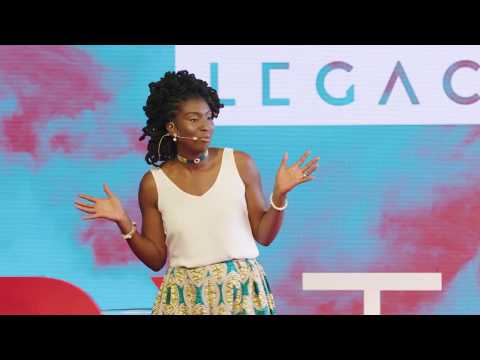
Translator: Mirjana Čutura Reviewer: Peter van de Ven
On October 24, 2016,
so basically a year ago, today,
I found myself outside my classroom,
crushed, defeated, and afraid.
Literally five minutes before my class was to start,
I hear one of the worst things to hear as a teacher, as a person.
One of my students, at the young age of 23,
had his life taken over the weekend.
And now, I had to figure out what I’m going to say to my class,
but I’m fearful.
I don’t want to say too much in front of them.
Everyone knows teachers are just supposed to state facts,
not their feelings.
And I don’t want to cry in front of them
because everybody knows
teachers should never cry in front of their students.
So, I’m literally standing outside my classroom,
talking to myself, trying to figure out how I’m going to keep my emotions intact,
stay in control, and say,
“I’m not going to be holding class today, because one of my students was killed.”
Not just any student – a student who had a magnetic smile,
a student who was loving and kind,
a student who had the spark.
That student.
With the sickness in my stomach,
I walk into my classroom, put my bag down,
take a breath,
open my mouth,
and the tears just flooded.
Literally all the feelings I had been feeling
over my past 11 years of teaching were surfacing.
I was sadden by society, life, and every single thing in between
because this was not supposed to happen.
Deshawn had his whole life ahead of him;
he had goals, dreams, desires.
And like I said, he had that spark.
On that day, I was unexpectedly open with my class.
There were no lesson plans, no rubrics,
no script, no rehearsal,
just me, raw and vulnerable.
In the education world, we call this a “teachable moment.”
My class was silent.
I actually think they were shocked.
Think back to the time when you realized
that for the first time your teacher was a human being.
The first time you saw them at the mall or the grocery store.
You’re walking through the aisles, you pick up a couple of apples,
you look to your left because you hear a familiar voice say “hello.”
And all you could do is look up and say,
“Mr. Adams? You eat … apples?”
(Laughter)
That was the vibe in the room –
weird and awkward.
They didn’t know what to do; I didn’t know what to do.
So I just started sharing my memories about Deshawn,
and within moments,
there was an unspoken connection, an unspoken understanding
that even though I’m their teacher, I’m a person first,
and life happens to me too.
That day, I began to reimagine vulnerability as a strength.
So, there are two things I want to tell you about vulnerability.
The first one is that vulnerability strengthens our relationships with others.
What I thought would’ve positioned me as weak in the classroom,
actually strengthened my relationship with my students.
Deshawn’s passing reminded me that in order to be a good teacher,
we need to be willing to build those relationships.
I’d forgotten about that.
I forgot that I not only saw Deshawn and his classmates in the classroom,
but I saw them at the community center, where I could smell
the peppers and sauces from their cooking classes.
I could see the intensity and concentration on their faces
during pick-up basketball.
And I could hear the joy and pleasure as they learned Caribbean dance.
And they laughed, and they pointed.
And they laughed at me as I tried to follow the moves.
They were a part of my life, and I was a part of theirs.
They met my family and friends.
They saw me, and in return, I was able to see them.
I showed them my spark.
Somewhere along my journey as an educator, I have forgotten about that.
I forgot that no matter where you teach –
whether it’s an area deemed “at risk”
or an affluent one,
whether you’re teaching small children, teenagers or adults –
relationships must be fostered in order for classrooms to thrive.
And that requires vulnerability.
At this point in the game, it is non-negotiable.
So that day …
that day,
(Sighs)
the wall that I had created between teacher and student,
between coldness and connectedness crumbled.
Gradually what happened was that the students in my class,
their wall started to crumble too.
They started to ask critical questions.
They began engaging in meaningful, intentional dialogue.
They were less hesitant and less afraid to discuss matters
around race, racism, class, and gender.
They shared their stories of love, hurt, resilience, and fear.
And I shared mine.
They sought me, and in return, I was able to seek them.
And most importantly,
they were able to start to see the spark in themselves,
and the classroom felt transformed.
When was the last time you had a meaningful relationship with someone?
When was the last time you were able to share your truth?
Is your wall blocking your spark from shining?
Is your wall blocking you from building meaningful relationships?
That wall needs to crumble
in order to strengthen your relationships with others and yourself.
And that is the last thing I want to tell you about vulnerability.
Vulnerability strengthens your relationship with yourself.
As I started to watch my students grow and develop,
I started to question my own growth and development.
I started asking myself a million questions –
some of them that were extremely difficult
and some that just kept coming back to me looking for an answer.
What was my intention as an educator?
Why did I want to hide those tears that day?
Did I in some way fail Deshawn?
And who am I to be teaching other people’s children?
I had to begin to answer some of those questions.
Here, I had to give myself permission to change;
I had to surrender.
I had to realize
that though on the outside the wall looks sturdy,
I had to embrace the fact that I hurt.
I really hurt.
Deshawn was someone who represented to me
light, hope, and resilience.
And his death shattered my soul and crushed my hope.
My insecurities, my complex family dynamics, and my regrets
were also things I was holding onto
that weren’t allowing me to become the educator and person I could be.
I had to begin to work through some of those things
in order to become the educator and person that I am today.
So today, I’m a course director at a teacher’s college.
I’m inviting teacher candidates to explore vulnerability in the classroom.
I am encouraging a movement one class at a time.
I’m inviting them to explore their journey as an educator and as a person
while I continue to explore my own.
I’m asking them to share their life experiences
and consider some of the questions I had set before.
Leaders in educational theory,
like Parker J. Palmer, bell hooks, and Rudolf Steiner,
say that the only way to teach
is to be deeply immersed in self-knowledge.
If one does not know themselves, one can not teach well.
It is that simple.
When our walls are up,
there’s no vulnerability; there is no spark.
Where there’s no spark, there’s no light.
Where there’s no light, there can be no learning.
When a teacher and student are not taking risks together,
there can be no love nor trust.
But we all know this –
we know the teachers we loved and the ones we couldn’t stand and why.
We’ve seen the numerous TED talks on vulnerability;
we’ve been to a conference, listened to a podcast, read a book,
had coffee with somebody and talked about it.
And what happens after?
We give gratitude for five days; we meditate for a few mornings,
and then we go back to our regular routine.
How do I know?
I’ve done it, like a hundred, a thousand times.
What will happen after this talk?
You know, who am I but a teacher from Toronto, The Six?
I’m smiling because I can see one of my students
in the back right there.
And he’s saying, “Ms. Subban, do not ever do that again.”
(Laughter)
Shout out to SBL.
So, I mean, what do I know?
I just had a moment,
so I dug up some research from this school –
I’m not sure if anyone has heard of it –
Harvard?
Great. Okay.
In 2015, they did a study in a grade nine class,
and what they found was when a teacher and student
build a meaningful relationship and share some type of common ground –
they both like soccer, or the movies, etc –
those students did better academically.
This stuff works. Harvard said so.
I have three sons, Legacy, who’s six; Epic, who’s four and a half;
and Honor, who’s four and a half.
Yes, Epic and Honor are twins, and before you do the math,
Legacy and the twins are 21 months apart.
Do I recommend that for anybody?
No.
(Laughter)
And I’m looking around the room,
and I could see
the look of exhaustion on your faces
just thinking about the type of energy
it takes to get through a 24-hour period with them.
And it’s exactly what you’re thinking, but it’s a whole other talk.
Thankfully, they’ve started school.
I want, when they have finished high school,
to be able to tell me about all the wonderful teachers they had:
the ones that they knew believed they were worthy of love and belonging
because they could feel it,
the ones they saw taking risks alongside them,
and they knew because they could see it,
and the ones they knew celebrated their triumphs
and challenged them to do more
because they could hear it.
These are the teachers
that would’ve understood the strength of vulnerability.
These are the teachers
that would’ve encouraged my sons to show their spark.
And these are the teachers I want not only for my children
but for all children.
With all the buzz around vulnerability,
there is no time better than right now
to do this work with integrity and intention.
Embrace the fear that is holding you back,
own it,
accept that it won’t always be there,
and then let it go.
You cannot build walls forever.
I hope you join the movement.
Email me. Don’t call me because I never answer my phone.
I have a running soundtrack of a screaming voice in the background.
(Laughter)
Give yourself permission to be vulnerable.
Give yourself permission to show your spark.
The time is now.
Miigwetch. Merci. Thank you.
(Applause)
On October 24, 2016,
so basically a year ago, today,
I found myself outside my classroom,
crushed, defeated, and afraid.
Literally five minutes before my class was to start,
I hear one of the worst things to hear as a teacher, as a person.
One of my students, at the young age of 23,
had his life taken over the weekend.
And now, I had to figure out what I’m going to say to my class,
but I’m fearful.
I don’t want to say too much in front of them.
Everyone knows teachers are just supposed to state facts,
not their feelings.
And I don’t want to cry in front of them
because everybody knows
teachers should never cry in front of their students.
So, I’m literally standing outside my classroom,
talking to myself, trying to figure out how I’m going to keep my emotions intact,
stay in control, and say,
“I’m not going to be holding class today, because one of my students was killed.”
Not just any student – a student who had a magnetic smile,
a student who was loving and kind,
a student who had the spark.
That student.
With the sickness in my stomach,
I walk into my classroom, put my bag down,
take a breath,
open my mouth,
and the tears just flooded.
Literally all the feelings I had been feeling
over my past 11 years of teaching were surfacing.
I was sadden by society, life, and every single thing in between
because this was not supposed to happen.
Deshawn had his whole life ahead of him;
he had goals, dreams, desires.
And like I said, he had that spark.
On that day, I was unexpectedly open with my class.
There were no lesson plans, no rubrics,
no script, no rehearsal,
just me, raw and vulnerable.
In the education world, we call this a “teachable moment.”
My class was silent.
I actually think they were shocked.
Think back to the time when you realized
that for the first time your teacher was a human being.
The first time you saw them at the mall or the grocery store.
You’re walking through the aisles, you pick up a couple of apples,
you look to your left because you hear a familiar voice say “hello.”
And all you could do is look up and say,
“Mr. Adams? You eat … apples?”
(Laughter)
That was the vibe in the room –
weird and awkward.
They didn’t know what to do; I didn’t know what to do.
So I just started sharing my memories about Deshawn,
and within moments,
there was an unspoken connection, an unspoken understanding
that even though I’m their teacher, I’m a person first,
and life happens to me too.
That day, I began to reimagine vulnerability as a strength.
So, there are two things I want to tell you about vulnerability.
The first one is that vulnerability strengthens our relationships with others.
What I thought would’ve positioned me as weak in the classroom,
actually strengthened my relationship with my students.
Deshawn’s passing reminded me that in order to be a good teacher,
we need to be willing to build those relationships.
I’d forgotten about that.
I forgot that I not only saw Deshawn and his classmates in the classroom,
but I saw them at the community center, where I could smell
the peppers and sauces from their cooking classes.
I could see the intensity and concentration on their faces
during pick-up basketball.
And I could hear the joy and pleasure as they learned Caribbean dance.
And they laughed, and they pointed.
And they laughed at me as I tried to follow the moves.
They were a part of my life, and I was a part of theirs.
They met my family and friends.
They saw me, and in return, I was able to see them.
I showed them my spark.
Somewhere along my journey as an educator, I have forgotten about that.
I forgot that no matter where you teach –
whether it’s an area deemed “at risk”
or an affluent one,
whether you’re teaching small children, teenagers or adults –
relationships must be fostered in order for classrooms to thrive.
And that requires vulnerability.
At this point in the game, it is non-negotiable.
So that day …
that day,
(Sighs)
the wall that I had created between teacher and student,
between coldness and connectedness crumbled.
Gradually what happened was that the students in my class,
their wall started to crumble too.
They started to ask critical questions.
They began engaging in meaningful, intentional dialogue.
They were less hesitant and less afraid to discuss matters
around race, racism, class, and gender.
They shared their stories of love, hurt, resilience, and fear.
And I shared mine.
They sought me, and in return, I was able to seek them.
And most importantly,
they were able to start to see the spark in themselves,
and the classroom felt transformed.
When was the last time you had a meaningful relationship with someone?
When was the last time you were able to share your truth?
Is your wall blocking your spark from shining?
Is your wall blocking you from building meaningful relationships?
That wall needs to crumble
in order to strengthen your relationships with others and yourself.
And that is the last thing I want to tell you about vulnerability.
Vulnerability strengthens your relationship with yourself.
As I started to watch my students grow and develop,
I started to question my own growth and development.
I started asking myself a million questions –
some of them that were extremely difficult
and some that just kept coming back to me looking for an answer.
What was my intention as an educator?
Why did I want to hide those tears that day?
Did I in some way fail Deshawn?
And who am I to be teaching other people’s children?
I had to begin to answer some of those questions.
Here, I had to give myself permission to change;
I had to surrender.
I had to realize
that though on the outside the wall looks sturdy,
I had to embrace the fact that I hurt.
I really hurt.
Deshawn was someone who represented to me
light, hope, and resilience.
And his death shattered my soul and crushed my hope.
My insecurities, my complex family dynamics, and my regrets
were also things I was holding onto
that weren’t allowing me to become the educator and person I could be.
I had to begin to work through some of those things
in order to become the educator and person that I am today.
So today, I’m a course director at a teacher’s college.
I’m inviting teacher candidates to explore vulnerability in the classroom.
I am encouraging a movement one class at a time.
I’m inviting them to explore their journey as an educator and as a person
while I continue to explore my own.
I’m asking them to share their life experiences
and consider some of the questions I had set before.
Leaders in educational theory,
like Parker J. Palmer, bell hooks, and Rudolf Steiner,
say that the only way to teach
is to be deeply immersed in self-knowledge.
If one does not know themselves, one can not teach well.
It is that simple.
When our walls are up,
there’s no vulnerability; there is no spark.
Where there’s no spark, there’s no light.
Where there’s no light, there can be no learning.
When a teacher and student are not taking risks together,
there can be no love nor trust.
But we all know this –
we know the teachers we loved and the ones we couldn’t stand and why.
We’ve seen the numerous TED talks on vulnerability;
we’ve been to a conference, listened to a podcast, read a book,
had coffee with somebody and talked about it.
And what happens after?
We give gratitude for five days; we meditate for a few mornings,
and then we go back to our regular routine.
How do I know?
I’ve done it, like a hundred, a thousand times.
What will happen after this talk?
You know, who am I but a teacher from Toronto, The Six?
I’m smiling because I can see one of my students
in the back right there.
And he’s saying, “Ms. Subban, do not ever do that again.”
(Laughter)
Shout out to SBL.
So, I mean, what do I know?
I just had a moment,
so I dug up some research from this school –
I’m not sure if anyone has heard of it –
Harvard?
Great. Okay.
In 2015, they did a study in a grade nine class,
and what they found was when a teacher and student
build a meaningful relationship and share some type of common ground –
they both like soccer, or the movies, etc –
those students did better academically.
This stuff works. Harvard said so.
I have three sons, Legacy, who’s six; Epic, who’s four and a half;
and Honor, who’s four and a half.
Yes, Epic and Honor are twins, and before you do the math,
Legacy and the twins are 21 months apart.
Do I recommend that for anybody?
No.
(Laughter)
And I’m looking around the room,
and I could see
the look of exhaustion on your faces
just thinking about the type of energy
it takes to get through a 24-hour period with them.
And it’s exactly what you’re thinking, but it’s a whole other talk.
Thankfully, they’ve started school.
I want, when they have finished high school,
to be able to tell me about all the wonderful teachers they had:
the ones that they knew believed they were worthy of love and belonging
because they could feel it,
the ones they saw taking risks alongside them,
and they knew because they could see it,
and the ones they knew celebrated their triumphs
and challenged them to do more
because they could hear it.
These are the teachers
that would’ve understood the strength of vulnerability.
These are the teachers
that would’ve encouraged my sons to show their spark.
And these are the teachers I want not only for my children
but for all children.
With all the buzz around vulnerability,
there is no time better than right now
to do this work with integrity and intention.
Embrace the fear that is holding you back,
own it,
accept that it won’t always be there,
and then let it go.
You cannot build walls forever.
I hope you join the movement.
Email me. Don’t call me because I never answer my phone.
I have a running soundtrack of a screaming voice in the background.
(Laughter)
Give yourself permission to be vulnerable.
Give yourself permission to show your spark.
The time is now.
Miigwetch. Merci. Thank you.
(Applause)
Please follow and like us: