
[Music]
[Applause]
on the morning of the 9th of November
last year as it became increasingly
clear that Donald Trump was about to
become the 45th President of the United
States the media and the political
establishment desperately began
searching for an explanation now it
wasn’t just an explanation of how he’d
come to win it was also how no one had
really seen it coming I’m on the main
explanation as they focused on was the
rise of fake news people had seen it
happening before the election and
afterwards they suddenly thought was
this the thing that swung it was this
the thing that we didn’t see now I think
actually a lot of this may be overblown
in a presidential election the margins
are small but we have very little
evidence to suggest that it actually
changed that many votes however the
actual discussion and debate about fake
news has opened up a problem that people
have been ignoring for years and this is
a fundamental change in the power
dynamics of our information ecosystem
now so look at this change it’s really
useful to go back and examine how the
modern media had an era of dominance
before the Internet and the major
technological innovation that allowed
that was the Gutenberg press this was
the first time that you could produce
information for a huge numbers of people
from one central location it’s changed
over time with radio with TV in scale
and scope and style but the fundamental
principle remained intact
it was the control of a printing press
the access to a TV station having access
to a radio tower that enabled you to
reach huge nuns of people and tell them
what was going on and no doubt the state
of the world and these ways of broadcast
the information were controlled by a
small number of people often from
similar backgrounds with shared views of
the world and often associating with
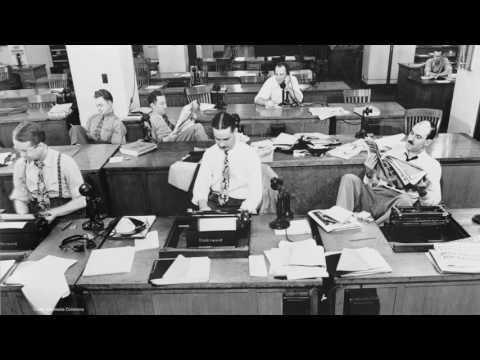
each other and those people were of
course journalists people like him
although I’m jealous that’s what we look
like
now if you ask most journalists why
people believe them throughout most
modern era and why people should still
believe them then or me talk about
ethics and skills they’ll talk about
things like double sourcing rigorous
fact-checking maybe a degree of
neutrality in balance and those things
are all great they’ve kept most
journalists in check and they’ve also
helped sometimes hold power to account
inform the public and really importantly
create consensus consensus around which
people can actually make decisions
around which we can run our democracy
about which we can use to ensure society
doesn’t get worse and hopefully improve
it but no matter how good all those
things are they’re not actually the
reason journalists believed the main
reason Jonas had believed is because
they had access to those broadcast those
broadcast tools so a radio station a TV
station a printing press so what’s
changed well this guy mainly this was
taken in 1985 about a month before I was
born and I was even til four years later
that he invented the web not the Weber’s
obviously change the world in a huge
number of ways it’s upended all the
different kind of technological skills
we need it’s changed businesses and
particularly it’s changed the power
dynamic of our information ecosystem
anyone can talk to anyone in Iraq a
broadcast to anyone at virtually no cost
and when it was being built there was a
huge amount of optimism about what it
would do for our democracy it would
enable these conversations which would
lead to better information sharing a
better decision-making but inevitably
with almost any technological innovation
people have been misusing it now when we
talk about fake news now we have them
talk about the kind of articles designed
to look like legitimate news sources
created by Macedonian teenagers to gain
ad dollars but actually it goes much
broader there’s things like this so this
is a Facebook post from a group called
Britain first who have been around for
quite a few years and a really good at
using social media to spread what is
effectively a racist message this is one
trying to get people to share
their fears that Nativity plays were
under threat in UK schools Nativity
place aren’t under threat in UK schools
but it taps into something that makes
people want to share it and that
promotes a specific agenda mostly
against immigrants and people of other
religions here’s another example from
Britain first because they’re
particularly good at this this is one of
their leaders and last year he tweeted a
picture of a load of Muslim men
celebrating a cricket win in Pakistan
and as you can see he was thought he
said he was talking about the Paris
terror attacks but this isn’t just the
right wing it’s also the left wing now
does anyone recognize this put your
hands up if you maybe you’ve seen it a
few of you did any of you share it no I
did I’m a journalist I should I should
know better I should have checked it but
I shared it because it appealed to the
narrative that I had about Donald Trump
and Republicans and the point here is
that we’re now all operating on an a
level playing field all the different
sources of information no matter where
they come from the matter who’s
producing them are actually basically
competing without any differentiation
and the problem is that the public who
have spent years getting used to having
trusted sources of information really
ill-equipped to navigate this situation
and even worse the media are completely
unprepared for the competition now as
I’ve said this isn’t actually new this
has been happening for years we’ve had
Britain first you’ve had the web and
lots of disinformation on there but
Tom’s victory did two main things first
it actually made the media wake up to
this problem start discussing it but
that led in turn to realisation among
those who wanted to misuse the Internet
but actually they could take advantage
of it and of course we’re going to go
back to this guy the speed with which
everyone from the President to internet
trolls and everyone in between that
really underlines this problem the speed
we actually used to fake news as a way
to discredit people now clearly it’s
opportunistic but it gets of that deeper
realization that the authority that
traditional media sources had doesn’t
really exist on the internet anymore so
when we now our about
six months after Trump’s election well
I’m going to use this guy I love a war
analogy like pretty much most people in
the media
unfortunately this guy came up with the
best term for this info wars this is
Alex Jones he founded Infowars
quite a few years ago and he’s one of
many who really grasped this early on
that they’re on a level playing field
and it’s a war people using conventional
weapons of rigor supporting and
government press releases but others
using weapons of mass deception fake
news branding the press the opposition
party and there’s no sort of Geneva
Convention governing this stopping
people from using the tools and and and
this information that really do damage
and because it’s taking place in our
online spaces there are no civilians
just people to be enlisted on one side
or another no I will say it’s not just
right-wing guys like Alex Jones doing
this it is a left but I would argue the
right-wing have been quicker to do it
and also have done a bit more damage
because there really aren’t casualties
casualties like this guy this is Lenny
Posner his son know he’s here pictured
with was one of the many young children
killed in the Sandy Hook massacre in
2012
now Bosna now gets regular death threats
from people who are convinced that the
Sandy Hook massacre was a fraud that it
was a hoax it gets them regularly every
week and he responds to them and you
know tries to tell them that no it
really happened he’s lost his son and
he’s got this visceral experience that
he knows it’s true but he’s been hounded
wriggling and a thing about Lenny is
before he started giving these death
threats before these hoaxes has got in
touch he is one of the people would have
believed all the conspiracy theories he
was a good he watched Alex Jones Alex
Jones now promotes these conspiracy
theories now this may sound like a
lament for some golden age when people
who look like this or all people who
look like me got to tell you what the
truth was
got to tell you what information to
trust but actually only MIT that era was
fundamentally undemocratic and not only
was it undemocratic
but journalism in that monopolistic
situation started to get lazy and an
arguably arrogant and I’m going to give
you some examples when you read an
article and someone is quoted
anonymously is it an anonymous source
close to the company or close to the
politician quite often every now and
again that person will be the PR guy for
that person for that company not always
but but relatively regularly but do
people know that do you know that when
you’re reading an article another
example Lobby journalists they’re the
journalists who spend almost all the
time in Parliament following MPs
following speech is following votes now
if someone gives a big speech at the end
of it those journalists will often
gather around and have a discussion
what’s the best line what’s the most
interesting angle and the result of this
is that those journalists in some some
instances will go back to their editors
and they’ll say we think is this best
line and you’ll see two newspapers who
may be diametrically opposed in terms of
politics come up with basically the same
story with slight tweaks and even worse
than that kind of arrogance is the fact
that we’ve actually really failed to
reflect the diversity of views and
experiences that our audience have
that’s to a large part because we come
from a group of people who maybe not
elite but we do have shared experiences
the shared experiences of in the UK
working in London of going to the same
events and that is incredibly
undemocratic
in contrast the web is is in principle
the most democratic thing that’s ever
happened to human society the problem is
that you’ve got bad actors taking
advantage of the chaos bad actors like
him again I just really love the photo
it’s a bit distracting though so I’m
just going to back to you a boring
picture of a newsroom now you may
realize when I’ve been talking about
this change I haven’t been talking about
the technology companies and in this
debate the technology companies mainly
Facebook and Google have taken all of
the blame and absolutely they’re
facilitating they’re accelerating this
in many ways and they have a
responsibility to act but I don’t think
it’s enough to rely upon them to solve
this problem
it’s bigger than face
working Google and I also did trust them
to actually come up with the appropriate
solution so what can we do well I
believe that to actually change the
situation and turn the web into a force
for good in our information ecosystem we
actually need a new partnership between
the media and the audience now I’m going
to start with with the media because
that’s where I’m from
and one of the good things about this
debate about fake news is that we’ve
actually got the situation where the
people have been warning about these
issues for a while of the guns being
listened to and one of the my former
colleagues of Guardian who is now a
professor at Temple University in
Philadelphia a man called Aaron Pihl
Hoffer he came up with this as a
question at a lot of practical solutions
and the question was how do we optimize
for trust and one of the practical
solutions he came up with it is about
advertising responsible advertising now
this this is from CNN but you’ll see it
on most websites right at the bottom and
these were loaded sponsored ads that we
get paid for now the money we get from
these this funds journalism but if you
look at these this is not responsible
these are ads that are kind of often
designed to look like news stories or
links for instance to other publications
that you know you probably wouldn’t ever
tell your audience to read but we
swallow this because we need the money
yet we’re undermining the fundamental
thing we need to build and that’s trust
another of the suggestions is being much
more explicit in explaining how we work
journalists take for granted what we do
a lot we kind of expect people to
actually understand it without an
explanation
Suzanne example this is from The
Guardian where I used to work these are
two stories now one of these is an
opinion story and one of these is a news
story how do you know I know because
they’re different colors but we sort of
expect everyone else to just get that
and this this really affected you can
see this in the New York Times article
recently where they hired an opinion
writer who wrote that it was kind of
okay to be a climate change denier and
there was obviously lot of blowback and
the response from the MIT was well this
is an opinion piece you know we have to
reflect a diverse range of opinions but
the public don’t really get that you
know explicitly
explaining that all the time and so
they’ve got lots of people unsubscribing
it it really broke that trusted
relationship partly because we weren’t
expressing ourselves well enough and
then possibly the most important thing
this we need to talk to our audience and
actually get engaged with you and so
these are some examples so on the top
your left you have CNN very simple
project asking people to send in your
reporting your pictures this is a way of
actually building relationship then we
have the Guardian at the bottom here and
that’s is an example of one of the
projects the Guardian is doing where
they go out into the community and go
and talk to Guardian readers about a
specific issue they ask them what we
should be covering who you should be
talking to and generally could finally
help them shape our coverage and then on
that number
you’re right you had the e correspondent
these guys are our kind of hot stuff at
the moment in the media because they’ve
built a membership model for their
journalism where their readers pay them
but more importantly actually
contributes to their journalism they’ve
had some great scoops out of this and
they also have an engaged audience who
are always going to come back and keep
helping them tweak things so that the
trust is at the heart of what they do
but as you may guess this is just one
side of the equation and the other bit
is you guys obviously we need your help
the first one is really practical the
first suggestion I have is a really
practical idea here share responsibly
it’s pretty simple if something really
appeals to you it’s a great headline you
really want to believe it check if it’s
true before you share it it’s not hard
another one though is actually challenge
falsehoods you see bit on social media
or in the pub if someone says or share
something that you know is probably not
true and you can prove it have that
argument it may not be comfortable but
it’s vital and then again just like the
news organizations are trying to engage
the public you need to engage back if we
go out asking for input and we don’t
receive anything we’re not going to
change what we do and then one little
selfish one also pay for the news you
like because I need to pay my rent
really badly now none of this is going
to change the situation we’re in and put
things back
the way they were it won’t make the
media the dominant force and information
nothing that isn’t a massive restriction
on freedom of expression actually would
and it’s not going to make people stop
believing falsehoods confirmation bias
just natural human instincts makes
people want to believe things and
believe them but I do fundamentally
believe that a cooperative relationship
between the media and the public is the
only way of creating a new strong
information ecosystem that can resist
the attempts to deceive miss inform and
damage our democracy in our society
thank you
[Applause]
[Applause]
on the morning of the 9th of November
last year as it became increasingly
clear that Donald Trump was about to
become the 45th President of the United
States the media and the political
establishment desperately began
searching for an explanation now it
wasn’t just an explanation of how he’d
come to win it was also how no one had
really seen it coming I’m on the main
explanation as they focused on was the
rise of fake news people had seen it
happening before the election and
afterwards they suddenly thought was
this the thing that swung it was this
the thing that we didn’t see now I think
actually a lot of this may be overblown
in a presidential election the margins
are small but we have very little
evidence to suggest that it actually
changed that many votes however the
actual discussion and debate about fake
news has opened up a problem that people
have been ignoring for years and this is
a fundamental change in the power
dynamics of our information ecosystem
now so look at this change it’s really
useful to go back and examine how the
modern media had an era of dominance
before the Internet and the major
technological innovation that allowed
that was the Gutenberg press this was
the first time that you could produce
information for a huge numbers of people
from one central location it’s changed
over time with radio with TV in scale
and scope and style but the fundamental
principle remained intact
it was the control of a printing press
the access to a TV station having access
to a radio tower that enabled you to
reach huge nuns of people and tell them
what was going on and no doubt the state
of the world and these ways of broadcast
the information were controlled by a
small number of people often from
similar backgrounds with shared views of
the world and often associating with
each other and those people were of
course journalists people like him
although I’m jealous that’s what we look
like
now if you ask most journalists why
people believe them throughout most
modern era and why people should still
believe them then or me talk about
ethics and skills they’ll talk about
things like double sourcing rigorous
fact-checking maybe a degree of
neutrality in balance and those things
are all great they’ve kept most
journalists in check and they’ve also
helped sometimes hold power to account
inform the public and really importantly
create consensus consensus around which
people can actually make decisions
around which we can run our democracy
about which we can use to ensure society
doesn’t get worse and hopefully improve
it but no matter how good all those
things are they’re not actually the
reason journalists believed the main
reason Jonas had believed is because
they had access to those broadcast those
broadcast tools so a radio station a TV
station a printing press so what’s
changed well this guy mainly this was
taken in 1985 about a month before I was
born and I was even til four years later
that he invented the web not the Weber’s
obviously change the world in a huge
number of ways it’s upended all the
different kind of technological skills
we need it’s changed businesses and
particularly it’s changed the power
dynamic of our information ecosystem
anyone can talk to anyone in Iraq a
broadcast to anyone at virtually no cost
and when it was being built there was a
huge amount of optimism about what it
would do for our democracy it would
enable these conversations which would
lead to better information sharing a
better decision-making but inevitably
with almost any technological innovation
people have been misusing it now when we
talk about fake news now we have them
talk about the kind of articles designed
to look like legitimate news sources
created by Macedonian teenagers to gain
ad dollars but actually it goes much
broader there’s things like this so this
is a Facebook post from a group called
Britain first who have been around for
quite a few years and a really good at
using social media to spread what is
effectively a racist message this is one
trying to get people to share
their fears that Nativity plays were
under threat in UK schools Nativity
place aren’t under threat in UK schools
but it taps into something that makes
people want to share it and that
promotes a specific agenda mostly
against immigrants and people of other
religions here’s another example from
Britain first because they’re
particularly good at this this is one of
their leaders and last year he tweeted a
picture of a load of Muslim men
celebrating a cricket win in Pakistan
and as you can see he was thought he
said he was talking about the Paris
terror attacks but this isn’t just the
right wing it’s also the left wing now
does anyone recognize this put your
hands up if you maybe you’ve seen it a
few of you did any of you share it no I
did I’m a journalist I should I should
know better I should have checked it but
I shared it because it appealed to the
narrative that I had about Donald Trump
and Republicans and the point here is
that we’re now all operating on an a
level playing field all the different
sources of information no matter where
they come from the matter who’s
producing them are actually basically
competing without any differentiation
and the problem is that the public who
have spent years getting used to having
trusted sources of information really
ill-equipped to navigate this situation
and even worse the media are completely
unprepared for the competition now as
I’ve said this isn’t actually new this
has been happening for years we’ve had
Britain first you’ve had the web and
lots of disinformation on there but
Tom’s victory did two main things first
it actually made the media wake up to
this problem start discussing it but
that led in turn to realisation among
those who wanted to misuse the Internet
but actually they could take advantage
of it and of course we’re going to go
back to this guy the speed with which
everyone from the President to internet
trolls and everyone in between that
really underlines this problem the speed
we actually used to fake news as a way
to discredit people now clearly it’s
opportunistic but it gets of that deeper
realization that the authority that
traditional media sources had doesn’t
really exist on the internet anymore so
when we now our about
six months after Trump’s election well
I’m going to use this guy I love a war
analogy like pretty much most people in
the media
unfortunately this guy came up with the
best term for this info wars this is
Alex Jones he founded Infowars
quite a few years ago and he’s one of
many who really grasped this early on
that they’re on a level playing field
and it’s a war people using conventional
weapons of rigor supporting and
government press releases but others
using weapons of mass deception fake
news branding the press the opposition
party and there’s no sort of Geneva
Convention governing this stopping
people from using the tools and and and
this information that really do damage
and because it’s taking place in our
online spaces there are no civilians
just people to be enlisted on one side
or another no I will say it’s not just
right-wing guys like Alex Jones doing
this it is a left but I would argue the
right-wing have been quicker to do it
and also have done a bit more damage
because there really aren’t casualties
casualties like this guy this is Lenny
Posner his son know he’s here pictured
with was one of the many young children
killed in the Sandy Hook massacre in
2012
now Bosna now gets regular death threats
from people who are convinced that the
Sandy Hook massacre was a fraud that it
was a hoax it gets them regularly every
week and he responds to them and you
know tries to tell them that no it
really happened he’s lost his son and
he’s got this visceral experience that
he knows it’s true but he’s been hounded
wriggling and a thing about Lenny is
before he started giving these death
threats before these hoaxes has got in
touch he is one of the people would have
believed all the conspiracy theories he
was a good he watched Alex Jones Alex
Jones now promotes these conspiracy
theories now this may sound like a
lament for some golden age when people
who look like this or all people who
look like me got to tell you what the
truth was
got to tell you what information to
trust but actually only MIT that era was
fundamentally undemocratic and not only
was it undemocratic
but journalism in that monopolistic
situation started to get lazy and an
arguably arrogant and I’m going to give
you some examples when you read an
article and someone is quoted
anonymously is it an anonymous source
close to the company or close to the
politician quite often every now and
again that person will be the PR guy for
that person for that company not always
but but relatively regularly but do
people know that do you know that when
you’re reading an article another
example Lobby journalists they’re the
journalists who spend almost all the
time in Parliament following MPs
following speech is following votes now
if someone gives a big speech at the end
of it those journalists will often
gather around and have a discussion
what’s the best line what’s the most
interesting angle and the result of this
is that those journalists in some some
instances will go back to their editors
and they’ll say we think is this best
line and you’ll see two newspapers who
may be diametrically opposed in terms of
politics come up with basically the same
story with slight tweaks and even worse
than that kind of arrogance is the fact
that we’ve actually really failed to
reflect the diversity of views and
experiences that our audience have
that’s to a large part because we come
from a group of people who maybe not
elite but we do have shared experiences
the shared experiences of in the UK
working in London of going to the same
events and that is incredibly
undemocratic
in contrast the web is is in principle
the most democratic thing that’s ever
happened to human society the problem is
that you’ve got bad actors taking
advantage of the chaos bad actors like
him again I just really love the photo
it’s a bit distracting though so I’m
just going to back to you a boring
picture of a newsroom now you may
realize when I’ve been talking about
this change I haven’t been talking about
the technology companies and in this
debate the technology companies mainly
Facebook and Google have taken all of
the blame and absolutely they’re
facilitating they’re accelerating this
in many ways and they have a
responsibility to act but I don’t think
it’s enough to rely upon them to solve
this problem
it’s bigger than face
working Google and I also did trust them
to actually come up with the appropriate
solution so what can we do well I
believe that to actually change the
situation and turn the web into a force
for good in our information ecosystem we
actually need a new partnership between
the media and the audience now I’m going
to start with with the media because
that’s where I’m from
and one of the good things about this
debate about fake news is that we’ve
actually got the situation where the
people have been warning about these
issues for a while of the guns being
listened to and one of the my former
colleagues of Guardian who is now a
professor at Temple University in
Philadelphia a man called Aaron Pihl
Hoffer he came up with this as a
question at a lot of practical solutions
and the question was how do we optimize
for trust and one of the practical
solutions he came up with it is about
advertising responsible advertising now
this this is from CNN but you’ll see it
on most websites right at the bottom and
these were loaded sponsored ads that we
get paid for now the money we get from
these this funds journalism but if you
look at these this is not responsible
these are ads that are kind of often
designed to look like news stories or
links for instance to other publications
that you know you probably wouldn’t ever
tell your audience to read but we
swallow this because we need the money
yet we’re undermining the fundamental
thing we need to build and that’s trust
another of the suggestions is being much
more explicit in explaining how we work
journalists take for granted what we do
a lot we kind of expect people to
actually understand it without an
explanation
Suzanne example this is from The
Guardian where I used to work these are
two stories now one of these is an
opinion story and one of these is a news
story how do you know I know because
they’re different colors but we sort of
expect everyone else to just get that
and this this really affected you can
see this in the New York Times article
recently where they hired an opinion
writer who wrote that it was kind of
okay to be a climate change denier and
there was obviously lot of blowback and
the response from the MIT was well this
is an opinion piece you know we have to
reflect a diverse range of opinions but
the public don’t really get that you
know explicitly
explaining that all the time and so
they’ve got lots of people unsubscribing
it it really broke that trusted
relationship partly because we weren’t
expressing ourselves well enough and
then possibly the most important thing
this we need to talk to our audience and
actually get engaged with you and so
these are some examples so on the top
your left you have CNN very simple
project asking people to send in your
reporting your pictures this is a way of
actually building relationship then we
have the Guardian at the bottom here and
that’s is an example of one of the
projects the Guardian is doing where
they go out into the community and go
and talk to Guardian readers about a
specific issue they ask them what we
should be covering who you should be
talking to and generally could finally
help them shape our coverage and then on
that number
you’re right you had the e correspondent
these guys are our kind of hot stuff at
the moment in the media because they’ve
built a membership model for their
journalism where their readers pay them
but more importantly actually
contributes to their journalism they’ve
had some great scoops out of this and
they also have an engaged audience who
are always going to come back and keep
helping them tweak things so that the
trust is at the heart of what they do
but as you may guess this is just one
side of the equation and the other bit
is you guys obviously we need your help
the first one is really practical the
first suggestion I have is a really
practical idea here share responsibly
it’s pretty simple if something really
appeals to you it’s a great headline you
really want to believe it check if it’s
true before you share it it’s not hard
another one though is actually challenge
falsehoods you see bit on social media
or in the pub if someone says or share
something that you know is probably not
true and you can prove it have that
argument it may not be comfortable but
it’s vital and then again just like the
news organizations are trying to engage
the public you need to engage back if we
go out asking for input and we don’t
receive anything we’re not going to
change what we do and then one little
selfish one also pay for the news you
like because I need to pay my rent
really badly now none of this is going
to change the situation we’re in and put
things back
the way they were it won’t make the
media the dominant force and information
nothing that isn’t a massive restriction
on freedom of expression actually would
and it’s not going to make people stop
believing falsehoods confirmation bias
just natural human instincts makes
people want to believe things and
believe them but I do fundamentally
believe that a cooperative relationship
between the media and the public is the
only way of creating a new strong
information ecosystem that can resist
the attempts to deceive miss inform and
damage our democracy in our society
thank you
[Applause]
Please follow and like us: