
thanks a lot ah ok I heard that some of
you applied to cornell ok if I were to
ask each of you to give me a piece of
nutrition advice about how to be party
to you healthfully what would you tell
me all right you might tell me one of
these things some people might tell me
more fruits and vegetables whole grains
and water that’s usually what to tell
people but some there is might start
telling me all yet any more fiber
fineness very specifically a less
saturated fat trans gothic is really
close up through our arteries maybe
something less person eating whatever
but today’s talk is really not about
nutrition and if I ask you a cool new to
you like that raise your hands it’s a
little game this Ranger and if you knew
that you had to eat some fruits
vegetables whole water see all you guys
know that keep your hands raised who
actually eats like that fifty percent of
the time at least seventy-five percent
of the time all of the time in a way I
think I do eighty percent of time but I
do need my crap consciously trying to do
that today that’s knowing so in research
there really is a clear of disconnect
between what we know what to eat how do
you healthy and what we actually do to
eat healthy and the reason might be that
you know some people just didn’t know
to eat more fruits and vegetables in
order to be healthy or less sad and
sugar right but sometimes it might be a
lack of skills not knowing how to cook
my vegetables properly in order for it
to taste good or sometimes people laugh
the confidence to choose the correct
food dining out whatever the reasons are
this researcher has a different idea dr.
Brian Wansink is a researcher from
Cornell and he had this book out there
and I called my voice leading he has a
really interesting research on the
bottomless bowl where the bowl sitting
in front of the person taking the test
in this study continuously keeps to be
filled endlessly and when they learn
from the study with that people kept
eating as much food as it was provided
so you can see what the huge implication
this has on the number of calories
grading and his idea in mindless eating
is that in order for us to eat fully
mindfully is nearly impossible because
we can’t make each and every single
eating decision on a daily basis three
times at least a day that would be
really tired so you know why because of
all these different triggers surrounding
us while we take while we go through our
day so in terms of for example in terms
of portion size that just means like
when I just told you with that funny the
more I give you the more you’re going to
eat in terms of any partner that means
if we’re eating together I took a bite
you’re likely to take a bite with me and
if I eat fast you’re likely to eat fast
with me and the rest of my slides that
you’re going to see throughout this
presentation I will give you mostly
example
from my work at the John Tom foundation
and especially with myself reduction
project that I was involved with I will
give you some examples about food
placement marketing advertisement how
price of whose influence where we eat
the convenience and location of foods
and food policies and here’s one that
okay this is the most research II slide
you’re gonna see so let’s it take take a
little bit of time this study involves
the cafeteria so imagine yourself going
into the cafe went through lines in one
blind one what like one is the healthy
one in the healthy life you see fruit
yogurt and granola first but if you are
allocated to the unhealthy line your
other seen cheesy eggs potatoes bacon
first and these unhealthy foods later so
what they found in his study with that
those people placed in the healthy line
they were a higher percentage of them
jokes the healthy food so this is about
food place but for those people who I
through the unhealthy line they chose
the bad news first so you can sort of
imagine how this could have implications
unlike your school cafeteria maybe here
what do you see can you see a bad word
sort of when I saw this ad I was really
pissed off I was so pissed off that I
called coca-cola oh and I said lady you
guys are selling that and i think it was
sovereign fun and do do you know if
that’s if you’re going to be selling
that for the rest from this day on or is
that just going to be a holiday special
thing because i saw this when people
were outside by I’m you know with the
large number of packaged junk foods
anyway she said I said well this has
really bad implications for public
health because you know coke is not
healthy for your body she say so how’s
coked-out healthy for you dad really
Art’s me but she actually said that I
said well you know me like the smell
coloring as sort of a carcinogen and you
know there’s a lot of sugar in that but
my point with that instead of instead of
the regular 330 milk cans we see they
started making it in 500 mil containers
so with the implication for that every
time I open this can of soda one purple
a person probably has to drink it in and
sitting right I’ll like the plastic
bottle so that means more calories
consumed you’re like I’ll add some like
70 calories more but then to calories a
dub on the daily basis here I like to
talk about policy video national policy
this is a photo taken at one of our
press conferences is the foundation
talking about sodium reduction here you
see different brands of corn chowder and
these numbers indicate the number of
milligrams of sodium per serving of soup
so you see 250 all the way into society
so if Taiwan want to implement a food
policy indicating the maximum level of
sodium that we could have in each of our
food groups that say for the soups maybe
if it’s setting up 400 so that that
means we can lower our sodium in our
daily diets sorry what do you see here
it’s a bunch of Chinese I tell her that
you don’t really retains I didn’t when I
first came back to Taiwan even but this
was a menu I took
restaurants of all these different
dishes fish names are confused downtown
grill time you know some eggs and
vegetables meat blah blah blah my point
is of the 68 68 dishes you see here only
13 were a vegetable based so that’s
about twenty percent what is this taught
telling us maybe you are Chinese culture
I don’t know maybe I’m certainly
American culture we’re very inclined to
use more meats and vegetables by the
dietitians promote eating more fruits
vegetables whole grains and water so
this is just telling us that our food
environment surrounding us really makes
it more difficult for us to choose the
vegetables they’re hiding in there so
what’s a better way of doing this this
is actually one thing I did with one of
the restaurants we were working with
through my salt reduction project what I
did was put all the vegetable base
dishes together and you put up up front
they’ll think with that cafeteria line
study if you put it up front people are
likely to see it first and they’re
likely to choose effort so that’s how we
manipulate the environment if this is
another example from a hot pot
restaurant Tony Navy ship so for option
one your meat plate it’s the same your
vegetable plate is the same it’s the
regular original version but with
version be with your meat plate you
actually get sixty sixty percent more
meat but your vegetables is cut down so
we’re meatless veggies and they call it
as smart that is the off to all right
with this one
actually took this walking down the
street you know with Family Mart it’s an
onion dis special but it’s telling you
is that if you pick if you buy an entree
for ten dollars and worried you get to
the web you get junk food ok one of
these sugar beverages or if I’m putting
in two thousand two thousand and one
teeny tiny dollars yeah you get a coffee
a suit and really phytochemicals build
fresh apple that’s great for thirty
dollars morning dear one another more
for the chemicals in your dry foods in
this colorful salad so what’s wrong with
this so for dietitians it’s annoying to
you because it’s making the food
environment less healthy and it actually
makes eating healthy more expensive I
guess what about eight months later I
found it online for this it’s about the
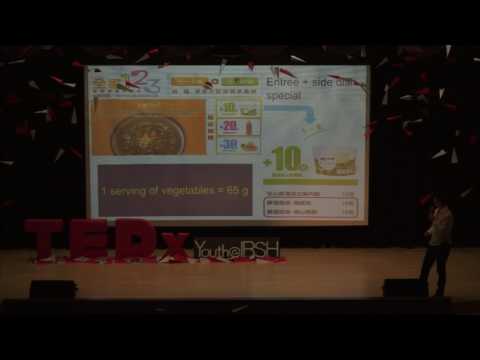
same idea you know you buy an entree if
you tip pay ten dollars more you
actually get one serving of vegetables
about 65 frames whoo that was my idea no
I didn’t anyone tell him to do that it
was my kind of idea that i’d love to see
but later we had a meeting with family
mars heard that it actually sell well so
that’s too bad and it’s sort of a cost
and demand idea if more people were
wanted to eat healthy and Ashley
supported this idea and got as excited
as me about it but I’m shop in the
comedian stores so I defy this you know
probably they would want to continue
this morning what about this now walking
down the street to give these um lunch
menus handed to you and here it really
interested me because here it says on a
bowl of white rice or multigrain rice it
guess we’ll head for the same amount of
money if you keep snug places where they
make you pay more for the multi
brown rice yeah this one time the
self-serve on different enemies so this
was really good but one time when i went
there and asked for the multigrain rice
they ran out with sad story telling me
the food service industry would probably
tell you that we don’t do the brown rice
it’s more expensive and also people
don’t like to give you but my experience
told me that people eat them and people
you think that people don’t eat them is
probably because you sell at a higher
price another example for my work in
this little eatery there’s a self-serve
area for all the green onions and
peppers and vinegars and all the condo
fees located in one central place
instead of on every table prize you
probably know what I’m going to talk
about so for some people they’re
probably too lazy to walk the distance I
don’t know two tables down you’re like
oh I’m in a hurry i’m not going to go
get the economist where has for some
people without seeing these triggers on
their table they’ve i didn’t think about
getting using the comments so you can
see that has implications for us
reducing our sodium levels in our diets
and sympathy here ok this was a picture
taken by a my colleague and it was
during time when i was working on this
all reduction project here it reads when
don’t you broth is a high sodium food
for your health sake we will not be
providing it anymore from now on I was
added my colleague was happy about it
she’s a bad titian too but then I’m not
sure if the students were held up happy
about it and just curious as to who won
in the end you know like if you if they
put it back because people were
revolting or something
oh this one you can see that it’s from
the subway what does that mean the
national trend change restaurant and if
they did one thing like this it could
affect the diets of many many people
what they did was that in order to do
they said they would increase sodium in
our sandwiches so they’re not going to
provide a faulty olives in people with
anyone young sure they’re saving money
to do this you can still ask for it I
just don’t automatically put in there
but then you know for self shy people
they probably weird asking for people
after asking for things or you know for
a lot of people you probably didn’t even
realize that it’s gone from their
sandwich really cool all right this is
one of my last slide and again from salt
reduction project and it’s about one of
the marketing you know or their own
management strategy for my vegetarian
shelving I wanted less salt we went to
these restaurants three during the
project so we were really focused on
this one of my vegetarian chow mein less
salt and my colleague she wanted her
phone blender flavored and in so I was
such a huge surprise to as I actually
went to the back of the restaurant asked
them if I could have my receipt back
because I wanted to take this picture
showing join me but the point is if they
have this built into their posts in a
point-of-sale system at the time of
ordering the only case these are the
little buttons so that tells us said the
food is industry food service industry
they’re totally ready to take our to
take their customers customize the
requests only if you knew that you
wanted to reduce some of these sodium
content or if you wanted more vegetables
or however way you like your kneels to
be healthier so let’s have to the
original question how do you healthy
keep in mind their fruits vegetables
whole grains and water as simple as that
I don’t count calories I don’t
sodium content all right but then
hopefully from my presentation you know
from point from this point on you need
to be a little bit mindful of your food
environments because there’s so many
triggers that sort of attack your subconscious somehow thank you