
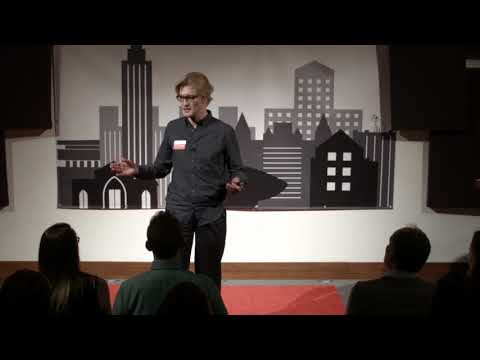
hi everyone let’s begin our time today
by taking a deep breath in and out
thank you breathing is one of the most
essential life functions for we humans
good news then that for most of us it’s
pretty automatic right you inhale you
exhale you don’t have to think about it
no real effort on your part but that’s a
little more difficult for about 1200
people worldwide my name is Nico and I
am one of those individuals there we go
what we have is called congenital
central hyperventilation syndrome or
CCHS if you’re looking for a colony
central high school I think you’re in
the wrong building
what this means is that when we are
sleepy when we are sleeping when we’re
ill we require mechanical ventilation
what we call vents there is currently no
cure no treatment for CCHS beyond
mechanical ventilation this condition is
genetic is most often present at birth
and it is lifelong now I’ve lived 29
years with CCHS dealing with this
disability has given me a better sense
of my own purpose and a better
appreciation for the abilities of others
but also a global community let’s take a
look at this kid this is in fact me what
happened right how did I get this way so
after we look at the cute blonde hair
and the chubby cheeks we turn to
something which is decidedly not cute
what is this thing under the neck that
was called the trach and it’s how I was
venting for the first six or seven years
of my life someone over here said it it
is a trach now when you’re six when
you’re seven you don’t really want to be
different right different is bad you
want to be normally you I’m good like
everybody else when you’re in
kindergarten one of your friends has to
go to the bathroom you have to go to but
at this stage of my development
I was very obviously different not only
because of my trick but also because I
had a dedicated nurse follow me around
me specifically me Nikko in elementary
school and also in junior high now think
back to kindergarten when you came in
from recess you probably helped make
naptime right lights were off you had
some cots could lay on the floor and
you’d go to sleep
and I could not do that it was continued
in high school in gym class I couldn’t
do a swimming unit without my own
personal lifeguard one year I had a fee
a lifeguard who walked alongside me and
kept pace with me and the next year I
had a male lifeguard who swam actually
right next to me and asked me how I was
doing which is nice the first like five
hundred times you asked it I really
appreciate it the five hundred first
time got real annoying and I couldn’t do
all the Football Union at all so it’s no
surprise that sometimes I felt isolated
I felt lonely I felt like my body wasn’t
a body I felt like my body was in prison
but you don’t have to take my word for
it
studies bear this out a 2016 study shows
people with disabilities do tend to have
more life stressors we are more
susceptible to anxiety and depression we
do tend to feel more isolated sometimes
socially maybe geographically we have
higher living costs probably because we
generally have higher medical costs and
that’s all rolled into living we don’t
always have the good social structures
that allow us to achieve financial
independence that let us get the job or
the diploma it’s not that great but it’s
not all terrible either so I stand
before you today and I just disclose
that I would disabled individual but
it’s possible that if you saw me on the
street you wouldn’t know this and I get
it like when I tell you to think of
someone who has a disability you might
not think of me but I tell you also that
I’m an independent man you know I have
my own apartment I have a full-time job
I pay my own bills I maintain my
relationships with my family and my
friends with my girlfriend – with whom I
live and who is the brightest star my
Scott I even take care of my two cats or
they take care of me
[Laughter]
and at this point you might say what
will hold up neato you can’t be both
disabled and independent that’s like
saying that you have a pet hippo who is
also a pet parrot a cute animal to be
sure but purely hypothetical at this
point and I tell you that this hippo
parrot paradox is a fake paradox just
because I’m disabled
doesn’t mean I’m not independent and
even if I get you all to that point and
you say okay that’s cool well I don’t
really see you as disabled I see you as
enabled I appreciate that but that’s
also on the wrong track right just
because I’m an independent man does not
also mean that I’m not a disabled man my
message here is that we do not need to
be defined by what we lack we are so
much more than our genes faulty or not
we can be defined by our ability and
what we bring to the table even if what
we bring to the table is just our own
opinions our own lived experiences and
and what have you so how do we get from
little Nico who was real cute but
sometimes felt lonely sometimes felt
powerless to the incredibly handsome man
you see before you today
well one real big benefit that I had in
my life are support groups a 2017
studies showed that participation in
rare disease support groups gave members
better emotional health less instances
of anxiety and depression less instances
of social isolation it gave members
better coping skills you get hit with a
higher hospitalization bill you get hit
with a sick kid you get hit with
bullying in school and I have to say
that I didn’t experience much bullying
but there were some instances we with
CCHS do benefit from our own support
group which is
called the CCHS family network and on
whose board I said the CCHS family
network was begun maybe a year after my
birth begun by a woman I’m honored to
call mom and we began not even
nationally almost kind of like
regionally real hit or miss you know you
might live in South Dakota and not have
any other CCHS families for for miles
around or you might live in New York
City and have someone who goes to the
same doctor as you do strangers became
friends as we moved from being regional
and not so connected to national and
more connected and then removed
internationally and became somehow even
more connected strangers became friends
and friends became family this is a
photo from one of our first ever
conferences although I think the youth
today called them meetups
the early 90s in Michigan somewhere I’m
still friends with some of these
individuals today imagine you’re running
an obstacle course and you run it every
day of your life
and you think and you feel that you’re
the only person running this obstacle
course but then you find out that there
are men and women running the obstacle
course alongside you and then you find
out that there are men and women running
that obstacle course after you and
before you giving me giving us a space
where we can hear and be heard is
invaluable and I noticed something
within myself also with each successive
conference with each successive Meetup
I got the chance to help other people
with CCHS through their own troubles and
their own tribulations I got to advise
them I got to help them and this is one
of the biggest honors
in my life when I am able to help people
activity that I took both first inside
the CCHS family network and then without
running a soup kitchen doing a canned
food drive whatever I felt smart and I
felt useful and I felt proud and I felt
valued but I had never really felt these
sensations so strongly before so I
thought I was ill check my temperature
and I checked my heart rate okay I
thought I had some kind of infection but
what I had to realize that it’s not the
flu its fulfillment growing up as I did
with this support group has benefited me
in numerous ways not only did I go to
high school and I went to college I also
went to graduate school which I’m a
little more proud of because you know
college was always expected of me that
was part of the plan all along and grad
school was not in fact after graduate
school I felt comfortable enough
accepting a opportunity in San Francisco
so I went from Binghamton New York where
I earned my degree where I had lived for
a few years in a place that I grew up
visiting because I’m from owning on to
New York so Binghamton is like a day
trip to go shopping to a city that I had
never been in before where I knew nobody
that I had only seen in books and TV I
knew that full house was filmed in San
Francisco never met Bob Saget
unfortunately and when I now have an
opportunity that I consider I ask myself
three questions one is it safe well yes
San Francisco was safe there are CCHS
families in the Bay Area and medical
professionals so if anything bad
happened I had some kind of support
network there is it feasible well again
yes if I worked very hard if I stretched
my
and was frugal and if I was lucky I
could afford to live there and is it fun
yes absolutely
I had fully enjoyed my entire year there
and I kind of felt like Frodo Baggins
from the Shire
Gandalf knocks on your door and says hey
Frodo real real quick take this ring
drop it in Mountain Doom and then come
back home he’s right
San Francisco is much better than no
dude so after I got done in San
Francisco and again I spent a year there
I moved back to New York and then a few
months later I accepted a position in
Texas that lasted a year and then I
moved back to New York and then I got a
full-time job here in Albany I’m a civil
servant and that may be a public service
or a public disservice depending upon
your opinion of civil servants and
government workers and all through my
travels I stayed connected with people
with CCHS through Facebook being able to
help other people with CCHS is one of
the biggest honors of my life like I
said I’ve begun to realize that it is
not enough that I succeed others must
also succeed you don’t get very far
being a flash in the pan I should not be
the exception to the rule
I should just be part of a standard at
the intersection of self and other you
have empathy I stand before you today to
tell you that it took me 20 years to
live in a body that I like that I
sometimes admire
and it took me 24 years to develop a
personality that I liked and sometimes
admire and if I can do anything to help
young people with disabilities reach
that same like stage of acceptance
earlier than I did something I
absolutely want to do I have a friend
who has CC HS and she wants to pursue
her PhD she lives in Canada and she
wants to examine the psychosocial
effects of being a sick kid what happens
to you in your development and your
personality if you’re frequently
hospitalized what happens to you if you
can’t do the swimming unit if you can’t
go out for recess because it’s too cold
or too hot I have another friend who
lives in Massachusetts this time who
went to pharmacy tech school because
after all when he was young and he
needed prescription medication he got
those medicines and those drugs very
quickly and easily and he wants to
ensure those say that that same ease of
access forgive me for everybody else
that comes after him and I have another
friend who wants to be a teacher and
she’s going to school and learning how
she could make her classroom accessible
to everyone these days like I said our
reach is international not only do we
have CCHS support groups in the US but
also the UK we have some families in
Germany and also in France CCHS families
in Japan are very well connected to each
other so often rare disease support
groups are at the forefront of
advocating for themselves advocating for
more research advocating from our
funding for research advocating for drug
treatment for cures we exchange our own
research our own advice and while we do
not share a common location
maybe not even a common language we do
share experiences we do share feelings
and perspectives this is why I like to
say nothing about us without us because
I’ve given you some examples of how my
CCHS peers people I’m honored to call my
friends have developed these skills like
I have and are now leading support
groups on their own and offering advice
to younger families in this way rare
disease support groups are acting as
their own incubators they’ve they’ve
helped give rise to the next generation
of leaders so truly nothing about us
without us and I also like to say that
while our reach is global our community
is local so a few nights ago at 3 a.m.
when I like most sane people was asleep
I got a text message on whatsapp from a
friend of mine in Italy and when I woke
up and I saw this message I was pissed
just want to get some sleep man
but then I reconsidered for two reasons
one the question she had to ask me or
the information she wanted to share was
probably really important and two when
it’s 3 a.m. here it’s 9 a.m. in Italy so
I should really be more understanding as
I close my talk today and I want to hit
you with more numbers like I mentioned
roughly 1,200 people worldwide with CCHS
that’s not really much at all you can’t
fill this stadium with 1200 people you
might be able to fill a village but they
even that would be sparsely populated
much less a town or a city but our
circle gets wider when we see that the
organization global genes estimates that
30 million Americans live with a rare
disorder
and our circle gets wider still when we
consider that a few years ago the CDC
told us that one in five Americans has
or will encounter a disability in their
lifetimes asthma diabetes mobility
impairments or hearing impairments
developmental disorders neurological
disorders like mine everything
one in five Americans is 20%
one in five Americans is me and one in
five Americans maybe some of you as well
so as you leave here today and you go
home I urge you to go forward with
compassion and empathy and when someone
asks you hey what did that weird blond
kid talk about you can sum up my talk by
reminding them we’re all a little
screwed up thank you
[Music]
[Applause]
you
Please follow and like us: