
since our earliest days humankind is
dreamed of soaring through the sky
alongside the birds welcome to
watchmojo.com and today we’ll be taking
a look at the history of aviation man
has been building primitive flying
apparatuses since before the Common Era
however famed Italian inventor Leonardo
da Vinci is credited with designing
early ancestors of the airplane based on
the flight of birds including the
parachute and an early version of the
propeller 1783 was considered a
breakthrough year in aviation for
example hot air balloons became popular
in Europe with help from the Mogul care
brothers more significant advances came
at the end of the 19th century when
gliders became more well developed in
1848 John Stringfellow managed the first
powered flight by using a steam-powered
flying machine Lawrence Hargrave then
helped develop the rotary engine by
introducing the use of compressed air
also involved in the flight race with
Samuel Pierpont Langley who attempted
several unpiloted and piloted efforts
his aerodrome was later considered the
first machine capable of flight just
days after Langley gave up his attempts
the Wright brothers achieved a
breakthrough on December 17th 1903
Orville and Wilbur Wright managed the
first reputable instance of sustained
flight by a heavier than air vehicle
they called the Wright Flyer this first
flight travelled 120 feet in 12 seconds
within five years the rights had
lengthened their flight time to over an
hour unfortunately shortly thereafter
their experiments resulted in the first
instance of an airplane passenger death
due to a crash despite this setback
flight quickly became ubiquitous and its
use increased exponentially because of
its role as a military tool leading up
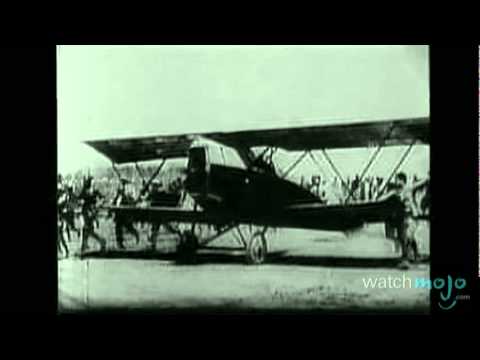
to World War one airplanes were mainly
used for photography and reconnaissance
missions and not as weapons of war to
make them viable tools they required
major revisions these range from the
creation of pusher biplanes where the
engine and propeller were located behind
the wing to Tractor biplanes which
featured these device
in front of the wing finally when it was
ensured that machine guns could steadily
be mounted air warfare became a reality
with the invention of fighter planes
soon after the onset of war planes
became devastating aerial bombers when
they began to feature two to four
engines in the period between the world
wars many important innovations took
place instead of wood planes were built
of aluminum and became much more
powerful as well airmail also became a
reality as did transcontinental flight
flight records were constantly broken
and the first round the world trip
occurred in 1924 world war ii firmly
established fixed-wing aircraft as a
decisive factor for military victory by
the time the smoke cleared over europe
humanity had developed jet and rocket
propulsion as well as radar technology
the importance of aircraft to warfare
only increased with the advent of the
nuclear bomb in 1945 a minor military
contractor named Boeing became the
largest aircraft manufacturer in the
world they developed new technologies
that allowed for pressurized cabins more
aerodynamic designs new metals larger
sizes and turbo jets capable of
supersonic speed by 1947 the sound
barrier was broken and regular
transoceanic flights became a reality
within two years Boeing introduced the
b-52 in the 1950s and this strategic
bomber was equipped with eight turbojet
engines intercontinental range and a
capacity of half a million pounds in
1963 a small jet aircraft called the
Learjet became a reality
six years later Boeing developed the
revolutionary 747 that wide-bodied
turbofan-powered commercial airliner
became the most successful model ever
created and it served as the foundation
for countless other models the 1970s saw
the arrival of the supersonic Concorde
jet and the Airbus leading up to the 90s
designers began adapting a flying wing
design and the use of composite metals
while this effectively made conventional
radar obsolete it was meant only for
military applications
this also spurred the creation of crafts
like Lockheed Martin’s f-117 stealth
fighter air travel has become the
fastest method of global transportation
and a major pillar of warfare disasters
like the Hindenburg acted as cautionary
tales but flight has advanced to the
point where it is now labeled as the
safest means available
dreamed of soaring through the sky
alongside the birds welcome to
watchmojo.com and today we’ll be taking
a look at the history of aviation man
has been building primitive flying
apparatuses since before the Common Era
however famed Italian inventor Leonardo
da Vinci is credited with designing
early ancestors of the airplane based on
the flight of birds including the
parachute and an early version of the
propeller 1783 was considered a
breakthrough year in aviation for
example hot air balloons became popular
in Europe with help from the Mogul care
brothers more significant advances came
at the end of the 19th century when
gliders became more well developed in
1848 John Stringfellow managed the first
powered flight by using a steam-powered
flying machine Lawrence Hargrave then
helped develop the rotary engine by
introducing the use of compressed air
also involved in the flight race with
Samuel Pierpont Langley who attempted
several unpiloted and piloted efforts
his aerodrome was later considered the
first machine capable of flight just
days after Langley gave up his attempts
the Wright brothers achieved a
breakthrough on December 17th 1903
Orville and Wilbur Wright managed the
first reputable instance of sustained
flight by a heavier than air vehicle
they called the Wright Flyer this first
flight travelled 120 feet in 12 seconds
within five years the rights had
lengthened their flight time to over an
hour unfortunately shortly thereafter
their experiments resulted in the first
instance of an airplane passenger death
due to a crash despite this setback
flight quickly became ubiquitous and its
use increased exponentially because of
its role as a military tool leading up
to World War one airplanes were mainly
used for photography and reconnaissance
missions and not as weapons of war to
make them viable tools they required
major revisions these range from the
creation of pusher biplanes where the
engine and propeller were located behind
the wing to Tractor biplanes which
featured these device
in front of the wing finally when it was
ensured that machine guns could steadily
be mounted air warfare became a reality
with the invention of fighter planes
soon after the onset of war planes
became devastating aerial bombers when
they began to feature two to four
engines in the period between the world
wars many important innovations took
place instead of wood planes were built
of aluminum and became much more
powerful as well airmail also became a
reality as did transcontinental flight
flight records were constantly broken
and the first round the world trip
occurred in 1924 world war ii firmly
established fixed-wing aircraft as a
decisive factor for military victory by
the time the smoke cleared over europe
humanity had developed jet and rocket
propulsion as well as radar technology
the importance of aircraft to warfare
only increased with the advent of the
nuclear bomb in 1945 a minor military
contractor named Boeing became the
largest aircraft manufacturer in the
world they developed new technologies
that allowed for pressurized cabins more
aerodynamic designs new metals larger
sizes and turbo jets capable of
supersonic speed by 1947 the sound
barrier was broken and regular
transoceanic flights became a reality
within two years Boeing introduced the
b-52 in the 1950s and this strategic
bomber was equipped with eight turbojet
engines intercontinental range and a
capacity of half a million pounds in
1963 a small jet aircraft called the
Learjet became a reality
six years later Boeing developed the
revolutionary 747 that wide-bodied
turbofan-powered commercial airliner
became the most successful model ever
created and it served as the foundation
for countless other models the 1970s saw
the arrival of the supersonic Concorde
jet and the Airbus leading up to the 90s
designers began adapting a flying wing
design and the use of composite metals
while this effectively made conventional
radar obsolete it was meant only for
military applications
this also spurred the creation of crafts
like Lockheed Martin’s f-117 stealth
fighter air travel has become the
fastest method of global transportation
and a major pillar of warfare disasters
like the Hindenburg acted as cautionary
tales but flight has advanced to the
point where it is now labeled as the
safest means available
Please follow and like us: