
[Music]
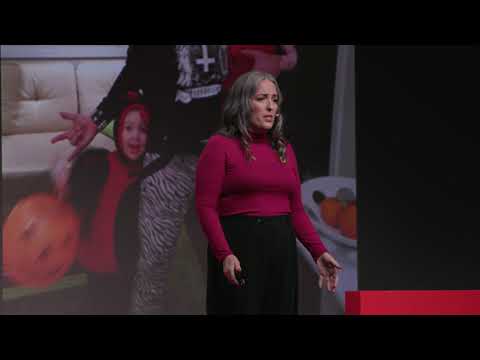
this is one of my favorite photos but in
full disclosure those are my kids so
clearly there’s a bit of mom bias going
on here and as a fashion girl by
profession I just love our outfits I
love how the patterns are mixing I love
how we’re coordinating but so subtly I
love the little shoes but what our
outfits don’t tell you is how we were
feeling that day I remember the anxiety
that was tearing my insides apart I
remember my hands were shaking like a
leaf
I remember the extra coat of waterproof
mascara I layered on that morning but
most of all what I remember is what my
brain was screaming at me it was
deafening and it was unrelenting it kept
screaming at me I can’t believe we are
about to go to his funeral I can’t
believe I’m about to bury my husband I
can’t believe he’s dead in August 2016 a
week before this photo was taken
my husband died unexpectedly and I was
about to get in a car with those two
little girls aged two and five and we
were about to go to his funeral it’s a
beautiful family photo but it breaks my
let me introduce you this is my husband
this is Kevin he was one of a kind
Kevin had his Masters in Social Work and
he had spent almost a decade working in
long-term care with senior citizens and
he’d spent a shorter stint working in
palliative care in a hospital and Kevin
always said that the best part of his
job was that he got to talk to old
people all day long he said he just
loved hearing the stories they had to
share Kevin was an amazing father I
remember when our oldest daughter was
four she was invited to a Halloween
themed birthday party and all the kids
were encouraged to wear their costumes
and the grown-ups were too but of course
none of us did except for Kevin and the
best part is the party was in a public
park so there was a bunch of people in
the park that didn’t know Kevin was
wearing
costume and he was dressed as a heavy
metal rocker at that the zebra print
leggings is like mullet wig it was a
true testament to the love of his
children because Kevin actually hated
Halloween and he hated dressing up Kevin
had a love of all things political and I
still can’t believe that in the last two
years he’s missed so much in politics in
Canada in the u.s. Kevin loved tattoos
and he was covered in them he loves the
art form so much he had one on his leg
that was simply the letters WD tsf and
he would grin like a Cheshire Cat when
someone would say Kevin what does that
stand for
and he wouldn’t answer he’d just laugh
and smirk and they’d say again Kevin
what does that stand for and he still
wouldn’t answer and he’d laugh and then
they didn’t said they asked again what
does that stand for and then that would
dawn on them o WD TS f heaven his
silliness and humor or what got me
through many a day he was my best friend
and he was one of the best things that
ever happened to me
a week before that family photo was
taken my family was ripped apart
unexpectedly those little girls there
now fatherless I had 16 years with the
love of my life but I’m now facing
40-plus years without him but what I
haven’t shared is how Kevin died and the
truth is my husband was a heroin addict
for seven of our 16 years together he
shot up heroin alone in our basement and
he died of an accidental overdose at
home to the outside world we were this
beautiful family a young couple
University educated in love with two
beautiful young daughters but on the
inside we were a family ripped apart by
mental health and substance use disorder
suffocated by shame and stigma we led a
now I want to ask you a question when I
told you that Kevin died of a heroin
overdose what was the flickering thought
that may have passed through your mind
my stomach tightens every time I say it
I say it bravely I say it confidently
but my insides turn over and I actively
worked to control the red flesh of shame
that is desperate to overtake my face
when I tell the world my husband was
addicted to heroin because in the
unspoken hierarchy of death overdose
it’s pretty well at the bottom I will
tell you at a party I am a huge buzzkill
someone will find out that my husband
has passed away and they’ll say very
kindly very sympathetically oh I’m still
sorry for your loss how did he die and
then I’ll look at them and I’ll say he
died of a heroin overdose that pretty
much shuts the conversation down right
there as a look of horror passes over
their face that cloud of judgment that
may have flickered through your mind
that’s what I want a battle that feeling
of shame that I feel when I tell the
world my husband died of a heroin
overdose that’s one of what I want to
eliminate because it’s the same shame
that is suffocating those who are
struggling today with substance use
disorder that shame keeps their
suffering in silence it keeps it in the
shadows and prevents them from reaching
out from help I know because Kevin and I
lived it in 2004 Kevin was diagnosed
with generalized anxiety disorder and
the stigma that surrounded his mental
health disorder it most certainly
silenced him he shared his struggles
with very few people but he wanted to
feel better he wanted to feel different
he wanted to feel something he wanted to
feel normal his mental health disorder
was most certainly a driving factor in
his substance use but never in a million
years was heroin something I expected
him to try heroin is for junkies on the
street help people like us but how naive
I was I found out about his heroin use
almost a decade ago
he overdosed at home and I found him he
was unconscious he was barely breathing
he was blue in the face he was nearly
dead i called 9-1-1 and the paramedics
revived him but that traumatic night
that changed both of us for the rest of
our lives
kevin fought tooth and nail for the next
seven years to resist the power that
heroin had over him and he struggled he
struggled with stints in inpatient rehab
outpatient rehab he lived in a sober
living facility and eventually living
back with me and eventually his
Narcotics Anonymous meetings in his
recovery work it started to stick and he
got a year in recovery and then he got
two years and then he relapsed and then
he got another year in recovery and then
he relapsed again over and over and over
again the cycle repeated itself
I remember after one relapse we were
sitting in our family room at home
Kevin’s head in my lap and he was
sobbing he would say sobs I hate this I
don’t want this I don’t want to do this
to you I don’t want to die after a first
few relapses I began to hide them from
my inner circle as well I was so tired
and I was so ashamed I was so tired of
explaining the disease of addiction and
I was so tired of defending Kevin’s
actions I remember one night having to
tell my parents that yet again my
husband had screwed up and relapsed with
shame flushing my face red I told my
parents and my dad looked at me with
such anger and he yelled get rid of him
but I couldn’t
Kevin was fighting tooth and nail defeat
to bite to fight this if he had cancer
and the cancer kept coming back I
wouldn’t leave him in my mind this was
often I would stumble across a poorly
hidden needle when I was doing our
laundry or looking for our Christmas
decorations
and each discovery was a knife to my
heart because it was a realization that
yes Kevin was still struggling and yes
he was still deceiving me it was a
realization that yes death could still
be on our doorstep over 400 people
attended Kevin’s funeral it was the most
the funeral home had ever had they told
me but sadly in that huge crowd only a
handful of people knew of Kevin’s
addiction and shockwaves reverberated
through the crowd when I pulled back the
curtain on his life and shared how he
died friends who had known Kevin for 30
years were dumbfounded to find out how
much about his life they didn’t know
guilt and helplessness consumed many as
they grappled with his newfound
knowledge of their friends double life
tears were shed and many friends cried
to me why didn’t he tell me why didn’t
he reach out maybe I could have helped
him I myself have spent many a night
wondering the same thing
if Kevin hadn’t been ashamed would he
have reached out more if Kevin hadn’t
been ashamed what do you have leaned on
his fans of friends and family more and
if Kevin hadn’t been ashamed
would he have would he still be alive
Kevin hid his youth and he hid it
because he was ashamed and in that shame
it caused him to isolate himself he
pulled back from his friends his family
his sponsor his recovery work and in
that isolation the thoughts that told
him he could use just one more time the
thoughts that told him he could return
to the drug they got louder and louder
now I want you to think of a time a time
when you have felt shame when you have
felt something that was so big and so
scary you couldn’t say it out loud now
imagine feeling that feeling every
single day how was Kevin
and that’s anyone who’s struggling with
substance use they want to share but
they can’t the shame and stigma keeps
their suffering in silence it keeps
their suffering in the shadows and it’s
hard to find your way out of that
darkness when there’s no one there to
guide you to the light in 2016 in Canada
almost 3,000 people died from opioid
overdose Kevin was one of those people
in 2017 almost 4,000 people died from
opioid overdose
that’s almost 1/3 more than the previous
year and that increase is horrifying
and currently in Canada today 11 people
will die each day from opioid overdose
now kevin was addicted to heroin but
that did not slowly define him he was a
person with a heart a story a life and
an addiction and like Kevin the 11
people who will die today
are also people not just statistics each
overdose is a person someone’s friend
someone’s child someone’s parent
someone’s spouse now you might be
thinking this isn’t something that
affects me but that’s simply not true
almost one in five Canadians will
struggle with substance use at some
point in their life so that means that
right now 240 people in this room might
be struggling with substance use and
perhaps in silence and with shame most
likely there is someone in your life
whether you know it or not who’s
struggling and imagine what it could be
like if that struggling didn’t have to
be in silence
shame and stigma are contributing to
today’s opioid overdose crisis empathy
and compassion can replace shame and
stigma empathy and compassion can help
save a life now let’s talk about a few
small yet powerful things you can do to
get us there your empathy and your
compassion can help save a life the
first thing you can do is you can change
the language that you use I’m gonna
share with you a quote and it’s by a man
whose name is dawn Coe hiss and I love
this quote it goes like this words are
important if you want to care for
something we call it a flower if you
want to kill something
we call it a weed and I love this quote
it just so eloquently sums up what it
does to a person when we label them in
fact I did it myself earlier when I
refer to my husband as a heroin addict
and for many years I’ve been quite open
about his struggles but I’ve always
called him an addict and it’s only been
recently that I realized how wrong this
is
by calling him an addict i reduced Kevin
to only his drug use I took Kevin out of
the equation I took his humor his
compassion his intelligence and I took
all of that out of the equation
I can’t bring Kevin back but I can
change how I refer to him and you can
change the words you use you can say
someone who uses drugs instead of an
addict you can say someone with a
substance use disorder instead of a
junkie you can say drug use instead of
drug abuse and you can say recovery
instead of being clean changing the
words is a small yet powerful step we
can take and reducing stigma it
literally costs you nothing but it’s
priceless to those who are struggling
because it treats them with dignity and
respect the second thing you can do is
you can get Anna Locke’s own kit now
treating substance use disorder it’s not
a simple straight line from addict
to saved it’s a complicated journey of
one step forward two steps back two
steps forward one step back the reality
is people can and do relapse
Kevon relapse so many times someone can
overdose and die while on the road to
recovery Kevin did and a naloxone kit is
an important tool it can quickly and
easily reverse an overdose should it
occur someone cannot access treatment
services or rehabilitation centers if
they’ve overdosed and died now I will
admit something I’ve wanted to get
analogue some kit for a long time but
every time I’ve gone to my pharmacy
because they’re available for free at a
lot of pharmacies I’ve gone and there’s
a little sign there that tells me they
have them so I like start to walk up and
then I freak out and I think what if the
pharmacist judges me and thinks I’m a
junkie what if this lady beside me in
line what if she hears my question and
she judges me but that’s precisely the
point the more we bring this out into
the open and simply treat Anna Locke’s
own kit as an important part of a
first-aid kit and an important tool in
saving lives while someone works towards
recovery the more we can reduce the
stigma surrounding drug use so the good
news is I got my kit I went last week
and I got it and guess what this guy did
not fall in all that happened was I got
my kit I got a brief tutorial on how to
use it and that was it but more
importantly I took a big step in
reducing the stigma that surrounds drug
use and the final thing you can do is
you can tell Kevin’s story one of
Kevin’s best friends from university as
a high school teacher and recently she
arrived in class and she was really
upset over Kevin so she abandoned her
lesson plan and instead she shared the
story of Kevin with her students she
told him about her friend and his
struggle with drug use and she told him
how he died because of his drug use and
she cried as she talked
and her students received her grief with
such open arms and they began to talk
one student who’d been causing a lot of
disruptions in class she shared how her
sister was struggling with drug use and
the effect it was having on their family
and it quickly became clear to everyone
in that room that her disruptions in
class were actually due to her really
tough family life
another student shared her brother
struggle with drug use and as they went
around the room all of a sudden every
student wanted to share my friend said
it was really hard and really scary to
share her heart with a bunch of 15 year
olds but because she did those kids were
able to unload some of that really heavy
weight they were carrying and those kids
that didn’t understand each other before
they walked in that room they began to
break down that wall and build
connection to one another and build
empathy and compassion for one another
she said they left that room more
connected more empathetic and more
caring so leave here today and tell
Kevin’s story tell someone in your life
how you heard a story about a man a man
who loved his wife loved his children
and loved his job and tell them how he
was also sick and tell them how he was a
drug user and tell them that he lost his
life to his illness and tell them that
you learned he was still deserving of
love and compassion and empathy
despite his drug use because the more we
talk about substance use disorders the
more we can reduce the stigma and shame
that is associated and the more the
stigma and shame is reduced the more our
empathy and compassion can grow and it
will be easier for those who are
suffering to speak up and access help we
can save lives
let Kevin’s story help us get there
thank you [Applause]
Please follow and like us: