
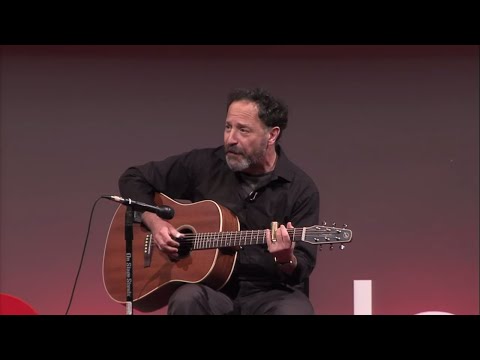
right well woody guthrie was a childhood
hero of mine and I’ve spent much of my
adult life researching and writing about
him and to be honest with you the more
that I’ve learned about him the less of
a hero he’s become to me but more an
object of simple admiration admiration
for an admittedly flawed individual
determined to acknowledge his mistakes
whenever he could and to make amends for
them to to make reparation to make good
and I found this to be in its own way at
least as inspiring as heroism now the
example that I want to focus on today is
Woody Guthrie’s racism he was born into
a racist culture and like many white
kids he was raised unconsciously into a
racist culture and as a racist and
during his his young manhood he wrote
and said and sang some horribly racist
things things that can’t simply be
airbrushed out of his biography but
through a slow and steady and sometimes
painful process of Education of
enlightenment he learned to take his own
racism on board and ultimately to fight
it down Woody Guthrie proved by his own
example that racists are not born but
they’re made and that they can be unmade
now I think we should all care about
this because this whole issue of making
reparation still seems to be such a
fraught one you know never apologize
that seems to be the mantra for so many
governments and nations as well as
individuals you know just think of the
ongoing slavery reparations debate but
psychologists Melanie Klein and others I
think have shown beyond doubt that the
failure or
the refusal to make reparation means
imprisoning oneself in a constant
unhealthy and potentially crippling
state of denial and that certainly goes
for nations and governments as well as
individuals now there are many ways of
making reparation besides paying money
in Woody Guthrie’s case it meant openly
acknowledging his mistakes apologizing
for them and through his songwriting and
other efforts doing all that he could to
repair any damage done and I’m convinced
that by the end of his life what he did
arrived on the side of the angels in
this regard
still with feet of clay of course but
all the more inspiring for it so for the
next few minutes I’m going to ask you to
put yourselves in Woody’s shoes okay
imagine that you were born somewhere
near here save Okemah Oklahoma in 1912
right and that’s where you grew up well
at that time politics in your region in
your state would have been dominated for
the most part by the Ku Klux Klan one of
whose most ardent champions was your own
father
Charlie Guthrie I mean there’s no
documentary evidence that he was ever a
Klan member but he certainly supported
them and there is some anecdotal
evidence that he may have accompanied
them on some of their night raids and
that he may and I stress may even have
participated in the lynching of Laura
and Lawrence Nelson from the Canadian
River Bridge just outside of Okemah the
year before your birth and we know that
this affected you very deeply because
you later wrote a song about it
as I walk down that old dog town the
town where I was born
I heard the saddest lonesome mole that I
never heard before my hair it trembled
at the roof cold chills run down my
spine as I drew near that jailhouse I
heard this deathly cry
don’t kill the baby in my son
Oh – my big baby and I said you can
stretch my neck from that old River
Chris don’t kill my baby that song came
much further down the line though when
you are still in your 20s you fled the
Dust Bowl and you landed up in Los
Angeles where you continue to prefer to
black people in the most derogatory of
terms you got a radio gig and one day
you decided that you would play over the
airwaves
an old minstrel song with the title
corrupted by that despicable word
beginning with n you announced it and
you played it and then you got an
outraged letter from an audience member
and this shook you to the core so much
so that you read it out over the air the
next day the writer politely reminded
you of the despicable words you used and
then he said this I’m a negro a young
Negro in college and I certainly
resented your remark nobody of any
intelligence uses that word over the
radio so okay you got slapped down but
most importantly you learn from it and
you apologized as you later said I
apologize to the Negro people for those
fraud things that I let slip out the
corners of my mouth then you began to
listen to and learn from friends who
were maybe a little bit more enlightened
than you at that time like your good
friend the actor will gear with whom you
performed on picket lines up and down
California he of course would go on
later to play grandpa Walton on the
Waltons on TV and as your daughter Nora
says you know I don’t think my dad ever
even heard the words that’s racism until
he heard him from will gear well your
journey of enlightenment continued as
you follow
your good friend will gear from
California to the New York island and in
New York you began to listen to and sing
with and learn from african-american
musicians who also became your good
friends and mentors folks like Josh
white Sonny Terry and brownie McGhee and
of course Lead Belly during the war you
joined the Merchant Marines and you
happily broke the rules by strolling
into the black quarters to sing with the
troops on ships that had been leased by
a still segregated US Army still Jim
Crow and after the war you took up the
cause of black veterans returning from
battle to face the indignities of Jim
Crow at home in the South there was
Isaac Woodard a veteran of the Pacific
Wars beaten blind by police in South
Carolina while wearing his army uniform
for demanding to use a public washroom
that had been marked white only listen
mr. policeman I started to explain
I didn’t cause no trouble and I didn’t
raise no cane well he hit me with his
billy club and he cursed me up and down
he said shut up you black bastard and it
run me down into the town as we walked
along the sidewalk my right arm he did
twist I knew he wanted me to fight back
but I never did resist
have you had your army discharged
I told him yes I had well then he pasted
me without a loaded stick down across my
head so I grabbed that stick and we had
a little run and we had a little wrestle
til another car run up with a gun and
jumped in to the battle he said
you don’t drop that stick black boy to
me that’s dropping you so I figured to
drop that loaded stick was the best
thing that I could do and they beat me
about the headed face and they left a
bloody trail all down along the sidewalk
to the iron door of the jail they
knocked me down upon the ground and they
poked me in the eyes so when I awoke
next morning I found that my eyes was
blind
they dragged me to the courtroom I could
not see the judge but he finds me $50
now you’ve heard my story there’s just
one thing that I can’t see how you could
treat a human being like they have
treated me I thought I’d fought on those
islands to get rid of all their kind but
I can see the fight much plainer now
that I am lying and in the Jim Crow
North there were two brothers Charles
and Alphonse of Ferguson one of them a
veteran both of them unarmed gunned down
by police outside a coffee shop that had
refused them service in Freeport Long
Island New York
you sang about their funeral and about
three fatherless children this morning
two hearses rolled out towards the
graveyard
one hers had Alfonso the other two
Charles Charles’s wife Minnie brought
her three little children and friends
and relations in old borrow car
[Music]
nobody has told these three little boys
yet everybody rides crying and shaking
their heads nobody knows quite how to
tell these three children that Jim Crow
who will tell these three boys that
their daddy is gone he helped with the
fascists and the Nazis to death who will
tell these three sons that it was Jim
Crow coffee that killed several thousand
and you began to write ballad
celebrating your heroes from
african-american history like the
freedom fighter Harriet Tubman when John
Brown hit them at Harpers Ferry my men
were fighting right out inside and when
John Brown swung upon the gallows it was
then oh my heaven cried
[Music]
now give the black man guns give the
black man powder to Abe Lincoln this I
said for you holy cripple the snake of
slavery but we got to fight to kill it
but you did more than write songs you
literally put your life on the line to
stand in solidarity with the victims of
race hatred and against American fascism
you were there on the ground during the
bloody Peekskill riots of 1949 in New
York State you stood shoulder to
shoulder with Paul Robeson Pete Seeger
and up to 30,000 others facing the
onslaught of racist mobs Klansmen and
plainclothes and police in uniform you
saw the rioters smashing car windows
dragging peaceful concert goers from
their cars to beat them up you stood on
a bus that was being attacked you were
leading the frightened people and
defiant songs of protest we shall not be
moved we shall overcome and then you
went home and you sang about everything
you’d seen Paul Robeson he’s the man who
faced down the Ku Klux Klan over Pete
scales golf and grounds his words came
Seldon all around him there to jump and
clap and cheer I said the best I had my
30,000
well the clansmen leaders sent home Paul
would lose his head when 35,000 vets
broke up his concert but less than four
thousand came to side in with a clan and
around Paul’s lonesome oh my 30,000
[Music]
you got home from Peekskill and you
turned to fight against the racism on
your own doorstep
after you and your family had moved into
the Beach Haven apartment complex in
Brooklyn you learned that your landlord
won Fred C Trump was actively doing all
he could to keep black people from
renting there and so you honored him
with a rewriting of your celebrated
dustbowl ballad I ain’t got no home
beach haven ain’t my home
I just can’t pay this rent my money is
down the drain and my soul is badly bent
Beach Haven that your heaven where no
black ones come to Rome no no no man
Trump Beach Haven ain’t my home
and a cross beach havens grass I see my
brethren who pass trying to hide their
misery beyond the window glass we’re all
crazy fools as long as race hate rules
oh no no old man trove DJ man ate my hoe
no no no old man Trump beat a man ain’t
my you wrote those words on the 3rd of
May 1952 in exactly four months later
you were diagnosed with the Huntington’s
disease that finally took your life in
October of 1967 but you left us with an
explicit call to action fight racism
fight fascism wherever you see it so
yours was truly a remarkable journey of
awakening of acknowledgment and of
repair and you certainly did wind up on
the side of the angels at the end of it
all so my own modest call to action is
this let’s set hero-worship aside and
instead let’s all take inspiration from
Woody Guthrie’s example not only with
regard to racism but with regard to all
aspects of life that might be fit for
reparation let us all constantly reflect
acknowledge and repair so that by the
end of our lives we can join Woody on
the side of the Angels thank you very
much
[Applause] [Music]