
dance movement is powerful ally Goulding
choreographer of 30 years was expected
to deliver this talk but I’ve taken her
place
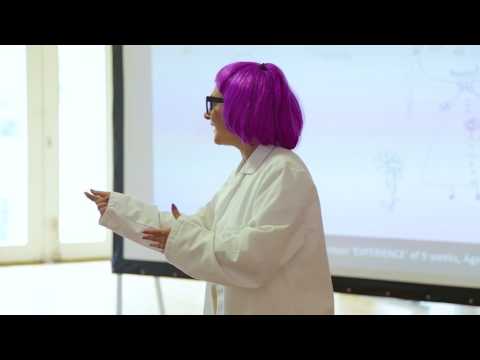
my name is Maile Nation and I’m adult
scientists every scientist needs a lab
assistant and he’s mine
yes I do have a skeleton in my closet
and his name is Marc question because
he’s got the answers except as you can
see his body’s been a bit neglected
similar to the way it is in our current
education system so I’m going to be
calling on your help today to discover
why dance movement works for learning
together we’ll improvise our way through
the introduction don’t stop with storm
of the discussion and come to a
choreographed conclusion so let’s begin
with a bit of physiology the study of
body systems I invite you to stand up
please and move with me because we know
that when we do things like this
feel free to improvise I want you to
experience what the moving is like and
it’s me
and if you’re feeling especially
energetic you could try something like
this excellent thank you very much for
joining in with enough intensity and
frequency we become healthier
individuals a science informed us that
through a number of complex
physiological processes aerobic activity
improves brain function of both in the
short and in the long term it may
surprise you that when physical activity
is increased in the school curriculum
academic attainment improves so just by
getting you up and moving
I can harness your attention and improve
your memory my friend mark here is a
moving miracle of biomechanics the study
of body physics his bare bones must
interact with the forces of gravity
along with some essential feedback
systems that literally help us all make
sense of the world we all take this
knowledge for granted but we have to
move to know it dances spin balance work
in close harmony with a partner with
such astonishing skill it can sometimes
defy human capability elite dancers can
perform these feats with their eyes
virtually closed in a darkened
auditorium or a blindingly bright
lighting state
for a practical experiment I call this
the et I invite you to stand up please
and I’d like you to turn around place
your left foot directly in front of your
right heel to toe and cross your arms
over your chest no the other way and
then close your eyes now you may be
fighting this difficult in which case
open your eyes momentarily and holds up
your index finger like this and I’d like
you to touch home with the neighbor you
can say hello at the same time hello
hello keep your fingertips together and
close your eyes again mmm now you may be
finding this easier thank you very much
for joining me I take a seat and it’s
not because your index fingers were
holding up your entire body weight but
simply that your brain was grateful for
the extra feedback one of the reasons
why ballet dancers train at the bar not
only do we store these essential
experiences in our brain but they
actually help to build it because the
brain is neuro plastic which means it
shapes and changes in response to new
situations Dunn is arguably one of the
most complex movement systems we ever
learn and there are several areas in the
brain responsible for movement not just
one so if you have dance experience your
brain connections will be different
excited to explore my passion for
neuroscience as an underpinning for my
master’s thesis I approached the course
director and said I’d like to create a
program using dance scientifically to
help children learn and she said you
can’t do that because there’s no module
for it and there’s no research I thought
the point of research was to notice the
gap and address the need and there
clearly is a need we have a childhood
obesity epidemic in the Western world as
well as looking to diet our children
simply aren’t moving enough and that is
just the visible tip of a much bigger
iceberg in modern urban 21st century
living we might need to change our
perception of what a disadvantaged child
might look like I bet you could all
right with your eyes closed because
you’ve had lots of practice but could
you still do it if you’d mainly used an
iPad research findings are alarming an
increasing number of children are
arriving at school without the necessary
background of movement experiences to
enable them to be efficient learners and
to access the curriculum currently that
figure is estimated to be actually I’m
not going to tell you
instead we’re gonna dance the answer so
mark question is what’s the percentage
of children arriving at school without
the necessary background of movement
experiences if you think the answer is
40 percent or under I’d like you to do
this please and you can do this standing
or sitting in your seats as you like if
you think the answer is 40 to 70% I’d
like you to do this plea and if you
think the answer is 70% or above I’d
like you to do this plea are you ready
dance your answer so just to remind you
what’s the percentage of children
arriving at school affected by this
issue 40% or under 40 to 70% 70% or
above and I’d like you to keep dancing
please because while you are everybody
is engaged in the learning plus the
dance movement is anchoring your
thoughts although I can easily see who
can follow the instructions and how
you’re dancing so that wasn’t it that’s
really useful information for a teacher
okay we’re done time for the answer if
you were doing the shorty George you
look hip but the answers to learn if you
were doing the crisscross hand eye you’d
be right about a decade ago so that
leaves the hi guys and the answer is
frightening me hi in fact it’s much
higher than 70% a current research study
indicates that figure is 90% 90% of
children are arriving at school not able
to reach their full potential and
teachers are noticing these difficulties
in the classroom well he worked wouldn’t
you
so I went ahead and I did the study and
my supervisor was completely right there
was no don’t specific research so I had
to be creative and in reaching out I
found myself supported by leading
pioneers in the fields of educational
theory and physical activity research
Mike Cox ala advocate of a kinesthetic
classroom has become a friend since that
time borrowing from him teaching through
movements is only limited by your
imagination so I brought all this
together with Ally Goulding’s 30 years
experience as the choreographer and
developed a program which I called
developmental Dolf movements and I took
it into two primary schools initially as
a pilot for a term I used the validated
measurement tool and easy to administer
drawing exercise to gather the data and
after just nine weeks the results came
back statistically significant the class
average in developmental maturity
increased by 7% with children with
special educational needs and that’s
about 20% of every mainstream classroom
by the way benefiting even more
I now have hundreds of these drawings
and as well as the actual school each
pre and post pair tell their own story
because as a child’s embodied
understanding and knowledge of
themselves improves so does their
ability to represent it drawing what
they know no matter what the baseline
but simply a child with an
age-appropriate all still improves what
I particularly like about this example
if you look closely is how this young
person
listening skills have apparently doubled
and their perception and headspace have
grown so much that they’re off the page
and this example goes from an
unrecognizable figure to a bold human
representation I regularly present at
conferences and just recently Baroness
Collins said something that I think
really resonant with this work when we
get it right for those with learning
difficulties we get it right for
everybody because this learning strategy
is beneficial for all children I’d like
to share a narrative with you
keyonna a child with profound autism and
additional needs had one-to-one support
and was hardly ever seen to integrate
with the rest of the class her teacher
said she’s not like that in class she’s
not part of the group she tends to do
her own thing and she’s not as focused
as she was in those movements session
this is a genuine model of inclusion
we’re borrowing from Tori Dunlap special
doesn’t have to be a euphemism for
separate because everybody hand on and
we need an inclusive classroom if we’re
going to have an inclusive society the
work is continuing to have a significant
impact on children who are on the
autistic spectrum Greenwich University
are leading on a new study my US
colleague Joe and Laura world-renowned
autism expert says it best
it takes two sides of the brain to dance
we know that the two hemispheres have
different functions autism is the
neurological brain difference there are
particular deficits especially in the
areas of speech and language and social
interaction and the two hemispheres
don’t communicate terribly effectively
none can help sort that out but I don’t
just want you to take my word for it and
this time it’s your turn to do the
choreography so I’d like you to stand up
one more time
we’re going to dance in the style of
Robert ho hands waterless method of
swimming instruction so I’d like you to
pick a swimming stroke please perhaps
your favourites and perform it dry side
off you go
you don’t need to copy me you can choose
your own fabulous excellent okay and now
choose another maybe one you don’t do so
often and perform a please excellent
it’s all about social interaction you
connect with someone okay all right now
for a bit of synchronized swimming
I’d like you to perform both strokes
simultaneously one with your right and
one with your left off you go and
alternate sides she do it giggles from
the audience you’re doing great
really good for non-swimmers this okay
and thank you very much you may take a
seat did you have to think about that
because the right side of the brain
controls the left side of the body and
the left side of the brain controls the
right side of the body and when we do
particular patterns and sequences with
rehearsed repetition pattern sequences
rehearsed repetition that sounds like
dancing to me we get amazing results and
it’s not so far-fetched because
physiotherapists use similar methods to
rehabilitate people who suffered a
stroke but this is a learning tool and
it’s primitive and fun and engaging and
motivating
and a little bit theatrical movement
works because the movement wires neurons
that fire together wire together and
there’s a name for that process by which
neural networks shape themselves
build and strengthen if you want to know
what it is it’s called mine and that’s
me I’d like to finish with a little
story Sir Ken Robinson international
educator in his wonderful TED talk about
creativity in schools mentioned the
little girl who was finding school very
difficult instead of being given
medication for ADHD she was given the
chance to dance she went on to become
Gillian Lynne world-famous choreographer
I have a similar story about a little
boy who was finding school very
difficult he was given the chance to
dance in the pilot program he’s probably
never going to become a world-famous
choreographer or even a dancer but his
life was changed positively we know that
the neural connectivity in ADHD and
autism looked quite similar
his teacher described him he was
agitated he couldn’t sit still for more
than 30 seconds
probably I can’t completely correlate
the change in him with the movement work
sessions but he’s been in reception a
whole year and it’s only now in the past
few weeks but he’s been able to sit and
use a pencil and do some nice activity
I’m delighted to be standing here
talking to you about the importance of
movement and dance because it raises a
when but what really makes the
difference is in the doing it’s likely
in the future we’ve never needed a very
different kind of knowledge and
curriculum in an education system that
inevitably is going to continue to
embrace advances in technology but if
we’re going to continue to embrace
advances in neuroscience we’re going to
also need many more concrete flesh and
bone experiences from inspiring and
creative educators that really
understand the true power of the body as
a source of knowledge I think we should
listen to the king when he talks about
the importance of creativity and valuing
dance for its own sake but when we start
to understand the science of dance and
really know how to apply it with
intention we could start to imagine that
dance could have a transformative effect
on our education system you’ve just
experienced a few fleeting moments of an
embodied learning approach imagine now
if you were led to learn through a
sustained sequence of dances carefully
crafted to embrace the gaps in your
movement experience and as well as
physical mastery you would improve your
neural connectivity and your conceptual
understanding and your speech and
language communication and social
interaction skills
imagine how much you’d grow across a
whole year that is developmental dance
movement I’ve been my knee
because the art science interface is fun
and creative just as I think our
children’s learning experiences can and
should be together mark and I have asked
for your pool embodied involvement to
draw on your filthy to talk and you
thought to anchor it to furnish your
attention to connect with yourself the
environment and with others and to
create new pathways of understanding
that’s why movement works alone
thanks for Dancing with me
[Applause]
Please follow and like us: