
the kitchen as she prepared our meals
and I would grab as many pots and pans
as I could get ahold of spread them out
around the floor around me grab a few
spoons and start banging away at those
pots and pans I’m not a musician I
actually quit piano as soon as my
parents gave me the chance to so why was
I engaging in these kitchen
drumming activities it’s because I was
born in engineering I think you were – I
actually think we’re all born engineers
in that kitchen experience it wasn’t
just the early 1990s version of the game
rock band it was an experiment I wanted
to know how many different loud sounds I
could make I wanted to know why the
wooden spoon made a different sound than
the metal one I was asking questions I
was creating hypotheses I was conducting
research and drawing conclusions just as
a trained engineer scientists would my
sister was also born an engineer she
would go into stores and start
rearranging things on the shelves
because she hypothesized that if
products were placed in certain ways the
customers would have a better buying
experience and they would be more likely
to return as customers she was what we
would call optimizing the purchasing
process she was studying and practicing
industrial engineering without a degree
so where does that
why don’t we all become engineers what
where does that wiring fall apart I
believe that it’s it’s our fault because
most kids that caused a ruckus in the
kitchen or touch things in the store
would be told to stop when they ask
their favorite question as a toddler
which is why why why why this why that
they’re told because I said so or
because that’s the way the world is or
because
just stop asking there’s not that grid
answer for that question in math class
why would I ever need to use this again
in my life it’s because well you need to
pass my class and move on to geometry or
because I’m the teacher and I assign the
homework rate so we’re stopping our
young innovators from exploring that
curiosity at a very young age
we’re hindering our ability to solve
some of the greatest challenges that
will face in the future because we’re
stopping our kids at that very important
first step of the engineering design
process
and as they lose that passion as they
keep being told that the world is the
way that it is they don’t see that
connection between their math and
science classes and how they can form
and shape the world so at a very young
age they lose that passion and we lose
that connection to them so I want us to
think of stem as another language as a
kid as a young child it is normal and
oftentimes easy to develop an
understanding of multiple languages as
adults we think it would be pretty cool
to know another language and think it
would be beneficial to be multilingual
but a couple things happen one we don’t
have the foundation to we don’t see
strong enough incentive or reward for
learning that second language and three
we usually go back to an environment
where only our native language is
required and oftentimes only our native
language is celebrated our youth have a
tremendous capacity for innovation but
they go through the same three steps one
they don’t have the foundation in math
or they lose a passion for it way too
early
oftentimes as early as elementary school
– they don’t see a strong connection
between their math and science classes
and a rewarding career in stem in a
product or industry that they’re
passionate about and three even if they
do have an exciting experience with them
they often go back into an environment
or a culture where
it’s not celebrated and where they don’t
have the opportunity because they’re
told that it’s okay to not be a math
person and they lose that foundation
early on we need to encourage our young
innovators to ask that question why we
need to empower them in those situations
and challenge them to look at the world
as something that’s moldable something
that they can shape and we should
challenge them to look and think of
different ways to make the world a
better place so the next time you get
that question are we there yet that
famous question are we there yet turn it
into a math problem it takes 45 minutes
to get to Grandma’s house we’ve been on
the road for an entire two minutes
how many minutes are left until we get
to Grandma’s house one of two things
will happen either the next time they
have that question they won’t ask cause
last time you made them do math homework
or two hopefully they’ll learn to solve
that problem and they’ll calculate it
themselves and as you get older and
continue to challenge them in those ways
they’ll develop an understanding of more
complex problems and in 28 to 25 years
they’ll make a whole lot of money
working for NASA calculating the amount
of time it would take for our spacecraft
to reach a planet that we don’t even
know exists yet and so we need to
encourage that curiosity because our
kids are just engineers and scientists
that don’t have the scientific
vocabulary yet but just as I was asking
questions about the sounds that my pots
and pan made there’s a trained engineer
scientist somewhere in the world
conducting very similar experiments as
the ones that I conducted in my kitchen
laboratory they’re asking questions like
how are the acoustics impacted by a
function of material type or how are
wavelengths created and how do they
combine interact we’re asking very
similar questions with different types
of vocabulary but we’re both acoustics
engineers regardless of the age and so
we need to find more of those fun and
engaging
creating opportunities to engage our
students and ask them to solve those
problems themselves guide them to the
answers to their questions with
questions of their own so that they
understand when they face problems one
that that’s something that they can
solve and two that they need to start
asking those questions and developing
the skills and math and science to be
able to solve those problems I like to
do that by connecting examples of
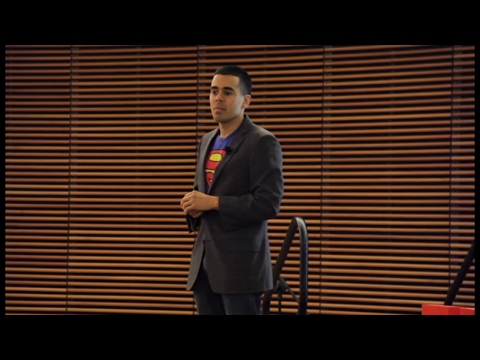
superheroes so most superheroes are
scientists or engineers and I believe
that most science and engineers are also
superheroes and should be viewed that
way Batman uses science and technology
to solve the problem that he had in his
environment and our kids should think of
themselves as being able to use their
superpowers of math and science to solve
problems that they face in their daily
lives so every time I speak to students
I try to grab their attention and their
excitement with superheroes something
that’s relevant to them something that
they can relate to and get excited by I
show them the math and science behind
those superheroes that may not always be
so obvious and then help them bring it
back to real life by drawing connections
to how those technologies could possibly
make an impact in real in our real-life
situation one of my favorite examples is
the Iron Man suit I was talking to a
group of students about superheroes and
we went into Ironman and I asked them
what’s a real-life situation where we
could use the Iron Man suit technology
to make the world a better place and the
student said he raised his hand he was
about six or seven years old he raised
his hand high and said I want the Iron
Man suit for my grandma and so I thought
to myself I should probably go warn
grandma that her grandson wants to strap
a rocket to her but I decided to go with
and I asked him well you know why do you
want daring man suit for Grandma how
would that make her life better and he
goes well my grandma can’t really move
around that much anymore so she can’t
play outside with me that much was the
cutest example of engineering I’ve ever
heard in my life
and so what the child told me was that I
want Ironman suit for Grandma but in
engineering terms what he was telling me
was that I want to develop an actual
skeleton that will make the world a
better place because it’s going to
provide mobility solutions to the
elderly and those who may be disabled
and so if we continue to encourage that
young man and we show him the math and
science that will help him solve the
problem that’s interesting to him in a
cool and fun way that will make his
grandmother’s life in his life better in
20 to 25 years the world will be a
better place because he will have
created mobility solutions for millions
of elderly and disabled people there’s
so many problems just like this one that
we face that we just shouldn’t have to
face and if we think differently about
how we approach stem we can solve that
problem because hundreds of millions of
dollars in a global effort across the
world to get more students into the STEM
careers are being based on the idea that
we need to get kids excited about stem
and I’m challenging us to think
differently and to focus our efforts on
keeping kids excited about stem they’re
already asking questions they’re already
curious and we’re stopping them before
they even have the chance to make the
impact that they want to and so these
problems that are everyday problems that
we have just accepted can be solved by
these students who are young and curious
and they haven’t failed yet and they
just have this excitement in them
naturally they can solve those problems
for us one of those biggest problems is
cancer that probably touches many of our
lives in some way or shape or form
whether it be a family member a friend
or even a pet that has suffered through
this problem that I believe we shouldn’t
have to face one of my best friends
happens to be a two-time cancer survivor
in high school he was diagnosed with
leukemia and had a very tough battle
with that but survived five years later
he was diagnosed with brain cancer I
don’t think anyone should have to go
through cancer to
it was a very hard moment for me to
watch him go through that twice but his
attitude was very positive during those
moments and it inspired me to get on
this journey because he was very
motivational in that journey and he
showed us that he was strong and that
with faith in that process and the
doctors and technology he would be able
to survive this but the most powerful
thing he ever shared with me was a note
after he had been diagnosed with brain
cancer which was a story of when he was
fighting cancer the first time and he
was in Children’s Hospital going through
treatment with kids that were as young
as three or four years old and one night
he went to sleep and he said he close
his eyes and he said God give me cancer
again before you give cancer to another
one of these kids and then he told me
that he didn’t regret saying that
because him having brain cancer the
second time meant that there was a
little kid out there that was having a
better life and so my biggest fear isn’t
that I’ll develop cancer tim has already
showed me that it can be beaten twice my
biggest fear is that there’s a little
girl out there somewhere that has the
cure to cancer in her mind and she’s
being told that the world is the way
that it is when she asked questions
she’s given an answer and she’s not
allowed to explore she sees engineering
as this thing that’s for boys she’s told
that when she asked the question why why
do we need why do we get sick why do we
have to go to the doctor it’s because
that’s the way that the world is that’s
something we deal with and when she has
ideas they’re shot down at Zenith as
silly and so I challenge us the thing
differently and instead to empower her
and get her excited about anything that
she’s excited about and give our little
boys and little girls opportunities to
view the world differently and
stand that they can change it help them
view themselves as innovators because
society gets the best of what it
celebrates and if we celebrates those
moments of questioning those moments of
excitement and of new ideas no matter
how crazy they sound they can make it
happen
so changing the world is an aggressive
goal but life is a giant experiment and
the experiences that we give these kids
are going to help them mold it in the
future and we can change the world all
we have to do is inspire these young
minds to continue doing cool things with
science I promise you that they’ll make the world a better place