
[Music]
[Applause]
okay so when you think about education
and India and in most emerging markets
sadly it’s hard not to think about DES
cause you know growing up the benzene
ring and its many moods I just found
them super high maintenance so I decided
to have a love affair with physics
instead turns out the Indian exam system
didn’t agree with my choices so what
happened was I ended up in a situation
where what I enjoyed learning I couldn’t
give enough time to and I kind of lost
the plot on the stuff that I actually
didn’t enjoy learning I could not bring
myself to love learning everything but
everything was part of the syllabus it
got me thinking what does it take to
actually balance the love of learning
what you really want to learn and at the
same time not lose the plot on the stuff
you don’t want to see for dinner what
tools could be created to balance
learning with scoring in a system where
grade based learning over many many
years eventually translates into a
three-hour exam that determines your
access to college turns out there are
two powerful ideas actually
revolutionary ideas which are driven by
data and eventually ended up becoming
driven by AI that can change the status
quo forever and help every student in
the world balance learning with scoring
the first idea is to do with the concept
of learning so you know three years ago
I was in a classroom and I overheard a
conversation between a student and a
teacher so the student very wide-eyed
happy person when to the teacher and
asked a question and the teacher
basically dismissed him with a wave of
his hand admonished him saying you
should not have this question at this
time of preparation in your exam if you
don’t know the answer to this question
you might as well give up you should
have come to me sooner it got me
thinking what did sooner mean and I
couldn’t get the face of that student
out of my head it was so crestfallen so
I resolved to start digging what is
sooner the answers as we unravel that
string became more and more exciting as
time passed over the last five years of
building and Bible
so everybody knows that learning layers
on itself right so we know that you
start in grade one then two then three
then four and then you keep passing your
grade and you get exactly one year to
master the concepts in that year and
then you know you take an exam there’s a
35% pass mark and you go to the next
year and we all know that familiar sigh
of relief that thank God seventh grade
is done right
turns out it’s never really done it
sneaks up on you when you least expect
it you just don’t know it
think about the 35% pass mark was that
really assessed properly and what is in
the 65% that’s going to rear its ugly
head later on we had to figure out the
answer to that basically over multiple
years of learning there is a continuum
of concepts building on each other and
the learning data that we generate is
extremely valuable but today there is no
way to access that gap when you most
need it there is no way to go back to
that information and see it again
and that is why that student looked
crestfallen because he had hit a wall he
had no way to respond to his teachers
feedback so he decided to react to it
instead and got demotivated but what if
he could trace a path what if he could
actually go back and see where the gap
is so as part of our resolve to dig we
said you know what let’s start with the
12th grade and start breaking it down so
we went after an atomized deconstruction
of the syllabus and said how do these
concepts actually link to each other
that if a student displays a weakness in
one concept you can actually trace the
path back to where the problem started
how do these concepts connect across
grades how do these concepts connect
across subjects do they even connect
across subjects the funniest thing that
we came across was that biology actually
connects to math so those of you who
choose bio because you don’t like math
there is a problem okay and we also
wanted to see which concepts are the
most fundamental to learning which
concepts are the most important for
testing what does this graph really look
like now one of the most interesting
things was that everybody understands
that learning gets more complex as time
passes but what we saw amazed us this is
not like the proverbial foundation walls
and roof this is actually so many
circular new
references there is a concept of time
which is introduced in the first grade
it’s exactly used in the same way in the
11th grade because mechanics uses it to
calculate speed and velocity so if you
think about it the entire graph turns on
itself higher grade English grammar has
notions like big bigger biggest which is
comparative and superlative in grammar
did you know that’s the first thing that
grade 1 mat covers in the first chapter
the child is taught big bigger biggest
the other very interesting thing was
that the deeper that you got and you saw
the to and fro motion and you saw the
circular references the more curious we
got that are there actually paths that
can unravel the blockages through these
years so we did something insane we said
not only are we going to connect these
concepts we were actually going to take
a huge volume of questions and generate
data on student attempts over four years
being probably the first company to make
learning and practicing and testing
completely free so we generated a lot of
data and what we saw was that this
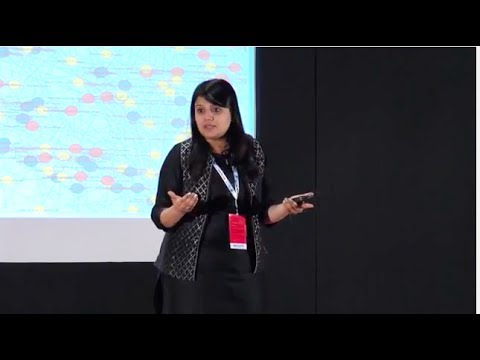
interconnected pulsating graph which was
almost like how the brain stores
information was emerging with India’s
weaknesses and we saw that there were
blocks of red there were blocks of green
and rocks of yellow and the
interconnections finally showed us a way
to resolve these blocks these blockers
of knowledge for multiple levels of
students because the graph looked
different for different types of
students at the same time we also saw an
opportunity to find what paths can be
used to resolve these blockers starting
from a student’s current strengths and
ending up on his weakness in the right
way there is no end to this
personalization you might see that a
particular type of video presented to a
child once you identify that block works
better than another type of video
there’s a video where a teachers face is
shown there’s a video where there’s only
text shown depending upon the level of
EQ of the child he may not want to see
the face of the teacher right it’s just
an example sort of drawing upon the
previous talk right so what we saw was
that it was incredibly possible
depending upon the students learning
goal to design powerful learning
recommendations from this graph that
either helped you game the system and
learn what’s important for the exam in
the most efficient way or actually store
this knowledge forever so you could
create powerful custom
to learn the content that matters the
most to you and make sure that you’re
resolving every blocker along the way
this was the knowledge graph the second
idea has actually got to do with the
irrelevance of learning what we saw was
when we took statistical parameters or
knowledge and regress them on score
there was actually a gap of 40% you’re
like wow what else could possibly matter
and what came back was not a surprise
but probably it was the first time in
the world where it had been
statistically verified by data and it
continuously grows as a model the answer
was grit and smart test taking grit or
the sheer force of wanting to try and
smart test taking which is basically
being a great examinee all at the same
level of knowledge what’s very
interesting is that this particular fact
or this blind spot because no assessment
measures it effectively is the single
biggest originator of the statement I
knew it but I just couldn’t do it on the
exam it is also what originates the fear
of failure in the test or exam psychosis
because when you prep and you go into a
paper and you’re not able to perform to
the level that you want to are the level
that you prepared you hit a wall
flatlining scores create demotivation
when they create demotivation the
student cannot respond because there is
no way to know how to respond so what do
they do they react they disengage they
get demotivated again take a step back
and said you know what I’m giving up the
worst thing that happens is you get
labeled if this hit of confidence is
visceral enough it can also go ahead
extend itself and viscerally impact life
outcomes the interesting thing is that
we’ve actually seen two to three hundred
percent improvement for the toughest
exam in the world on-base course just by
touching these parameters are not
learning anything so what does that tell
you about our examination systems right
does it really truly reflect the
potential of a student but you know what
you could call the world the store peon
or utopian we are where we are and I
think it’s important to be practical so
the point is you’re standing here and
now you can improve your score by 200%
nothing succeeds like success and for a
demotivated checked out unable to folk
student there is nothing like the
panacea of hey I can suddenly move my
grade up and I can see it happen within
the space of a day let’s take a few
examples so one example is a student
let’s call him Harry Harry came to us in
2014 that’s when we were just in the
data collection hypothesis stage and he
said you know what I’m not able to cross
a score of 20% and a spare and said he
keeps sitting with the books all day but
he’s not able to score so we said ok
let’s figure out what our analytics say
we saw the analytics we realized that
Harry was obviously xperia x perience
alack of knowledge it was not adequate
but what we also saw was he had low
stamina
and that low stamina meant that he could
not sit for 3 hours in the exam and
actually make sure that he gives his
best because of that he was also not
going deep in every question he
attempted and he was making sure that he
was attempting but the attempt was
actually a fluke so as a result of that
his scores were low because that gap was
detected it could be actioned and when
he acted on it they were 2 years 2 days
of marathon test taking where the only
metric we focused on was stamina and
flux just by doing that he added another
10% to his score within two days and
this was four days before the actual
exam when teachers basically shut down
their shutters and say you know it’s all
up to you and God now right so what does
this mean this means that AI may not be
the most emotionally intelligent thing
but if you can parameterize behavior we
are looking at the dawn of a new era and
learning science their behavioral
interventions that actually work could
move up education outcomes if you look
at the multiple personalities that exist
there is no end to the levels of
interventions and detection that you can
do so many cohorts can be formed and was
impossible to do this without machine
learning and I feel like in a space like
India this is specially a sector that
welcomes technology interventions
provided we skirt the delicate issue of
making sure we create teacher buy-in in
the classroom let me give you another
example there was a student you know
let’s call him I don’t know Batman right
so Batman took a paper and then he took
a paper we realized that he was not
performing as high as he possibly could
have
and he was actually in the high 200s out
of 360 which means that he was
potentially a very very good student in
terms of his knowledge levels so what we
realized with Batman was his problem was
first look accuracy what is first look
accuracy if you think about taking a
paper there are always some questions
which are within easy reach and there
are some questions you can get on a good
day what is the difference between the
two what’s your mindset that’s where the
fourth subject comes into play which is
psychology okay so when you actually end
up doing those questions first that you
have mastery on and you carefully choose
those questions the first time you look
at the paper it sends you on a high in
terms of confidence if your first look
accuracy is high chances are you will
get those questions that you would only
have gotten on a good day because it
becomes a good day for you in the paper
we’ve realized over a period of time
that collecting this tangible data like
first look accuracy careless mistakes
and whatnot
along with these learning
recommendations and data on the
knowledge graph can create intangibles
like success like confidence like life
outcomes for students take the example
of a student from Gujarat who went from
a score of 14 percent to 41 percent
within the space of a day combining the
impact of these two ideas in the way he
took his test and improved his teachers
were pleasantly surprised at the soaring
test scores they saw even on physical
pen and paper tests later on because he
now was suddenly more confident and they
were pleasantly absolutely so happy and
delighted at the level of energy that he
then brought into the classroom remember
this was a student at 14% had pretty
much been written off by our system so
what does this mean for the future
measuring intent is a single biggest x
factor the ability to record it and
record it in a way that it can be
influenced in measuring education
outcomes today just getting this right
and introducing this in assessments
globally would put us in a position
where we actually end up seeing
education outcomes multiplied for all
the students around world we will also
see the true gaps in the learning graph
because if you get it wrong it doesn’t
necessarily
you don’t know it it’s just that we
don’t know that’s the reason the most
exciting thing for me is that maybe over
1516 years of learning data when it’s
all connected into one coherent graph
and you actually see the
interconnections on the data continuum
of Education for the first time maybe
just maybe it’s possible for a student
to love learning everything because you
catch the first sense of the state’s
distaste with your behavioral
measurement and then address it with the
world’s best content resources which
could be tagged to this graph through AI
another problem that we’re working on
but not relevant for this discussion
maybe it’s possible to actually remove
labels from the education world and do
it in a way where learning and scoring
is balanced I’m very excited about the
future we’re straddling a changing world
some of us have never heard of these
tools you know some of us look at and
say I wish I had this when I was
preparing for my exams or even when I
was in sixth grade seventh grade some of
us are seeing the stages of that emerge
on the horizon a lot of you guys might
have children you know who are in for
doing some or the other technology tool
in the classroom and maybe future
generations will take these tools for
granted but whatever be the case I’m
extremely passionate about the fact that
whatever solutions are being built using
AI data science technology and content
have to straddle the changing world and
not just be built for a utopian future
where there’s a controlled environment
and you can only do things right if you
start a certain way it has to be
inclusive no child can be left behind
and no child should be labeled thank
[Applause]
[Applause]
okay so when you think about education
and India and in most emerging markets
sadly it’s hard not to think about DES
cause you know growing up the benzene
ring and its many moods I just found
them super high maintenance so I decided
to have a love affair with physics
instead turns out the Indian exam system
didn’t agree with my choices so what
happened was I ended up in a situation
where what I enjoyed learning I couldn’t
give enough time to and I kind of lost
the plot on the stuff that I actually
didn’t enjoy learning I could not bring
myself to love learning everything but
everything was part of the syllabus it
got me thinking what does it take to
actually balance the love of learning
what you really want to learn and at the
same time not lose the plot on the stuff
you don’t want to see for dinner what
tools could be created to balance
learning with scoring in a system where
grade based learning over many many
years eventually translates into a
three-hour exam that determines your
access to college turns out there are
two powerful ideas actually
revolutionary ideas which are driven by
data and eventually ended up becoming
driven by AI that can change the status
quo forever and help every student in
the world balance learning with scoring
the first idea is to do with the concept
of learning so you know three years ago
I was in a classroom and I overheard a
conversation between a student and a
teacher so the student very wide-eyed
happy person when to the teacher and
asked a question and the teacher
basically dismissed him with a wave of
his hand admonished him saying you
should not have this question at this
time of preparation in your exam if you
don’t know the answer to this question
you might as well give up you should
have come to me sooner it got me
thinking what did sooner mean and I
couldn’t get the face of that student
out of my head it was so crestfallen so
I resolved to start digging what is
sooner the answers as we unravel that
string became more and more exciting as
time passed over the last five years of
building and Bible
so everybody knows that learning layers
on itself right so we know that you
start in grade one then two then three
then four and then you keep passing your
grade and you get exactly one year to
master the concepts in that year and
then you know you take an exam there’s a
35% pass mark and you go to the next
year and we all know that familiar sigh
of relief that thank God seventh grade
is done right
turns out it’s never really done it
sneaks up on you when you least expect
it you just don’t know it
think about the 35% pass mark was that
really assessed properly and what is in
the 65% that’s going to rear its ugly
head later on we had to figure out the
answer to that basically over multiple
years of learning there is a continuum
of concepts building on each other and
the learning data that we generate is
extremely valuable but today there is no
way to access that gap when you most
need it there is no way to go back to
that information and see it again
and that is why that student looked
crestfallen because he had hit a wall he
had no way to respond to his teachers
feedback so he decided to react to it
instead and got demotivated but what if
he could trace a path what if he could
actually go back and see where the gap
is so as part of our resolve to dig we
said you know what let’s start with the
12th grade and start breaking it down so
we went after an atomized deconstruction
of the syllabus and said how do these
concepts actually link to each other
that if a student displays a weakness in
one concept you can actually trace the
path back to where the problem started
how do these concepts connect across
grades how do these concepts connect
across subjects do they even connect
across subjects the funniest thing that
we came across was that biology actually
connects to math so those of you who
choose bio because you don’t like math
there is a problem okay and we also
wanted to see which concepts are the
most fundamental to learning which
concepts are the most important for
testing what does this graph really look
like now one of the most interesting
things was that everybody understands
that learning gets more complex as time
passes but what we saw amazed us this is
not like the proverbial foundation walls
and roof this is actually so many
circular new
references there is a concept of time
which is introduced in the first grade
it’s exactly used in the same way in the
11th grade because mechanics uses it to
calculate speed and velocity so if you
think about it the entire graph turns on
itself higher grade English grammar has
notions like big bigger biggest which is
comparative and superlative in grammar
did you know that’s the first thing that
grade 1 mat covers in the first chapter
the child is taught big bigger biggest
the other very interesting thing was
that the deeper that you got and you saw
the to and fro motion and you saw the
circular references the more curious we
got that are there actually paths that
can unravel the blockages through these
years so we did something insane we said
not only are we going to connect these
concepts we were actually going to take
a huge volume of questions and generate
data on student attempts over four years
being probably the first company to make
learning and practicing and testing
completely free so we generated a lot of
data and what we saw was that this
interconnected pulsating graph which was
almost like how the brain stores
information was emerging with India’s
weaknesses and we saw that there were
blocks of red there were blocks of green
and rocks of yellow and the
interconnections finally showed us a way
to resolve these blocks these blockers
of knowledge for multiple levels of
students because the graph looked
different for different types of
students at the same time we also saw an
opportunity to find what paths can be
used to resolve these blockers starting
from a student’s current strengths and
ending up on his weakness in the right
way there is no end to this
personalization you might see that a
particular type of video presented to a
child once you identify that block works
better than another type of video
there’s a video where a teachers face is
shown there’s a video where there’s only
text shown depending upon the level of
EQ of the child he may not want to see
the face of the teacher right it’s just
an example sort of drawing upon the
previous talk right so what we saw was
that it was incredibly possible
depending upon the students learning
goal to design powerful learning
recommendations from this graph that
either helped you game the system and
learn what’s important for the exam in
the most efficient way or actually store
this knowledge forever so you could
create powerful custom
to learn the content that matters the
most to you and make sure that you’re
resolving every blocker along the way
this was the knowledge graph the second
idea has actually got to do with the
irrelevance of learning what we saw was
when we took statistical parameters or
knowledge and regress them on score
there was actually a gap of 40% you’re
like wow what else could possibly matter
and what came back was not a surprise
but probably it was the first time in
the world where it had been
statistically verified by data and it
continuously grows as a model the answer
was grit and smart test taking grit or
the sheer force of wanting to try and
smart test taking which is basically
being a great examinee all at the same
level of knowledge what’s very
interesting is that this particular fact
or this blind spot because no assessment
measures it effectively is the single
biggest originator of the statement I
knew it but I just couldn’t do it on the
exam it is also what originates the fear
of failure in the test or exam psychosis
because when you prep and you go into a
paper and you’re not able to perform to
the level that you want to are the level
that you prepared you hit a wall
flatlining scores create demotivation
when they create demotivation the
student cannot respond because there is
no way to know how to respond so what do
they do they react they disengage they
get demotivated again take a step back
and said you know what I’m giving up the
worst thing that happens is you get
labeled if this hit of confidence is
visceral enough it can also go ahead
extend itself and viscerally impact life
outcomes the interesting thing is that
we’ve actually seen two to three hundred
percent improvement for the toughest
exam in the world on-base course just by
touching these parameters are not
learning anything so what does that tell
you about our examination systems right
does it really truly reflect the
potential of a student but you know what
you could call the world the store peon
or utopian we are where we are and I
think it’s important to be practical so
the point is you’re standing here and
now you can improve your score by 200%
nothing succeeds like success and for a
demotivated checked out unable to folk
student there is nothing like the
panacea of hey I can suddenly move my
grade up and I can see it happen within
the space of a day let’s take a few
examples so one example is a student
let’s call him Harry Harry came to us in
2014 that’s when we were just in the
data collection hypothesis stage and he
said you know what I’m not able to cross
a score of 20% and a spare and said he
keeps sitting with the books all day but
he’s not able to score so we said ok
let’s figure out what our analytics say
we saw the analytics we realized that
Harry was obviously xperia x perience
alack of knowledge it was not adequate
but what we also saw was he had low
stamina
and that low stamina meant that he could
not sit for 3 hours in the exam and
actually make sure that he gives his
best because of that he was also not
going deep in every question he
attempted and he was making sure that he
was attempting but the attempt was
actually a fluke so as a result of that
his scores were low because that gap was
detected it could be actioned and when
he acted on it they were 2 years 2 days
of marathon test taking where the only
metric we focused on was stamina and
flux just by doing that he added another
10% to his score within two days and
this was four days before the actual
exam when teachers basically shut down
their shutters and say you know it’s all
up to you and God now right so what does
this mean this means that AI may not be
the most emotionally intelligent thing
but if you can parameterize behavior we
are looking at the dawn of a new era and
learning science their behavioral
interventions that actually work could
move up education outcomes if you look
at the multiple personalities that exist
there is no end to the levels of
interventions and detection that you can
do so many cohorts can be formed and was
impossible to do this without machine
learning and I feel like in a space like
India this is specially a sector that
welcomes technology interventions
provided we skirt the delicate issue of
making sure we create teacher buy-in in
the classroom let me give you another
example there was a student you know
let’s call him I don’t know Batman right
so Batman took a paper and then he took
a paper we realized that he was not
performing as high as he possibly could
have
and he was actually in the high 200s out
of 360 which means that he was
potentially a very very good student in
terms of his knowledge levels so what we
realized with Batman was his problem was
first look accuracy what is first look
accuracy if you think about taking a
paper there are always some questions
which are within easy reach and there
are some questions you can get on a good
day what is the difference between the
two what’s your mindset that’s where the
fourth subject comes into play which is
psychology okay so when you actually end
up doing those questions first that you
have mastery on and you carefully choose
those questions the first time you look
at the paper it sends you on a high in
terms of confidence if your first look
accuracy is high chances are you will
get those questions that you would only
have gotten on a good day because it
becomes a good day for you in the paper
we’ve realized over a period of time
that collecting this tangible data like
first look accuracy careless mistakes
and whatnot
along with these learning
recommendations and data on the
knowledge graph can create intangibles
like success like confidence like life
outcomes for students take the example
of a student from Gujarat who went from
a score of 14 percent to 41 percent
within the space of a day combining the
impact of these two ideas in the way he
took his test and improved his teachers
were pleasantly surprised at the soaring
test scores they saw even on physical
pen and paper tests later on because he
now was suddenly more confident and they
were pleasantly absolutely so happy and
delighted at the level of energy that he
then brought into the classroom remember
this was a student at 14% had pretty
much been written off by our system so
what does this mean for the future
measuring intent is a single biggest x
factor the ability to record it and
record it in a way that it can be
influenced in measuring education
outcomes today just getting this right
and introducing this in assessments
globally would put us in a position
where we actually end up seeing
education outcomes multiplied for all
the students around world we will also
see the true gaps in the learning graph
because if you get it wrong it doesn’t
necessarily
you don’t know it it’s just that we
don’t know that’s the reason the most
exciting thing for me is that maybe over
1516 years of learning data when it’s
all connected into one coherent graph
and you actually see the
interconnections on the data continuum
of Education for the first time maybe
just maybe it’s possible for a student
to love learning everything because you
catch the first sense of the state’s
distaste with your behavioral
measurement and then address it with the
world’s best content resources which
could be tagged to this graph through AI
another problem that we’re working on
but not relevant for this discussion
maybe it’s possible to actually remove
labels from the education world and do
it in a way where learning and scoring
is balanced I’m very excited about the
future we’re straddling a changing world
some of us have never heard of these
tools you know some of us look at and
say I wish I had this when I was
preparing for my exams or even when I
was in sixth grade seventh grade some of
us are seeing the stages of that emerge
on the horizon a lot of you guys might
have children you know who are in for
doing some or the other technology tool
in the classroom and maybe future
generations will take these tools for
granted but whatever be the case I’m
extremely passionate about the fact that
whatever solutions are being built using
AI data science technology and content
have to straddle the changing world and
not just be built for a utopian future
where there’s a controlled environment
and you can only do things right if you
start a certain way it has to be
inclusive no child can be left behind
and no child should be labeled thank
[Applause]
Please follow and like us: