
literature I was trying to create a
classroom which felt alive to me and
authentic and these are the kinds of
things that we talk about in this
program we use literature as an
opportunity to talk about life issues
that are relevant to all of us that are
universal if you boil it down to the
most essential element this is a class
in which two groups of young people the
same age 18 to 21 one group from a
university the other group from a
Correctional Center come together
sit down side-by-side and have
conversations about life through
literature when I walked into that
building every Tuesday afternoon it’s
like I wasn’t locked up it’s like for
the next three hours I can live I can do
me I can be myself I can open up it’s
not often that you spend ninety minutes
talking about the things that you’re the
most scared of or the people that you
love the most or you know like what you
want to do with your life and what
you’ve done wrong with your life I was
expecting like to come in here like be
scared I look down the nice light yeah
they’re criminals I didn’t expect for
that’s the bear to connect like I like
me the same something like some ways we
had it so troubling the same problems
the students and the residents grapple
together and they realize doesn’t matter
if you’re a 20 year old college student
or 20 year old youth you know in a
Correctional Center you know what it
feels like to lose someone you love
you know what it feels like to struggle
with family situations you know what it
like to try to search to find your place
in a world that doesn’t always make that
easy those are the issues of Russian
literature and those are universal I
have found that they connect with these
themes at a visceral level they know
what it means to
is there freedom that’s not an abstract
question to them they’re incarcerated
and it’s incredibly valuable for them to
be able to talk about that theme through
a story from their own experience and
share that with the students so students
come away with a totally new
understanding of that whole convert that
that whole theme in Russian literature a
lot of these stories really have helped
me realize you know a lot of inner
issues that I’ve been dealing with my
whole life that I really couldn’t quite
piece together in words until I heard it
in the story and then it would say it
and I’d be like that kind of reminds me
of myself you know and I’ll think about
it and then I’ll start thinking will I
need to work on that and now I’ll work
on it and then it’ll just get better and
then eventually it’s just not even a
problem anymore just to see that people
that had a whole different background
for me can kind of connect with me and I
got a lot of ways and through these
stories that was so like unique it saw
like that coming to these meetings every
to say like they made me feel life they
made me feel that real sense of
connecting with other people like truly
and with your heart and they have helped
me more than they’ll ever know you know
I hope students come away from this
experience realizing what’s possible in
a classroom what’s possible in their own
lives I hope that the residents come
away feeling empowered with an altered
perception of who they are and what
their worth is and what they’re capable
of feeling like they deserve to be at
Raskolnikov Raskolnikov is a 24 year old
poverty-stricken student who commits a
double murder for a few hundred rubles
he kills an old pawnbroker with an axe
and he accidentally kills her younger
sister who happens to be at the wrong
place at the wrong time and with that
moment his punishment begins because for
the next 72 hours he is in a feverish
delirium he is literally wandering
through the streets of st. Petersburg
he’s racked with guilt his conscience is
tormented he’s trying to understand why
he did what he did and with every hour
his sense of isolation from the world
becomes more and more acute and it gets
to the point that he feels as if as if
he were standing on a tiny little ledge
on the edge of a giant cliff overlooking
a vast stormy ocean and that he is
condemned to stand alone on that spot
for the next thousand years and all he
wants to do at this point is confess to
unburden his soul but who would listen
to him who would hear what he has done
and still treat him as a human being
there’s one person he thinks he can
trust Sonia a prostitute whose father
Raskolnikov meets two days before he
commits the murder and he’s sitting
there with Sonia side by side in her
tiny little garret like apartment and
he’s looking at her and he’s getting up
the courage and he blurts it out he
tells her what he’s done and she looks
at him and she begins to weep and she
embraces him and he pushes her away he
says I just told you I murdered two
people how how can you respond in that
way and she says because I can see there
is no one in the world
unhappier than you are now so we were
talking about that scene from dusty f
keys crime and punishment at the
Correctional Center it was a hot July
day and we’re all sitting in a circle in
the prison classroom it’s about five UVA
students and they’re in their jeans and
their t-shirts about 15 residents all in
their identical khaki pants they’re
state-issued polo shirts and we’re
having this conversation and one of the
residents raises his hand and I’m kind
of surprised because I haven’t heard
anything from him in the past month he’s
a very quiet kid kind of stereotypical
you know tough-guy image very muscular
he’s got tattoos all over his arms and
he raises his hand when we’re talking
where’s my Sonya you know when I got
locked up everyone abandoned me where’s
the person it would see the worst of
what I’ve done and still love me and
with those few courageous sentences that
young man taught all of us in that room
more about the theme of compassion in
Dostoevsky than 20 lectures by me could
have done Yvonne
leach Yvonne e leach is a very
successful 45 year old judge at the top
of his career he’s wealthy he’s famous
he’s someone who has spent his life
jumping through hoops climbing ladders
and he’s finally made it Avani leach
loves authority he loves that moment
when as a judge he is walking into the
court room everyone rises and the
bailiff says the judge is coming the
judge is coming
he loves that moment he loves clarity
clarity it is very clear to Yvonne who
is right and who is wrong who is
innocent
and who is guilty and Yvonne loves order
and discipline which is why that day
that he goes to the doctor’s office with
that undisciplined pain in his side and
he finds out that he has some mysterious
incurable illness blows his mind me
dying that’s a that’s impossible
that’s against the rules but sure enough
he is dying and the pain gets worse and
worse and he becomes a weak and he
becomes emaciated and literally within a
matter of weeks
this beautiful rational orderly world
that he has created for himself comes
tumbling down in a matter of weeks
all of those walls that he has put up to
protect himself from other people they
are now the prison from which he most
wants to escape and if before his
illness his favorite moment was that one
of walking into the courtroom now the
only moment that means anything to him
is the one when his twelve year old boy
with whom Yvonne has hardly had any
relationship that twelve-year-old boy
comes into his dying father’s room sees
that his dad is too weak to speak or to
move and he takes his father’s hand and
he brings it to his lips and he kisses
it so we were talking about that story
by Tolstoy the death of Ivanovich at the
Correctional Center on the day that one
of the senior administrators decided to
come visit our class and I’d met this
woman a few weeks earlier she’s very
buttoned up very bureaucratic woman very
somewhat authoritarian she said to my
students and me during our orientation
she said no first names the residents
must call the students by your last
names and no personal conversations in
this program just keep it at the
professional you know scholastic level
so after class being the somewhat
disobedient student that I am I’m
talking to my students and I’m saying
that’s ridiculous
of course you’re gonna call each other
by your first names you’re the same age
for crying out loud and yes have those
personal conversations that’s what we do
in this program and look if someone
complains or whatever just you know put
it off on me so you can imagine my fear
on the day that I show up and there she
is there she is
and she’s sitting on the opposite end of
the room for me about 10 feet away from
one of the tables so I can’t hear what
she hears but I see her and I noticed
after about 10 minutes
her eyes are kind of focused and she’s
leaning in like this listening and I’m
thinking uh-oh
what’s she hearing 10 minutes later she
picks up her chair she slides it over
she sits down at the table and she
proceeds to have a conversation with one
of the residents and I’m freaking out at
this point I’m thinking I’m gonna be
reprimanded when this class is over or
worse she’s gonna pull the plug on the
whole darn program so I go up to my
students after classes were walking
across the prison courtyard and I go up
to the students at that table and I
asked him what was that about and one of
my students very matter-of-factly
explains oh well we were talking about
the scene when Yvonne says goodbye to
his son and one of the residents shared
that he lost his grandmother a year
earlier its grandmother that he loved
and apparently the administrator
recently lost her own brother and she
was overhearing this conversation she
was so moved by it that she wanted to be
a part of it so there she is the
administrator in the resident having a
conversation about the theme of loss in
Tolstoy and I’m thinking well so much
for the no personal conversation rule
but I’m also thinking triumphantly that
in that moment what she saw was not a
young criminal what she saw was a young
man with ideas and emotions and the
ability to articulate them and reflect
on them through the lens of literature
and what he saw was not an evil Stern
authoritarian figure but a woman about
the same age as his own late grandmother
who also knows what it feels like to
love and to lose through their shared
loss they found that connection with one
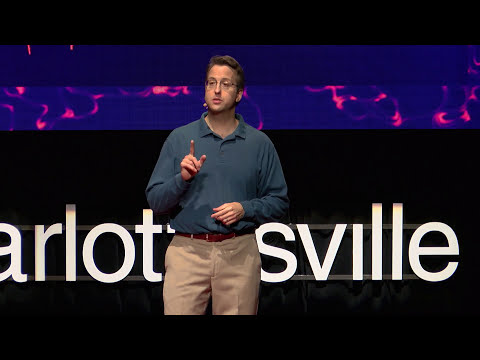
Andrew Kaufman is a 47 year old
professor of Russian literature and it’s
the last day of class it’s the last 20
minutes of the very last day of the
semester and I’m about to bring my class
to a close just as I’ve been doing for
the past several years and one of my
students raises her hand she says
professor Kaufman there’s something I
need to share with the group between the
last meeting that we had at the facility
and today curiosity got the better of me
and I needed to know what what my guys
did and so I looked it up on the
internet and I feel incredibly guilty
about this and her voice begins to
tremble as she and she says and I found
out that one of my residents with who I
care about who I’ve come to admire I
would invite him into my own home to
meet my family
I found out he murdered someone let me
tell you this is one of the most
difficult moments of my teaching career
to have that bombshell 20 minutes before
the end of class I felt all 16 pairs of
those student eyes on me and had no idea
what I was gonna say and I even had a
moment of panic of doubt I started to
think wow have I been misleading these
students have either been leading them
down this kind of pollyannish path all
of these years have I been encouraging
them only to see the good in
these guys and forgetting that in some
cases these guys have caused harm
irreparable harm to other people but I
couldn’t stay with that doubt and I
don’t know where it came from but it
came through me and it hit me in that
moment and I shared it with the class I
said maybe what we’re supposed to be
learning from what the student just
shared maybe what we’re supposed to be
learning from this whole experience is
one of the great lessons of Russian
literature acceptance maybe what we’re
supposed to be learning is how to do
what Sonya does with Raskolnikov how to
look another human being in the eye and
how to bear witness without judgement to
the good and the evil the beauty and the
ugliness that resides inside of every
single one of us and Tolstoy’s words
came to me and these are words that I
had been quoting for years I finally
understood them in that moment Tolstoy
said that man is flowing in him there
are all possibilities one minute he’s
stupid but the next he’s smart one
minute he’s evil and the next he’s good
and the other way around and this is the
greatness of man a few months before I
started this class in 2009 I was
actually planning my own escape from
academia little-known fact there it is
and I find it incredibly ironic that I
had to go to a prison to find what was
most missing in my own classroom and in
my own life authenticity authenticity
what I have found from this experience
is that when I can allow myself to bring
my full authentic human self to my
classroom and when I can give students
the permission to do the same and when
we can have authentic conversations
about the things that
all of us as human beings the learning
is so much deeper and richer than when I
try to play the role of a professor that
I thought I was supposed to play and
week after week watching the students
and the residents sit down side by side
take the risk of looking into one
another’s eyes and sharing their most
intimate human stories about compassion
about loss about acceptance watching
them break down those walls that exist
between them and within them that has
given me the courage and the inspiration
to try to do the same in my own life and
not just as a teacher but as a father as
a son as a husband and I’m still working
on it
the residents and the students have
changed one another’s lives we talk
about that a lot but let me tell you
they’ve changed my life proving yet
again the wisdom of Dostoevsky’s words
everything like an ocean everything
flows and comes into contact you touch
in one place and at the other end of the world it reverberates thank you