
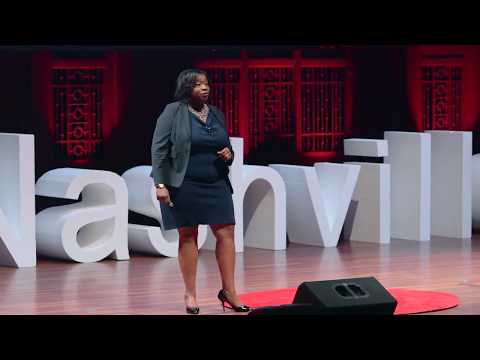
hello Nashville thank you so much for
having me
jamming a little Dolly Parton here one
of my favorite singers so if they let me
sing I might sing nine to five if I had
a song but oh I need a clicker thank you
thank you guys so much so I grew up
actually my first time here in Nashville
I grew up about six hours away in a
small town called Washington Georgia and
where I grew up no one that I knew ever
went to the doctor for anything unless
they were seriously ill or if they went
it was definitely to the emergency room
as a matter of fact I remember growing
up my mom and family would say old that
hospital they kill people over there and
I thought okay has it become a doctor I
look back people’s people’s diseases
have progressed so far there was not
much that the hospital or doctors were
able to do but I also knew we had
insurance I was able to go through my
entire college career with but without
ever having a pap smear or learning
about self breast exams so we never
access preventive care when I was
growing up and I really didn’t know much
about it at age 20 I had my first visit
to the dentist
I had a cavity I was in a lot of pain
and the dentist gave me a choice he said
look you can have an extraction we’re
gonna have a root canal
and I was twenty years old he’s playing
the root canal I’m like I don’t think I
want that that sounds painful I’ll take
the extraction I thought I was making a
rational decision but because growing up
I didn’t know a lot about it I made a
choice that actually impacted me many
years down the line and in my 30s I was
able to take advantage of new technology
and correct it as I look back I would
hear my mom say so-and-so died this
person died and at the time these people
were in their 40s and 50s and I couldn’t
put all together at the time but I knew
that many of them did have health
insurance coverage
but they were still dying early and they
were dying from preventable conditions
like diabetes high blood pressure high
cholesterol and sort of wandering there
we know what’s going on it but
definitely inspired me to continue in my
career heading towards medicine and the
practice of as a young medical resident
out in California as learning internal
medicine I began to see patient after
patient again who would present with
advanced cases of conditions that were
related to very treatable and manageable
conditions like diabetes high blood
pressure cholesterol hepatitis etc and
began to wonder well why is that why is
it that people have access to care but
we’re still seeing progression of
disease that’s extraordinary remarkable
and it will impact their ongoing sort of
morbidity disease burden and their
ability to live a healthy and happy and
highly functioning life it was it was
clear that at that time primary care and
prevention which is what I was studying
and learning to be was failing many of
our patients many of my patients so
insurance was important but it wasn’t
the only issue when I landed in Chicago
and began the practice of medicine on
the south side I realized that wow I’m
seeing over half the people I’m seeing
are actually covered what’s what’s going
on here what is it that we’re missing as
we think about the treatment of
conditions that I was seeing over and
over what people weren’t managing them
well and it really disturbed me so much
that I said gosh I’ve got to do
something about this I realized as I
looked at the communities that many of
my patients were from that they faced a
lot of obstacles and challenges getting
to the care that they needed it wasn’t
as simple as having insurance in fact
seem to be a lot more complicating
factors as a scientist I realized as I
looked at the data that well this
transcends race or ethnicity
what’s the factor there is there
something predisposing my patients to
not following up and not
in the care that they need what was
getting the way of access even when they
had health care insurance what we
figured out is that actually if you look
at all the data it’s really low income
that has the biggest impact on health
outcomes in our country where you live
matters too and as we look at the data
there’s a lot of data that shows you
that where people live influences and
has a great impact on their health care
outcomes low income and low resource
communities often have low resource
areas around them meaning there’s not
much that they can access that’s
beneficial for them sometimes health
plans or providers may have to intervene
to overcome barriers that people are
facing and obstacles that they’re facing
transportation is one that we know is
important you got to get there sometimes
for families with child bear a child
bearing age child care is important
while mental health we really need to
think about it we know that it’s there
and many times we don’t pick it up
because we’re not looking for it it may
get in the way of how people access
health care even recognize that they
have a mental health condition or and
they have a chronic condition that would
do well if it’s better treated sometimes
people just don’t want to go to the
doctor by themselves they may need
support some people are afraid of
doctors that’s not unusual I know I took
my husband home I he’s also a physician
we were in our late 20s and my mother
said to me she goes she was just staring
us she goes you all don’t act like
doctors I said mom I’m your daughter she
so is as if a doctor might be an alien
right so we have to realize that there
are things like white coat syndrome or
just myths and fears related to seeing a
doctor and then follow-up sometimes you
get there but then the doctor asks you
to come back multiple times that might
get in the way if you’re dealing with a
low income and low resource situation
now the social and economic factors if
you’re in a low resourced environment
can be paralyzing what we know is from
us from a study get done at Princeton
and Harvard is that the the cumulative
cognate
load of excessive stress can take you
down 13 IQ points the ability to deal
with strapped with a with a doctor’s
appointment or anything but an emergency
our patients just won’t have that other
things are important well when I began
to really listen to my patients and
understand what I want to understand
well tell me more you you you don’t want
to take the medicine I’m prescribing for
your high blood pressure
will you take anything and they say doc
I take oil
I take vinegar and garlic every day okay
vinegar and garlic how about I add a
little bit of this little water pill
here hydrochlorothiazide low side
effects you continue to take that and
let’s see if together they might work
and you know what I actually want a lot
of battles just meeting people where
they are but that’s real people have
their own remedies and in many
communities they may approach it
healthcare way different than the doctor
might approach it and we’re gonna have
to take some of those things into
consideration in much of my medical
practice my patients would accuse me of
experimenting on them often you might
start a medicine your doctor might start
a medication on you let’s say you’re
taking something for cholesterol might
start you with the low dose and then
progressively increase the dose over
time well my patients would say doc why
are you doing that like don’t you aren’t
you really smart and then you go to all
these schools or should you know which
one works and how much I say well no we
have to sort of test your tolerance
every individual responds differently
well we often found that when I said I
had a medical practice my patients
thought that meant I was practicing on
them so these are things that you got to
think about as you as you deal in
different communities you want to
understand what are the mints the
cultural mores that influence how they
think about medicine what are those
things and we have to really think about
acknowledging those now it’s not just
South Side of Chicago where this occurs
when I went home as a young
doctor and I begin to talk to my own
family I found that a lot of what I was
seeing in Chicago I saw it in Washington
Georgia so it turns out that these myths
are largely there they’re around and
what’s important for the medical
community is that we address those when
we are trying to meet patients where
they are to get them on track now I’m
solution-oriented
give me a problem I want to find it so I
found I’d sort of studied all these
problems over 15 years and I said you
know what I’m gonna start a company
we’re gonna solve this I’m gonna do it
so first we start with individual issues
we want to understand what is get in the
way of a person accessing care we talked
about all the different obstacles that
might impact a person’s approach to
healthcare then we have to think
systemically what are the system
barriers that are in a community we
talked about barriers and access in low
resource communities we have to
understand those we also have to
understand the disease burden in those
communities because we want to be well
equipped when we go in to help and
intervene and meet people where they are
that we know what they’re dealing with
the science of that is called population
health you understand the broader
community and then you can really hone
in on the individual and be effective so
you armed your staff with great tools
they’re able to go out and really make a
difference disease and burden is
important understanding where you are
what’s going on in that community
there’s a community in Chicago called
Humboldt Park it has the highest
incidence of diabetes in the city well
before you go into that community you
really need to understand how do people
think about diabetes in that community
because when you go in you’re going to
want to be armed with that information
so that you’re your starting point makes
sense for where you are mental health we
talked a little bit about it before
really important it is if for most a
chronic condition so it bears a nice the
same respect as diabetes and high blood
pressure and high cholesterol emia
because it’s going to require ongoing
contact with the healthcare community to
support that person to get what they
need and also it can
ask other conditions and make people
less likely also to seek here for
conditions that could easily be treated
and managed so we take all this
information and we can move forward much
more effectively managing that dollar
that we’re spending on health care and
getting better outcomes I much rather
spend the money upstream on prevention
and treatment of these conditions then
downstream losing a foot going on
dialysis I’m suffering from let low
exercise tolerance etc when your heart
starts to give out now at the company we
started we went really local we believe
healthcare is local right that’s what
we’ve been talking about communities
what do you see in communities how do
you best understand him so we locate
employees locally we hire from local we
train local healthcare is local so we’re
going to build capacity in those
communities by hiring people from them
to participate in improving the health
of their own communities for its
creative partnerships where do members
and patients go we want to be everywhere
they are that’s churches schools other
not-for-profits that are in the
community doing great things technology
is important our folks are enabled with
technology that allows them to in the
field they’re in a certain community
they can pull up a zip code and say aha
this community has this percent of
diabetes this percent of hypertension we
also know about the place they’re in we
can look and see ha this community has
six churches 35 liquor stores three
playgrounds right we know what people
are dealing with is you don’t want to
tell people to go exercise if there’s
really nowhere for them to go right so
you want to know your community our
folks are digitally and technically
enabled to be able to do that so while
health insurance is important and I
agree it is a great starting point
our folks may not be completely enabled
and equipped to take advantage of what
that access offers so we hope we want to
help them out we want to begin to coach
them on yes these doctors are in network
this is where you can go and begin to
engage there he wasn’t one to go with
you
we’ll send someone with you so that you
can get the care you need it’s much
better to invest upstream then to have
to go downstream and spend money on a
foot that’s not working on a heart
transplant etc many things if we deal
with them upstream we then have a health
care a health care system that is much
more efficient effective and hopefully
cheaper for all of us
obstacles we have to deal with them and
think about them so while being think
the forward progressive next-generation
payer and provider who providers who are
rendering these insurance products that
we’re aware of these obstacles and we’re
ready to coach in place our members and
then we can take it global I think that
the science of community is something
that we can take all over the country we
learn about communities we can go all
over the world
implementing improving and hopefully
saving lives if we’d had a system like
this when I was coming up I think I
might still have that molar and the
people I thought that my parents you
know who knew who are dying early might
still be alive thank you
[Applause]
you
Please follow and like us: