
I got quite a few hints there thank you
so much to the brave souls already
willing to have acknowledged losing your
mind some of the rest of you might have
been wondering what on earth i was
actually asking about so let me clarify
i was not referring to the stereotypical
glib way that some people use to refer
to mental illness i actually meant
something quite different so let me
clarify even further by asking you to
additional questions by a show of hands
who has ever said or done something mean
or ugly or unwise in the heat of the
moment maybe something you later
regretted or felt embarrassed about be
honest keep your hands up for a moment
and take a look around that looks like
almost all the hands up in the air thank
you and one more question by another
show of hands how many of you have ever
posted something online in the heat of
the moment maybe something you later
regretted or even deleted be honest okay
few years without there thank you so
much to everyone willing to acknowledge
these instances of losing your mind if
you notice i had my hand raised to are
you interested in reducing the chances
of losing your mind in the future yes
excellent that’s what I’ll be talking
about this evening in fact I’m going to
ask you to commit to a practice an
action that will help improve your
ability to respond wisely instead of
reacting impulsively we’re losing your
mind I’m going to ask you to meditate
actually let’s get started right now for
the next few moments tune into all the
sensations of your own breath you can
close your eyes for this if you like or
keep them open however you feel most
comfortable notice the rise and fall of
your chest and belly with every
inhalation and exhalation notice the
sensation of air moving in and out
through your nose or your mouth see if
you can even tune in to the sound of
your own breath as air moves in and out
of your own body if your mind has
wandered off and gotten distracted
that’s fine our minds all do that from
time to time respectfully notice where
it’s gone and gently bring your
attention back to your breath I’m going
to invite you now to say a mantra
silently to yourself with every breath
as you inhale say I am here and as you
exhale say in this moment breathing in I
am here in this moment excellent let
your attention broaden back out now to
the whole theater gently open your eyes
if you’ve had them closed we just
meditated together how awesome this is a
room full of over 300 people thank you i
feel very honored to have meditated with
all of you as you can see meditation is
a practice that is available to us in
any moment what we just did involved a
few techniques common to mindfulness
meditation mindfulness is the
intentional practice of anchoring
ourselves in the current moment we just
used our breath and a simple mantra
as anchors for our attention as we
meditated together when we are being
mindful we are not only of experiencing
our own thoughts emotions and body
sensations but we’re also observing them
from a standpoint of curiosity
acceptance and compassion let me take a
moment now to share with you the
background story of this TED talk in
2016 there were several months in a row
where it seemed like we were being
bombarded by news of absolutely horrific
events unfolding across our country
there were alarming reports and even
videos of excessive force being used by
authorities against unarmed people of
color news and social media lit up with
reactions to this some helpful and
constructive others ugly and downright
hateful I had started blogging early
last year and thought to myself I’m a
clinical psychologist I need to say
something about this but the words would
not come then game the news of the
deadliest shooting in US history at a
gay nightclub in orlando florida again
news and social media lit up with
reactions to this horrific event and
again i thought to myself i need to say
something about this but the words would
not come soon after came the news of
five police officers shot and killed
during an otherwise peaceful protest
march in dallas texas the city that has
been my home for over 14 years like so
many others I was overwhelmed by shock
and sadness and confusion about these
devastating losses of life and the deep
prejudices that seemed to drive them I
was also deeply concerned about this
culture of ugliness that was being
fueled online it seemed as if our modern
world of instant
easy reactions was making these terrible
situations even worse I finally had
something to say I wrote a blog post
that became the inspiration for this TED
talk my words did not come in the form
of a cure for racism or homophobia or
gun violence I wish I had the answers to
those problems instead I issued the same
call of action that I put to you today
please for your own well-being and the
greater good of humankind commit to the
practice of responding wisely instead of
reacting impulsively commit to learn how
to integrate with your emotions with
to learn more about our emotions let’s
take a little trip into our brains hello
brain brain imaging researchers have let
us know some fascinating things for
example when we experience intense
negative emotions we literally lose our
minds or part of them anyway when we
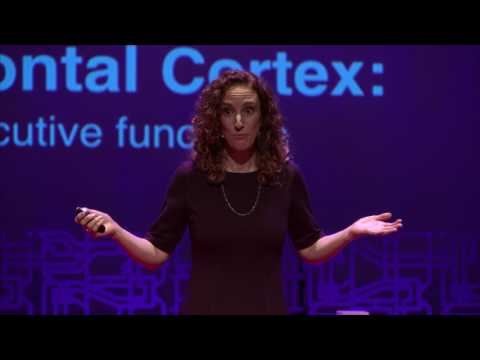
experience intense negative emotions the
prefrontal cortex area of our brain
which is right behind our forehead goes
partially offline now this is
interesting to think about because our
prefrontal cortex is responsible for
functions so important they’re called
our executive functions things like
planning reasoning and anticipating
consequences oh what does it mean when
the planning reasoning part of our brain
goes offline well other parts of our
brain become more active please meet
your amygdala the amygdala is a small
lima bean sized region of our brain that
is responsible for most of our biggest
negative
emotions think fear anger and rage when
we are triggered into a highly emotional
this isn’t necessarily a bad thing as
human beings we are hard-wired for
emotions we need our emotions for
example in the midst of a
life-threatening crisis like meeting
this cute little mountain lion on our
hike our intense emotions can offer us
information that is vital to our very
survival in non life-threatening
situations our emotions can still offer
information that is helpful to us in
figuring out how to move forward take a
moment to think about how you felt when
you learned of the tragedies I mentioned
a few moments ago as you recall those
events you might even be feeling some
emotions right now if we constructively
tap into these kinds of emotions they
can offer us helpful guidance on how to
grieve make meaning and make changes to
move forward what happened so if we
react impulsively in the heat of the
moment when our lives are not in
immediate jeopardy these are the moments
when we can get ourselves into some
trouble how likely are you to make wise
informed decisions when the reasoning
planning part of your brain is not
accessible for most of us that answer is
painfully clear right in those moments
we are more likely to make impulsive
choices that we will regret later when
the rest of our brain comes back online
we do best when we allow our emotions to
integrate with our brains other
functions this gives us the chance to
respond with wisdom dignity and poise so
how do we work on the practice of
responding wisely an important start is
recognizing there’s a difference between
a reaction and a response a reaction is
quick and emotion based it’s a bit like
drinking that cup of instant coffee it’s
ready in a snap and there’s definitely a
time and a place for it but most of us
are not going to feel very fulfilled
drinking that all day every day a
response on the other hand is slower
more like that cup of freshly brewed
coffee hopefully made from freshly
ground beans the addition of time allows
our emotions to brew with our knowledge
and our wisdom it turns out that one of
the most effective ways to improve our
ability to respond wisely is meditation
yes meditation brain imaging researchers
have also let us know that meditating on
a regular basis increases the number of
neural connections between our
prefrontal cortex which is that thinking
reasoning part of our brain and other
parts of our brain responsible for very
important functions things like
attention focus cognitive flexibility
learning memory emotional regulation
compassion empathy and the ability to
see other perspectives well that’s
pretty cool right who wouldn’t want to
boost those abilities as a psychologist
I prescribe mindfulness meditation to
all of my patients because there is now
a robust body of research showing the
benefits to our mental health including
for things like depression anxiety
trauma and ADHD I also practice what I
preach and I meditate almost every day
usually twice a day if I can on
no no I can let you know that meditation
has helped me navigate through some
rough patches in my own life now
meditation cannot totally prevent you or
me from losing our minds and flying off
the handle but it can help decrease the
likelihood of that happening and
there may be some of you out there right
now thinking to yourself that meditation
is just too out there or whoo-whoo for
you I’ve seen some of the skeptical
glances coming up here and I respect
that I was raised by two research
scientists an astrophysicist and a
microbiologist so even though I’ve been
meditating almost every day for several
years now it still feels a little woowoo
to me I choose to lean into those woohoo
feelings and meditate anyway for two
reasons one the scientific evidence is
quite clear and to the beneficial
effects in my life are quite noticeable
there may also be some of some of you
out there asking the question does
meditation fit within my spiritual
belief system well full disclosure here
I’m a psychologist not a theologian so
you can take my response with a few
grains of salt but my answer to that
question is yes meditation can be a
spiritual or a secular as you would like
it to be you can listen to guided
meditations to a walking meditation go
to a mindfulness meditation class sit
quietly in centering prayer or meditate
on the sensations of your own breath and
body like we did earlier isn’t it
interesting that something as simple as
meditation can make such beneficial
changes in our brain and therefore maybe
our lives meta
nation is indeed a radical way for us to
engage with the world around us
meditation can help us pause before we
post that inflammatory comment online
meditation can help us pause before we
rip into someone who has hurt our
feelings or cut us off in traffic
meditation can help us pause before we
medicate our own upset feelings with
unhealthy choices addiction denial or
hatred meditation can help us pause to
allow our intense emotions to integrate
with our wisdom showing us a different
path forward meditate for yourself and
your brain meditate for your family for
your community for your higher power
meditate in any way that will work for
you please meditate thank you very much [Applause]