
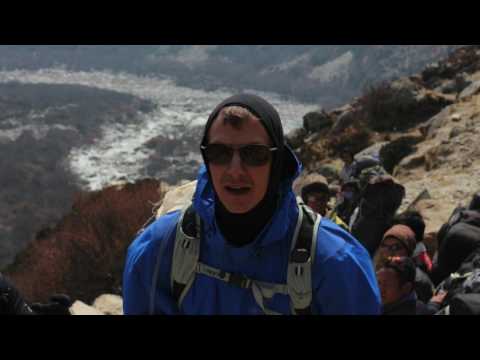
honestly I have a confession to make I’m
a boring researcher and helps to make it
even worse one of my interests is
boredom which is kind of ironic and
secondly when when people hear about my
research they usually say with some kind
of excitement in the voice oh are you a
mountaineer as well no I’m still just a
boring researcher I’m sorry
but then again two negatives might make
one positive right so speaking about
mountaineering Everest
I guess that most of us have some kind
of preconception about it how hard it is
how exciting it must be to be over there
it looks like this and up until today
283 people have actually died because it
died a guy just a lot other day
unfortunately but if we put this into
perspective the ID day it’s extreme if
we put it into perspective because
Everest have been summited seven
thousand seven hundred times almost so
the death verse is kind of the number of
summits it’s not too bad actually and
while I’m at it I’m gonna try to
continue to challenge your assumptions
about Everest because when I speak to
Mountaineers when we do our observations
about what what’s going on at an
expedition what we come to realize it’s
not necessarily their ever launched
that’s the big danger it’s not the fall
not even the impact that’s the big
danger but it’s actually the process
leading up to it and this process then
Everest is boring it’s the boredom that
actually kills people and Everest is
boring and actually when we have looked
at other types of organizations as well
in extreme environments like this but
also in ordinary organizations
what we find this of course boredom is
all around us we need to live with it we
need to handle it and if we doesn’t do
that then we end up with a problem and
the problem problem is they may get us
into trouble
we might take too big risks or it might
jeopardize the big goal the great wishin
that we have so we need to manage the
boredom somehow the upside is if we are
able to manage this boredom then we’re
going to recreate the wor rewards
because it’s going to glue the
organization together we’re going to
come together as a team we’re gonna
create memories we’re gonna accomplish
great things and that’s s why we need to
attend to boredom this is the team that
we followed for two months and the
reason why boredom is dangerous is that
we we might get it paves the way for
frustration and because things aren’t
going according to what we expected or
we miss the sense of meaning in the
activities that we are doing and if we
miss the I the reason why we are doing
things either we start doing things that
we shouldn’t do in order to accomplish a
certain goal or we basically we take too
big risks in order to accomplish the
goal because we just want to get get it
over and done with or third we’re gonna
just simply quit either of those options
are equally bad in order to obtain a
great goal and this team then we follow
them for two months and about five days
after arriving at Basecamp
what we could observe was that they
started to pick a fight with each other
they started arguing they started kind
of questioning whatever they could come
up with and soon also what we saw was
that they started questioning the entire
plan
because what they could see was that
about 30 other expeditions they were
moving up the mountain and they knew
that they had sit idle in Basecamp for
yet a few days and of course they wanted
to move as well they wanted to kind of
have something to do because they didn’t
have that much to do in Basecamp so what
they did was of course they started
questioned the expedition leader and the
sanity of the entire plan because they
wanted to get going just add just the
next day
of course the expedition leader in
didn’t in in this situation he had to
explain why they were doing it first of
all it was a matter of acclimatization
because at this altitude speed equals
risk in many in many situations because
if your body is not ready in order to
take on the altitude you’re gonna end up
with high-altitude sickness and trust me
high altitude sickness it’s not
something you won’t develop III know
that from personal reasons and I this is
actually me and we are on the way up to
Basecamp and one of the benefits of
being a researcher and an organization
like nog refer is of course I get to
spend time with amazing people and look
at what they are doing the downside is
that sometimes it really feels like
to be honest you suffer and man I did I
thought it was a lack of coffee I drink
way too much coffee but I had this
pounding headache and it turned out it
wasn’t coffee what have happened had
happened actually was that I had the
altitude sickness down here at one way
of measuring and seeing the signs of
having altitude sickness is that you
measured the blood oxygen level in him
and here at sea level I bet that each
and every one of you his guts
119
900 hours as low as 59 if you consult
the health care you should be
hospitalized if you’re below 70 trust me
it wasn’t that fun but I can try to
describe the feeling for you if in case
you haven’t experienced the altitude
sickness perhaps you have experienced
this one at least and I don’t know if
any one of you have had one of these
really really bad hangovers and you kind
of you pledge that you won’t touch
another beer
never ever in your life and you’re kind
of ready to approach the closest person
next to you and basically ask them to
take you out of your misery this is like
that you don’t want to eat you don’t
want to sleep you don’t want to be awake
you don’t want to exist you don’t want
to do anything but the only thing to
deal with altitude sickness is actually
to lose altitude to go down in altitude
and for obvious reasons if you are say
on 7,000 meters it’s really really hard
to move about in particularly if you
have developed the kind where the brain
swells and you get unconscious and you
die
but equally difficult is it if you get
the other kind where your lungs fill up
with fluid and you drown in your own
fluids it’s kind of hard to move about
move about in that case as well so the
point being that was that the expedition
members they didn’t really consider this
when they were arguing against
expedition leader they were bored they
wanted to get get going but they didn’t
consider the overall plan with a
acclimatization and also with the
overcrowding at Everest they had to wait
in order for people to move upwards but
also for the bodies to acclimatize so
then one could ask did the expedition
leader just let boredom flourish and
kind of
exist no of course not he implemented
routines something as boring as routines
worked against boredom and one of those
routines was celebrations and imagine
you have celebrations on five-and-a-half
thousand meters and in this particular
case then it was a wedding improvised
wedding ceremony where actually two of
their members of the expedition had come
there on their honeymoon
she was a trekker and he was to climb
Everest and the expedition leader had
heard about this and improvised a party
and we’re on 5,000 meters and they we
had had alcohol we had had food we have
had had music and so on so imagine that
you’re in five and a half thousand
meters or 5,000 meters now
[Music]
and the importance of this is not
perhaps the sound volume of the on the
film but it really brought the team
together one one of the clients the guys
that was responsible of the music he
still goes under the nickname DJ tour
because went basically when they meet as
soon as they meet they talked about DJ
tour and that’s pretty pretty amazing
and also when we talked to one of the
clients what what he said was that no
sorry we talked to one of the most
renown expedition leaders on Everest he
had been there arranging expeditions for
like 25 years
for 20 years and what he told us was
that these parties they are so
incredibly important to the scene
because if they act as a safety event
where people can let go of all their
frustrations and without them four more
people would die the second kind of
routine they implemented was different
kind of social events in order to break
the monotony of being on Everest but
also take people’s mind off the harsh
environments they were in and also
provide them with some kind of normality
of things because basically they were in
the harsh environment environment and
they were far away from friends and
family and one of the more important
part of this was this guy Borat it was a
movie that they looked upon over and
over again they had bunch of movies but
this one was kind of they looked upon it
at several times it says something about
her it’s a taste of film but that’s
another thing and when we talked to one
of the clients what he said was that
well these movie nights it’s one of the
things that he remembers the best
because it kept his mind off his family
that was back home
the third kind of routine that they
implemented was different kind of
rituals these rituals came to act as
kind of on and off time on time being
time to focus off time to kind of okay
we can relax take it easy for a bit and
also provide good luck
so this puja ceremony done it served
even though neither of them was
religious it served the purpose of
blessing the climbers and their tools
and also providing good luck on the
mountain and this the expedition leader
said well I don’t believe in this but I
take all the luck I can get on the
mountain because it’s dangerous business
they are in and a day after this
ceremony they went up so taking a step
off from Everest and this is something
that applies to any 120 team to any
organization to any individual because
it’s by celebrating the successes and
providing the social arenas where we can
meet and establishing rituals that we
can achieve great things that we come
together as an organization where we
where we avoid rushing into things where
we avoid getting killed because we are
simply bored and as a leader of a team
or our organization whatever it is we
need to understand these dynamics and to
put it really really simple what we need
is more of the work we need more fika
and we need rituals in organizations and
this is not something that comes
automatically by it’s something that we
need to deal with each and every one of
us
thank you
[Applause]
Please follow and like us: