
[Music]
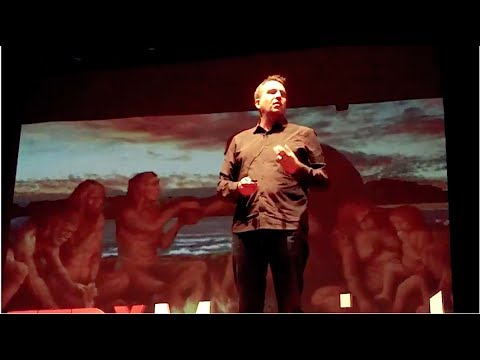
once upon a time 50,000 ish years ago we
lived in tribes cultural parent ologists
tell us were no more than 150 strong
because that’s what could survive in the
environment at that time there was
danger all around those tribes forces
that they could not control wanted to
kill them to maim them to displace them
the weather competitive tribes animals
that were stronger and faster
our survival was at stake human
existence was at stake and yet I stand
here today before you and you sit before
me mostly and we survived some things at
play here how did that happen well it
turns out there’s a pattern it turns out
that there’s a formula and over 50 and
millennia that pattern in that formula
has played out and the tribes and the
organizations and the individuals who
followed that were more successful than
others
it’s been there for everyone to see all
I’ve done is codified and I call it the
law of infusion of purpose and the law
of infusion of purpose applies equally
today as it did back then and it
explains why some people in some
organizations who start with purpose who
start with why becomes successful and
why some who start with why who’s
stating their brand their cause their
belief what they stand for are not
successful
so let’s take a look but before we do a
little neuroscience 50,000 years ago our
brains were not as evolved as they are
today
the limbic brain where all emotion is
hold was very evolved and these tribes
were instinctual in the way they behaved
the law of infusion of purpose came
about because survival the fittest these
tribes that survives tested this
instinctually the neocortex the modern
part of the brain was not evolved
there’s no capacity for language so what
we’re about to see here the law of
infusion of innovation of which there
are six components to the equation all
came about from an EQ that our ancestors
fifty thousand years ago had so it’s
very simple it starts with a shared
purpose the tribe had one thing in
common and one thing to do they had to
survive they didn’t have a choice they
didn’t know any better all the members
of the tribe had to agree that survival
was the thing that they were working
towards if you didn’t agree to that you
got kicked out of the tribe if you
didn’t pull your weight there was no
place for you in the tribe you were a
virus so to speak the tribe had early
adopters and innovators to innovation
was key to our society back then
figuring out how to make the fire last
for longer how to protect it when it
rained a new way to hunt the woolly
mammoth it was required for a tribe to
survive the rewards back then were all
biological if you successfully killed a
bama ‘the and you ate the protein that
was good for you your body responded you
would say I should do that again if you
found the right roots and vegetables to
eat it was nutritious for you you would
do it again if you saw something on the
horizon it took a little bit of an
effort to run across the savanna to get
there
your body will release epinephrine to
give you that runner’s high and then
when you succeeded it would release
dopamine little hits that created sad
fashion that you achieved a goal
storytelling was the fifth pillar back
then there are no video cameras there
are no cell phones there is no pen or
paper the way we shared our experiences
the way we passed down the experiences
was through stories when someone from
another tribe came and visited us the
way we knew that we were friends not
enemies is because we had common stories
and common themes together and in fact
after fire was invented the only thing
we could do at night when it was so dark
outside was sit around the campfire and
tell stories so it’s part of our DNA and
all the tribes align their operation
every member of the tribe from the chief
to the hunters to the gatherers to the
shaman’s had a job to do each of their
operations was equalled what no one no
more equal or better than the other my
favorite one is the person whose root
asked with keeping the fire going at
night why because if you fell asleep and
the fire went out you could be attacked
so you had to understand and trust and
cooperate with everyone else so that you
could go to sleep knowing that you would
wake up in the morning the law of
infusion of purpose so fast-forward
50,000 years to today’s time what’s
different
well back then survival was a long-term
horizon and the tribes that’s the only
way they looked at it today we live in a
society where short-term fixes are
things that everyone goes after and
people are thinking now that purpose or
the declaration of purpose is a panacea
a silver bullet to solve the problems
they haven’t learned from history that
that just doesn’t work and so they make
the excuse that says today’s times are
different what worked in the past can’t
possibly work too
and say they continue that behavior and
we know though that the data suggests
otherwise that those companies and those
people that simply declare their purpose
and say what they stand for are not
always successful why is that it’s
because if we go back to the law of
infusion of purpose we realize that the
first element of that equation shared
purpose stating a purpose is only
one-sixth of how you’re successful
you can’t fight 50 Millennials of
success Gandhi noticed and put it at a
very macro statement happiness is when
what you think what you say and what you
do or in harmony he knew at the macro
level what the law of infusion of
purpose meant he didn’t understand at
the equation level what all those six
principles were but at the macro level
he did and what he meant was this that
what is required to be successful is the
balance between what you say and what
you do between what you stick Lehr your
brand promise to be and then how you
deliver on that brand promise and I
remind you this is true for individuals
it’s true for companies it’s true for
any brand and organizations of all type
so let me give you an example and I’m
going to start with a personal example
and then we’ll move to an organizational
example I’m here today I’m going to tell
you that what I want to stand for that I
want what I want to be known for is
being a good husband good spouse a good
father and a good friend when I leave
here today I will have been sitting here
all day and I get back to my home I’m
going to have a hundred emails waiting
for me and although I promised my wife I
waited dinner with her there are outside
forces that will cause me perhaps to say
I’m sorry I can’t have dinner and then
next week when I go on a business trip
outside forces might cause me to for
get to call my son on his birthday or
forget to come home because I promised a
friend that I would go to a concert with
him or her not allowing me to keep my
brand promise not allowing me to live
into what I stood for and then one day
as I’m getting later in life I’m going
to say oh you know what I did say that’s
what I was going to do and I’d better do
that and okay for a little while I did
but then I didn’t and I did it again and
finally we arrived at my grave and as
people stand before my grave and look at
my epitaph if I say I was going to do
something but I didn’t balance it with
doing what I said what will I be
remembered by what will you be
remembered for at best its rest in peace
not a lot to say at worst if you say
you’re going to do something and you
don’t do it what are you a liar I don’t
think any of us want that to be what our
legacy is there’s another possible
outcome you say you want to be a beloved
spouse I say I want to be a beloved
father I say I want to be a beloved
friend and then although it’s hard when
I go home tonight I don’t pick up my
iphone I don’t start going through the
emails I have dinner with my wife
and when I’m on that business trip even
though it’d be great to go with my
colleagues to the Napa Valley after for
the weekend I come home and I go to my
daughter’s soccer game and although it
would be easy not to
I remember my friend’s birthday and
those friends who are in my tribe that I
care about who believe in what I believe
in who believe in being a beloved friend
and I do that and then because life
interrupts you and you can’t always be
perfect and everything is trying to
imbalance you all the time you slip
because we all do because that’s what
being human is all about but then you
pick yourself up and you do the hard
work again and you live into the brand
promise that you made to yourself and
you declared
publicly to all of your friends and all
of your family and you do it again and
again and again until you get to your
grave and then what happens people
standing in front reading your appetite
it’s totally different right I’m
remembered as a beloved spouse a beloved
friend and a beloved father at the macro
level you see the impact of what the law
of infusion of purpose means when you
start with a purpose but then you finish
with doing the five additional pillars
of the formula it works every time let’s
look at a corporate example now just
shared a personal one at a corporate
example in modern times for example of
modern times I want to use an analogy a
story we know that storytelling unites
us all 50,000 years ago there was no
wheel yet invented but today there is so
let’s look at the wheel as the analogy
and I want you to imagine for a moment
that it’s not just any wheel but it’s a
wagon wheel and you all know what a
wagon wheel looks like it has spokes
right when the spokes of a wagon wheel
are completely balanced completely
aligned the wheel rolls if one of the
spokes is imbalanced if one of the
spokes is not aligned with the other
what happens the wheel wobbles you still
might move forward but the wheel wobbles
if two of the spokes are an align what
happens the wheel wobbles a little bit
more it still may move forward if you’re
lucky but if three or four or five or
six of those folks are not aligned or
not imbalanced the wheel will not move
backward or forward you’re stuck in the
middle unable to make a decision unable
to make an impact unable to do what you
said you were going to do you want to
avoid having misalignment of the spokes
at all cost this is what that might look
like in today’s corporate environment
the same six elements of the law of
infusion of purpose
for analogy sake aligned in a circle
around the spokes of a wheel in order
for an organization a family a tribe to
run smoothly to move forward to not be
stuck in the mud you need all six things
aligned shared purpose so let’s use an
example harley-davidson in the late
1950s
Harley Davis’s were born out of a vision
out of a belief of the hippies of that
era that they didn’t want to conform
with the establishment that they wanted
to be free that they wanted to do what
they wanted and so they declared the
founders of harley-davidson they found
other like-minded people they aligned
mindset and they declared their shared
purpose loudly so everyone could hear we
want to fulfill dreams of personal
freedom by being able to get on a bike
and go wherever we want whenever we want
and you can’t tell us not to do it two
of the pillars align there were early
adopters and innovators they had to
invent a new type of bike Harley
Davidsons aren’t the best bikes in the
world but they have a sleek elegance to
them they experimented they found a look
and a feel and a style that appealed to
the people believed who believed in what
they believed in innovation is key
innovation was key 50,000 years ago the
rewards intrinsic rewards the difference
between extrinsic rewards which the
carrot and the stick
versus ignorant intrinsic rewards Daniel
ping speaks about it in his book Drive
right the idea feeling trusted and
fulfilled and happy when you go to work
every day they set up that company
Harley Davidson so the insurance rewards
were aligned with their purpose they did
what they say they were going to do and
both they and their customers felt
rewarded in everything they did you
can’t talk to a Harley owner without
them telling a story a great story about
it was like to go on a trip about how
they met their their wife or great
friends on a cross-country tour how they
flew to Vietnam and rented Harley’s and
had people in the villages stopped them
and looking at their bike and ask them
for the stories it’s part of their
culture it’s part of a shared experience
and finally to align all of your tribe
operations to support the purpose its
the infusion of purpose the law of
infusion of purpose all of the
operations which is exactly the opposite
of the way most companies think most
company thinks that their operations are
there to create efficiency to drain more
revenue the opposite of true of
companies who follow the law of infusion
of purpose their operations their people
process and technologies are there to
support the vision of the shared purpose
and when you do that when you do that
isn’t in an individual or as an
organization what happens you become a
beloved person you become a beloved
brand because it’s not what you say it’s
the combination of what you say in what
you do and maintaining that balance is
hard so if I can leave you with one
thought today it’s this that while
purpose gets all the credit declaring
purpose is inspiring declaring purpose
brings people and attract people to your
movement without the four other five
elements of the equation without the
without the complete law of infusion of
purpose you can’t be successful so it’s
the hard work and the daily work of
consistently balancing what you say and
what you do of consistently balancing
your brand promise and your brand
delivery of consistently balancing your
what in your why that transforms
ordinary people and ordinary
organizations into beloved brands thank
you
[Music]
Please follow and like us: