
okey hey da mr. Norton eNOS Tony Danny
good and I three sound awesome hello and
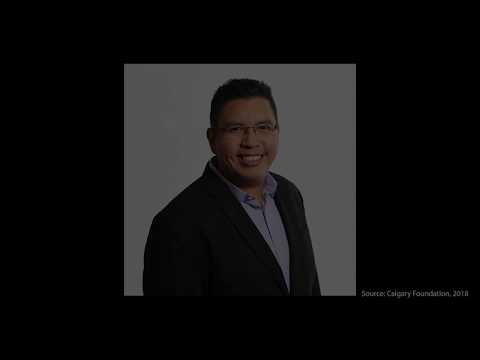
good morning everyone my name is Tim Fox
and I’m originally from the kyanite
nation which is a part of the Blackfoot
Confederacy my family comes from the a
capo Geeks clan and in English that
translates to the many children’s clan
and I’m very proud of where I come from
but it hasn’t always been that way so
today I’m hoping to shed some light on
many important issues by using my
personal story as parallels to the need
to repair a relationship across the
country and moving into generations to
come so last year I attended a
presentation where an elder mentor and
academic from my community leader a
little Barrett was giving a talk on
Canada 150 from an indigenous
perspective so being in business myself
I was intrigued to come and listen to
lis represent because I knew that Canada
150 was a point of contention for many
people many indigenous people across
Turtle Island and leroy said many things
at this presentation many profound
things as he often as he often does when
he presents and one of those things has
always stuck out with me he said every
society in one way or another lays claim
to a territory within the claimed
territory a culture arises from the
mutual relationship with the land a
culture consists of paradigm ik concepts
values and customs paradigms are the
tacit infrastructures members of a
society utilized for their beliefs
behavior and relationships so in other
words the way societies and nations are
supposed to be built are meant to come
from the values beliefs and customs of
the original people of that land but
when you think of things like the
Canadian national anthem symbols of the
Canadian flag and all things that are
considered to be Canadian they’re not
based on the original customs beliefs
and values of the original people of
this land so Leroy was an ambassador for
Canada 150 but he made it clear to the
people who asked him to be an ambassador
that he was going to use that platform
to tell the missing story of Canada 150
and be a voice for the indigenous people
of this territory so within this vein we
have begun to develop a community
resource that talks about the importance
of providing and giving voice and
context as well as acknowledgement what
is land acknowledgment those of us that
are continuing our oral histories are
blessed what we shared that was told
from way back
we were part of the ecosystem we were
not masters of it you know after we go
up from my biological mother’s the earth
becomes everything that we need is there
well we were raised to believe that
everything has a spirit and that
everything around us is alive and has a
purpose the spirit of the land our
spirit you can’t separate land in three
to seven territory I’m accepted I’m
we acknowledge Treaty seven territory we
acknowledge the Treaty seven nations
that be gunning six Agha gana Stoney
Nakota
and the certain of First Nations we
acknowledge the ancestral territory of
six agates at the people the Blackfoot
Confederacy in the home of maytee region
number three this is one of the reasons
why it’s so crucial to understand why we
acknowledge traditional territories we
need to foster a world of equality and
balance my hope is that all across the
country moving forward will acknowledge
territories and prioritize the
acknowledgement of traditional
territories the same way we acknowledge
and prioritize singing of a national
anthem it’s about creating that balance
so this year’s TEDx theme is focused on
legume as you know it’s a Swedish term
that centers around the balance of life
and I can resonate with this theme both
personally and professionally so from a
personal perspective it’s about
continuing to create balance in my life
by fostering a relationship that I have
with the land this is important because
pre-european contact indigenous people
have always had a strong relationship
with the land and spirituality our
belief is that everything has a spirit
and emit things
inanimate things carry spirits meant to
create balance for individuals and for
the environment but it’s it’s meant to
benefit everyone that was our belief
system I’ve been taught stories of
living off the land in a way that left
enough for future generations gratitude
for the many gifts this earth provides
us with was and still is incorporated
into ceremony and offering of tobacco
hunters would only hunt enough so that
our families and communities were fed we
understood that no one above this above
the Creator governed this land in our
relationship with it traditional
community structures fostered consensus
and although there there still are and
there were people who have leadership
roles everyone was involved in the
decision-making process everyone had
that equal voice in our communities
children were at the center of our
community structures there were the most
important people of our communities in
some nations infants were kept in Moss
bags for the first few months of their
life they weren’t allowed to touch the
earth just because they were seen to be
so sacred they were going to carry our
way of life our values our traditions
our spirituality into the future for
future generations
language identity our traditional family
structure goes beyond the biological
connection that we have to our parents
and it extends to our aunts our uncle’s
our grandparents who we also consider
our parents
cousins become siblings biologically I
have a younger brother and I have one
sister biologically but in a traditional
sense
I have many brothers and I have many
sisters there is diversity within our
Nations and depending on where you come
from there are different variations and
teachings of the Medicine Wheel the
consistency with this teaching how the
Medicine Wheel is about creating balance
from an individual perspective our
belief is that everyone has a medicine
wheel that makes up our physical mental
emotional and spiritual selves the
challenge we have is keeping that
medicine wheel into imbalance so as an
example if you’re stressed out about
something maybe work school personal
relationships
chances are the mental quadrant of your
medicine wheel is taking over so how can
you find ways to focus on other areas of
your medicine wheel to bring yourself
back into balance go for a run a walk
work out talk to someone pray or
LightSwitch it’s about trying to find
that balance in disruption so I’m
emphasizing all of this I’m emphasizing
traditional indigenous paradigms of
thought and practice when it comes to
relationships with the land and
spirituality and family I’m emphasizing
where I come from for a reason there was
a disruption in our way of life and how
we value family and how we practice
ceremony looking back at my own school
experience I attended a school with
mostly non-indigenous peers and while my
classmates were engaged in a lesson and
asking questions I was the child that
said at the back of the classroom they
kept to myself it wasn’t because I
didn’t understand the lesson that was
being talked to me or that I was
incapable of making friends it was just
that my mind was on other struggles and
challenges going on in my life most
likely due to toxic stress or loss now
my story isn’t that different from other
narratives of systemic discrimination
addictions and poverty I experienced all
of that growing up but I normalized it I
thought that only indigenous people
experienced that because I couldn’t see
that happening with my other classmates
so I carried a lot of shame with me I
wasn’t always as proud of where I come
from as I am today I even remember being
in school and hearing some teachers
refer to me in very discriminatory in
stereotypical ways that was my
experience going to school I resented my
parents I didn’t agree with the way they
parented me or some of the decisions
that they made and negative experiences
that they exposed me to and so I grew up
with that kind of struggle my shame was
amplified the older I got and as I
experienced the varying sectors of
society and personally but I continued
today to carry a healing journey and
focus on my connection to culture and
spirituality through the land in my
relationship
thankfully my healing continues and will
continue until I leave this world I’m
also very proud to be indigenous I’m
very proud of where I come from I have
an incredibly close relationship to my
parents and I no longer hold any
resentment towards them today I’m the
director of indigenous relations with
the Kaveri foundation we inspired
philanthropy so we can support the
charitable sector to do the amazing work
that they have a mission to do in my
role I’m focused on the area of systems
change and finding ways to mobilize the
Truth and Reconciliation Commission at
the foundation and in the broader
community part of this work includes
developing ways we can collectively work
towards strengthening our relationship
in need of repair I’m talking about the
relationship between indigenous and
non-indigenous people from a
professional sense it is about bringing
the the disruption that I referred to to
the forefront of the conversation when
we’re talking about shared history and
the Truth and Reconciliation Commission
it’s important that when you think of
history and the residential school
experience for indigenous people it’s
not just my history that’s your history
as well it’s a shared history a lot of
things seem to be surfacing when it
comes to indigenous initiatives these
days but there’s still so much work to
be done to address the historical
disruption that still impacts indigenous
communities today the imbalance in
equality for indigenous people is
prevalent in so many ways and ranges
from little to no access to clean
drinking water for most First Nations
communities across the country to an
abundance of indigenous women girls and
two-spirited going missing or being
murdered two indigenous young people
losing their lives at the hands of
non-indigenous people and no one being
held accountable to the continued loss
of land and resources from our
communities and removal of our children
from communities it’s relentless and it
still happens today in balance no I
think it’s injustice there’s very little
separating my personal experience in my
professional experiences you could
probably tell from these examples I do
believe change will happen and shifts
will occur but I would be naive to think
I will see the significant changes we
need in my lifetime I think I’m hopeful
that they will but it’s not the reason I
continue to do this work I am motivated
to do this work for future generations
like my daughter who was seven years old
she will become an indigenous woman one
day and that’s both exciting and
terrifying sorry there’s a reality to
our situation or I’m scared that
anything can happen to her she can go
missing or she can be murdered and
nothing will be done and based on recent
incidences for Colton bushi and Tina
Fontaine
she can lose her life at the hands of a
non-indigenous person and no one will be
held accountable that’s what I think
about that when I think about my
daughter going up on the flipside I’m
excited about the idea of my daughter
overcoming layer upon layer of challenge
and unequal prioritization and
experiencing a level of success that we
see in so many indigenous women today
like her mother her grandmother and her
aunt and in the broader community where
there’s an abundance of indigenous women
succeeding in leadership advocacy and
success all of these women inspire so
many including my daughter and I another
point of Leroy’s presentation last year
focused on the age of reason from what I
understand as and as he explained it the
age of reason is about mathematics and
science if you could improve it through
math or science it was discounted and
was seen as irrational now the age of
reason was in full bloom at the time of
colonization of North American
indigenous people so you can imagine
what European settlers were thinking
when they came across our people
practicing traditional forms of
spirituality and culture and connection
to land they had no problem committing
atrocities on our people and it still
continues today there is a thought
pattern that exists cindy Blackstock
refers to it as a colonial dichotomy of
the savage and the civilized the savage
being indigenous people and the
civilized being the settler community
one of the pioneers of this thought
pattern is the well-known Sir John a
McDonald now we all learn about Johnny
McDonald as Canada’s first prime
minister and only recently have we begun
to learn about that his his intentional
destruction and assimilation efforts of
the indigenous people he said Indian
children should be taken away from their
parents so as to eliminate their bar
Berrien influenced and exposed the
children to the benefits of civilization
the teacher has been sent out as an
educational missionary to introduce
culture changes in Indian societies it’s
a thought pattern that fuelled
adopting indigenous paradigms of
practice and culture is not only needed
to create balance and life for
indigenous people but it is imperative
for the sustainability of this land we
need to seek to understand movements of
change gone are the days when indigenous
people had no say in all matters
associated with our lives
we need to be acknowledged and respected
as equal members of the society who have
an instrumental insurmountable
opportunity to contribute to the social
and economic fabric of this country
after all the indigenous population is
the fastest growing segment of the
Canadian population so Canada needs to
prepare itself for this growth by
fostering a society and a nation of
balance and equality legume for me is
related to mobilizing efforts of
reconciliation at the Calgary Foundation
we have entered our own journey of
reconciliation and while this is an
ongoing process we have already begun to
experience a shift in how we work and
the shift is evident in very small
subtle ways but also very profound
intentional realizations that are
embedded into our practice at work and
at home but we are only one small piece
of a larger puzzle of society together
all of us indigenous and non-indigenous
communities alike can create the
substantial changes we need on a broad
scale so that we live in a society in a
world of lagoa of respect equality reciprocity
Please follow and like us: