
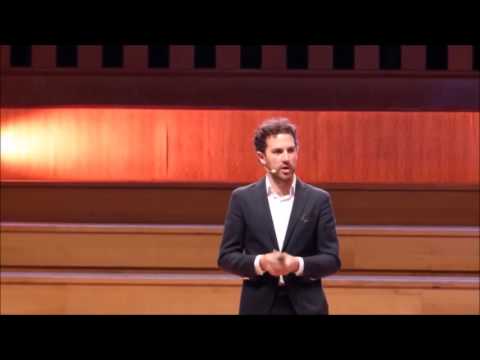
exciting to standing on this stage and
this is actually a very great view I’m
going to be very honest with you from
the beginning
my introduction will probably be a bit
more different and quite explicit a
little bit x-rated if you will and if
you read my title then probably a lot of
you are frightened of this question but
I’m going to ask it anyway who have you
ever had a one-night stand come on don’t
be afraid okay so I see some smile in
your faces I see some people that really
are thinking back of that memory and I’m
happy that I could deliver that for you
but also see some people that are a bit
more doubting that are a bit more afraid
and then I see a third group of people
and this third group maybe doesn’t know
what I’m talking about or doesn’t really
want to know what I’m talking about but
that’s no problem I’ll take my time and
I’ll try to explain what a
one-night-stand this because you will
see that this method fool will be used
as we go along in my presentation first
of all a one-night stand is a special
event it’s some kind of a momentum so
it’s a special event but in another way
it’s a very simple a very elementary
build-up and I’ll take you through this
one first of all of course you meet
somebody you meet somebody new you meet
somebody excited and besides food
there’s probably quite some drinking
involved to this in most cases there’s a
lot of drinking involved but the night
proceeds and you start dancing there’s
some music it really gets fun it’s this
high energy and at a certain point you
realize that you run the same pace you
realize that you have the same energy
you realize that there’s some kind of
yeah as I said a momentum but it’s more
than talks a one-night stand is not just
about talks there’s a sexual build-up
step by step this sexual tension becomes
bigger until the moment where you reach
the climax and if you’re really lucky
you reach
– okay fun part done I’ll quickly take
you to a time hub five six hours later
you wake up different story your mouth
is dry you have a headache you really
feel different and you look to your
right you look to your left
she’s not there she’s actually gone you
just realized that you’re all alone you
SMS her you send a text message you call
her you go on LinkedIn on Facebook all
of the channels but there’s no response
there’s only uh Terr
silence next time up five to six months
later you meet your friends your
partners in crime the people that really
put you through all this and when you
get together you have a few drinks and
they come with a new question they asked
you the question did you ever meet her
again do you know what happened to her
did you had the chance to speak with her
did you had a chance to meet her again
face to face do you actually know what
she is doing and then you think you step
back and you think about all the text
message you said all the calls and you
have to admit I don’t have a clue where
she is I completely lost track of her
and this is where I really want you to
stand still for a moment and think about
that because I’m going to switch from
storytelling to something deadly serious
I’ve been talking about one-night stands
and it’s the fun thing and basically
what it is it builds up tension you go
step by step you go to a sexual peak and
then all of a sudden it plummets it’s
something what we call the souffle
effect and we see the souffle effect we
see it in innovation nowadays because
innovation is such a hot topic
everybody’s talking about it everybody
wants to do it and everybody wants to do
it fast and if you would be a CEO today
innovation would be amongst the top
three priorities because if it wouldn’t
you would be a bit strange you would be
very different
than other CEOs but what we see is that
innovation is currently handled from a
very much standpoint as an event
business its entertainments it’s a one
night stand and I’ll quickly explain how
we observe this today I’ll take it to a
short story if you would be a CEO you
probably would group your management
team together and you would send them on
an off-site probably to the audience and
you would have a very expensive
consultant to join them you would pack a
bunch of post-its put them on the table
and you will start building a team
atmosphere and the people they will grow
closer together and they will dream
where their company could go in two or
three or four years and posters go on
the wall ideas grow and when you end
these exercises you can end up with 350
ideas a customer of ours did an
innovation they global 350 ideas were on
the table then those people go back to
their jobs and on Monday they realize
that they have a number of emails piled
up of their normal work their day-to-day
job they go back to meetings they missed
they check in with people and four to
five months later they look back and
they think we really had a really nice
management team back in the audience
remember that the CFO got drunk yeah the
student was really good and what did we
do with those ideas and then in most
cases it’s really silent because those
350 ideas are probably on somebody’s
desk and nothing has happening and this
is what we’re struggling with this is
where I want to take a next step and say
that innovation requires a strategy if
you consider innovation to be an event
business entertainment inspiration then
you don’t have value and this is where I
want to get your attention with three
pragmatic tips three trap pragmatic
pointers and the first one will be a
very specific guideline the second one
will be a bit more on the organization
and process level and the third one will
be more on how you look at innovation
and what
Livas what is a kind of philosophic note
at the end the first one you need to
think beyond the posted exercise if you
look at innovation of just being a
brainstorm then you end up with nothing
innovation is about execution and of
course those brain storms are fun and
it’s really excited to be in one room
and to grow closer together but what you
really want to have is execution power
you want to realize stuff because in the
end if you get a good idea it doesn’t
get you a medal you do not get a price
for a good idea actually and this is
very straightforward and blunt a good
idea is worth nothing
you can ask legal it’s worth nothing but
what you do need is execution power you
want to make things happen so what I
want you to do is before you initiate
yourself in an innovation program before
you start off on these inspiring tracks
of building the new company is that you
think on execution you should rethink
what you’re capable of doing 350 ideas
impossible why don’t we make three and
deliver on three and really execute them
so when I normally introduce this I get
some questions from the audience and say
okay Philip we got a message we need to
think we need to be prepared and we need
to consider what we’re capable of doing
make sense but I have a problem and the
problem is that my organization is not
capable of working with these ideas and
getting them towards execution and this
is where I want to discuss my second tip
and this is what we’re doing actually at
our core we are institutionalizing
innovation so this brings me back to the
process and organizational side of
innovation if I would asked you who’s
got a full time job or who is about to
engage in a full time job normally all
of the hands go up and if I then ask for
who of you a full time job means working
more than 9:00 to 5:00 all of those
hands go up as well and this is where
I’m actually challenging that if you’re
working as a performance engine which is
everybody working in the company the
favoring on sales delivering on targets
and really executing your job function
and we add those 350 ideas when are you
going to deliver and this is really the
bottom line we realized from experience
that you cannot match short-term
performance a lot of you are customer
facing as well as short-term performance
to match that with long term innovation
it’s almost impossible not only from a
capacity level but also from mindset
consider this one innovation very vague
you know you think where you’re heading
but you’ll probably end up in that way
it’s about being comfortable with the
uncomfortable very different than being
efficient and highly performant at a
specific task at a specific task and
this is where we introduced something
new something new to help companies
build and gain execution power and this
is something you already know we call it
a year cycle and a few years a few weeks
from now you see these year cycles
popping up in companies and I’ll briefly
explain that within a few weeks probably
marketing will start doing their
research marketing will start doing
their research to build their marketing
plan 2017 and that’s from July and
August the sales teams will be start
working really hard on using these
marketing insights to build their sales
plan 2017 because by September and
October a lot of companies are building
their budgets so finance is setting
targets for the sales and the strategic
plans of 2017 so already in companies
there’s a certain rhythm to things
things that occur every year and get go
around and around what we see and that
we’re really doing at the moment with
companies a building an innovation
rhythm and that allows us to work with
companies and to deliver execution power
and we do this with three main angles
and it’s a bit more complex that what
I’m showing here but I just want to give
you a very tangible view of what we’re
doing the first layer is that we’re
thinking about continuous innovation
there is continuous change out there so
we implement continuous innovation
and in a way we’re helping a focused
dedicated innovation team and we come by
every week with innovation Fridays and
we coach people how to get along with
their ideas how to build execution
besides this continuity we focus on a
second layer and this is speed speed is
really really important if we would just
do the first one these innovation
engines they would take years and years
to deliver we build in hackathons we
build in work sessions we build in very
focused sessions where we get together
20 people to deliver within a week on a
new strategy and the third one is also
crucial to innovation innovation and
inspiration comes from the outside in it
comes from different markets and this is
where we get insights from outsides we
fuel this innovation engine and we get
this thing turn turning year after year
and we see companies that invest in this
way for two to three years that they
really get the execution power they need
I’ve been talking about what you should
do before you before you start an
innovation I’ve been talking about
institutionalizing innovation and the
last one is about how I look at
innovation today what I truly believe is
that the companies of the future that
will survive will be the companies that
will be the most responsive one thing I
know for sure is that it’s impossible to
predict the future two years ago
probably there was somebody here on
stage talking about Google glass one
year ago there was somebody who’s been
was talking about how Apple watch would
change the world and we all know that
Google glass and currently Apple watch
is not going in the direction where we
thought it would go meaning that it’s
impossible to predict the future nobody
of us can say what will happen in two to
three years but if I would be a CEO of a
company I would invest in making my
company ready and responsive and agile
for whatever that comes along and this
means that you need to invest in your
organization this means that you need to
look at your organization and
and just drill it down to different
pieces and a big part of that is people
it’s people that leave your company
people that manage your company and
people that work there if they’re not
they don’t have the capability to deal
with continuous change they will never
build that responsive company that you
need if the leadership of today cannot
let go of the normal behaviors of
controlling things and steps towards a
new way of leadership which is the art
of letting go and letting people thrive
within the environment then you will
face very difficult times and this is
where I end my presentation and I hope
that you have realized that the
complexity of innovation is big it’s
very layered and I hope also that you’ve
realized that innovation is about
continuous change
it’s about continuous innovation it’s
about an innovation engine and with this
topic I feel that innovation is truly an art of change thank you very much