
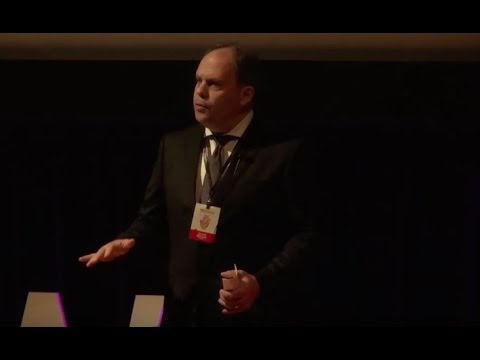
have no slides on them the dinosaur so I
have these paper these paper things in
my hand but I might refer to I have
attention deficit disorder so you know
there were pretty things up on slides I
just took this dragon stare at them with
you I am a I’m a physician I work in
Guelph material also a scholar of a
blooding scholar English literature
cultural studies at McMaster University
and I studied the representations but I
want to tell you some anecdotes you may
wonder why I’m here today this
particular panel has a large amount of
scientific content for the TEDx talk
today and I wonder how did the family
doctor getting the bill well I came here
a couple months ago I was invited by
Josh who’s a PhD at Western and I was
invited because I’m a poet but also
because of a medical doctor bill that
particular Dave was science torture and
so I was allowed in the door based in my
province as medical doctor but I’m sure
you know that most physicians actually
aren’t scientists that’s going to become
ironic as my Cochrane fools I tell you
another anecdote this one involves my
marriage and it was in was in 2003 I was
in Halifax Nova Scotia should just be on
the northwestern I was at a Commissioner
Bose office I was trying to get a
marriage license with my wife we’re
sitting in front of this middle-aged
lady who’s wanted to break down her
occupation required its toes and so in
response to a question as to what I did
I thought well residency so i lured it
out very quickly to build a sign silence
musician and my wife as much can you
than me waited she
had a big smile on her face she just
finished a master’s of science at the
house of university she smiled and she
said scientist I felt like it was a
little bit like a doctor my wife
forevermore won the battle of romantic
career choice I could have at the time
said poet but forevermore I’m a
physician scientist I have another
anecdote for you gets a little bit more
than me to talk today consider rene
descartes a modern-day Rene Dakar
he’s neurophysiologist and he’s in the
burn unit the Health Sciences here in
London Renee isn’t her physiologist but
for some reason yes the 20% burned
surface area burns on his body he’s on
the burn unit knows science he knows how
nerve a connects Louis how a stimulus
effects with no susceptor in the
periphery he knows how that signal goes
up to his brain he knows the
neurotransmitters involved in the
transmission of that signal
he knows the areas of the brain that are
responsible for the reception
interpretation and the cognizance
experience of it but Renee knows
something else
Renee also knows he has a problem with
me because a few years ago
Renee lost his job global financial
crisis it was a private researching a
private company ended up in a rooming
house here in London and he turned to
speak taxed alcohol for solace he had a
cigarettes he has cigarette in his mouth
one night he passed out burned him in
the bed and because the building codes
weren’t enforced in this burning house
sprinklers didn’t go on maybe there were
no sprinklers and so he has the burnin
he’s on the burn unit and neuron a
leading to neuron B does not help him in
his bed he has a problem
not a problem at all so why am I telling
you these anecdotes
I’m telling these anecdotes to present
to you that there’s a different way of
knowing there’s a different way to
produce and disseminate knowledge
perhaps you’ve heard of the discipline
of narrative medicine it’s something
that was largely created by Rita Charan
who’s a PhD in Henry James and also an
internist at Columbia University but
it’s not my intention to even define
narrative medicine today in order to
pretend that I know Rita personally it’s
simply to enact their the medicine in
the form of my presentation because I
truly do feel that there is a problem
with the way we treat these patients
with pain and the problem is done to
patients based on the scientific the
purely scientific view that’s applied to
them so let me define my terms what do I
mean when I say pain well there’s a
local Western connection I believe this
there was a fella by the name of Harold
murski who’s a psychiatrist here in
London and he defined paint for our age
in 1979 he created the definition for
the fledgling International Association
for the study he wrote it and the short
version is pain is a negative sensory
and emotional experience experience to
inter experience in terms of the damage
that work damage is key I don’t disagree
that pain is a negative sensation but
the connector to damage and negative
really becomes normative and what I’m
going to say they’re linked together and
they’re inextricable in the medical view
that is the codified definition that we
have so if that’s pain I need to tell
you that what I’ve taught me about today
is also chronic pain and the National
Institute of Health defines Roenick pain
as pain which lasts longer than three
months there’s more finicky definitions
but that’s going to be the definition
that’s going to suffice for today now I
want to tell you the states of pain in
Canada because there are significant
it’s estimated that 20 percent of
Canadians will experience chronic pain
in their lifetime a number that’s only
gonna go up as we age hopefully we will
of course surprising rates of obesity
and other things are gonna maybe pull
down a recent insult read study was done
69 percent of physicians who have a
significant family physicians who have a
significant amount the palliative care
practice and also convenient practice
estimate that chronic pain is under
treated the cost the Canadian economy
estimated a few years ago by the
Canadian teen society is fifty to sixty
billion dollars a year and maybe a
shocking piece of information it was
shown the shocking to me I was talking
to dr. Jim Ducharme who’s a pain
specialist at the University a
world-renowned expert and he pointed me
to a study done in the archives of
internal medicine in 2015 no that was a
Cochrane review and I’m also not going
to go into the nuances of that but a
Cochrane review is basically a
compilation of all the previous research
that has been done that meets a certain
standard on a particular topic the
upshot of it is there they concluded in
2015 this year there is no evidence to
support the use of opiates in chronic
pain over the over the month of the year
I found that shocking the physical that
is commonly done all goods are used to
prescribe for patients with chronic pain
they did of course find a dose-dependent
so what are what am i saying today am i
saying that doctors are immense I am
actually and am I am I saying this oh
there’s a problem with chronic pain in
Canada both of those things both of
those things are are really obvious let
me tell you what I’m saying based on Who
I am
I’m not a specialist in crime
I’m a family doctor I don’t see chronic
pain patients every day every minute of
every day and I’m also not an expert in
the demographics of what an is a scholar
a budding scholar in English literature
who reach shelves of Canadian literature
to find alternate representations of
pain and I’ll tell you what I’ve
concluded as the possible nature of the
problem that we all share and the nature
of that is that we all use destructive
metaphors to describe pain now before I
get too deep into that I’ll just say it
could be true that we lack the perfect
drive to treat pain and that’s our
that’s our plight as people it could be
that we lack the perfect intervention as
people we think but I would suggest to
you that it’s the path suggested by our
very same destructive metaphors that
makes us the drug so what do I mean by
destructive marketers it’s simple you’ve
all been in this clinic let’s pretend
it’s my clinic but you’ve all been in
this particular clinic I’m sure for
those who in the audience who are
suffering from chronic pain or those in
the audience who are suffering from
acute injuries go into the doctor you
say it hurts some doctor listens
hopefully and he says to you and I would
say to you describe your pain to me and
what words would you use where it’s like
crushing burning stabbing or it think
those are the only words there are
others like it those are the only words
used that we have as people to describe
the pain experience they are metaphors
so this is not a new thing this is
something that’s been known for a long
time so I’m not pointing to anything
that I myself included I have concluded
it but it’s not my original conclusion
it’s been known since the 1940s and
Elaine Scarry popularized it in 1985
with her book of the body in pain it’s a
beautiful book and since Gary’s book
there have been and in response more
positive way is to look at me
so the humanities in particular has
looked at other ways to raining outside
of the hegemonic negative frame we have
now things that I’ll just mention that I
won’t explain but there are ways there’s
eleven Athenian philosophy there’s
subjectivity but why should we care
about these negative numbers what we
should care because we’re all locked
into them if we only have a negative way
to talk about them and how can our
outcomes improve I would suggest to you
that that is the fundamental problem
that we have I doubt that very many
people in the audience listen to this
talk when you talk to your friend about
your pain you say it hurts
it feels like it’s stab not thinking in
terms of it so I have an alternative way
alternative way that I personally frame
me what do I mean by narrative I mean
that the person in pain has has a sink
but it should always be interpreted in
the context of their lives already
I’ve lived with myself out of looking at
things burning stabbing ripping I’ve
looked at affect looking at pain in
is that they are meaning for them that
they have if you have P that fact is
that you have P can have several effects
of life that suggests that it can have
several meanings that that pain has
effects on your life means that I can
have effects on the lives of others so
so let’s I just want to draw our
attention today to the fact that we’re
all in this being predicament
together we’re all in the same boat
we’re all locked into this cultural
model which suggests that would be
expressed negative no if I wanted to be
scientific for a moment for those who
are blind in the audience to speak this
language I could talk without mirror
neurons and wave my hands but what I’d
rather do is go along a parallel track
I’d like to suggest that imagine if you
will a person in pain how do you know
that there is an interesting well you
can tell by their body language you can
tell by their facial expressions you can
tell by the tone of voice
by recognizing these things and then
enter it into their experience you can
impact eclis respond to the person I
don’t mean to suggest to anyone that
pain I don’t mean to suggest that pain
is a good thing all I’m here to suggest
today is that poenas are not necessarily
negative by looking on it that way we’ve
freed ourselves I think a little bit
there has been research done we just
looked at functional enough fMRI
responses functional MRI responses to
people
we’re shown pictures of people we know
in the brain where this works
we’ve done electro biographic Studies on
people who have we have science for them
describe their pain but also to put it
into a context of partly so if you
followed me this far
goodbye what I’m saying
then we’ve left the clinical apocalyptic
mechanistic help that is in some
respects some elements of the modern
medicine we’ve left a huge amount of
infusion of money to pharmacology
looking for the way main pathway where
it’s looking for a perfect magic bullet
again weapon we left that left the hell
we’ve got into the zone let’s say of
recovery positive zone is not
necessarily negative but I still would
suggest despite Levin asking philosophy
despite intersubjectivity despite my
essay at narrative I still suggest we
have a fundamental problem that’s our
problem that’s how we talk to them and
we need to fix that and so by the power
invested in me by FedEx and poetry I
command all the poets who are listening
to me here to work on this problem with
metalwork to try and invent more
and I’ll conclude by saying that the
problem that we have with pain is not
pharmacological or based on intervention
its definitional the problem is of
course and I hope you can all work together to