
[Music]
you
I’m gonna talk to you guys today about
improvisation and when I say
improvisation it’s fairly common for
people to think oh yeah
jazz musicians and these guys are great
if you think Miles Davis Charlie Parker
phenomenal jazz musicians are awesome
improvisers or you think Robin Williams
or comedians basically I think what I
want to sort of argue here today is that
all of us are phenomenal improvisers we
just haven’t noticed it yet and that
improvising is kind of like the earliest
and most effective kind of thinking and
problem-solving so what I want to show
you guys today is how do we improvise
what’s the what are the obstacles that
get in the way of good improvisation and
basically how do we become better
problem solvers and decision makers sort
of on the fly so courage creativity and
the self there’s a pretty funny movie
it’s fairly poignant as well called
three kings and some of you have
probably seen it it’s David O’Russell
there’s a wonderful exchange between two
soldiers in that film it’s probably the
best example I’ve seen of sort of
characterizing what is courage or
bravery these two guys are about to go
into a firefight and one of them says
you’re scared right and the other
soldier says maybe and the first soldier
says the way it works is you do the
thing you’re scared shitless of and you
get the courage after you do it and the
other soldier says that’s a dumbass way
to work it should be the other way
around and the guy says I know that’s
the way it works and I think this is
probably true and that will appreciate
it I think by most of us but one of the
things you have to do when you’re an
improviser is overcome fear fear is a
tremendous obstacle because it gets you
sort of paralyzed and then you you no
longer sort of see the immediate
situation and you don’t respond well to
the actual changes that are going on
around you so I want to show you some
great improvisers this gentleman here on
the left of course is Bo Diddley and
everybody knows he’s one of the great
framers of rock and roll one of the
great creators of rock and roll and this
utterly terrified lad
behind him is me so you see on the right
hand side I got a call this was many
many years ago when Bo Diddley was still
active Steve would you play guitar
behind that Bo Diddley he’s coming to
Chicago this was down the street at
buddy guys legends the original legends
and I had had a little bit of success at
this point as a musician otherwise they
they wouldn’t have called me presumably
but nothing on this order of magnitude
this was way over my head
and utterly terrifying and so I did the
the thing that I think most people would
do is I got the entire opus of Bo
Diddley I’m you know record and listened
to everything and figured out every
guitar part and got into the deep cuts
that nobody’s heard in 30 years and I
thought this is the way to prepare know
everything and then the day of the
performance comes along and we go down
to the club and I’m thinking well we’re
gonna head least rehearse with Bo he’s
gonna tell us what Tunes were doing
right no performance time comes he’s
nowhere to be seen and the manager says
get up and start playing and so we’re
playing on stage and it was booked Italy
and he just comes walking in off the
street with his guitar just storms the
stage plugs in and starts playing and
we’re like oh my god what key are we in
what are the chords what you know what
tune is it no idea that’s a classic
improvisation story and what I found was
we were able to find the key then sort
of figure out vaguely what the chord
changes were and then sort of get behind
it and lock in and after the first tune
he’s he turned back to us and said I
never forget it was so bizarre he said
that this cat is tied now let’s skin it
and we were like okay let’s spin it both
and this was a it’s a kind of a good
example because we did not have any set
list or song structure but but all the
work that we had done that I had done
figuring out these songs was somewhere
back in my sort of limbic system in what
psychologists call the hot cognate
system I had trained my muscle memory to
sort of be able to follow things there
were no actual song parts that I had
memorized that that sort of inserted
into the performance but in a sense I
had the kind of vocabulary that was
necessary and that’s a great thing about
improvisation is prepare prepare prepare
then forget about it and try to be more
receptive to what’s actually happening
in the here and now
now there’s other kinds of improvisation
to cultural improvisation is something
we’re all doing all the time if you go
to a foreign country and you go down to
the market and you don’t know the
language or maybe you know a little bit
of vocabulary you are improvising you’re
engaging in all kinds of body movement
gestures you’re trying to figure out
what they’re saying you’re trying to
navigate your way through and so it’s
very common for us to do cultural
improvisation when we’re in foreign
countries but this is true also if you
just go from urban spaces to rural
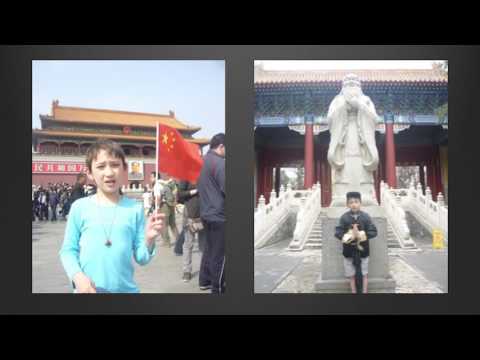
spaces and back again so this is China
this is my son in China we’ve lived in
China on and off for a few years and
it’s always an amazing adventure even
though I learned more every time it
still shocks me and surprises me here’s
a very sort of trivial example of
cultural improvisation we’re in China
we’re at Tiananmen Square walking around
like other tourists and it’s very common
for Chinese people particularly older
Chinese people to come right up to a kid
especially a foreign kid and put their
hands on his face this is just very
common practice like they’re curious
they think he’s cute they want to get
into his into his personal space but for
the kid it’s very surprising and
disturbing because we have this notion
of personal space like don’t come up and
touch my face
and for the parent I’m like oh my god
hygienic concerns and all this sort of
thing and we’re out on Tiananmen Square
and this this guy comes out of nowhere
just like grabs my son’s face and I’m
like whoa Booya we don’t want this and
and I see a cop and I yell for the cop
to come over I don’t even know what I’m
thinking like well how is this going to
help but
I think when else to do so the cop comes
over and I’m start to explain to the cop
you know what’s going on and he’s got
his hands on my son’s face so I realized
okay that there’s some expectations that
we have that are cultural and if you
hold to them or cling to them too strong
then you won’t be able to adapt the
environment that’s happening and so we
learned you know how to say
Genta booyah oh I really don’t want you
to touch my face but we also learned to
roll with it and sort of good humor and
a sense of play is really vital for
improvisation if you’re too uptight
then you’re gonna miss these wonderful
opportunities and that’s a fairly
trivial example but it’s kind of a fun
one here’s one also fairly trivial but
fun as well here’s a bit of social
improvisation again in China but I think
you could apply this to all of your
travels I’m doing something very mundane
like buying a watch in a Chinese
department store and when I go through
after I’ve paid for it I go through the
security detection system and it starts
blaring the alarm and so I I go back and
basically like four guys descend on me
with walkie talkies wearing these sort
of military outfits and fine
okay so I put the bag down and I walk
through and the alarm goes off again
now managers are coming over and like a
group of people starting to form around
the the security device so I go back and
then I’m standing there and I’m trying
to demonstrate they don’t have anything
with me so I’m like I was shirt and
pants on and I’ve even pulled my pot by
pockets out of my pants like a cartoon
character who’s trying to demonstrate
that he doesn’t have any money and I go
through and I keep setting off the alarm
now a bigger and bigger crowd is forming
and they they’re not mad about it or
angry they’re fairly polite and even
apologetic but nobody seems to be able
to let me go through and here in the
States you just be allowed some kind of
magnetic glitch you know be on your way
but there were just standing there and
standing there so finally I’m like okay
I just take my shirt off and now I’m
standing there with no shirt on
and there’s a big crowd around I’m like
I go through it the alarm goes off again
so finally I take my pants off and I’m
standing in a Chinese department store
in front of a hundred people in my
underwear and so so but I had to smile
and laugh and then they were smiling and
laughing and in the end you know turn
out to be some weird manufacturers tag
that was built into the pants that I had
bought in in the States so I was it
allowed to go on my way but this is an
example again it’s sort of improvising
they didn’t know what to do there was no
protocol for letting me through I didn’t
know what to do either we solved the
problem I think and I don’t know whether
I I gained face or lost face I think I
probably lost a lot of face whatever all
right so then I moved to Cambodia this
is a while ago and I lived in Cambodia
for a while and one of the things I
learned there I was teaching at the
Buddhist Institute in Cambodia and one
of the things you learn about Eastern
culture is Buddhism has a notion that
says you think you’re a self or you have
a soul or there’s some sort of core
essential ego within you but really that
doesn’t exist that’s a kind of fiction
and one of the goals in Buddhism is to
sort of overcome this natural tendency
to feel self-important and to sort of
have your ego out there in in front of
everything and so this idea of
selflessness is really important and I
learned it when I was living in Cambodia
it’s also really important for
improvisation if your self is in the way
then improvisation usually goes badly
you’re too worried about protecting it
and making sure it gets status and
usually forms a great obstacle to good
improvisation this is true in in music
and true in life and so one of the
things that you can see here is a kind
of representation it’s a this is
obviously a sort of a joke version but
many of us think there’s this essential
self what I want to suggest is that the
eastern philosophy like Buddhism and to
some extent Chinese philosophy like
Taoism suggests that weak
overcome this notion of self in Chinese
philosophy particularly Taoism you’ll
see the same kind of philosophy just
like I had studied Bo Diddley’s music
over and over and the basic sort of
maneuvers to make within blues or rock
music then you have to get to this point
where you sort of forget about what you
learned and it’s basically you have to
let yourself try to just be pure action
there’s a wonderful analogy or metaphor
within Taoism they talked about the
great butcher ding the butcher this is a
Chinese philosopher named wanza tells
this story of a butcher who’s so skilled
that when he approaches the animal to
carve it up he just sort of in a few
very economic moves he sort of unravels
the animal beautifully cuts perfectly
even the joints and between the sinews
and there’s no sort of artificial
cutting everything is perfectly in
keeping with met with nature which
Taoism is basically calls the Dao or the
way of nature so your job as an
improviser is to sort of be as natural
and in the flow of things as possible
and so overcoming the ego is one of the
things you have to do in order to
achieve this so what’s a recipe then for
good improvisation here’s a very brief
sort of eight step this is my Eightfold
Path here first study work master
something this is something as a college
teacher I have to sort of encourage
students to get past the sense that they
can automatically do something well when
they watch a lot of sort of reality
shows and and they think well if I just
have the right feelings it’ll go well no
you have to prepare and study and slave
and and sweat then to put yourself under
duress don’t look for the safe space
look for the unsafe space you know
within reason of course
because duress is what draws out of you
all this potential you can’t actualize
potential unless you’re in this kind of
demanding context three-stop
aggrandizing the self or the ego this is
something we automatically do it’s our
default position and instead serve
others or serve music or whatever it is
this
our goal for fail failed with grace but
fail that 5 fail again 6 fail again
finally 7 succeed and make a difference
and then 8 repeat and so I want to give
you sort of one sort of fun story so
that all these points will may be
condensed into one image Buddhism has a
set of scriptures called the Jataka
tales and these are oftentimes the way
in which young kids in Buddhist
countries are taught Buddhism because
they can’t understand that the hard core
philosophy so their stories that are a
lot like our Aesop’s tales and they have
a moral message and one of them is about
the buddha a bodhisattva who’s traveling
through the the jungle on his own trying
to get from one place to another and
this is called the prince of the five
weapons and he has five weapons on him
he runs across this creature I did this
drawing of it just for fun this is the
furry hug which come to think of it is
not a very intimidating name for a
monster but this creature has a thick
fur that is incredibly sticky and
everything gets stuck in it so the
Buddha attacks him because he basically
says I’m gonna kill you and eat you like
I’ve done everybody else on this pathway
and the Buddha says no you’re not so he
shoots him with an arrow and the arrow
gets stuck in his in his fur and then he
throws a you know a dagger at him and
that gets stuck and it throws another
thing and he basically uses all his
weapons all the weapons get stuck on
this creature but undaunted and using
his fear correctly to improvise he goes
up and he punches the furry hug and his
arm his arm gets stuck in the furry hug
somebody should really do a graphic
novel of this because it’s pretty funny
and then he’s like okay I’ll punch again
so he punches with the the left arm and
his left arm is stuck in the furry hug
then you could see where this is going
right then the right leg then the left
leg so finally he’s entirely stuck in
this monster and the only thing he’s got
left is his head which he then plows
into the creature and now he’s stuck
entirely and all appendages into the end
of the
we hug but he’s undaunted he doesn’t
give up he keeps plowing ahead
the creature is utterly stunned by this
and says who is this lion of a man
unbelievable I’ve never seen anything
like it why aren’t you afraid of me and
the Buddha says because inside me is the
is the dagger of righteousness and even
if you eat me the dagger of
righteousness will will basically cut
you up from the inside out which is sort
of a metaphor for saying you know the
Dharma or the the way of Buddhism is
that strong the furry hug basically
eques s’s and says I am converting to
Buddhism right now be on your merry way
and so the Buddha conquers him with this
truth rather than just violence so my
point is this my sort of last moral
injunction to you is attack life in the
same way that the Buddha attacked the
furry hug thank you very much
Please follow and like us: