
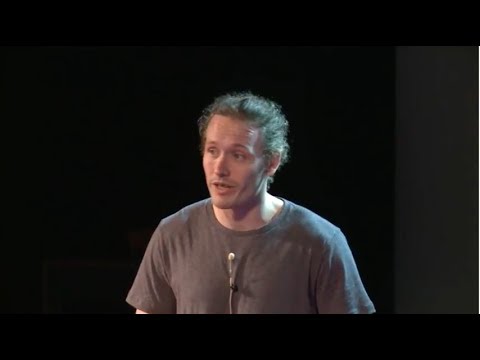
what if a typhoon hit tonight tonight
but when so strong it’s already blowing
roofs of the buildings around you you
have to evacuate any minute
and you can only grab a handful of
things on the way out what would you
bring I return to Tacloban City four
months after typhoon Haiyan the
strongest typhoon to ever hit land
devastated the central regions of
Philippines destroying more than 4
million households and a private
thousands of lives the study center that
I had built with the community was gone
the waves caused by the typhoon had
destroyed it they do nothing behind the
traces of the foundation a man
approached me with a roll of paper in
his hands and he told me he had saved it
from the typhoon and he wanted me to
have it it was a blueprints of the study
center his only thing that he had stayed
on he and his wife and daughter escaped
the waves caused by the – he could have
taken anything but he chose to take the
blueprints and he did that because he
believed that the one thing that they’ll
need after a typhoon has come back
together again the same way to be built
the study center the situation for the
community was already tough before the
typhoon the father’s struggling every
day to get a job to put food on the
table for their families apart from
managing the household and taking care
of the children the mothers was also
working in the market to make ends meet
still they could not afford breakfast or
lunch
not to mention school expenses like
books or uniforms for the kids imagine
imagine how it feels like to graduate
see your children give up and drop out
of school street light was a local NGO I
was working to help these kids back to
school and I was invited to build a
study center for this purpose but to
truly address why the children dropped
out of school we needed to involve their
parents in the process to enable them to
address the underlying issues and
challenges that they were facing in
their everyday life we were no longer
designing a building you’re not
designing a process for us and the
families to come together at first we
asked the children to draw their dreams
for the future and later we ask the
parents to guess which drawing belongs
to your child but they couldn’t it’s
made a deep impression on the parents
but it also became a reason for them to
come together to make an effort to
support their children becoming coming
together wasn’t that easy at first the
children did not want to speak up in
front of their parents and the voiced
Rashied to speak in front of their
husbands so to enable everyone to come
together we needed to separate the
family members into groups of mothers
fathers and children to enable them to
speak freely to build their
self-confidence and to contribute to the
project but to be able to contribute we
needed to provide the time and the space
for the parents to be able to engage so
we employed the fathers on the
construction site providing the security
of a steady income during weekly
workshops with food and entertainment
for the kids the mothers got a break
from their daily responsibilities and
the possibility the time and the space
to think about the future
during this weekly gathering so children
would visualize what they needed to
realize their dreams and the mothers
would give shape to these needs to
drawing a model
the fathers would take these designs and
these ideas and test it out in
full-scale on-site before building the
study center itself the building was not
just a building to come in to the
community there was a symbol of their
efforts for their children
and they had built it through a process
that they later called by Annie hunt
Bunyan is a Filipino tradition of coming
together to make a shared effort towards
a common goal and actually I learned
that we also have a very similar
tradition in Norway that we call doing
odd but for by Nia not big not to exist
the needs to be a sense of community and
had created this by coming together for
the shared purpose of supporting their
children
the building was their take on behind a
bottle a Filipino typology of heavy
stones with a light Kimbra structure on
top this light timber structure allows
for natural ventilation to pass through
the building but it also allows strong
winds to pass through without destroying
the building and this was a principal
use on their own houses
this allowed the study center to survive
several star strong typhoons but also a
major earthquake but on the 8th of
November 2013
typhoon Haiyan created a storm surge by
hit Tacloban City this is a video
showing how the children the parents and
streetlight escaped the race by climbing
onto the nearby roof this was filmed by
my friend Allen which runs street light
founded it the study center was
destroyed many were traumatized by the
waves and I wanted to move off the coast
permanent and temporary houses was being
built in the northern relocation zone
for families that lost their houses but
the uneven distribution and in random
relocation of families contributed to
split communities apart it no sense of
belonging the lack of livelihoods
and infrastructure there was an increase
in crimes and conflicts they became
important for us now that we were also
moving to the northern relocation zone
to not just think about what we were
building back but how we would build
back to deal with the trauma the
community identified two concepts that
were important for them see the that was
the idea of the heavy and the lights the
heavy represented a castle that the
children have seen from the roof had
survived the race and became a symbol of
safety the lights represented a
ventilated timber structure of the study
center it was a symbol of comfort this
these two concepts became a common
language for us to create and to build
back what we lost true role play the
children omission what kind of
activities the building needed the
mothers who take these activities and
position I mean said the heavy and the
light volumes we test these heavy and
the light columns in full scale on site
to understand how the Sun works how the
climate works I’m Eeva dimensionally
also looked in models to understand the
structure the roof the doors the columns
the windows it became important for us
to change the focus away from the
building as a product to the building as
a series of qualities and activities to
design the doors and the windows the
children wrote poems these poems
Illustrated what they meant a window is
for them trying to identify what this
meaning was the fathers would look
around the village where similar doors
windows already existing their word
document is presented back to each other
the way would make new designs in
different materials and test it out on
site or for eventually getting it
approved by their wives the signing of
the windows
and the building’s themselves was a
process of understanding not only what
these objects are but also what they do
it was trying to understand one because
these objects mean to us what resources
and knowledge do we really have and how
can you use this to create something
that that matters to everyone as a group
the office the Study Center the
orphanage the part was recently
completed it took us three years and a
hundred workshops to design and build
back what we lost
remember the blueprint that the father
had saved from the typhoon when we open
it on a table in front of us there was a
strong sense of salt water that’s now
filling the room and we realized that
all the drawings and illustrations they
had already washed away but he told me
it’s not the blueprint itself that
mattered
it’s the meaning and the story is
embedded in this blueprint that later
enabled the community to come back
together to deal with the trauma and
build that what we lost I believe and I
learned this from this project is that
it’s not so much what we do it’s also
how we do it
so whatever profession you have whatever
you do if you can come together with
others build on each other’s differences
and create something a matter so all of
you you sound stronger whatever happens
in the future thank you
Please follow and like us: