
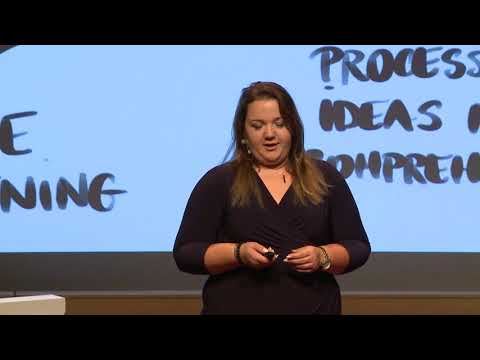
close your eyes please imagine you’re
suffering from information overload as
so many people do nowadays emails
constantly pouring into your inbox phone
calls text messages social media
notifications or even ads lurking around
open your eyes this is modern world we
are surrounded by information every
single minute of our life how does this
make you feel I’m an English teacher and
when I ask my students about information
overload they told me about pressures
stress and it was very often combined
with the feeling of not being able to
manage it all you know what Tim what’s
the most important thing is the fact
that 90% of the information that we
receive is not really relevant but we
have to check it because it might be but
still it’s nothing to worry about the
consequences of information overload are
serious we feel bad it stops us from
thinking clearly and it very often stops
us from being productive in 2017 people
watched movies and TV series for 69
thousand hours on Netflix they also
asked Google three million questions
they posted 46,000 posts on Instagram
and they took a two concered 527
thousands of pictures on snapchat and it
is not the data collected within the
whole year this is what we do on a daily
basis and I was shocked when my friend
told me about this and you can check the
information on the whole August 4 it’s
not PL or Domo calm that we do this
but I’m also like a part of this machine
I also post a lot of information but I
hope that my information is relevant and
meaningful and I also flat people with
this kind of thing today I want to share
with you my way I deal with information
overload and there are like many
different approaches one of them is
digital detox but what I want to
advocate today is called visual thinking
and graphic recording visual thinking is
the art of thinking in pictures it’s
your ability to build mental pictures in
your head generally or especially when
you’re talking to different people
graphic recording on the other hand is
the art of transferring these already
built mental pictures in your heads into
a sheet of paper this approach is very
helpful not only in the classroom
because I use it as an English teacher
but I also use it when I’m at the
conference it’s very helpful and in it
helps a lot of people because we do not
care about the education of a person we
don’t care about the nationality we
don’t care about the culture or the
social class because all of our brains
are very visual there is no brain
that does not think in pictures but very
often we think that we communicate using
words no we don’t mystery pavia I want
you to meet a professor a psychology
professor from the University of Western
Ontario and he has done research in this
field and he also advocates the way that
we comprehend information onto the into
two different ways it’s like we create
our verbal associations and we also
create our visual imagery and this is
how the information gets into our brain
it’s like very very deep
inside us you might hear about Tony
Buzan and his idea is also based on the
concept of the power of combining words
and images together truth be told it’s
very difficult to show you from the
stage how graphic recording works but I
already showed you what visual thinking
is when I asked you the question at the
very beginning of my speech however I’m
going to do a workshop during the lunch
break and then you can approach me and
we can try some graphic recording the
most important thing when you decide to
visually record something something
knowledge or words of somebody is that
you have to listen very actively it’s
not like you can do it by drawing only
the representations of the words you
have to take it very very deep and try
to create like a mental story in your
head and when you do it you’re able to
create like a bigger picture of
everything what has just been said or
what has just happened in a meeting or
during the conference and if you wish
you can check it when you approach the
wall on which I’m today I’m drawing
today there are just three reasons three
reasons that’s it why visual thinking
combined with graphic recording really
work so I’ve been teaching English for
11 years and three years ago I decided
to implement visual thinking and graphic
recording into my teaching curriculum
and the fact is that it has had a very
positive impact on a way I transfer
knowledge to my students and the way
they transfer their knowledge to me it’s
like we exchange mental pictures and
it’s like when I’m a graphic recorder
during my lesson it’s like 90% of
responsibility the responsibility is on
their site because they have to produce
something they have to produce either a
language or they need to know something
so I have anything to draw it’s like I’m
no longer the teacher there I’m only
there to
like recorded the knowledge that they
have so I don’t know if you can imagine
like a better classroom environment than
this when your students already know
it helps their clarity of understanding
their absorption and retention of
information and also their ability to
understand metaphors they are all able
to create bigger pictures and it doesn’t
matter if there are six on the of it
they are like 58 or 100 they know what
they say and not the other way around
they are like very aware of very
different concepts and they are very
aware of the words that they choose and
the pictures of course to represent
their like mental images that they have
in their head one of the most important
things it’s like the focus during the
class it’s like on a very very high
level because they have to they have to
listen to one another in order to be
able to take part in a discussion it’s
also connected with active listening
because they need to know how to follow
the others if they don’t follow they
have like nothing to say so they have
nothing to share so like generally and
to be honest there is no need for them
to be in the classroom because they are
doing like nothing and of course they
are also processing ideas more
comprehensively it is impossible to say
or to judge the image that they create
in these frames of being right or wrong
whatever they decide to put on a sheet
of paper it’s okay if for them the Apple
is only like a circle and a triangle
it’s perfectly okay it is an apple if
they choose to represent it like in a
more exact way I’m also okay with that
and the most important thing everybody
in the classroom must be okay with that
there is no like saying like it doesn’t
look like an apple it does for him it’s
an apple so for you it must be his Apple
and you have to accept it this kind of
process when you combine visual thinking
and graphic recording makes the
environment of learning for students
more open to their ideas like do you
remember when you are asked to come to
the blackboard during the lessons in
primary school or junior high school or
even high school we I’m sure that we
felt stressed and tensed and we didn’t
want to say anything and I think that
the reason for that was because we were
waiting for the right and wrong answer
yes we were also like looking for the
good and the bad because we thought that
this kind of answer is expected from us
while in visual thinking you say what
you really think
but you there is like rule that you
cannot like hurt any other people when
we discuss difficult subjects and just
believe me that even if they are like
sixteen or sometimes even younger they
do discuss difficult concepts we do not
focus on judging never we are focused on
finding the solution it’s very often
like this that we put ourselves into
another person’s shoes so it allows us
to look at things from at least two
different perspectives and when you look
at things from at least two different
perspectives it leads you toward the
solution and if it’s not the solution
after 60 or 90 minutes it’s at least the
right direction that you should follow
all of it is supported by emotional
experience because we all say what we
think but through our subjective land
says I’d never say that the kid who is
six cannot have like more life
experience than that then I have because
for example his or her parents might be
divorced while I have never experienced
such a thing so I’d never say that a
six-year-old kid cannot be my teacher
yes they can but we have to allow them
and they have their own experience they
like lifts their own stories and they’re
like deep insight emotionally based so
we all share emotions here you can see
me in your sitting doing the graphic
recording and it’s also them and I know
for sure that whenever I’m a graphic
recording of the conference I experience
the same things that my students
experience in my classroom or in our
classrooms because it’s not only about
me I have to listen very actively I have
to focus and I have to create a lot of
mental pictures in my head I have to be
like inside head storyteller so then I
know what I want to transfer it to a
sheet of paper do you remember how you
felt when I asked you about information
overload some of you might have been
able to deal with this problem better
than others some of you my might be
still struggling with this but I know
that from today you will at least have
the knowledge that there is a very
powerful tool of dealing with it and I
hope that when you are at a conference
or at a meeting or anywhere where you
have to like take very important
information you will try to record it
visually on your sheet of paper
do you remember doodling while talking
on the phone or
you remember your last pages of
notebooks in primary school for example
or even high school that was your first
step into our common journey because we
all do this there is no need to be any
kind of artist you just need to be able
to transfer what you think into into a
sheet of paper and the most important
lesson from is it’s that visual thinking
and graphic recording they don’t know
nationality they don’t know social
background they don’t know your
education they don’t know anything about
you
we’re all equal in the classroom no
matter the age no matter any
circumstances because we all share the
same pictures in our head and through
the pictures we learn to accept one
ask in Robinson’s
one set revolutions don’t start with
laws and regulations they emerge from
people’s actions they start at the
bottom and this is like my way to start
a revolution in the way we educate
ourselves and I’m sure that you know
that education doesn’t stop when you get
a university degree it’s like lifelong
experience today I want to thank my
students my journey with graphic
recording and visual thinking happened
because of them and they learned from me
as I’ve learned from them I wouldn’t be
here today if they didn’t show me the
way how to teach them and just to finish
I want to I want you to remember that if
you can see it you can learn it thank
you very much [Applause]
Please follow and like us: