
communications I was never much of a fan
of watching television growing up in
fact by the time I was 17 I don’t think
I had really watched an entire series
from start to finish
however my lack of interest for
television changed when I realized that
I might like girls instead of viewing
television as a device that related
predictable narratives and easy to see
through plots I found it as a way to
gain meaning and exposure to an entirely
new world of people who were similar to
myself
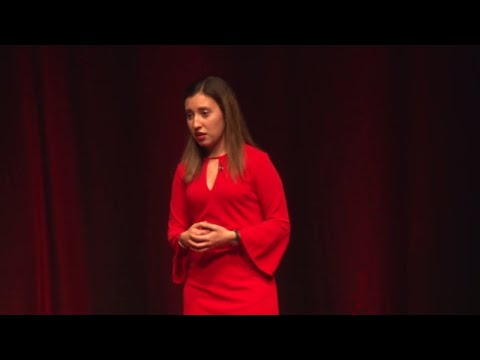
hi I’m Alanna peach I go to Ithaca
College one of the nation’s most lgbtq+
friendly campuses and for those of you
who might not be aware of the acronym
lgbtq+
includes people who are lesbian gay
bisexual transgender queer and the plus
includes people of other sexualities and
gender identities or people who might be
questioning their own identity aside
from attending classes at Ithaca College
I was born and raised in Northwest
Indiana I’m Mexican I use she/her
pronouns and I myself am queer and even
though I’m giving this talk to you right
now I had an extremely hard time when it
came to coming to terms with my own
sexuality in fact when I was a freshman
in high school I had dated a girl for
three months but I never told anybody
about our relationship and I never told
anyone about our relationship and I
never once questioned my sexuality again
until about four years later now I
didn’t start dating another girl but I
stumbled across a pair of fictional
teens from Texas during my senior year
of high school I found the MTV
television series faking it faking it
tells the story of a me rotten felled
and karma Ashcroft two best friends who
go to high school in the liberal
environment of Austin Texas as the
series progresses
Amy realizes that she might be gay and
as I watch the series I realized that I
might be like Amy I was kind of going
through a similar series of thoughts and
processes she was I was kind of in the
same state of denial and loss and
confusion and so when I was watching
this series I just felt like I had a
character that I could kind of relate to
and after watching faking it I began
searching for other characters with
lesbian and queer characters
and I began searching for these shows
because media is an incredibly powerful
conduit for social change Viktor Evans
writes in a 2007 study with the American
communications Journal that media with
gay characters is more critical for gay
and lesbian youth because unlike racial
and ethnic minorities they’re not
usually born into a family of others
like them and they cannot easily
distinguish gay and lesbian individuals
within society
now I especially resonate with this
quote because growing up in Northwest
Indiana I don’t really know any other
individuals who were queer so by gaining
this media exposure I was really able to
find individuals who were like me and
going through similar experiences elect
myself and that’s not even just my own
story I’ve talked to several other queer
20-somethings who seem to have a similar
experience with media exposure GLAAD is
a non-governmental media monitoring
organization that specializes in
accountability every year GLAAD compiles
this thing called the where we are in TV
report they crunch the numbers to find
the overall representation of LGBTQ plus
characters and racial and ethnic
minorities on television shows primetime
shows cable shows and streaming services
glads been compiling this report for the
past 22 years and it seems like every
year the number of LGBTQ plus
representation gradually increases and
I’d like to think that this
representation has led to more people
feeling comfortable with their own
sexuality in fact according to a recent
accelerating acceptance survey compiled
by GLAAD of 18 to 34 year olds nearly 20
percent identify as being part of the
lgbtq+ community that numbers huge
that’s pretty much one in five Americans
we’re living in what might be considered
as the gayest generation right now and
I’d like to say that we’re part of that
generation thanks to media exposure and
visibility why because media is powerful
in their book media and the American
child social psychologist George
Comstock and Erica Shar point out
several social theories that show how
the media we consume is adolescents
impacts our own development as adults
now their theories are not specific to
lgbtq+ media but based on my experience
and the experience of others that I’ve
talked to I think we can see the power
and impact that this media does have
and so one theory they talk about is
social compare our social cognition
theory and when they talk about this
theory they define it as the media
outweighs other sources in defining
social reality because they not only
broaden what individuals can observe but
constitute experiences often perceived
as more universal and less idiosyncratic
pretty much by having media with queer
characters youth questioning your own
sexuality or gender identity can learn
that these groups exist referring to a
conversation I had with Luca Mauer the
director of Ithaca is very own Center
for LGBTQ education outreach and
services you can’t be what you can’t see
this media exposure shows people that
their identities are valid and once
somebody can recognize that these groups
are valid maybe they can learn how they
might belong with that group so Comstock
and shard defined the theory of social
comparison as individuals make
comparisons between themselves and
others in order to learn about values
and expectations in the culture and they
develop a perception of their legitimate
place within that culture so by having
media with more lgbtq+ characters
individuals can kind of compare
themselves to the people that they’re
seeing on screen and they can see what
it might be like to be part of this
group and they can see how they fit with
this group they can see how they belong
for me when I discovered the character
Amy from faking it I learned what it was
like to be a gay teen and after I
watched faking it I turned for other
series that had queer and lesbian
characters such as Netflix’s orange is
the new black which is about women who
are in an all-female prison or even the
l-word which is about lesbians that live
and work in Los Angeles or even Carmilla
an online web series about a girl who
discovers that her roommate might be a
vampire and also a lesbian and so by
watching these shows I was kind of able
to learn more about my own identity I
was able to learn that it was empowering
to be gay and also that it was okay to
not know who or when to come out this
media brought about conversations that I
would not have been exposed to at home
and even talking about home life media
with queer characters can benefit
viewers who are non LGBTQ plus
identifying its Comstock and Shar called
this cultivation theory they talk about
this theory by saying how exposure to
the consistent themes that mark
television content shapes audience
members views of reality
pretty much television can be a way
where viewers can watch a show and learn
that the environment portrayed on screen
reflects that of the world around them
by having content with more queer
characters people can see how these
identities are valid in that for your
characters are not only on screen but
they’re their neighbors or the person at
the grocery store maybe the person
driving in front of them one of the
biggest and first examples of this might
be the launch of the 1998 television
series Will & Grace Will and Grace is a
show that talks about the fictional
friendship between will Truman a gay man
and grace Adler a straight woman at the
time this show is credited for bringing
gay culture to mainstream audiences and
even looking at the success and impact
of the show when talking about his
support for gay marriage back in 2012
Joe Biden said I think Will and Grace
probably did more to educate the
American public than almost anybody’s
else has done so far and so we can see
the power that comes with media and
especially given times where a political
administration may have a questionable
viewpoint of lgbtq+ rights
I do find comfort in Biden’s
acknowledgment but that’s not to say
that Will and Grace was perfect looking
back at the show nearly 20 years later
from its initial launch we can see how
we’ll might have been portrayed in a way
that wasn’t as progressive as it could
be he seemed almost tailored for an
audience that might be hesitant to
welcome a gay character to their screens
and as a way to accommodate for that
hesitation Will was portrayed in a
quote/unquote safe way he was
stereotypically feminine and he rarely
showed affection to his partner but it’s
not just will looking up until probably
the mid 2020s the majority of media with
queer characters consisted of these
white men who were cisgender
traditionally attractive able-bodied and
from the upper-middle class in reality
these white men only make up a small
portion of the entire lgbtq+ community
when we’re watching media it’s
imperative that we all engage in a
robust critique of who how and why
someone is being brought to the screen
the use of stereotypes or tropes can
oftentimes minimize the complex reality
of what it might mean to be an lgbtq+
person even looking at my media
experience I can see how it was not one
perfect cultural inclusion for me most
of the queer characters that I watched
were all white women
I didn’t relate to them exactly because
I’m a woman who is both queer and also
Hispanic and so when we’re watching
media it’s important that we see that we
have characters who are more
intersectional with different identities
as well it’s great that we do have a
space for LGBTQ plus characters but we
need to make sure that that space is
larger and also that that space includes
LGBTQ plus characters of color or
characters with disabilities or
characters with multiple marginalized
identities and we need this space
because it’s going to bring about more
recognition and exposure overall people
should be able to turn to media as a way
to see themselves and as I sit in my
park classes with other students who are
communication students I realize that we
have the ability to set the tone and the
culture and I’d like to think that we
are more aware of the power that can
come with telling these diverse and
inclusive narratives we have the ability
to create characters that let somebody
watch a show and see themselves for
maybe the complex beautiful or sometimes
messy human being that they are Media is
powerful and media with queer characters
is great because it can show people that
their gender or their sexuality is valid
and that it’s okay to be feeling the way
that they are feeling or to be part of
this group and for me I’m definitely
thankful to have had my moment of
discovery with the character of a me
from faking it
but I’m looking forward to a future
where more individuals and more youth
are able to have their own moments of
discovery thank you [Applause]