
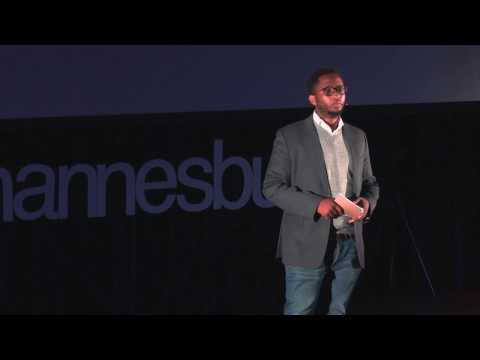
TEDx Johannesburg 2016 Mulvaney that
hushed Baldwin is gives me a sense I
should have said Amanda but I’m afraid
Africans have a way with words
very interesting and very marvelous
grasp of language and words the renowned
Nigerian scholar cheenu achiever in
conversation with James Baldwin said we
are not only receivers of art we’re also
makers of art and similarly I would
apply the same logic to technology and
some of the tools of the 21st century
that lead us to speak about the
abundance we often want to speak up so
to paraphrase him we are not only
receivers of technology but we are also
makers of technology and in a very sort
of godlike fashion we would want to
fashion technology not only in our image
but in a way that responds to our own
needs so before I go into what I mean by
that allow me to say a bit more about
myself my name is Hong Ki iya bong I’m a
Palani let our unfortunately the two
names which are unknown to most people
didn’t make it into the green bar coded
ID that proves that I’m here and that I
exist and that I’m not an alien however
I think my beginning starts much further
than that my parents had a lot to do
with it my father is a sort of a teacher
trade union lefty communist type who
married my mother a year after I was
born and my mother an enterprising
assertive industrious cosa woman you
know the kind of woman man yeah no one
will Racine and if you don’t know what
that means you know that’s the methodist
thursday woman’s union the real woman’s
league if I should add but I guess my
beginning start much much further my
Genesis
starts I would say in the 15th century
in what is now called the Eastern Cape
among my own people
you won’t bite on him no my child let’s
see what kind I know unknown sob darling
I’m a born was indecent Vinnie I’m on
Jima
oh my table al on demand a hot rock rock
those indeed are my people and so when I
introduce myself it would be incomplete
if I don’t summon their names and summon
their memory a status ed I’m an
economist by training and economists
aren’t sort of the most creative
storytellers nor nor the most creative
people I would add however I studied
economics because I guess it helped me
to understand how public policy and
collective decisions had an influence on
three things which I think have really
framed my own curiosity and my own
inquiries over my life the first is how
we understand Authority the second is
how we understand identity and race and
the last one which i think is very
important is how we understand power so
for me it’s quite unsettling to really
speak to a crowd of people who paid
1,500 rand to come and hear me speak
when i understand that the median wage
for instance of domestic workers in this
country is 1577 let me give you a second
and let that sink in 77 ran more than
you’ve paid to be here for the next two
days is what fifty percent of people pay
and less for the woman a black woman who
cleaned their living spaces and who
raised their children and that for me is
the invisible work of social
reproduction it’s the work that prepares
us for our different labels we get the
kids ready for school I’m the nice
shirts and starched collar to get us
ready for boardroom and all of the other
Labor’s and yet that Labor’s seen as
invisible my own grandmother was a
domestic worker and orange grove here in
Johannesburg for about three decades
until she retired in the early 2000s
with a brown bag of ten thousand rand in
it and a few hand-me-downs which i think
by now we’ve outgrown
but you see that that was her retirement
her thank you for her loyalty and
commitment for three decades and so you
then understand why I feel it’s a bit
unsettling as someone born in a small
town sandwich between plan sky and the
sky and I guess it might explain the
other names that don’t make it into my
ID but I want to speak about
exploitation in this age of digital
expansion and boundless information and
how it is experienced by the people who
in this country have always been and
have shouldered the cost of our
expansions of our skyways byways and
other physical markers of progress in
many ways I think we need to answer how
technology and its advances intersect in
a society like ours in a post-colonial
post-apartheid society with many of its
hang-ups and hangovers from the past
what does it mean to speak about
abundance if we never speak about those
excluded from that abundance what does
it mean to think about you know the
advances that as the organizers say have
the possibility of rarely for the first
time I think in centuries totally
eradicating poverty and so I think as I
think about this intersection between
authority identity race and power
I spoke to meter taxi drivers in the
West of Johannesburg a few months ago
during the wake of their violent
interactions with uber taxi drivers and
I spoke to them because I thought that
their narrative never really made it
into sort of our public discourse or
even in the media painted as they were
savage Luddites violent prone people we
didn’t really have an interest in coming
along with us into the 21st century and
this is what some of them had to say
three high gentle injustice and that’s
when they came here the sugar came to us
and then if one of us la la would was
the best ability Max Evans on the same
system enterprise it’s 50 run every
private – maybe like a kilometer
storefront 50 with visual friendly one
what is the difference is over now –
under present is watch but now the
governor should come in in a system of
because the charging fearlessness and
they maybe we can find the difference of
our people have can’t let him be stood
at the pot because they’re gonna happen
is that important but why you guys
getting the premise whether the donut
you know things that really emerged from
the story of the meter taxi drivers the
notable one for me was around labor
issues alongside those issues was the
challenge of anti-competitive priced
behavior so they were complaining that
uber and the main was unable to really
set them up in a way that they could
compete with the uber drivers because
many of them were charging about a
hundred grand less and also I think
there was the real challenge around
whether or not the partner drivers were
actually employees and if you look at
the shouldering of the risk in that in
partnership or whatever relationship you
would like to call it
it was the drivers who in the end had to
really showed an inordinate amount of
risk that to pay for the installment of
the car they had to pay for insurance
they had to pay for maintenance and yet
at the end of it the parents of Silicon
Valley would just take their 20% and in
many ways they were reminded that they
are indeed workers and not necessarily
partners they are just like many other
workers handlers of machines drillers of
rock manchinga Llano a conveyor belt
merchants in life restoration and death
push mechanics peddling vendors drunken
pastors who scale him towards
willfulness he’s also a worker as much
as those who hold the wealth of the
world in their hands for a second before
its allure and the hierarchies of the
world invade the across and the hungry
crumbles of the empty stomachs we’re
reminded ladies and gentlemen that we
are also the children of workers where
the children of workers who looked after
the children of others but never their
own we are workers ourselves all be
it’s well-trained ones sophisticated
hobos two paychecks from the breadlines
lion is a lion in the wild or in the zoo
it matters not if you clean corridors or
turn tricks sell stocks or paint
apartment blocks blue or white the color
is the same when you tie it up brown or
green the gap the cash is the same when
we counted up physical or mental the
control is the same when you pair it up
we are reminded that all of us are
workers and even in this age of
technological innovation where once
again reminded that the unequal power
relationships are never replaced nor
displaced by technology in many
instances technology the new
technologies are able to do what
previous technologies were unable to do
which is to exploit our people much
further and much more efficiently but
more importantly I think there is a
positive side to technology as well
we’ve seen for instance in a continent
like ours that’s always been defined by
migration that technology is people to
give life to people it’s been able to
allow through mukuru ecocash and Pesa
to allow us to send money across borders
it’s also allowed us to be able to build
early warning systems for crises
political violence and a range of other
emergencies in addition to this we’ve
also been able to transact and
transactions across the globe beyond the
borders that were set in 1885 without
our permission and without our consent
and so I think for me there’s something
out leave in the room today which is if
we are indeed to not only be receivers
but makers of technology how do we make
it in a way that resolves and responds
to some of our social challenges more
importantly how do we speak about
monopolization of our economy an economy
with four Miller’s feeders all with four
banks bankers all with three telecoms
companies connect us all and
unfortunately if we are unable to have
this conversation
then we defend and we reproduce the
status quo which is one of concentration
of wealth in the hands of a few
while our regulators find themselves
standing of our indifference and
exploitation continues to the dance of a
QWERTY tune while we can request and at
the response of a please rate Mesa will
then click on the four stars and carry
on with our lives this ladies and
gentlemen is the responsibility if we
are to indeed be makers and not only
receivers of Technology and I remind us
once again that we are workers I’ll be
it well trained once sophisticated hobos
two paychecks away from the bread lines
lion is a lion in the zoo Oh in the wild
it matters not if you clean corridors or
turn tricks
sell stocks or paint apartment blocks it
matters not if the collar is blue or
white or the cash is brown or green
because physical or mental the control
is the same when you pair it up we are
indeed workers and we are and the
children of workers who raise the children of others but never their own