
development organization and many of you
actually are indeed and so you are
listening to a pitch from three
different teams and the idea that they
are pitching for is an effective support
package for the poor to be able to
increase their income and the first team
says that you should invest in cows
because cows generates very high return
on investment but second team says that
no no no actually issue give cash
because with cash the poor can make
their own decisions on what to invest
and the third group says well actually
you should invest in chickens because
you can reach even more people with the
same amount of money that you’re
providing for cows for example so how do
you decide this I think is a very
important question for all of us because
we want to make a maximum impact in a
very very effective manner so a sensible
answer might be to say that well let’s
compare these options and see which one
would generate the highest return on
investment and based on that you will
make a decision
it sounds no-brainer right but are we as
testing and comparing different options
with evidence oh let’s call
experimentation doesn’t seem to happen
all that often in the development sector
but if you think about it
experimentation is everywhere we humans
want to understand how the world works
and we want to understand how we can get
the result that we want and take an
example
this is my sixth year old daughter and
she often conducts an experiment so she
will come to me and ask a questions like
this can I watch something on my on my
iPad and if I say no she would go to her
mother and asked the exact same question
to see if she would get the most
satisfactory answer
so through this experiment she’s
figuring out how she can get what she
wants an experimentation seems to be
also a commonplace in the business
sector so suppose that you are renewing
your company’s website in a big way and
before you make a huge investment you
might want to compare right so this
design a generated this percentage of
the click rate and the other design
created generated even higher click
rates so based on this test you might
want to make a decision on which one you
want to invest in so this
experimentation is a commonplace in
business and in our everyday life
but it does not seems to be the norm in
the development sector and this is
despite the fact that there’s so much at
stake in the development sector because
it touches the lives and well-being of
so many people in living in a very
difficult conditions and I must admit
that I myself was not thinking about
experiment until recently so the large
development programs are often designed
without really comparing different
options and without really looking at
the evidence and the reason for this
might be because of the way that
planning and funding process are set up
so funders often ask the recipient
organization to spell out all the
detailed activities for the next four
years and there is also a cumbersome
grant amendment process if you want to
change the project design which is quite
but the good news is that this is
starting to change there is more and
more interest in experimentation and
evidence-based decisions and pioneering
work is being done by institutions such
as MIT is j-pal or innovations for
poverty action so this is an example so
out of a 2,400 candidates to become a
community health workers 300 were
recruited through two different methods
and one recruiting message emphasize the
social incentive so basically if you
join this community health workers group
you will be able to serve the community
so it’s a social incentive and the other
group was recruited through more of a
carrier incentive so if you join this
community health workers group you
actually can develop your own skills and
after a year a study was conducted and
compared this the performance of these
two groups of community health workers
what they found was that those who were
recruited through the carrier incentive
messages performed a lot better
they organized 30% more a household
visit and they also organized twice as
many community meetings compared to its
counterpart now some of the
practitioners here may ask right this is
quite important but we are doers we are
not researchers so what do we do I think
the answer lies in a lean
experimentation so let me rewind a bit
seven years ago I left the United
Nations and then started my own
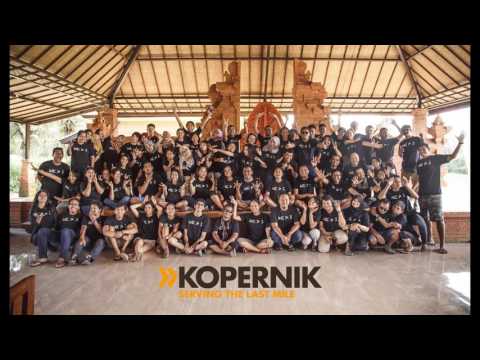
organization called Kopernik and
Kopernik is named after Nicholas
Copernicus who himself was very fond of
experimentation and just like he changed
the way that we see the world we wanted
to
the changed the way that development
assistance is delivered and one of the
things that we have been doing is to
distribute a very simple yet
life-changing technologies to the poor
in the last mile so technology such as
clean cookstoves or water filters or
solar lights and these are distributed
through a sales agent that we recruit
and train and after a while we notice
that there is a huge difference in terms
of the sales performance among the sales
agent and we wanted to find out what is
contributing to that because we wanted
to reach more people in a more effective
way so we took a sample of a
high-performing sales agent and compared
against the general overall sales agent
and we looked at the things like gender
or age or the previous background in
business and none of these were
differentiating between the high
performing sales agent and an ordinary
sales agent but when we looked at the
mobility we found an interesting
correlations so those agent who have
easy access to motorbike was selling
twice as limited as many technologies
compared to those without access to the
motorbike so through this very simple
experiment we changed our recruitment
strategies of the sales agent and this
took us only three days of our staff
time another experiment that another
example of a lean experimentation we
conduct is around grain storage
this is sorghum which is the fifth
common a most common grain in the world
and this is becoming quite popular in
eastern part of Indonesia
where many of our activities are
concentrated around and this becomes
very popular because it grows without
much water so it’s appropriate for the
dry area and it’s very very nutritious
but the challenge is that after the
harvest farmers typically stores these
grains in a very simple bag like this
this is just a wooden plastic bags and
soon this grain will be infested with
weevils and up to 70% of the grain is
eaten up so it is a huge waste of
resources and also a huge loss of
potential income for these smallholder
farmers so we wanted to do something
about it and we did some quick research
and found that maize has a very same
issue and some organizations are
advocating for an airtight or hermetic
storage method and we were not sure if
the same solution would work with
sorghum because it’s after all it’s a
different grain so we wanted to test if
this hermetic storage indeed in
decreases the number of weevils the idea
of the hermetic storage is that you you
basically limit the flow of oxygen so
eventually the weevil will run out of
oxygen so they will die and when they
die of course they will stop eating the
grain so we did this experiment so we
had this bag of sorghum in a traditional
bag and the other one is contain use the
hermetic bag inside the traditional box
so it’s double double is sealed and this
each contained 25 kilogram of solvent
grain and we put them side-by-side for
three months and literally we go back
every month and have three scoops out of
and then spread it and then literally
count the number of weevils by hand and
after three months as expected this
traditional bag was infested with
weevils there are close to 400 weevils
it took a long time to count and while
this hermetic bag had less than a third
of the weevils now this is not a perfect
solution but it is reducing the number
of weevils significantly and this
experimentation costs less than $2,000
for us so I’m sharing these very
seemingly mundane and simple examples
because I believe that even a complex
development programs can be broken down
into simple activities and then can be
tested through lean experimentation so
the message today is that we should be
doing more of experimentation be it
rigorous or lean and really trying to
find a smart solutions that really work
and if we do that collectively soon we
will be able to achieve the sustainable
development goals more effectively and
we will also be able to answer the
question of which one it is cows cash or
chickens that are most effective in
increasing the income of the poor thank
you [Applause]