
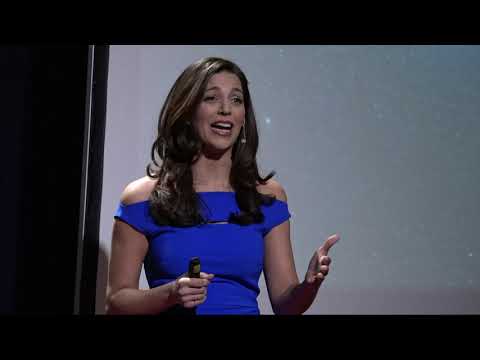
by the age of 17 I had a black belt in
karate
I can still do a roundhouse kick to the
head well not in this dress people
considered me courageous because I
wouldn’t hesitate to defend myself
physically what’s taken me a lifetime to
develop is the skills and the courage to
use my voice only 18 months ago I’m
attending a networking event for
purpose-driven leaders and when I walk
in I noticed there’s two men standing in
the middle of the room having a casual
conversation so I walk right up and I
ask if I can join them and they say of
course and one of the men asks what I do
and I share that I create scalable
women’s leadership and mentoring
programs and he looks me right in the
eyes and he says I hope you don’t find
this offensive but I love working with
women you should see how hot my
assistant is did I mention I can still
do a roundhouse kick to the head with
these exact words I realized that he
does not see women as his equal we are
excluded from his vision of what an
executive could be now being the
confident woman that I am whose job it
is to literally diffuse bias empower
women and promote inclusion I disrupt
this exclusionary behavior with a
powerful I do find that offensive and if
you have time after today’s event I’d
like to speak to you about that more in
private of course that’s how it went
except it didn’t instead I froze even
worse I laughed awkwardly and then I
booked it to the bathroom to get out of
the room as quickly as possible and
that’s when the shame sunk in my
devastation and to be clear my
devastation had very little to do with
him and everything to do with me you see
I had an opportunity to disrupt
exclusionary behavior and instead I
stayed silent the repercussion silence
is often mistaken for acceptance and now
he’s probably going to do it again I
wish I could say that this was the first
time I stayed silent but it wasn’t
this was my default behavior whenever I
felt excluded
what’s your default behavior when you
feel excluded how do you respond when
you’re not invited to lunch or when
you’re interrupted twice in a meeting or
you overhear someone making fun of
another person after that situation I
made a promise that I would disrupt
exclusionary behavior and never be
silent again it wouldn’t be long until I
had an opportunity to test my promise
about six months later I’m invited to
attend a thought leader summit where the
editor-in-chief of a global media
company was the keynote speaker it was
pretty clear from the beginning that he
had a political opinion to share and he
started off his presentation with a joke
about a prior president and he said mr.
president had his indiscretions the
majority of the audience laughed but I
sunk in my chair and so did a few others
at my table
he continued to bring up this president
because he felt like he did a really
great job stimulating the economy and
making people money and because of that
people were more forgiving of his sins
and the parallel was that if our current
president could stimulate the economy
and make people money maybe they’d be
more forgiving of his sins too but I
kept thinking to myself what sins is he
referring to is he trying to say that
any sin including disrespectful behavior
towards women is forgivable with enough
economic growth the more I thought about
it the more I felt like he had no idea
how his message could be misconstrued as
exclusionary and somebody should tell
him and that person was going to be me
well I tried to talk myself out of it I
mean Who am I why would he care what I
think
am i sabotaging my career because of it
but I had that feeling in my stomach you
know that anxious feeling that got
stronger and stronger and I took those
cues as my body telling me that this was
too important to brush off so I grabbed
a pencil and I immediately started
writing on the hotel note
what was it about what he said
specifically that made me feel excluded
and how can I say this to him in a way
that’ll be respectful and won’t make him
feel like he’s being attacked so he has
the greatest opportunity to hear me I
wrote it out word-for-word refining my
approach and now I’m hoping I get a
chance to speak with him at the end of
the event I noticed that he’s graciously
sticking around to let people come up
and ask questions and talk to him
so I purposefully get in the back of the
line and as my turn
inches closer I most pass out but I took
a deep breath and my brain began to thaw
and I reached my hand out to shake his
and I said I want to thank you for your
keynote presentation and all of your
innovative ideas and there were a couple
of comments that I’d like to get your
feedback on if you wouldn’t mind and he
said yes of course I said well there
were a couple of comments that rubbed me
and a few others in the audience the
wrong way and I and I want to bring them
to your attention because I do not think
it was your intention and then I paused
and curiously listened and he said oh my
gosh please tell me what what did I say
and I said well you’re first you I
brought up the indiscretion joke coupled
with the deeper overall message of
disrespectful behavior being forgivable
with enough enough economic growth and
then I paused and he immediately
interjected he was like no I meant
growth dissolves political sins not
sexist sins
I’m relieved but now he’s utterly in
shock and he had this remorseful look on
his face so I calmly reaffirmed I know
that’s why I wanted to say something
because I figured that was not your
intention and I don’t want others to get
the wrong message he thanked me we shook
hands and we both walked away
enlightened when I got back to work
though I kept waiting for an email to
come in that said my career was over but
luckily that didn’t happen what did
happen was I finally realized that the
success of our women’s leadership and
mentoring
rooms were completely dependent on how
inclusive the culture was it didn’t
matter how empowered women felt if men
felt excluded in the process so we
immediately began working on a new
program for all genders called inclusion
360 to instill the six traits of an
inclusive leader and one of the modules
focuses on the daily habits of being a
change agent for inclusion which
includes disrupting exclusionary
behavior following these four steps step
1 ask if you can give them some feedback
to clearly and specifically state what
was said or done and why it was
exclusionary to you and potentially
others 3 give them the benefit of the
doubt but they were unaware that their
actions or their words were exclusionary
now this might be the hardest step for
most of us but it’s the most important
because the next step won’t work without
it in step four is to curiously listen
give them an opportunity to respond by
listening to them openly without
judgement in hopes of understanding each
other better I shared these four steps
with the authors of the book the
neuroscience of inclusion who advised us
during the creation of inclusion 360 and
they agreed that these steps were ideal
because of the way that the brain is
designed the lower brain often referred
to as the reptilian brain is responsible
for the automatic responses a
fight/flight but also fries and this
part of the brain is easily triggered
whenever we experience any sort of
physical threats such as a snake but
also just as easily when we experience
social or psychological threats such as
exclusion the middle or limbic brain is
involved in our emotional memory and
it’s influential in our capacity to
listen for me anytime that I had a
perceived threat a feeling excluded or
my career being threatened I would
immediately be thrown into a freeze
the higher brain also called the
neocortex and in particular the
prefrontal cortex is responsible and is
where our ability our executive thought
reasoning and it’s where our ability to
be inclusive lives this part of the
brain is most easily accessible when we
are in a calm and non-threatening
environment everything finally made
sense on why I would freeze and stay
silent in situations of exclusion
it was my lower brain trying to keep me
safe and all of my shame and guilt for
not responding the way that I wish I
could have in the moment dissolved and
my hope is that it does for you now to
the process of working through these
four steps is a way to consciously bring
the higher brain back on line so you
have the greatest opportunity to choose
inclusive behaviors it’s important
though that it not feel like we are
attacking or calling people out when we
use these four steps because their lower
brain can become easily triggered and
their protective instincts will come
into play too this is why we must have
these conversations in private and give
them the benefit of the doubt now you
might be sitting here thinking I’m the
one that’s cause the defense I mean at
some point we’ve all used a poor choice
of words that didn’t consider someone
else’s experiences and made them feel
unintentionally excluded like the one
time I sent a newsletter to 7500 readers
announcing my second pregnancy using the
term knocked up yeah I would quickly
learn that a number of my readers were
offended by this term and after doing my
own research to understand why I use
these same four steps to acknowledge my
poor choice of words and to encourage
feedback in order to disrupt
exclusionary behavior we have to first
disrupt our brains tendency to fight
flight or freeze only then can we access
our higher brains full
capacity to leverage these skills and
harness the courage to own our voice and
help create the inclusive world we all
deserve thank you [Applause]
Please follow and like us: