
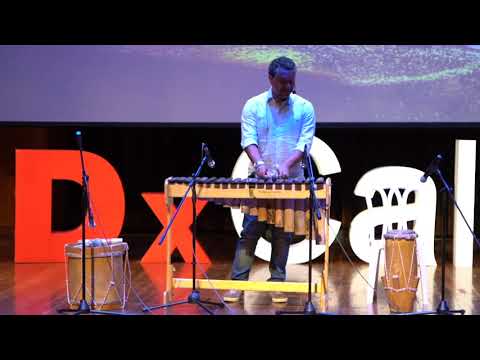
[Music]
my name is hugo candelario gonzález si
Guapi from Guapi
the first settlers in the Indians
huapi is why this is so called huapi
population my population my people and my
terroir
this conference is talk rather
has no intentions or pretensions
scientific or technical rather the
reflective intention
it’s called destiny
identity and freedom through the
music
in the film forrest gump there is a
moment when we take the actor is
making a reflection of his life as
he despite being aware of his
limitations
he values and recognizes everything his mother
all that strength the teaching the
self-esteem the self-esteem that he injected
to be able to overcome the difficulties and
all the vicissitudes of life but
get to a point where good already
it was also destiny many things
depended directly on him or on that
teaching or that learning but
came a point that was cesarean is your
understanding because it was destiny
in my case it’s the other way around a bit because
begins with the destination
that my name is hugo candelario because
when my people are born my population
is in no big fire
it burned the whole town practically
but born in a fire that’s why
they put me in a candelario I imagine that if
had been born in December I have
put a sheriff or
something like that but
it was destiny is that for me
born precisely in those
circumstances receive all that anxiety
difficulty receiving from my mother because I already
had 88 children ahead of her husband in
the house is several grandparents my mom was
a midwife is a midwife because she lives
still my life
and has taken care of everyone besides
his family created the old man in guapi and
is godmother of half good town from
they are my dad languages are barbecue
we merchants and they moved water
barbican barbecues
so for me that is destiny
destiny is also that as the people
I was in a burning fire
very large
they had to call someone who was going
driving a boat a canoe because no
I had to go where the streets not
there was where to get to the hospital
coincidentally the person who was going
driving the motorcyclist of the boat was
my teacher gualajo jose antonio towers
we are unfortunately was made
34 months of destiny
coincidentally of destiny the day
that died I was in guapi in the house
of him with his brothers
the masters towers that are like a
Dynasty folklore Pacific
Colombian in the part of guapi don
Genaro Torres del Mayor and Pacho Torres
the smallest heirs builders of all
that
of all that ancestral baggage of the
Pacific music
destiny to be born in that large family
nice to receive everything s
all that teaching
identity because there it was forming there
was formed from that first start
from that first circumstance of
birth destiny be there in which
my parents had a warehouse they sold
marimbas sold a 1 hype were not the
builders they bought them
towers to the different luthier of
those from the region good crafts was a
warehouse of different products among
them the instruments and the craft I
I was little there
for fate things seeing when a
marin see a teacher a builder
came to leave his marimba in my house the
I registered
I was there, it was my turn to be there
circumstantial things of fate that was
my first contact because not in the
family there are no musicians I do not have a
familiar musical reference as to
feel that it was over there there is good hearing
like everything in the Pacific we have good
heard we all have good rhythm
in guapi everyone makes up all the
Dancing world acts that’s a
is a
wild natural talent bunch
it’s out there
everyone has some
artistic characteristic
so
There, my identity was generated
so
back to guapi
and there I have the opportunity to sing more
in the field of playing music a little
most popular I played the flute the
marimba a little
then came here good this city me
He fell in love from very little to very
early age once my parents
brought from that since I got off the
plane I liked the smell is the smell not what
forgetfulness is a smell for like new single
like new that I do not forget it from there
I fell in love with Cali and in this city
in this city I have to live some day
I could not but until s until the year 85
because the pacific calendar and
bogotá was a jackie arab never never
I could block and that that semester of
difference will finally reach you by
I get it out here and it comes with a
marimba comes with a marimba
traditional built by don silvino
mine that is still alive is a luthier
marimbero of the great masters of the
tradition in guapi
but then when I was going to try to
relate to the other musicians and
cali here I could not get my
husband because she came with her
traditional tuning the tuning of the
Traditional marimba is a machination
own native vernacular to touch
Pacific music as there is no
harmonic instruments that accompany it
I do not know and the voices are accommodating to that
tuning traditionally speaking
I did not know those codes much then
I saw that I could not enter, it was my turn to do the
process of tempering the tuning towards
the 440 to be able to touch with others
musicians here at cali good there I went
developed between the conservatory ta
ta ta ta
I was developing my musical career
for things of fate came to timbiquí
in the last currulao festival that
it was a year 1987 88 I was already
studying at the conservatory I went
with an investigation
there’s a song that’s called out there
memory of justino
[Music]
Y
how they played how you heard how they repeat
that marimba style garcia that man
He came out in protest because they did not say
they did not let him compete there in the village
in timbiquí they did not stop competing that time
there was another great teacher but he did not
could he was an old man so you go and peak
with the half- hearted face and said that
had a pact with the goblin because he played
very much he played rapids and he played with
32 studs in the left hand and one in
the right was very rare for then for
the tradition is there that technique is
tradition then on Sunday
the Sunday after the festival
the protest he left
Y
and that he started playing there on the court
of the village of timbiquí de santa barbara
steele and kirk and because they are indicated is
the river and several municipalities belong to the
river timbiquí between them the head the
Capital that Santa Barbara of Timbiquí
then I start to play
and that gentleman was a painter a poet of the
marimba
began to touch to go to paint in
that instrument
and it was enough to see it once in the
life so that I will be influenced so much
simple as a musician and the way you play
the marimba
things of destiny already formed bay
year 1997
the petronio is already being programmed
first festival first version of the
petronio pacific music festival
álvarez 1997 the bay group has a
invitation to go to england we are
processing the visas for a paper that does not
arrived on time
We could not travel, they did not give us the visa
is the compass went to the oil
we started preparing for the
good oil so as not to stretch the story
we win the oil with hype and
saucer ‘treats many prizes a new
a new door opened
for the bay for the music of the
peaceful and for a lot for all this
process that is happening in this
good time but coming back a little bit
back to the part of timbiquí in that
opportunity saw what
if by the day it sounded the folklore sounded
everything but at night in the disco
in the houses the music of the
peaceful the marimba was not recorded
was recorded is sessioning ten years
before the petronio 87 and until 1997
that we won the first oil that
we had the opportunity for that prize
stop recording could be recorded the
marimba there we had the opportunity to
record the isie and started a new era
also of music the pacific because
previously, I had already been
we know the teacher I pray the teacher
alexis lozano good many teachers who
they were already born
all his contribution with music to
summarize come some keys some matrices
that I told him comes another that arrives
directly to Cuba from africa
in the Caribbean basically devastate the
indigenous to the indigenous heritage
basically it ends obviously in the
continent not that same key is plane
matrix arrives on the continent but as in
the continent if it is on the continent
if there is the indigenous and the indigenous has
its rhythmic sense
comes and gets together with that
land does not come directly from africa
coolies to that matrix so
it’s here on the continent you can go back
quietly
[Music]
and
[Music]
I do not have scientific research
for neither psychological nor anthropological Multiple
to be able to explain what I’m
transmitting at this time but if what
I feel and if I know if I know that it is so that
same key is the same key s
He joined the indigenous here and he left
returning that matrix to me
and the Caribbean the Caribbean are like
Older brothers
that is, the mother is
the great earth and the great lady the
Midwife and Africa is coming from Africa
all that rhythmic baggage is a
family
there they become homes tobin cubes white
and jamaica
jamaica is a is a family is a
family and they are fish are brothers
older are two older brothers who
have influenced with their music we have
inherited we have danced is the drum that
they are giving
but it was coming to the continent and
we accept it but I feel that
as the younger brother also
corresponds to take out and tell my own
history
they as Caribbean as brothers have
counted as older brothers have
already told his story
we as natives of the Pacific ‘
native of this region we also have
our own matrix we also have
our own key we have that
heritage as older brothers but
we have to also count our
own story we have many things for
that we feel proud and could
tell many anecdotes and many
examples of why I feel full of
identity above all full of love
own for what our where I was born and
for what I inherited that’s why I want
both my old and my ancestors
because that’s why I defend music so much
of the Pacific and if I want to make a
invitation for example to the musicians to
the musicians of this region
that we tell our own story the
idea is not to reject anything that already
we have learned or fight with anything
because that is that inherited ancestrality
very rich in the Pacific we grew up
all dancing salsa are all this rhythm
but I believe as well as many companions of
tonight has been counting and have
used a word as something new
reinvent the random the unforeseen the
improvisation we do not take the opportunity
of something new to paint the page in
White
to say again to return to
tell our story of recognizing ourselves
value we love ourselves more because
we have what we have
that’s why I can stop myself just like it has gone
all over the world
miss australia
I meet with an African or with a
Japanese with a Greek this is me this
it’s my identity that identity gives me
freedom that identity gives me a
feeling that I can travel without fear
for the world I feel free and just like
raise me free in guapi thank you very much
[Music]
Destiny identity and freedom
thank you very much for the opportunity
[Applause]
Please follow and like us: