
[Applause]
every Monday morning and tumor board
doctors who treat cancer get together at
Baylor clinic to discuss difficult cases
for one particular case a doctor said
you can’t cure it if it doesn’t fit in
the box he was referring to the use of
focused radiation therapy in which
higher energy x-rays are directed at a
cancer the problem is if the cancer
doesn’t fit in the box a box that you
can cut out with a surgical scalpel or a
box that you can destroy with radiation
if the cancer spread outside of the box
to other parts of the body or if it’s
too close to important structures like
the heart of the brainstem what do you
do the goal is to cure everyone’s cancer
not just those with cancer small enough
to cut or to destroy with radiation in
this talk I want to show you how to
think of cancer in a box differently not
as a box for radiation or surgery that’s
too limiting instead I want you to think
of cancer in a box as cancer in a
computer by putting cancer in a computer
I want to use the same computing power
in your smartphone to treat cancer we do
this by taking cancers putting them in a
sophisticated meat grinder and analyzing
the data that comes out we call this DNA
sequencing I’ll show you that 50% of our
progress in cancer medicine over the
last 10 years is a result of sequencing
that is digitizing cancers after the
human genome project was completed in
2000 the cost of DNA sequencing dropped
as quickly as Moore’s law which is
responsible for bringing better and
faster smartphones every two years in
2007 with the technical breakthrough
called next-generation sequencing the
cost of DNA sequencing dropped even
faster than Moore’s law coincidentally
2007 is also the year that we started
seeing this slide in the investor pitch
decks of every Silicon Valley biotech
startup answer researchers were quick to
take advantage of this breakthrough by
sequencing a patient’s cancer and a
patient’s normal tissue you did too
sequences or to books of about three
billion letters each and I compared
these two books we can pull out
mutations specific to a patient’s cancer
in 2008 cancer patients scientists did
exactly this or a patient with leukemia
and they sequenced the world’s first
cancer genome 2013 over 3,000 cancer
genomes have been sequenced through the
Cancer Genome Atlas 2017 the Cancer
Genome Atlas or TCGA was wrapping up at
that time 11,000 patients have their
cancer sequenced or presenting 33 cancer
types all in all five hundred thousand
DVDs have been produced it’s at least a
few hours of Netflix content question is
what do you do with all this data and
the technological and computing
pipelines for generating more at this
data we are talking about cancer so the
answer is that we use this data to save
lives when I first started medical
school this article Jeanette Campbell
came out in the New York Times he
described the story of Lukas Wortman who
was a medical student just like me he
wanted to be a hematologist oncologist
or a doctor who treats cancers to the
blood he himself was diagnosed with
leukemia at age 25 initially he received
chemotherapy and his the command went
away but then it came back and after
that his chances of surviving leukemia
were under 5% so his doctors took an
experimental approach it put his cancer
in a box it put a needle in his bone
marrow took out some of his leukemia put
it into a meat grinder that at
Washington University we call the genome
Institute and analyzed the data that
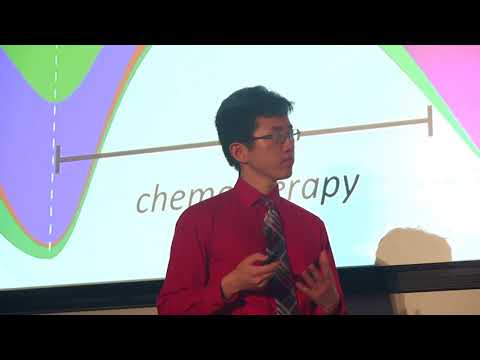
came out what they found was very
similar to this in which every color
represents a different strain or clone
of leukemia with the different set of
mutations unlike traditional tests
sequencing captured the full complexity
of leukemia a disease that isn’t static
but balls with time and isn’t uniform
pose if many layers or clothes and what
sequencing found was that these leukemia
clones shared an overactive gene thus
overactive gene could be treated with a
kidney cancer drug Luca started
receiving this kidney cancer drug which
he never would have received without DNA
sequencing and his leukemia went away
he’s now a professor at the medical
school I attended and his ability to
defy the odds and rid his body of
leukemia was a direct result of
sequencing so by putting cancer in a box
by putting cancer in a computer we can
search for better therapies to give our
patients in the last few years
sequencing has become so fundamental to
cancer research in cancer medicine the
top hospitals like MD Anderson and deep
pocket institutions that you normally
don’t associate with medicine like
federal government and Google have been
pouring billions of dollars into
sequencing everyone’s cancers and now
that we can sequence cancers and
identify cancer mutations we’re having
to invent new types of clinical trials
instead of a clinical trial for patients
with lung cancer we can run a trial or
patients with lung cancer breast cancer
colon cancer it doesn’t really matter
what kind of cancer they have as long as
their cancer it has a specific mutation
they can receive a trial drug using this
new type of trial design a basket trial
so how has this new drug development
strategy panned out increasingly we see
results like this in which all the
vertical bars beneath the horizontal
line represent the cancer that shrink in
response to an experimental drug all the
different colors represent different
types of cancer pancreatic cancer colon
cancer and you can see that it doesn’t
really matter where the cancer
originated in the body as long as it has
a specific mutation there’s a good
chance this experimental drug will work
or that patient this graph in particular
represents cancers with microsatellite
instability a class of mutations that
renders the cancer susceptible to
immunotherapy in 2017 the fda-approved
immunotherapy for solid tumors with
microsatellite instability the first
example
of a truck approval or a cancerous
mutation not for where it originated the
body at the end of medical school I had
a classmate who wasn’t feeling very well
he had a lot of reasons for not feeling
very well he was on a surgery rotation
so it’s what we talked it up to until
you went to the doctor’s office and they
found that he had a rare type of
pancreatic cancer the same type of
pancreatic cancer that Steve Jobs passed
away from when they sequenced his tumor
they found that his cancer had
microsatellite instability and he
received this immunotherapy if his
facebook photos from his recent wedding
are to be believed he’s doing quite well
again the ability to defy the odds
through sequencing to identify the best
therapy for our patients one final
example of putting cancer in a box
starts as many stories started with
someone getting pregnant pregnant mom
she can look for how her baby is doing
by getting a blood test when she gets a
blood test how did the DNA and her blood
comes from her and part of the DNA comes
from a baby it’s actually a very common
non-invasive prenatal testing I wouldn’t
know that’s very common because I’ve
never been pregnant hundreds of
thousands of women get these blood tests
every year and very rarely these tests
identify cancer in a pregnant woman like
babies when we have a cancer are the DNA
and our blood comes from us and part of
the DNA comes from the cancer we can
look for these little pieces of DNA not
just in pregnant women but in everyone
again we take blood from a patient put
it into a sophisticated juicer and
analyze the date that comes out and by
doing so we can find cancerous early
monitor cancers in a non-invasive way
and identify the best therapies for our
cancer patients at the end of the day I
agree with the doctor who said you can’t
care it if it doesn’t
but I shouldn’t lend us as doctors or as
patients if the cancer doesn’t fit in a
traditional box a box in which you can
only cure cancer its small if it’s
early-stage then we can call cancer it’s
in a different type of box by creating
boxes by combining computing power with
methods for probing and manipulating the
rich biology within cancers we can
create new tools to control this
devastating disease
[Applause]
every Monday morning and tumor board
doctors who treat cancer get together at
Baylor clinic to discuss difficult cases
for one particular case a doctor said
you can’t cure it if it doesn’t fit in
the box he was referring to the use of
focused radiation therapy in which
higher energy x-rays are directed at a
cancer the problem is if the cancer
doesn’t fit in the box a box that you
can cut out with a surgical scalpel or a
box that you can destroy with radiation
if the cancer spread outside of the box
to other parts of the body or if it’s
too close to important structures like
the heart of the brainstem what do you
do the goal is to cure everyone’s cancer
not just those with cancer small enough
to cut or to destroy with radiation in
this talk I want to show you how to
think of cancer in a box differently not
as a box for radiation or surgery that’s
too limiting instead I want you to think
of cancer in a box as cancer in a
computer by putting cancer in a computer
I want to use the same computing power
in your smartphone to treat cancer we do
this by taking cancers putting them in a
sophisticated meat grinder and analyzing
the data that comes out we call this DNA
sequencing I’ll show you that 50% of our
progress in cancer medicine over the
last 10 years is a result of sequencing
that is digitizing cancers after the
human genome project was completed in
2000 the cost of DNA sequencing dropped
as quickly as Moore’s law which is
responsible for bringing better and
faster smartphones every two years in
2007 with the technical breakthrough
called next-generation sequencing the
cost of DNA sequencing dropped even
faster than Moore’s law coincidentally
2007 is also the year that we started
seeing this slide in the investor pitch
decks of every Silicon Valley biotech
startup answer researchers were quick to
take advantage of this breakthrough by
sequencing a patient’s cancer and a
patient’s normal tissue you did too
sequences or to books of about three
billion letters each and I compared
these two books we can pull out
mutations specific to a patient’s cancer
in 2008 cancer patients scientists did
exactly this or a patient with leukemia
and they sequenced the world’s first
cancer genome 2013 over 3,000 cancer
genomes have been sequenced through the
Cancer Genome Atlas 2017 the Cancer
Genome Atlas or TCGA was wrapping up at
that time 11,000 patients have their
cancer sequenced or presenting 33 cancer
types all in all five hundred thousand
DVDs have been produced it’s at least a
few hours of Netflix content question is
what do you do with all this data and
the technological and computing
pipelines for generating more at this
data we are talking about cancer so the
answer is that we use this data to save
lives when I first started medical
school this article Jeanette Campbell
came out in the New York Times he
described the story of Lukas Wortman who
was a medical student just like me he
wanted to be a hematologist oncologist
or a doctor who treats cancers to the
blood he himself was diagnosed with
leukemia at age 25 initially he received
chemotherapy and his the command went
away but then it came back and after
that his chances of surviving leukemia
were under 5% so his doctors took an
experimental approach it put his cancer
in a box it put a needle in his bone
marrow took out some of his leukemia put
it into a meat grinder that at
Washington University we call the genome
Institute and analyzed the data that
came out what they found was very
similar to this in which every color
represents a different strain or clone
of leukemia with the different set of
mutations unlike traditional tests
sequencing captured the full complexity
of leukemia a disease that isn’t static
but balls with time and isn’t uniform
pose if many layers or clothes and what
sequencing found was that these leukemia
clones shared an overactive gene thus
overactive gene could be treated with a
kidney cancer drug Luca started
receiving this kidney cancer drug which
he never would have received without DNA
sequencing and his leukemia went away
he’s now a professor at the medical
school I attended and his ability to
defy the odds and rid his body of
leukemia was a direct result of
sequencing so by putting cancer in a box
by putting cancer in a computer we can
search for better therapies to give our
patients in the last few years
sequencing has become so fundamental to
cancer research in cancer medicine the
top hospitals like MD Anderson and deep
pocket institutions that you normally
don’t associate with medicine like
federal government and Google have been
pouring billions of dollars into
sequencing everyone’s cancers and now
that we can sequence cancers and
identify cancer mutations we’re having
to invent new types of clinical trials
instead of a clinical trial for patients
with lung cancer we can run a trial or
patients with lung cancer breast cancer
colon cancer it doesn’t really matter
what kind of cancer they have as long as
their cancer it has a specific mutation
they can receive a trial drug using this
new type of trial design a basket trial
so how has this new drug development
strategy panned out increasingly we see
results like this in which all the
vertical bars beneath the horizontal
line represent the cancer that shrink in
response to an experimental drug all the
different colors represent different
types of cancer pancreatic cancer colon
cancer and you can see that it doesn’t
really matter where the cancer
originated in the body as long as it has
a specific mutation there’s a good
chance this experimental drug will work
or that patient this graph in particular
represents cancers with microsatellite
instability a class of mutations that
renders the cancer susceptible to
immunotherapy in 2017 the fda-approved
immunotherapy for solid tumors with
microsatellite instability the first
example
of a truck approval or a cancerous
mutation not for where it originated the
body at the end of medical school I had
a classmate who wasn’t feeling very well
he had a lot of reasons for not feeling
very well he was on a surgery rotation
so it’s what we talked it up to until
you went to the doctor’s office and they
found that he had a rare type of
pancreatic cancer the same type of
pancreatic cancer that Steve Jobs passed
away from when they sequenced his tumor
they found that his cancer had
microsatellite instability and he
received this immunotherapy if his
facebook photos from his recent wedding
are to be believed he’s doing quite well
again the ability to defy the odds
through sequencing to identify the best
therapy for our patients one final
example of putting cancer in a box
starts as many stories started with
someone getting pregnant pregnant mom
she can look for how her baby is doing
by getting a blood test when she gets a
blood test how did the DNA and her blood
comes from her and part of the DNA comes
from a baby it’s actually a very common
non-invasive prenatal testing I wouldn’t
know that’s very common because I’ve
never been pregnant hundreds of
thousands of women get these blood tests
every year and very rarely these tests
identify cancer in a pregnant woman like
babies when we have a cancer are the DNA
and our blood comes from us and part of
the DNA comes from the cancer we can
look for these little pieces of DNA not
just in pregnant women but in everyone
again we take blood from a patient put
it into a sophisticated juicer and
analyze the date that comes out and by
doing so we can find cancerous early
monitor cancers in a non-invasive way
and identify the best therapies for our
cancer patients at the end of the day I
agree with the doctor who said you can’t
care it if it doesn’t
but I shouldn’t lend us as doctors or as
patients if the cancer doesn’t fit in a
traditional box a box in which you can
only cure cancer its small if it’s
early-stage then we can call cancer it’s
in a different type of box by creating
boxes by combining computing power with
methods for probing and manipulating the
rich biology within cancers we can
create new tools to control this
devastating disease
[Applause]
Please follow and like us: