
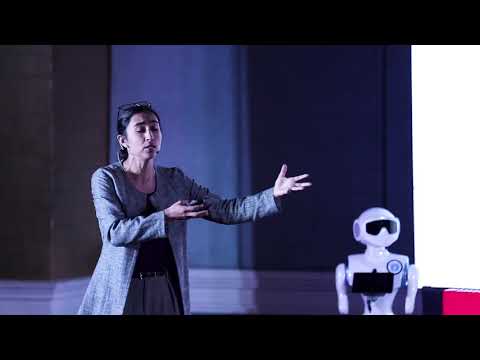
hello my name is shadow a it’s a little
bit difficult to say
so I usually ask people to remember
Saturday
I knew BC I don’t know another so I am
an arts educator I spent about 12 years
now so whatever we’ll be talking about
today it’s taken me about 12 years to
figure out what it is that I really want
to dedicate my life doing and I have
decided um I’m pretty clear now about
where I want to go with it so what
you’re seeing here is young people using
their senses to create write to learn to
explore the world so today I wanted to
talk a little bit for in this very short
period of time about what would it mean
to bring artists into education and see
them as educators so have them see
themselves as educators and what would
it mean to take educators and have them
see themselves as artists and what does
that look like and how could that be
made possible and very specifically in
the context of Nepal’s so Nepal in all
its diversity in all its massive amount
of you know differences so if you go we
have Geographic differences we have this
amazing history in the earth you know
where you know you can really think
about every every place we’re walking on
on this part of Nepal anywhere in Nepal
has come probably from the ocean right
and what does that mean in terms of time
so we have so many resources when we
want to learn in the classroom right the
classrooms does not need to be just
what’s in the walls or in that small
space so how do we imagine it beyond
just those walls so what does it mean to
be artists right a lot of the times
we’re given that role
being the inspirers we’re supposed to
inspire we tell stories so what happens
when a group of musicians when dancers
when storytellers come together and
create a story and go and perform so
this is usually before we do workshops
with with young people we actually go
and we introduce ourselves in terms of
our arts we say okay look this is what
we have to share with you so a lot of
these are practicing artists themselves
and so you also see that when we’re
talking about artists we’re not just
talking about painters or people who
draw we’re also talking about other
forms of Arts and here in both of these
images you’ll see people within the
community who also see themselves as
artists right and a lot of the people
performing here are themselves teachers
so we invite them to perform as well and
share their art forms with us as well
when we do workshops this is a decree
dance in Sindhu palcic where young
students who are studying or actually
performing as well so where I want to
begin the conversation is also from
seeing schools as places as
possibilities
I’m actually tired I mean I I’ve spent a
lot of time thinking about schools as
jails and I’m sort of tired of that now
I really avoided going into school
spaces for a long time because I feel
like they’re time bound there they’re
placed bound they don’t allow for
creativity and I’m sort of tired of that
argument now so I’ve sort of put that
aside and as an artist who goes in as an
educator who goes into schools now I see
them as places of possibilities because
now we’re required to send every single
young person into school which means
that these are places where children who
would never have been friends before who
would never have met each other are now
on the same platforms
possibly there’s that’s debatable
obviously but if you look at some of the
data I mean some of the things I’ve
heard and I need to do a little bit
more research on it but one of the
things is 80% of young people young
students are going to government schools
so what does that mean right so you have
lots of diverse cultures you have
diverse languages you have diverse
backgrounds and all these people are now
suddenly together in the same space with
an adult and several adults probably
were also from different backgrounds so
it’s a place where people can meet right
it’s a place where we can learn we can
explore we can gather we can learn how
to be communicative with each other we
can create a small microcosm of what we
imagine the world to be later on so it’s
a place to practice being together and
so what do we mean by educators and I
think that’s also something we need to
start redefining so teachers largely
feel the burden of having to teach but
what does it mean to be an educator
maybe we need to start rethinking what
we mean by educator so maybe we need to
think about educators having the role of
creating spaces where learning can
happen doesn’t mean we tell them what
needs to be done maybe we need to create
those kinds of spaces and maybe the
burden is not only on the teacher maybe
we need to join the community of
educators and I mean that also from the
side of guardians from the side of
people who you know maybe somebody who’s
a shopkeeper can also become an educator
and what role does the school have in
inviting these people into the school
because there’s a lot of knowledge and
there’s a lot of new things that we need
to start learning more about I mean we
just we’re just going to this massive
political shift now so if you go to a
government office and I was just
recently in one I mean everybody’s so
excited actually I mean it’s very
complicated I know you know right I know
but we’re riding on some excitement
right now everybody’s feels like they’re
supposed to learn how to govern you know
we’re supposed to figure it out now and
so what does that mean so maybe there
are also educators and so what does it
mean now again for artists to come in as
a educators
so who are artists artists are people
who interpret the world they’re people
who express their views the way that
they see the world and then they use
mediums around them whatever is
available or what they are learning how
to do really well some people use their
bodies some people use the you know it
could be somebody might just decide that
if this carpet gets thrown away they
might use this carpet as a medium of
expression it could be anything really
so if we’re talking about artists we’re
talking about visual artists we’re
talking about performing artists
performing artists are musicians dancers
theater artists we’re talking about
language artists
so people who string words together so
these are all artists when I’m talking
about artists and what do artists do so
they bring all these things together but
they also inspire and make you think
because they are processing it and then
they’re going to create something that
then you get to see and then that allows
you to think so there are people who
allow for communication to continue for
us to reflect on what’s around us that’s
what they do that’s their job right
that’s it they spend their whole lives
doing and then this question of what’s
the process like how do they create and
this is what I’m getting at in terms of
what is their role in education so this
idea of the process they go through the
creative process what is that and when
you think about artists the main thing
that people that artists that I really
respect is that a question they start
with a question
so something strikes them which which
strikes their curiosity and then they
want to know more about it and then they
explore they do research right they want
to go deeper into it they want to figure
it out and the way they do it is through
their mediums they express they try one
thing they take notes they sketch they
do this they do that they work through
it they try to find clarity in their
thought in their expression in all the
different forms it could be
and then they share it but then that
sharing is one part of the process they
get your feedback they listen to you and
then they do it again and that’s what
they do so they become experts at what
at the creative process so what would it
mean to then take that and bringing it
into learning spaces because what
they’re doing is they’re basically
lifelong learners they’re expert
learners and maybe that’s something we
learn need to learn from them so a lot
of sometimes what we do is we bring
musicians into classroom spaces and as
you see the classroom spaces is now
outside the classroom here and these
kids are performing and they’re they’re
clapping with the musicians so here
music is about creating rhythm is about
creating something that we can all enjoy
together and it doesn’t have to be this
massive instrument they’re just using
sticks and they’re using their bodies so
that’s where we begin when we talk about
music and so these musicians have come
in and they’re helping us what would it
mean to bring dance right so in movement
you don’t just use your mind you use
your mind you use your heart you use
your body that’s a great way to learn
it’s a great way to learn what you see
so what would it mean for me to
interpret standing in front of you I
don’t know what I would dance for this
moment like later the visual arts the
visual arts you can select what to put
on your surface you select your identity
what how you want to interpret what you
see around you that’s a very powerful
thing you can lose you can remove people
you can put you can put objects together
you can decide what colors you can
decide not to use colors you can decide
what medium you want to use this is a
mural so this is a representation of
collaborative work that can happen and
going monumental going from something
small to something big and what effect
does that have in terms of your learning
poetry how do you string words together
with artists what does it mean to bring
an instrument that’s been in your
culture for years on end and these kids
when they first started they wanted to
play guitar and they were so upset they
were so angry that we had brought
somebody to play the tune now with them
but what happened over time over three
days suddenly the tuna became this you
know prized instrument that they wanted
to learn and they played a whole song
after the three days as well and what
does it mean for a teacher so he himself
is also Thomas
but he’s an ethnomusicologist student
and he has taken the tuna he’s learned
how to build it he makes it himself and
now he’s teaching other kids and he’s
using this modern sort of sense of how
music is notated and now he’s sharing it
with the students as well and where’s
the math in this you can also see the
math right so there’s a lot of learning
going on here that also connects to
their confidence to their sense of self
to their sense of history and this is
all happening through the art forms now
how can we make these kinds of
situations happen more I’m really
interested in that now okay because it’s
not enough for me to want it it’s not
enough for an artist to want to go to a
school it’s about partnerships so now
we’re lucky enough that there’s one
group of people like yourselves
shishah Foundation Nepal there’s a group
of people who said okay go and try it
out so now they’ve come on board now
we’re talking to the government leaders
we’re talking to the school leaders
we’ve got the teachers on board we need
to bring the parents on board the kids
are already interested cuz we’ve already
started some of this work with them so
it’s about a partnership now we’re gonna
have to create a network where this can
happen so everybody has to agree and buy
into it and so that’s the kind of
partnerships that we’re looking to
create so what does it mean to create a
support system around the teachers and
the poor teachers I mean mm I like the
new mothers to Alice
suddenly they’re having to teach all
these like new things they haven’t even
experienced it themselves a painting
first time burglary dad sir it’s the
first time they were mixing colors and
how do you suddenly expect them to do
integrative curriculum great teaching in
multiple very interesting ways you want
them to explore everything but they
don’t even they haven’t explored
themselves so how do you expect them to
bring that into the classroom that is so
unfair so a lot of the works that needs
to be done is with the teachers we need
to have them explore have them unlearn a
lot of the ways they were learning so
how do we create that kind of a network
where we can support them and so this is
some of the work that the the teachers
are doing and we did this for three days
and the teachers were like we’ve never
had anybody support us in this way you
know and that’s really sad I mean it was
lovely that they were saying that to us
but I was so saddened by that actually
because that’s just not be the case you
should be happening at mass we should
all be doing art workshops with teachers
right now and how what would that look
like you know the kinds of support
systems we can create as a society so a
lot of the work that we would like to do
with teachers is talk about learning and
when does learning happen where does it
happen how does learning happen why this
learning need to happen so what’s the
importance why why is is that I’m not
gonna just read whatever is in the
textbook you know why is it important
and what does learning constitute those
are the kinds of choices that teachers
are going to have to be able to make and
so how do we build their capacity to be
able to do that so again I’m gonna end
with just this idea of what would it
mean it’s a question it’s a question
that I pursue my whole life now doing is
what would it mean to reconceptualize
what we see as education with artists so
using them as a resource so that
learning is meaningful empathetic so I
put myself in your position see it’ll
see the world from your perspective you
see the world from my perspective
rigorous and this addresses some of what
time did you was also saying
so how do we create a world where where
people really want to work hard on about
something how do we motivate people to
do that how do we make it relevant how
do we creating how to make it engaging
so that they’d want to and how do you
make it lifelong so something that it’ll
continue for the rest of our lives thank
you [Applause]
Please follow and like us: