
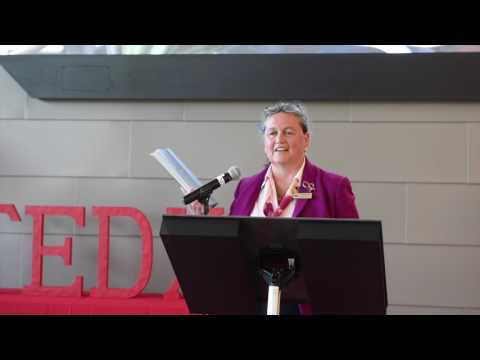
so thank you for asking asking you to
share my thoughts with you here tonight
at this model this incredible model of
future education here in the North Shore
community at the amazing North Creek
High School
I will we can go ahead and start I want
to share just briefly this world is my
spirit animal and I thought in the
spirit of talking about creativity I
wanted to to share that because you may
see that squirrel come back during the
first of my remarks this evening I want
to thank deeply for in extending the
invitation to share my thoughts on
creativity in schools of public
education today so um I want to start by
saying that what you’ll see behind me
represents really sort of my thinking in
a natural habitat for all creatures here
in the North Shore’s school district
both our students and you’ll later
understand what I mean some of the true
spirit of creative thought I’m going to
ask you to make meaning of the slides on
your own I’m not going to tell you what
they made because in fact in a true
creative sense it would be tantamount to
telling you to color within the lines if
I told you what each line meant to my
remarks so you need to make your own
meaning tonight although I’d love to
hear you share your thoughts with me in
the coming days about the meeting you
were able to make from that tonight I
hope that we have the conversation
really about a topic that’s very near
and dear to my heart and I think many of
yours as well so we’re most three
we at a crossroad both here in our
district and in our community in our
country a large honestly our need has
never been greater for creativity in our
thoughts and actions as we lead into our
future and watch only the best for our
upcoming graduates recently Sir Kenneth
Robinson noted that a kindergarten
ninety-eight percent of us at our
kindergarten age were distinguished in
the area of divergent thinking
illustrating a capacity for creativity
and almost all of us I might be in the
2% that didn’t meet the distinguished
level therefore divergent thinking it
was based essentially on a test of 1,500
kindergarteners and asking them what
would they do was the number of uses
they could come up with for a paperclip
and so many of us might think you know
what holds people together we can put
together perhaps different things and
hang them from places but tinder
gardeners had an admission for that by
how large is the paperclip
could it be 200 feet tall could it be
made of green foam could it right so
they have many ideas and very much a
great deal of creative thought but what
was troubling is that this longitudinal
study also demonstrated that the longer
these children were in our schools
honestly the less capacity they
demonstrated for thinking creatively so
I think we clearly have our work cut out
for us so I invite you to be a thought
partner with me tonight close together
here’s I was on film and those in the
larger world at some point and think
about where’s this movement to restore
focus on the arts going to start and I
think why not here I think that why not
we start that model that had a focus on
creativity mind of performing our
to music that took center stage why not
us why not here it’s essential honestly
that we do something to thoughtfully
prepare our students for a world that’s
yet to be imagined and that requires
creativity I will argue that’s an
essential core skill I also want to note
that all the content areas that have
been so marginalized with the current
standards movement high-stakes
assessment trend which include the fine
arts history music civics those are only
to name a few that we somehow have not
found as much time for us we have our
standardized tested topics have really
put us in a position in our country that
I think marginalizes our ability to
problem-solve together creatively and
empathetically I think you can argue
that we’ve lost an entire generation of
students to these content areas because
it’s been almost 20 years that we’ve
been in this morass the standardized
testing and high-stakes assessment that
is almost a generation of students and
we must reclaim these content areas our
community and country needs citizens to
understand big ideas and can grapple
with them authentically so let’s pause
for a moment in defying creativity it’s
really the ability to transcend
traditional ideas rules patterns
relationships and have meaningful new
ideas able to form new interpretations
and methods things that we do in many of
the classes we no longer teach think of
a time when you learn something you read
that you really remember today something
a lesson perhaps you learned or a skill
and what were the key characteristics of
that experience I got a side question
many times too many groups around the
country and often hear people say that
they were able to do things they
believe they could have previously done
someone push them a little harder than
they thought the material was
challenging intellectually there was an
academic press and maybe it required
more time more patience more effort and
more tries at it than initially thought
I also think curiosity as an important
component of creativity and an attribute
perhaps I’m a little obsessive about I’m
sure a few details that I think
illustrate my issue around being drawn
to wonder and where we do this today so
in fact one of the comments and I’m
sharing with some of the students up
front is that humans have 46 chromosomes
we all kind of know that right
potatoes have 48
hermit crabs up 254 so I wonder about
that
right so our potatoes genetically more
complex than people and what are the
implications of that and then I thought
I couldn’t share that I think I will I
learned this morning while I was
visiting a school that when you sneeze
the projectile mucus moves at about a
hundred miles an hour you do that right
so I think that that’s troubling at many
levels in terms of the construction of
Kleenex and so forth and the German
issues so I think our minds are drawn to
wonder and to make sense of dissonance
right we’re drawn to a place where we
want to make sense of something so it
feels right again and I think that’s
really important in terms of creativity
and curiosity so I would submit that
it’s not the people within the schools
that are responsible for some of this
creativity Lafayette outstanding
teachers curious students it’s really
the system we find ourselves in and then
if you will federal and state statutes
on the standardized testing piece that
are creating less and less space for
what’s really important in the arts I
brought today a couple examples of what
we are doing that are amazing Guillaume
ailments art class and or short junior
high
I brought an animal from Eagle for high
school
the students and their advisors a Mills
came to my office today to provide it
and it’s an interesting annual with a
theme of ecto which means it never ends
it has no front or back and if you’re
interested what that looks like it’s
amazing and ridiculously creative and
one of the things I asked the students
possible so how did you do that me like
how did you think of that because it’s
really I think way too quite interesting
and they said well we didn’t want to
hear a can’t write we didn’t because it
couldn’t have an index at the back that
maybe we couldn’t do it but we didn’t
didn’t stop there we kept blowing you
knew we could do it if you had a vision
for it and acted on it so given a vision
and acting sometimes KP takes patience
so I want to share with you another
example from nature and that’s the
example of the giant timber bamboo and
its connection honestly the topics the
school and creativity when you plant a
seed of giant timber bamboo you have to
water it for not one not two but really
three years before you never see
anything at the ground level but once it
hits the ground level it grows as much
as 90 feet 60 days it’s known to grow up
wouldn’t a half a day that’s amazing so
I think that it’s remarkable the quality
and the time of the patience it takes to
get there but once it’s there the
strength is unbelievable so I think
about now and I think about the world
ahead of us and the one we face today
that I was educated for over 40 years
ago I know it’s a long time we did not
have calculators cell phones computers
any of those things we still had
antennas not on our heads they run our
visions party wines for phones and slide
rules for calculation and computation
yet here I am talking to you about the
future so there must be some skills that
are inherent that are critical and
important that aren’t just about the
technology and how to use it so let us
be clear about what we’re talking about
in terms of creativity in schools if
there’s anything we understand in
education is the importance of clear
targets so whose responsibility is it
yours mine
well I would argue it’s ours sitting in
this room tonight we have a
responsibility to improve the time of
space we have for creativity and I think
about our reasons your teaching plan and
some of the language that we have there
the epoch of lifelong learning is the
catalyst for growth and continuous
improvement empowers the journeys of our
students educators in our community
toward excellence and learning into the
future will generate it together
everybody grows every day so as we think
about this and we think about the
constraints that we have on our
creativity I’d like to think about that
topic as an enduring understanding and
how I connect really to all the content
areas it’s not just a separate class
taught third period right because we
probably wouldn’t have time for it so we
need to integrate creative thinking and
problem-solving into everything we do
too long that thinking has been
documented and focused on and it’s been
ignored by again in the high-stakes
testing content areas so I think at this
point we would achieve these goals and
providing more creativity in schools
because our future really
depend on too often we’ve had students
across this amazing country of courses
that they wanted to take not be able to
take them because they haven’t been able
to fit it into a schedule and often to
take courses we believe are more
important or required often these core
skills that are taught in isolation with
less and less relevance as those
opportunities for the application of
those core classes have really been cut
back due to funding shortfalls and also
really honestly the the measurements
that have been placed upon us so I would
submit to you that our system will
always produce what it’s designed to
produce what we need to do is have the
courage to talk about it together and
talk about how we’re going to redesign
that for us so I think that one of the
things we need to talk about is that
there is an art and a science to
teaching and I believe that if we can
focus on that we can understand that are
all those facets that make it a critical
element in terms of creativity and
imagination and couldn’t we use a nation
that uses or collaborative resourceful
ways I think the lack of the coursework
in some areas of civics and so forth and
really created some issues for us
locally and nationally so at this point
I want to share a story and now we have
a lot of young people in the room the
shirts a story that really I think
illustrates innovation that occurred in
1949 and some of you may know the story
but I’ll be brief so at this point you
want to share the story of 15
smokejumpers who jumped from planes into
a raging fire along the upper Missouri
River area Montana in 1949 this Canyon
was called the Mann Gulch Canyon many of
these firefighters were about 18 or 19
years old so the age of some of you
room the fire started as a result of a
lightning strike on the south side of
the five Mile Canyon known as man Gulch
it was a very hot day in the Montana
Canyon the temperatures sizzling at 97
degrees after parachuting into the fire
area the crew began fighting the fire
when unexpected and very strong winds
picked up the intense heat of the fire
along with the wind that came off of the
river pushed the planes up the gulch and
into the fast burning grass this blow-up
of the fire caused it to expand by 3,000
acres in just 10 minutes and as you know
fire travels faster up a slope catches
and catches and so forth and the slope
on the north side is a 75% incline it
made it really difficult for the
firefighters to run in fact the fire
jumped the river and the goal should be
on chasing the firefighters at an
unbelievable rate of speed the leader of
the group shouted to them to drop their
heavy gear they were running with all
their gear their backpacks full of
shovels and spades and firefighting gear
while they’re trying to outrun a fire
moving at the rate of three thousand
three thousand acres of ten minutes at
some point it became apparent that they
would not be able to outrun the fire at
that point the leader Wagner Dodge made
a decision with the fire less than 100
yards behind them he took out a match
this is the leader of the group in the
middle of running past a forest fire and
I think I can light it he lit the match
and set fire to the grass right in front
of them the grass they hadn’t gotten to
yet enjoying so he was attempting to
create an escape fire he felt like if he
light a fire and burn the grass ahead of
the
and they jump in the firewood around
them to get to the grass that haven’t
yet been burned so he asked he screamed
at the crew jump in jump in but they
never trained for that the estate fire
was something completely new his crew
did not choose to stay in the circle
they kept fronting even having dropped
most of their here they could not outrun
the fire including dodge only three of
the team’s survived that day the man in
mulch fire remains a lasting mystery of
epic proportions it also became the
first time that wildfire forest by to
use something called an escape fire so
what I think that that is interesting is
to me it shows the importance of taking
risks when we talk about creativity and
do an innovative ways of doing things we
encourage young people to take risks and
we argue that’s how you learn but our
structures and systems sometimes are not
designed to support that risk-taking
indeed our grading systems sometimes
reinforce staying safe and making
failure a dangerous proposition
do I take a class that’s really
challenging or really interesting mm-hmm
I don’t know my GPA might interfere with
my post-secondary plans maybe not so as
a system we have some work to do to
we’re going to have to make taking risks
safer if we’re going to enable and
support truly creative thinking we don’t
what we can’t quit here in North Shore
we are amazing we need to continue that
as we make space just as Wade Dodge made
spaces as escape
fire we need to be able to have those
safe places for students to be creative
and truly to try innovative ideas
because failure is part of that process
there’s been no scientist musician
dramatist artists is that their first
time created a masterpiece didn’t happen
there’s a lot of failure that happened
before they were able to be that amazing
person we read about but we need to make
that safer for our young people and our
staff our teachers I think feel just as
handcuffed if I try something different
what if it doesn’t work right but the
answer is not to keep running so I’m
going to share with you just a last poem
from one of our other teachers to
retiring this year Tim Curtis has taught
for many years at Eagle Moore high
school and I think he coucher creatively
what it’s like to be a teacher here in
North Shore and kind of how a difficult
it is to say goodbye so I’ll try to read
it well he began teaching at North Shore
at Engle more high school in 1972 party
line within the limits of time learning
to say goodbye is really saying you know
lightly acknowledge that an end does
exist that the truth is it is been there
waiting since the first days smell the
familiar smell of a wax classroom floor
holding desks which held students who
help books that held ideas that other
words all the while forming numerous
circles of motion that whose details now
have become faint memories as they to
fade away which to a large degree allows
you to keep all the tomorrow’s you ever
planned for still it’s the small way
ever there is you now look as it
out over what will forever be an empty
classroom I think that’s a powerful way
to communicate perhaps a more powerful
than a mento learning leads to change
and change leads to growth and new
possibilities learning into the future
is a precondition for growth of a
passageway into the life they all
imagine for one another as we embrace
learning into the future and the
creative possibilities necessary we also
have an ethic within our schools and
community to steadily advance toward
accomplishing our aspirational goals for
all of our students and the hopes and
dreams of our community our courage and
conviction will provide the strength be
here in North Shore need to become the
global model for public education join
our journey and edge of the
possibilities and thank you
[Applause]
you
Please follow and like us: