
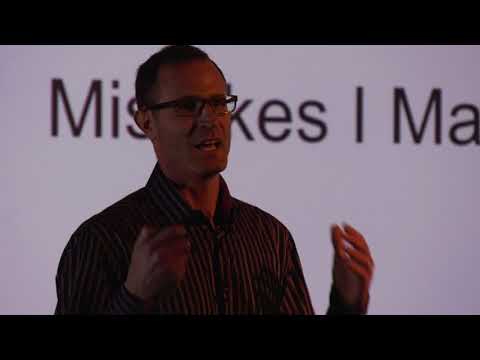
my name is Alan Castel I’m a cognitive
psychologist at UCLA and today I’d like
to tell you three things I’d like to
show you how our mind tries to make
sense of the world but sometimes plays
tricks on us and fills in the gaps I’d
also like to discuss how we become
selective and need to become selective
and then despite experiencing more
memory challenges as we get older
perhaps paradoxically
we become more selective and better at
focusing on what’s important I’d like to
show you some interesting demonstrations
that illustrate how our mind sometimes
plays tricks on us what I’d like you to
do is just to read each phrase in each
triangle just read it out loud go ahead
so most of you read these as Paris in
the spring once in a lifetime and bird
in the hand but if you slow down and
look more closely each phrase says Paris
in the spring once in a lifetime bird in
the hand so you made a mistake but the
mistake made sense of these sentences
and so this is our mind playing tricks
on us we fill in the gaps so that we can
make sense of our world here’s another
illustration just quickly read this to
yourself say it out loud so most of you
say the cat but then again if you look
more closely the second letter is
identical in each word but again our
mind interprets these letters to make
sense of what we think they should say
and the same thing happens with memory
just because we’ve seen something many
times doesn’t necessarily mean we’ll
remember it so how many of you know the
Apple logo pretty much everyone in this
room you probably have it right in front
of you on your phone now I want you to
think about the Apple logo and don’t
look at your phone which way is the byte
is it pointing to the left or is it
pointing to the right how about this
stem or the leaf you’re pointing to the
left or pointing to the right so when I
tried to do this I then drew the Apple
logo from memory and I’ll show you what
I came up with you can laugh at my
mistake and there’s plenty of them here
but this is what I thought the Apple
logo kind of looked like and then I
thought well maybe my memory is not so
good so I’ll ask my daughter my
seven-year-old daughter she’s a very
good memory I asked her do you know the
Apple logo says of course I do
and so this is what she drew okay now I
had the bite on the left she had the
bite on the right so we had a little
contest he was right we both had teeth
marks we have this genetic family
history of putting teeth marks in the
Apple logo now I’ll give you a
multiple-choice test so this should make
it easier right No so how many of you
can identify the Apple in this lineup
I hear several different love letters
from the alphabet when we ask people
UCLA undergraduates fewer than 50% of
people could correctly identify the
correct Apple logo so simply because
we’ve seen something many times doesn’t
necessarily mean we remember it but
perhaps there’s good reason we don’t
want to burden our memory with this
information we don’t need to remember
what the Apple logo looks like how about
things that could potentially save our
lives so how many of you know where the
nearest fire extinguisher is perhaps at
your workplace or at your home maybe
you’ve seen it it’s bright red I was
taking a safety training course in my
office building at UCLA we’re in the
basement and we were asked the same
question and my colleague and I were
kind of puzzled we knew it we’d seen it
many times we couldn’t quite remember
exactly where it was and so this is a
picture of my colleague he went back to
his office and decided to look for the
fire extinguisher and this is what he
saw when he went back to his office how
many of you see the fire extinguisher
this is what there this is where it
actually was he’d had this office for
over 25 years and just stopped noticing
it so this is the difference between
seeing something and noticing it and
sometimes
the more experience we have the worse we
are at remembering things like this and
so we followed up on this we actually
went to other people’s offices just to
see maybe we were just strange and asked
them if they knew where the nearest fire
extinguisher was most people were kind
of hesitant or puzzled and then instead
of telling them where it was we asked
them to go and find it and so they’d to
get up out of their chair walk down the
hall and point it out and oftentimes
they’d missed the one that was right
next to their office and so this failure
to find something this failed retrieval
then informs memory it reminds us of
what we don’t know and then we followed
up with these same individuals three
months later we went back to their
office and asked them where the nearest
fire extinguisher was everybody knew
because they failed the first time and
they learned and this sort of learning
becomes incredibly important failure can
be a very potent and powerful learning
event we often remember our failures yet
we sometimes seek to avoid failure often
my daughter’s will ask me to tell them
stories at night and their favorite
theme are mistakes I made when I was
little they want to hear about my
failures probably because they want to
know what we shouldn’t do but they also
want to know that sometimes it’s okay to
make mistakes we all grow up and so
their favorite story was when I was in
the Wizard of Oz I was in grade four and
I had a very important line in the play
I was Uncle Henry you don’t remember
Uncle Henry it’s because he only had one
line in the play
so I rehearse my line again and again
and I really just need to say one line
listen everyone there’s a cyclone on the
way hurry and get into the cellar I
thought it’s a very important line and
so on opening night I burst on the stage
and I said listen everyone there’s a
cellar on the way hurry and get into the
cyclone I’d memorize this line I knew
this line and yet at the one time I had
to deliver it I screwed up and my
daughter’s love that story of course my
son likes to hear stories more about how
I break bones when I fall so he’s
interested in other kinds of mistakes
but it shows that children want to learn
from mistakes and they want to know that
it’s okay to make mistakes and
oftentimes we experience anxiety when
we’re gonna give a presentation when
we’re gonna give it a test and this
anxiety can influence how we perform we
will often perform to expectations so
when I talk about memory and Ageing and
I talk to people who are over fifty
sixty seventy and tell them we’re gonna
give you a memory test that results in a
certain amount of anxiety and that
anxiety can lead to stereotype threat we
perform as we think we should perform
research has shown that if you take this
same memory test and simply call it a
wisdom test and then administer the same
test older adults do better so just
labeling the test in a different manner
can empower people to do better and
that’s why I think psychology is
incredibly important now how many of you
on the topic of memory and aging have
had trouble remembering names anyone you
know you know someone’s name or you’re
trying to introduce them and then that
name just slips from memory or you just
heard that name and you can’t recall it
and there’s good reasons why we actually
don’t remember names
maybe a hundred years ago mr. Barbour
was actually a barber but today names
are somewhat arbitrary and so I’m gonna
give you some tricks to remember my name
my name is Alan Castel and it rhymes
with past Oh in fact my grandfather was
a painter who used pastels so now you
can incorporate my name with some
thing you know already the concept of a
painter Castel passed out or I can tell
you it looks a lot like castle but you
just switch the e in the L so it’s
Castle illusion so now you’re doing
something with the name to remember it
and this sort of practice actually leads
to good memory performance yet we rarely
do it so when I give people these
mnemonics to try and remember my name
they say that really helped me dr.
pastel so they’re using the mnemonic but
sometimes they’re forgetting that you
have to go one step further or they’re
just playing games with me
so I think what’s bit becomes important
is not just remembering names but
remembering what is the most important
so to test this in our lab at UCLA we’ve
used a paradigm where I’m going to
present words with to you one at a time
and each word is paired with a point
value and the point value indicates how
important it is to remember the word and
this is much like a situation where
we’re often overloaded with information
and we need to kind of put our hands up
and focus on what’s important we need to
be selective
so in this task I’m going to show you
these words and they go by fairly
quickly you won’t be able to remember
all of them but in order to maximize
your score you should focus on the words
paired with the highest point value are
you ready there’s going to be a memory
test at the end after all the words are
presented your job is just to recall as
many words as you can in order to
maximize your score are you ready
okay just recall as many words as you
can remember
excellent impressive so I hear a lot of
people saying ticket house pizza
you might recall snow or guitar ticket
house pizza were the highest value words
the 12 11 and 10 and this is what we
found this is the probability of
recalling a word as a function of the
point value and what we find are that
both younger and older adults are
sensitive to value these are younger
college-age students and older adults
over the age of 60 but what’s
interesting is there’s no age-related
difference for the higher value words in
fact for the highest value words younger
and older adults are doing just as well
so this suggests that even as we get
older we become selective even if our
memory might not let us remember as much
information we can selectively focus on
what’s important of course in this task
I told you what was important words
paired with point values but in the real
world we often do encounter important
events that we need to remember
in fact sometimes it can help us survive
and this sort of obsolete observation
reminds me of my grandparents even in
their 80s or 90s they sometimes confuse
my name with my brother’s name but they
would be able to recall the price of
groceries and specifically groceries
that were on sale they’d almost brag
about how much bananas were even if they
had to drive five miles across town to
find them so we decided to test this in
the lab and we presented people with
grocery items in their prices and you
can play along so your job is to
remember the grocery item and the price
for a later memory test but we also
presented items like this overpriced
items some you might have this reaction
like oh where are these Whole Foods
prices and then later we tested people
so now recall the price of the
cornflakes great now how about the price
of the ice cream all right and some of
you might recall $17 or that’s just too
much and what we found is that younger
people were better recalling the prices
the overpriced items but older people
were just as good if not better than the
younger people at recalling the prices
that made sense
all right the prices that we experienced
in the real world which suggests that as
we get older we can use schemas or
knowledge to remember new information of
course we might not all be interested in
the price of bananas or ice cream Albert
Einstein once said I have no special
talents I am only passionately curious
and I think what becomes most important
as we get older is to maintain high
levels of curiosity we examine this in
the lab by presenting people with trivia
questions but before we told people the
answer to the questions we asked them
how curious they were to learn these
questions and answers so for example
what was the first consumer product to
have a barcode you can think about that
for a second and then on a scale of one
to ten tell me how curious you are to
learn that answer some of you might not
care at all and some of you might be
very passionately curious
anyone want to provide a guess serious
cigarettes ketchup beer alcohol it was
actually Wrigley’s chewing gum okay so
now we asked people to rate how curious
they are to learn the answer let’s try
this one what was the first nation to
give a women the right to vote France
Sweden now I ask you how curious are you
to learn the answer on a scale of one to
ten you know tell me the answer all
right it was actually New Zealand okay
we asked people to rate how curious they
are now to learn that and then what we
did is we surprised people a week later
we called these younger and older adults
who saw over a hundred trivia questions
and we asked them the same questions and
what we found is that it was only the
older adults who remembered the
questions that they found most
interesting that they were most curious
about which suggests that as we get
older we might be more judicious about
what we try and remember we don’t try
and remember everything but we
selectively focus on what’s important
and so I think aging leads more to a
change in focus instead of simply
declines in memory and this change in
focus can happen at different levels
I’ve talked a little bit about the
memory aspects but also in terms of
emotion as we get older we focus on
different emotions and work at Stanford
University has looked at this positivity
bias when you presented with these faces
which one do you look at first which one
do you spend the longest time looking at
what they’ve shown is that while younger
people will look at the faces on the
right older people will spend more time
looking at the happy face and this can
influence memory in terms of what we
recall it can also influence mood and it
may be related to a surprising finding
that healthy older adults actually are
happier than college aged students
contrary to many people’s expectations
and stereotypes so this focus
positivity may actually be adaptive and
make us happier as we get older so at
the beginning of the talk I mentioned
how we’re often overwhelmed with
information and I think the key to this
is being able to provide a good summary
the other day my daughter was watching a
movie and I missed the first 10 minutes
of the movie and so I asked her what did
I miss and my daughter has a very good
memory and she gives me a report about
exactly what I missed the plot the
character the music where the movies set
it takes her about five minutes okay
compare this to my wife we’ll miss the
first 10 or 15 minutes of the movie and
I asked her what did I miss and you know
what her responses know nothing or
she’ll give me a very quick summary
because she has this awareness of what I
need to know and what I’ll learn by
watching the rest of the movie she
doesn’t need to rely on her memory for
what she’s seen she needs to be aware of
what I need to know and I think this is
something that might actually get better
with age being able to communicate
important information and sometimes
forgetting the rest or letting people
learn about what they need to know and
so I think when we’re presented with a
lot of information we don’t necessarily
need to ignore things we need to distill
it we need to take what’s important and
communicate that to the people who are
interested so if someone asks you how
was your day you don’t tell them
everything you did the entire day you
communicate what becomes important if
someone asked you how is that TED talk I
missed it you wouldn’t give them the 18
or 20 minute version you’d try and give
them one or two minutes summary and I
think this is something that becomes
better with age that we’re better at
summarizing and communicating more
effectively
so to summarize as we get older we might
make more memory mistakes but this can
also lead to some form of adaptive
selectivity we know what we know and we
know what we don’t need to know and we
can learn that forgetting is not
necessarily a bad thing sometimes it’s
good to forget information and focus on
what is most important and I think with
life experience
we do this more often and this is what
can allow us to get better with age
thank you very much
[Applause]
Please follow and like us: