
[Music]
[Applause]
you
we’re in a society now particularly
Australia where we focus a lot on
results we see that students at NAPLAN
results and a lot of our students are
completing their farmer years of
education as well and it all comes down
to a particular number and somehow we
can be confused to think that one number
or that score is the value of who we are
as individuals the value of what we will
contribute to society in the future so
I’m going to talk about connection today
with regard to the idea of relationship
and the power of relationship between
individuals communities and the
individuals between in them let me start
by asking you a question to reflect on
do you think it’s important that
students are happy well-adjusted
connected to their schools is it
important that a student wants to go to
school in the morning and I would say to
you that is really important and the
studies are starting to show that that a
student who feels that they’re going to
school which is a community of people
who likes some who accepts them who
values them go to that school are more
regularly they go to that school with a
better sense of self but they their
ideas and their values about where they
will end up in the future are much
higher and finally that their results
are far better because the way that they
see themselves the way that they feel
that others see them is so critically
important that it becomes a
self-fulfilling prophecy in that young
person’s life this type of research is
now coming to the fore and a group that
that I really like and I recommend is
the group called the relational schools
foundation since 2014 dr. Rob Lowe has
been looking at the impact of
relationship on young people he has gone
through all of the UK into doing surveys
and interviews of young people to say
and to look at how do they feel versus
how they see themselves or achieve as
individuals he found five different
components in terms of how a young
person views themselves or how school is
set up and his research shows that there
are five elements of a school that will
help them to improve the sense of
well-being for an individual and develop
community the first one is around power
and in a sense is that for young people
and for schools to thrive in big good
places to belong is that power something
that is distributed
fairly as an individual is power and
distributed in a sense where I feel
respected and I can respect others the
second one there is around the
information when I’m in this school
environment do I feel I receive the
information the feedback that I require
to be successful in that community the
third element is communication are there
times where I can communicate to speak
to others and times where I can be heard
as well and does the school value that
do my classes do my colleagues value
that ability to be able to communicate
with each other the fourth element is
around purpose why are we here
what are we doing together what is the
direction that we’re headed is there a
synergy in the types of things that
we’re doing together
that we’re actually building towards the
same destination and finally when I
reflect back on my story and I look back
over all the time that I’ve spent in
that school and community is that story
building and showing me and telling me a
set of patterns and transits show me
overcoming difficulties working with
relationship with it which with others
in terms of being able to go forward
towards my desired destination because
if I’ve got a story that when I retell
it from the past is one of overcoming of
one of dealing with difficulties and
struggles and most likely to think that
my future is one that’s going to be
positive but yes it will have
difficulties and struggles and in the
future but because I know my story and I
know where I’ve overcome that in the
past are more likely to see that my
future story is going to be one that’s
positive also in looking at a school
then the relational skills foundation
and dr. Loes research started to look at
schools in as being not just permanent
entities not something that was fixed in
stone but almost like a mixing desk that
we can look at those five elements
within a school and start adjusting and
working with those in a school that
doesn’t communicate very often or
doesn’t have spaces for students to
communicate they can provide
opportunities for them to communicate
and interact and to speak and to be to
know and to be known and so in that in
there our mixing desk we can actually
then increase that proximity in terms of
being able to provide opportunities for
that so if we were to evaluate our
school and think that our students don’t
have the opportunity
Trinity to communicate with staff for
each other then we can provide those
opportunities and so doing lifts that
scale in terms of the community as he
went around he decided then to have a
look at each of the schools and work out
throughout the United Kingdom which
schools were doing this really well and
so the question for many people is how
do you actually measure a relationship
how do you measure the connections that
are occurring within a school what he
was looking for was relational proximity
how much do we know connect or
interrelate to each other and that was
the basis upon which he was valuing or
understanding the level of that
connection and it’s an interesting tool
where where he was asking was he paired
people up in terms of the the classrooms
from all individual classes gave them
somebody within that class to think
about maybe somebody they knew well
maybe somebody who was brand-new to the
school maybe somebody they’d known since
they’d commenced even in in prep or
grade one and ask some questions about
how well they knew this individual what
this person’s values were what they
liked or disliked how other do they know
these things did they know what this
person’s aspirations were like there are
still evaluated to make a decision
around was their relationship in the
past a good one or was it a stressed one
now was it a good one or a difficult one
and then in the future in 10 or 15 years
time did they expect to know the
individual that they had been paired
with randomly within that back with that
school group and from that he was able
to judge how close or distant
relationships were within that school
now that’s not valuing the relationship
it’s talking about a proximity how close
am I to understanding that person to
realizing what their needs and wants are
understanding that values will project
him where they want to head in the
future and it gave him a huge amount of
data and the data looked like this so
those five domains I spoke about about
first off were divided into 35
individual elements so for each one of
those five seven subsets of questions
could be asked and going across each of
those little Wrigley lines that have
appear on the screens are different
schools and putting all the students
results together so that was totally
anonymous and hundreds of children
within
schools put their results together and
then to be able to evaluate where they
were doing well or where they were
struggling this allowed him to develop a
baseline to say in an average school how
close should those connections be how
well should students know each other how
will should they have an understanding
of their future aspirations of the
students that they traveled with the
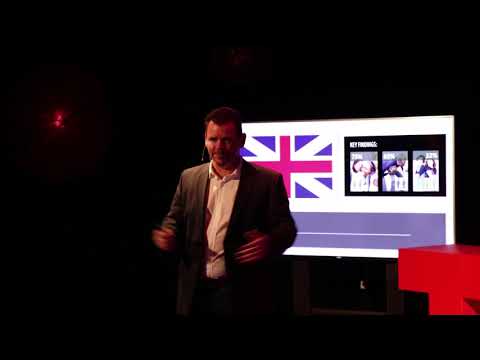
findings are very interesting so in
total three of the findings that came
out of his study where the girls
actually had better relationships in
general and so he gave it about a 75%
ranking came down to the fact that the
girls actually spoke a great deal more
and when you looked at the amount of
time that they communicated with each
other in meaningful ways
that they were spending a lot more time
communicating in boys they spent less
time actually interacting communicating
they may have spent time together
undertook activities played sport spent
time in spacial proximity to each other
but in terms of communicating being
understood and understanding the other
that was reduced but the fascinating
part of this research was that all of
these schools were co-educational and
that they had boys and girls right the
way through and what the study found was
that in terms of understanding the other
within school environments it was the
male and female relationship that was
the most disconnected and on his results
it was about 32% and when the
researchers went in and dug a little bit
deeper the reason that that was the case
was the fact that the only way that male
female relationships were framed were
around concepts of dating and marriage
so for a boy and a girl in a school to
communicate with each other
the destination was either dating or
somehow marriage and so in that sense
schools had not set up the relationships
or the behaviors or the expectations
that boys and girls could actually be
friends and so accordingly they didn’t
interact with each other even though
they sat next to each other in class may
have gone through school for 13 15 years
together their understanding was still
very limited it’s interesting because
when we talk about private schools and
we talk about single sex schools a boys
school or a girl school often the
greatest complaint about them is if you
send your child to a boys school or a
girls school
weren’t they weren’t they won’t learn
how to actually interact with the
opposite sex so here are people spending
13 years together and they’re still not
learning about that one would think that
if we are able to teach that and to
develop that in skills how different
would marriages actually be if people
came out with even just as 75% between
female and female as demonstrated there
how much different impact that would
have when you look at those results
there’s one school that really stood out
and this was a school that actually
surprised the researchers in their
results in what’s called the Samuel Ward
school and you can see it there and
doing some of the comparisons have a
look at the first element that was there
and that was amount of time that
students were allowed or given
opportunity to interact and connect with
each other compare that to another
school that’s there in terms of just how
different one element is how often
students have time to talk and interact
communicate and get to know each other
that’s not a million-dollar activity
that doesn’t require a new facility it
doesn’t require employing new staff
simply being focused on the fact of
whether or not you were giving
opportunity for students to communicate
had that profound impact if you go all
the way through that same school the
Samuel Ward School was exceptional all
the way across and you can see how far
it was ahead all of the other schools in
the United Kingdom now they were
fascinated by the school and they wanted
to know what was different about this
school compared to all the other schools
that they had reviewed and they were
expecting wanting to know whether a
wealthy school was at a school that was
brand new
was that a school it was in a really old
area and all the families knew each
other etc and when they looked at the
Samuel Ward school what they actually
found one said it was actually a school
that was in quite a challenging area a
school that was from low economic
background low economic background and
that the projections in terms of
students academic ability was quite low
as well but in terms of what the school
had set up besides their community or in
spite of their community was a school
that was focused on culture of community
a school that was focused on
relationship but all parts of how the
school was developed from the very start
of the school and through all parts of
its DNA they wanted to develop a school
that was built upon connection
and provide opportunities for people to
get to know each other and to be known
the results are that even the students
who were the most challenged did well
the students were good students already
improved beyond what was expected but
the students who are the most
marginalized the most at risk of failure
or dropping out results increased
exponentially and what they found out
that one of the key factors was that all
students had a high level of literacy
and communication and in doing so they
were able to connect with others because
they were able to understand and
communicate be communicated to but they
were also able to express and
communicate to others things that were
important about them things that they
were worried about destinations and
pursuits that that were important to
them as well and because of that they
had a good sense of belonging and that
good sense of belonging ensure that
their academics increased remarkably but
we’re in Australia we are not the UK
we’re not Samuel Ward school and so our
question was to say what is the
transferability of these studies
so it’s great that the relational
schools foundation did these studies in
the UK with with government skills how
would they come across into it the
Australia environment and so we invited
dr. Rob Lowe to come out and actually
speak to our schools and part of that we
thought wouldn’t it be interesting if he
brought his research tool with him and
our view has been as a group of
Christian schools and heading up those
schools 140 of them we’ve always put
forward that schools that shared the
same ethos and values and ours where it
was a Christian sort of ethos and values
that our view was that relationship was
central to what we did that we were
communities of people coming together
and rolling around that that there
should be some kind of profound impact
if relationship was central and his
study said that that should make an
impact the now schools who were set up
to do that shouldn’t there be some kind
of correlation that was there so we then
took his findings and his research and
remembering a take you back that’s the
Samuel Ward schools results takeaway
everybody else that’s Samuel Ward and
when he came out to Australia we asked
dr. Rob Lowe we said here’s a one of our
skills at random that we are selecting
for you we would like you to take that
research tool
all of that data and apply it to one of
our Christian schools and this was the
result the schools had nearly the
identical results to schools on opposite
side of the world ones a government
school one’s a Christian school the
thing that they have in common is their
focus on connection community and
relationship and that’s really profound
we’re still yet to work out the
statistic the statistical percentage of
that of how close that is in terms of 35
different points and on that scale just
how close those results are but isn’t
amazing with two schools from very
different backgrounds who focus on
connection and relationship and the
value of individuals the impact that it
has on the results over there now
the question may be well we’re doing
from here you’ve got one school and
you’ve compared it to the rest and I
would agree with you any person who’s
involved with statistics or research
would say that could have been a fluke I
groove you having two schools that match
up but it does say to us is there
something here that we should be
investigating and to that end we’ve just
commissioned research over 20 Christian
schools involving 8,000 students to find
out whether or not when a community
comes together where they should share
the same ethos and values where the
whole focus upon relationship of about
valuing and caring for individuals does
this hold true across an entire movement
and so those results have gone out and
I’m pleased to say that not only we have
about eight thousand participants we’re
about close to 11,000 people who are now
participating further than that want to
take it one step further so it would be
good to say people gathered around the
same ethos the same value of connection
would achieve these results the two
communities don’t look the same and in
that part of our group we realize that
we’ve got some very different
communities so we said what if we did
then a case study of some of the more
unique communities and thought how does
relationship or connection change with
them so one of them we’ve decided to do
a specific case study on is an
indigenous community how does an
indigenous school develop relationship
have a sense of community and its values
we’re looking at a multicultural
community we’re looking at a very small
community
we’re looking at a rural community and
we’re looking at a community that deals
with the marginalized as well and we
want to know does the power of
connection of having a shared set of
values and a shared ethos overcome all
differences and still have that positive
impact upon students what are we hoping
to find from that I believe that we will
find differences in our school yes it’s
lovely to think that every one of the
hundred and forty schools in Christian
schools Australia would would achieve
the same as Samuel Ward but what I think
we will find is that there will be
schools that will have slight
differences and when we look at that
little mixing desk there’ll be some
schools that do communication extremely
well but we are other schools that
students know their story and they
school very highly and others where it’s
not the case and our hope is then to
have a look at the schools that are
doing extremely well and to take those
little pieces of information those
little ideas or activities that they’ve
got in their skills and start applying
it to those schools that are struggling
in those areas because for the first
time we can say we value relationship we
know the connection has an impact but
we’ll also know how you do it as well
and whether we get ideas from an
indigenous community a rural community a
little school or a city school the ideas
of and there are ways in which they
build connection and community will be
important and at the end of all of this
my hope is is is that wherever a student
goes to school then rather than just
focusing on NAPLAN results or their
final Oh peace core or great a senior
certificate result though they’ll
actually realise that just as important
maybe even more important are the
connections they’re made with their
fellow students the connections that
maybe their teachers the connections
they’re made with the school that they
will realize that those connections give
them an idea about who they are and when
they know who they are
when they know that they belong and have
value when they are realized as well
that they have a future
that they can actually participate in
and influence that a student will have a
greater sense of satisfaction and going
to those schools and schools will know
how to facilitate that and so my hope
theirs in a year’s time when all those
results come back in that will have a
few clues to be able to get students to
connect better with each other and this
thank you
[Applause]
[Music]
[Applause]
you
[Applause]
you
we’re in a society now particularly
Australia where we focus a lot on
results we see that students at NAPLAN
results and a lot of our students are
completing their farmer years of
education as well and it all comes down
to a particular number and somehow we
can be confused to think that one number
or that score is the value of who we are
as individuals the value of what we will
contribute to society in the future so
I’m going to talk about connection today
with regard to the idea of relationship
and the power of relationship between
individuals communities and the
individuals between in them let me start
by asking you a question to reflect on
do you think it’s important that
students are happy well-adjusted
connected to their schools is it
important that a student wants to go to
school in the morning and I would say to
you that is really important and the
studies are starting to show that that a
student who feels that they’re going to
school which is a community of people
who likes some who accepts them who
values them go to that school are more
regularly they go to that school with a
better sense of self but they their
ideas and their values about where they
will end up in the future are much
higher and finally that their results
are far better because the way that they
see themselves the way that they feel
that others see them is so critically
important that it becomes a
self-fulfilling prophecy in that young
person’s life this type of research is
now coming to the fore and a group that
that I really like and I recommend is
the group called the relational schools
foundation since 2014 dr. Rob Lowe has
been looking at the impact of
relationship on young people he has gone
through all of the UK into doing surveys
and interviews of young people to say
and to look at how do they feel versus
how they see themselves or achieve as
individuals he found five different
components in terms of how a young
person views themselves or how school is
set up and his research shows that there
are five elements of a school that will
help them to improve the sense of
well-being for an individual and develop
community the first one is around power
and in a sense is that for young people
and for schools to thrive in big good
places to belong is that power something
that is distributed
fairly as an individual is power and
distributed in a sense where I feel
respected and I can respect others the
second one there is around the
information when I’m in this school
environment do I feel I receive the
information the feedback that I require
to be successful in that community the
third element is communication are there
times where I can communicate to speak
to others and times where I can be heard
as well and does the school value that
do my classes do my colleagues value
that ability to be able to communicate
with each other the fourth element is
around purpose why are we here
what are we doing together what is the
direction that we’re headed is there a
synergy in the types of things that
we’re doing together
that we’re actually building towards the
same destination and finally when I
reflect back on my story and I look back
over all the time that I’ve spent in
that school and community is that story
building and showing me and telling me a
set of patterns and transits show me
overcoming difficulties working with
relationship with it which with others
in terms of being able to go forward
towards my desired destination because
if I’ve got a story that when I retell
it from the past is one of overcoming of
one of dealing with difficulties and
struggles and most likely to think that
my future is one that’s going to be
positive but yes it will have
difficulties and struggles and in the
future but because I know my story and I
know where I’ve overcome that in the
past are more likely to see that my
future story is going to be one that’s
positive also in looking at a school
then the relational skills foundation
and dr. Loes research started to look at
schools in as being not just permanent
entities not something that was fixed in
stone but almost like a mixing desk that
we can look at those five elements
within a school and start adjusting and
working with those in a school that
doesn’t communicate very often or
doesn’t have spaces for students to
communicate they can provide
opportunities for them to communicate
and interact and to speak and to be to
know and to be known and so in that in
there our mixing desk we can actually
then increase that proximity in terms of
being able to provide opportunities for
that so if we were to evaluate our
school and think that our students don’t
have the opportunity
Trinity to communicate with staff for
each other then we can provide those
opportunities and so doing lifts that
scale in terms of the community as he
went around he decided then to have a
look at each of the schools and work out
throughout the United Kingdom which
schools were doing this really well and
so the question for many people is how
do you actually measure a relationship
how do you measure the connections that
are occurring within a school what he
was looking for was relational proximity
how much do we know connect or
interrelate to each other and that was
the basis upon which he was valuing or
understanding the level of that
connection and it’s an interesting tool
where where he was asking was he paired
people up in terms of the the classrooms
from all individual classes gave them
somebody within that class to think
about maybe somebody they knew well
maybe somebody who was brand-new to the
school maybe somebody they’d known since
they’d commenced even in in prep or
grade one and ask some questions about
how well they knew this individual what
this person’s values were what they
liked or disliked how other do they know
these things did they know what this
person’s aspirations were like there are
still evaluated to make a decision
around was their relationship in the
past a good one or was it a stressed one
now was it a good one or a difficult one
and then in the future in 10 or 15 years
time did they expect to know the
individual that they had been paired
with randomly within that back with that
school group and from that he was able
to judge how close or distant
relationships were within that school
now that’s not valuing the relationship
it’s talking about a proximity how close
am I to understanding that person to
realizing what their needs and wants are
understanding that values will project
him where they want to head in the
future and it gave him a huge amount of
data and the data looked like this so
those five domains I spoke about about
first off were divided into 35
individual elements so for each one of
those five seven subsets of questions
could be asked and going across each of
those little Wrigley lines that have
appear on the screens are different
schools and putting all the students
results together so that was totally
anonymous and hundreds of children
within
schools put their results together and
then to be able to evaluate where they
were doing well or where they were
struggling this allowed him to develop a
baseline to say in an average school how
close should those connections be how
well should students know each other how
will should they have an understanding
of their future aspirations of the
students that they traveled with the
findings are very interesting so in
total three of the findings that came
out of his study where the girls
actually had better relationships in
general and so he gave it about a 75%
ranking came down to the fact that the
girls actually spoke a great deal more
and when you looked at the amount of
time that they communicated with each
other in meaningful ways
that they were spending a lot more time
communicating in boys they spent less
time actually interacting communicating
they may have spent time together
undertook activities played sport spent
time in spacial proximity to each other
but in terms of communicating being
understood and understanding the other
that was reduced but the fascinating
part of this research was that all of
these schools were co-educational and
that they had boys and girls right the
way through and what the study found was
that in terms of understanding the other
within school environments it was the
male and female relationship that was
the most disconnected and on his results
it was about 32% and when the
researchers went in and dug a little bit
deeper the reason that that was the case
was the fact that the only way that male
female relationships were framed were
around concepts of dating and marriage
so for a boy and a girl in a school to
communicate with each other
the destination was either dating or
somehow marriage and so in that sense
schools had not set up the relationships
or the behaviors or the expectations
that boys and girls could actually be
friends and so accordingly they didn’t
interact with each other even though
they sat next to each other in class may
have gone through school for 13 15 years
together their understanding was still
very limited it’s interesting because
when we talk about private schools and
we talk about single sex schools a boys
school or a girl school often the
greatest complaint about them is if you
send your child to a boys school or a
girls school
weren’t they weren’t they won’t learn
how to actually interact with the
opposite sex so here are people spending
13 years together and they’re still not
learning about that one would think that
if we are able to teach that and to
develop that in skills how different
would marriages actually be if people
came out with even just as 75% between
female and female as demonstrated there
how much different impact that would
have when you look at those results
there’s one school that really stood out
and this was a school that actually
surprised the researchers in their
results in what’s called the Samuel Ward
school and you can see it there and
doing some of the comparisons have a
look at the first element that was there
and that was amount of time that
students were allowed or given
opportunity to interact and connect with
each other compare that to another
school that’s there in terms of just how
different one element is how often
students have time to talk and interact
communicate and get to know each other
that’s not a million-dollar activity
that doesn’t require a new facility it
doesn’t require employing new staff
simply being focused on the fact of
whether or not you were giving
opportunity for students to communicate
had that profound impact if you go all
the way through that same school the
Samuel Ward School was exceptional all
the way across and you can see how far
it was ahead all of the other schools in
the United Kingdom now they were
fascinated by the school and they wanted
to know what was different about this
school compared to all the other schools
that they had reviewed and they were
expecting wanting to know whether a
wealthy school was at a school that was
brand new
was that a school it was in a really old
area and all the families knew each
other etc and when they looked at the
Samuel Ward school what they actually
found one said it was actually a school
that was in quite a challenging area a
school that was from low economic
background low economic background and
that the projections in terms of
students academic ability was quite low
as well but in terms of what the school
had set up besides their community or in
spite of their community was a school
that was focused on culture of community
a school that was focused on
relationship but all parts of how the
school was developed from the very start
of the school and through all parts of
its DNA they wanted to develop a school
that was built upon connection
and provide opportunities for people to
get to know each other and to be known
the results are that even the students
who were the most challenged did well
the students were good students already
improved beyond what was expected but
the students who are the most
marginalized the most at risk of failure
or dropping out results increased
exponentially and what they found out
that one of the key factors was that all
students had a high level of literacy
and communication and in doing so they
were able to connect with others because
they were able to understand and
communicate be communicated to but they
were also able to express and
communicate to others things that were
important about them things that they
were worried about destinations and
pursuits that that were important to
them as well and because of that they
had a good sense of belonging and that
good sense of belonging ensure that
their academics increased remarkably but
we’re in Australia we are not the UK
we’re not Samuel Ward school and so our
question was to say what is the
transferability of these studies
so it’s great that the relational
schools foundation did these studies in
the UK with with government skills how
would they come across into it the
Australia environment and so we invited
dr. Rob Lowe to come out and actually
speak to our schools and part of that we
thought wouldn’t it be interesting if he
brought his research tool with him and
our view has been as a group of
Christian schools and heading up those
schools 140 of them we’ve always put
forward that schools that shared the
same ethos and values and ours where it
was a Christian sort of ethos and values
that our view was that relationship was
central to what we did that we were
communities of people coming together
and rolling around that that there
should be some kind of profound impact
if relationship was central and his
study said that that should make an
impact the now schools who were set up
to do that shouldn’t there be some kind
of correlation that was there so we then
took his findings and his research and
remembering a take you back that’s the
Samuel Ward schools results takeaway
everybody else that’s Samuel Ward and
when he came out to Australia we asked
dr. Rob Lowe we said here’s a one of our
skills at random that we are selecting
for you we would like you to take that
research tool
all of that data and apply it to one of
our Christian schools and this was the
result the schools had nearly the
identical results to schools on opposite
side of the world ones a government
school one’s a Christian school the
thing that they have in common is their
focus on connection community and
relationship and that’s really profound
we’re still yet to work out the
statistic the statistical percentage of
that of how close that is in terms of 35
different points and on that scale just
how close those results are but isn’t
amazing with two schools from very
different backgrounds who focus on
connection and relationship and the
value of individuals the impact that it
has on the results over there now
the question may be well we’re doing
from here you’ve got one school and
you’ve compared it to the rest and I
would agree with you any person who’s
involved with statistics or research
would say that could have been a fluke I
groove you having two schools that match
up but it does say to us is there
something here that we should be
investigating and to that end we’ve just
commissioned research over 20 Christian
schools involving 8,000 students to find
out whether or not when a community
comes together where they should share
the same ethos and values where the
whole focus upon relationship of about
valuing and caring for individuals does
this hold true across an entire movement
and so those results have gone out and
I’m pleased to say that not only we have
about eight thousand participants we’re
about close to 11,000 people who are now
participating further than that want to
take it one step further so it would be
good to say people gathered around the
same ethos the same value of connection
would achieve these results the two
communities don’t look the same and in
that part of our group we realize that
we’ve got some very different
communities so we said what if we did
then a case study of some of the more
unique communities and thought how does
relationship or connection change with
them so one of them we’ve decided to do
a specific case study on is an
indigenous community how does an
indigenous school develop relationship
have a sense of community and its values
we’re looking at a multicultural
community we’re looking at a very small
community
we’re looking at a rural community and
we’re looking at a community that deals
with the marginalized as well and we
want to know does the power of
connection of having a shared set of
values and a shared ethos overcome all
differences and still have that positive
impact upon students what are we hoping
to find from that I believe that we will
find differences in our school yes it’s
lovely to think that every one of the
hundred and forty schools in Christian
schools Australia would would achieve
the same as Samuel Ward but what I think
we will find is that there will be
schools that will have slight
differences and when we look at that
little mixing desk there’ll be some
schools that do communication extremely
well but we are other schools that
students know their story and they
school very highly and others where it’s
not the case and our hope is then to
have a look at the schools that are
doing extremely well and to take those
little pieces of information those
little ideas or activities that they’ve
got in their skills and start applying
it to those schools that are struggling
in those areas because for the first
time we can say we value relationship we
know the connection has an impact but
we’ll also know how you do it as well
and whether we get ideas from an
indigenous community a rural community a
little school or a city school the ideas
of and there are ways in which they
build connection and community will be
important and at the end of all of this
my hope is is is that wherever a student
goes to school then rather than just
focusing on NAPLAN results or their
final Oh peace core or great a senior
certificate result though they’ll
actually realise that just as important
maybe even more important are the
connections they’re made with their
fellow students the connections that
maybe their teachers the connections
they’re made with the school that they
will realize that those connections give
them an idea about who they are and when
they know who they are
when they know that they belong and have
value when they are realized as well
that they have a future
that they can actually participate in
and influence that a student will have a
greater sense of satisfaction and going
to those schools and schools will know
how to facilitate that and so my hope
theirs in a year’s time when all those
results come back in that will have a
few clues to be able to get students to
connect better with each other and this
thank you
[Applause]
[Music]
[Applause]
you
Please follow and like us: