
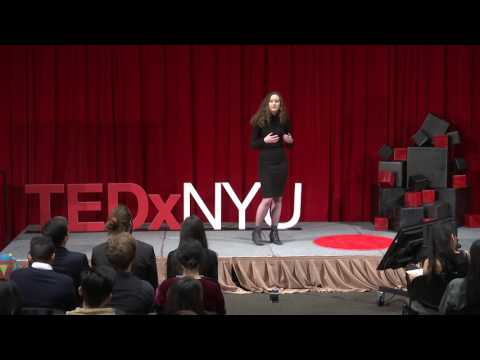
[Applause]
so we’re all familiar with the concept
of the midlife crisis you picture a kind
of pallid balding guy with an expanding
waistline who suddenly figures out that
he’s unhappy in his current career so he
tries to radically transform himself by
quitting his job as a stockbroker or a
used car salesman and throwing himself
into a brand new pursuit like ballroom
dancing or cross-country biking in the
archetypal story these attempts are
hardly ever successful and our
protagonist eventually has enough of his
misadventure returning to his cubicle
before the next mortgage payment is due
on his suburban home although it barely
entered my 20s I share many of these
same unhappy feelings I’m having what
you might call a quarter life crisis in
December I’ll graduate from NYU Stern
School of Business famous for producing
successful accountants and consultants
and bankers and I’ve just figured out
that I don’t want to be any of those
things well I’m interested in computer
programming and maybe might go to law
school all I actually want to do is
practice yoga and write angsty dystopian
novels and the classic question that you
get in every interview where do you see
yourself in five years is panicking
you’re saying because it reminds me that
I’m not even sure when I’m going to do
laundry next week I shared these
concerns with a professor who was kind
enough to meet with me and discuss my
career surprisingly he actually thought
that I was ahead of many other people my
age simply because I wasn’t trying to
pin myself down to a single linear
5-year plan he shared that he started
his career as an engineer and then moved
into research and investment making
through a few strange strokes of luck
and then worked in real estate and a few
other commercial industries before
finally settling
into academia adaptability or the
embracing of change was the key to his
success after that I realized that the
halls of Stern were filled with MBA
students in their 30s and 40s who were
going through the exact same midlife
crisis as the unhappy suburbanite in my
opening story but many of them weren’t
returning to their cubicles at all
instead they were making wild leaps into
brand new jobs and new industries
completely unlike the ones they’d
previously been in or even starting
their own companies and I started to
realize that the idea that were bound by
our mortgages and our receding hairlines
was sadly outdated and incompatible with
the way that many people lived their
lives today and I wondered why the idea
of the life crisis was still seen as a
cause for alarm instead of a welcome
opportunity for growth and change why do
we glorify stability why is it that
since the age of four I’ve been asked
the same question over and over what do
you want to be when you grow up is if
there can only be one such answer why is
it that now is I’m about to graduate
from college is the answer that I’ve
been giving my whole life I’m not sure
no longer an acceptable reply and why is
it that a few years from now I’ll
probably never hear this question again
as if 40 or 30 or even 25 is already too
late to change your mind if you think
about it our country actually has a lot
in common with a volatile emotional
young twentysomething it’s obsessed with
technology in the internet with our head
of state using Twitter as his primary
form of communication it’s rebelling
against its parents the founding fathers
who wrote its constitution and rolling
its eyes and all the things in it that
are literally so last century it has a
crushing 1.3 trillion dollars of student
debt
and like many of us it’s struggling to
figure out what it wants to be when it
grows up wavering between two unstable
extremes resulting in one of the most
divisive political moments in American
history this uncertainty of our nation’s
quarter life crisis is making many
people uneasy and wishing that we were
back in a time that was stable and felt
safer when I start to worry about my
future I long for the glory days of
fruit roll-ups and Disney Channel movies
when my biggest worry was the boy who
sat next to me on the bus picking his
nose when we start to feel nervous about
our nation’s future we elect a leader
with a campaign slogan make America
great again
who lures us like moths to flame with
false nostalgia for an unidentified
moment in the past
the driver of all of this uncertainty is
technological change and the trends of
automation and globalization that it
creates by the end of this decade about
16% of all jobs that exist currently in
the US will be automated and this number
is expected to increase to 47% by 2035
we already have AI systems that can
write screenplays and give financial and
medical advice and even build new AI
systems of their own people of all ages
and all educational levels are worried
that they’ll soon lose their jobs if
they haven’t already to a machine that
doesn’t have to feed a family like they
do and while it’s true that technology
also creates lots of new jobs for
example social media managers and pro
gamers didn’t exist 50 years ago most of
us are unprepared to take advantage of
these new opportunities according to a
recent survey of large US corporations
over half of them stated that they had
trouble finding qualified US workers to
fill new positions forcing them to go
abroad to countries like China or India
to find the talent that they need and
technology with its instantaneous
digital communication
an overnight intercontinental travel
only makes this process cheaper and
easier for American business owners if
we can learn one thing from the past is
that attempts to stop technological
growth rarely get very far the classic
example is during the Industrial
Revolution when a group of textile
workers called Luddites smashed machines
in an angry and desperate attempt to
preserve their jobs just the way they
were obviously they were unsuccessful as
I’m assuming most of the clothes that
you’re wearing were not sewn by hand
with a needle embed technology simply
moves too fast and is too powerful for
us to be able to stop and even if we
could I’m not sure that we should want
to if we were to stop technology in its
tracks what would be the price of our
newfound job security and stability
never curing cancer never bringing
education and literacy to the furthest
reaches of the globe never going to Mars
I don’t know about you but that’s not a
trade-off that I would be willing to
make so if we’re not going to try to
stop technology our only option is to
change with it in order for Americans to
really start feeling good about
technological growth we must make
adaptability the number one lesson
taught in our schools and the primary
value embraced by our society my parents
and grandparents lived in a world where
you maybe had about four jobs during
your entire career instability and
uncertainty were seen as undesirable and
frowned upon
like the hapless you know midlife ER in
the story that I opened with but
Millennials like me live in a very
different world with most of us having
at least four jobs by the time we turn
thirty-two and our children they’re
likely to have at least four jobs at
once this isn’t because each generation
is increasingly becoming more Restless
or picky or
coddled or any one of the many other
words that are constantly ascribed to us
it’s simply because technology is moving
faster now than it ever has before
meaning that jobs are created and
destroyed more quickly in 1958 the
average age of a company in the S&P 500
was 61 years old today that number is 18
our country’s economic landscape is
increasingly coming to be dominated by
new and disruptive companies and if we
want to take advantage of the
opportunities that they offer we must be
ready to radically overthrow and
transform our own careers the answer to
this isn’t just more programming or stem
computer science classes in schools
although those are certainly important
it goes deeper than that and it lies in
defeating the notion that education is
for the young 65% of grade school
students will start their careers and
jobs that don’t exist yet meaning that
the stem classes that they take today
well great for teaching them critical
thinking abilities and developing an
interest in technology are unlikely to
give them the technical skills that
they’ll need in their first nine-to-five
in the same way many of the skills that
I and my classmates are learning in our
technical classes will probably be out
of date as well by the tie the time
we’re done paying those student loans
that I just talked about the education
of the future will be a combination of
traditional educational institutions
massive open online courses career and
technical training programs and lots of
individual study by people of all ages
and in all walks of life and the
stereotypes that currently exist in
today’s white-collar America against
those who don’t hold a four-year college
degree or against those who obtain it
part-time or while working will have to
be deeply rethought as these lines
continue to blur adaptability doesn’t
have to mean giving up everything that
you’ve learned or experienced in the
past
my first job was as a waitress in a
small family-owned restaurant in my
hometown and I did everything I washed
dishes I cleaned the bathrooms I dragged
the dirty water from mopping the floors
to the drain out back at night since
I’ve come to college I’ve had many
business internships and none of them
have asked me to do any of those things
but they have asked me to follow
directions to work quickly under
pressure and to be kind helpful and
courteous to clients all things that I
learned just as well in that tiny
restaurant kitchen as we saw in my
professor story the best careers often
don’t take a linear route a fact that is
only going to become more prevalent as
adaptability increasingly becomes the
most important skill to have for a
successful career I’m having a quarter
life crisis and that’s great I’ll have
many more of these moments throughout my
career and those will be great also
they’ll help me to make friends with
surprise and uncertainty and keep me
open to opportunities that present
themselves in my life they’ll keep me on
my toes and prevent me from being lulled
into a false sense of security and
thinking foolishly that my life can
remain the same in a rapidly changing
world they’ll keep me nimble and agile
always ready to grow in areas where
before I had been weak and most
importantly they’ll help me take my
crisis and turn it into a moment of
opportunity so stop asking your child
what do you want to be when you grow up
instead ask her what do you dream about
ask her what adventures do you want to
have and ask her how do you want to
change the world
help her frame her goals and desires in
a way that will keep her open to
tackling unexpected challenges instead
of just having her choose from a list of
pre-primed career paths that may or may
not have vanished or mean something
completely different by the time she
gets there instead of saying I want to
be a doctor let’s say I want to cure
disease instead of saying I want to be a
lawyer let’s say I want to fight for
people’s rights and instead of saying I
want to be an artist let’s say I want to
make the world beautiful that way when
someone or something inevitably becomes
better than us at our day to day tasks
instead of feeling resentful and giving
up we’ll find a new way to pursue our
goals and our dreams this is how we
build a society based not off of anger
and fear but instead off of meaning
purpose and maybe even happiness thank
you
[Applause]
Please follow and like us: