
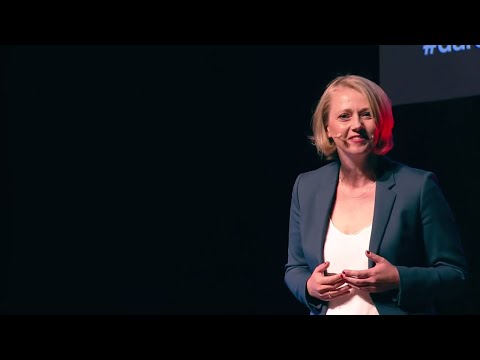
Translated by: Bieke Van Gelder checked by Peter van de Ven
A few months ago
I gave a tour to a respectable Indian couple living in the US.
He was a CEO,
she was a doctor.
They wanted me to show them as much as even remotely possible was
During a two-hour tour.
So I did.
I remember them very well.
It was a sunny afternoon.
I took them on the St Michael’s Bridge,
along the harbor,
up to the castle.
We crossed the Friday market.
We tasted chocolate.
We even spoke to Ghent.
And yes, he asked thousands of questions
And she took thousands of pictures.
Everything went really smoothly, until we arrived at the cathedral.
“Should we see this really, Kristel?” He said.
“Churches are not really our thing, you know.”
“Well,” I said, “you do not,
but did you know that this is the place
where you can see the world famous Mystic Lamb?
You can not miss in Ghent! “
They looked at each other.
I saw that they had no idea where the Lamb of God is about,
but even more,
They were concerned that the visit would take too much time.
But look, I was able to convince them.
And there we stood,
in the dark chapel,
the gigantic Lamb.
It was painted by van Eyck,
‘Ike’ in English,
some 500 years ago.
I saw that they were impressed
and so I told them briefly about the symbolism, art
and the exquisite details that Van Eyck is famous for.
“Kristel, can we take a picture?”
“I’m afraid not,” I said,
“But you know what?
Take your time – all you want –
and I wait for you guys out. “
When she finally came out,
their whole attitude was different:
he was lost in thought,
with his arm around its shoulder
and she had tears in her eyes.
“Thank you for bringing us down here,” she said through her tears.
“It all came back, you know.
We thought we had it processed, but now … here … “
And when they entrust me
how the year before their child had lost.
You can imagine that the rest of the tour was different.
They were more open,
relaxed,
more connected;
they were a couple.
What I really want to say,
is that this change was visible.
She was substantial
and she really was.
And I wonder if this would have happened
as the Lamb of God would be hanging in a museum.
I do not know how you see it,
but if I go to medieval rooms in museums around the world,
it always amazes me how few visitors they attract.
I took a picture.
What you see here is the medieval room of the museum in Princeton,
but it might as well be another museum,
because it is always another excellent collection of unique pieces
which clearly belong to a specific place,
As with most medieval art is the case, though.
It seems like the work, once removed from its place,
loses its appeal,
its inspirational value,
his soul.
Believe it or not,
same terrible fate was also waiting for the Lamb of God
especially since it gets very expensive restoration turn.
Some policymakers suggested Ghent
we had to make a museum there specially.
You can imagine how much I was in shock,
but also how happy I was when I heard that the tide has turned
and they decided
the Lamb of God will remain in the cathedral,
anyway.
And that money, time and effort is invested
to house the better.
That’s good news for you,
because now you can, like the Indian couple,
fully enjoy his power,
its inspirational value
and his soul.
The question is of course:
post have a soul?
Take the cathedral.
For over a thousand years
it is a place where people mourn, pray, celebrate.
Is this nothing else Cathedral
than some mere, albeit beautiful and impressive square footage?
Or is the comfort, inspiration and reflection
those people clearly experience
as real as the ancient stone with which it was built?
And if so, what is its value?
What is the value of one square meter soul?
You know, if I from my apartment to my office walking,
I often take a shortcut through the cathedral.
I always go in through the green wooden door on the side
and I go out through the main entrance.
I used to walk through hastily,
with my laptop in one hand and my smartphone in the other.
But one day I slowed my pace and I sat down for a minute.
I looked up
and let my mind wander.
When I then arrived at the office,
I felt that those few minutes had really strengthened me,
grounded and relaxed.
And it turned out to be the perfect early morning workout.
I’m sure each of you has such places.
It need not be a religious site,
it may be any place that attracts you intuitively.
You know, those places that just have something.
It could be a park bench that you like to read,
or a typical old bar where people, sometimes generations,
agree with each other.
Or small, iconic stores in the city,
where you enter and immediately smells its history.
That kind of places –
the places that feel good.
Those places are valuable.
Those places are the heart and soul of a city,
and yet we consider them too often take for granted.
As usually happens with valuables,
we realize their value really if we hit them in danger of losing:
the day you discover that your favorite spot was destroyed
or converted into something it is not at all.
Let me take you for it a favorite hangout Ghent:
the Grass and Korenlei.
This was a medieval harbor from over and in the 12th century,
and the place has everything that entails such a port:
restaurants, shops, cafes.
Imagine the boats which loaded here and were discharged.
And all went well until the sixties,
because when we dug a huge canal around Ghent
This port was unnecessary.
So our policy makers pondered and pondered and pondered,
and the most creative that they could think of, was this:
a parking lot
which was not a living soul in sight.
Fortunately for us, we came back to our minds in the nineties
and we gave it back its original function,
be it only as a port for pleasure boats.
I remember very well that once the renovations were finished,
everyone suddenly seemed to notice the potential of the Graslei and Korenlei:
everyone wanted to be there, you know?
And so it is still today.
Once we ended up right in the soul of the place,
it was the hotspot that it is still in Ghent.
Now the Grass and Korenlei is a wonderful conversion,
because we not only invested time, money and effort
the restoration of medieval decor,
but also in restoring the original function.
But it is not always.
And yet,
conversions of places are very difficult,
but they are trendyer than ever.
In that context, I want to show you a picture
I made last week in a beautiful 16th century chapel,
here in Ghent.
As you can see, she is transformed into a trendy bar.
And as you can see furthermore,
has invested a lot of time and money in the original characteristics:
Gothic windows, tiles, pillars.
But, there was not invested in restoring the original function.
The original function could not harder differ from the current position:
a reflection site versus an outlet.
As much as I love pubs –
I’m finally a Belgian –
a conversion only focuses on the restoration of the building
and not quite harmonize with the original function,
then there will …
will not fully appreciate the potential to be.
You will always have the feeling that something is not quite right.
And what is worse,
in time
The new feature devours the soul of the place completely on,
to which – if the trend is over – back is completely empty
and new investors must be sought.
Now I can hear you thinking:
but Kristel, what should we do with such places?
We can not let them stand empty, right?
However, the most relevant question for me:
Is this place really empty?
Let me take you to a previously empty, very inspiring place in Ghent:
St Bavo’s Abbey.
More than 1,000 years old
and outside the beautiful refectory
and a well and an enclosed garden
there is nothing.
No heating, no facilities, no electricity.
Only stones and a pack, a pack soul.
I love to take people you go there, really,
because that place never disappoints me.
She always has its effect, whether we are ready or not.
One day I took a young, enthusiastic, loud group of marketers are there.
They had expected a teambuilding,
So can you imagine their faces when we arrived at the abandoned abbey.
But she tried to stay positive and I challenged them:
“Can you find three minutes on your own to wander?”
“Hey, of course we can!”
And there they went.
And slowly but surely
the peaceful tranquility fell back down on the abbey.
Three minutes, five minutes.
Five minutes there were ten or more,
and when they returned at last,
everything else to them.
They were quieter, more relaxed.
They were also more attentive to each other
and I noticed that their conversation had changed.
It was no longer about their work;
it was about themselves,
their wishes and desires,
their dreams.
And it was important, for me at least, they assured me
they one day would still return to this place.
And that is the value of one square meter soul.
Places can be very inspiring,
very powerful, valuable,
but they can not speak.
You can.
And I could be that.
And so I would say the following to all policymakers around the world:
Be observant for the inspiring and sites
you near you, you have your village and town.
For they are the heart and soul of it.
Look beyond the square meters;
see the soul.
And once you see it,
make sure you do everything possible to preserve and protect him.
And if a place becomes obsolete and empty will be placed,
ask yourself whether it is really empty.
And if he’s not – he has a lot of soul –
then have the courage to invest in the soul
and future generations will thank you for that.
And if there is no other option than to choose a rezoning,
do not go for compromise,
but make sure the rezoning harmonizes with the original function,
because that is the only way that will pay off.
Of course I have an errand
For my fellow guides worldwide.
I want to say, from the bottom of my heart:
Keep your customers take
to the places that you value so where you live.
Take them there you go, but once you are there –
I know this is very difficult for guides,
because we always want to talk –
construction than silence and space in your tour,
so your customers can really experience a place and enjoy it.
And finally, I would say this to each of you:
Continue to go to those places that you attract intuitive.
Jump once inside.
And when you get there,
please be really full.
Listen to that place, for what it has to offer you.
Let him nourish your soul,
be aware of its value.
And above all, I hope you all get inspired
by every square meter soul.
(Applause)
Please follow and like us: