
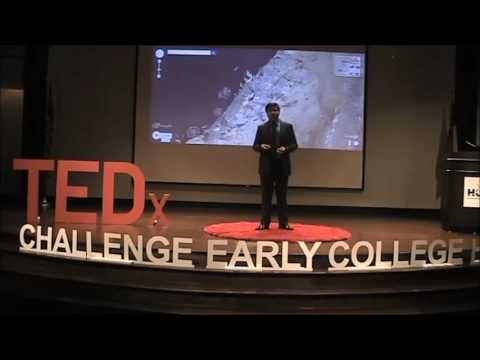
okay I want to begin by asking you a
simple question so if any of you if any
of y’all have ever seen this building
before or know of incredible universe
could you raise your hand okay so the
reason I mentioned this is actually
because the build of the building you
see behind me is actually the same
building that you’re in right now this
building I should underwent a process
known as this building actually
underwent a process known as adaptive
reuse and now what adaptive reuse is it
is it is a process where a building the
pre-existing building undergoes
repurposing in order to fit a new
function and and this building is an
example because this building went from
a warehouse store to a school we’re now
a teachers thousands of kids everyday
adults and tricks so firstly I want to
begin by mentioning the benefits of
Epirus adaptive reuse helps companies
save money by not making them pretty
nominating the make design and create
new buildings for the purpose of a year
to be and what they can do
what they do instead is just take a
pre-existing building and remodel the
interior to fit the purpose that they
need another another great benefit of
adaptive reuse is the fact that it helps
the environment the way it does is is
first it helps it helps conserve
materials by not making not a map not
making us design your buildings and
create them but another way that it does
this is another way that an actor does
this is that you know another way that
it does is that it helps slow the spread
of urban areas and so I have some
examples here of how urban areas are
spreading in the past 32 years here you
can see you can see Houston in 1980 84
here you see Houston in 2016 this is Las
Vegas in 1984 Las Vegas in 2016 Dubai in
1984 Dubai in 2016 so what this shows is
that urban areas are going at a rapid
rate in just the past 32 years and what
adaptive reuse does is it slows this
process by instead of just leaving
unused buildings unused and filling up
space and crew and spreading urban areas
by creating new buildings it takes those
unused buildings and it gives and it
gives them a new purpose and
and thus new buildings don’t have to be
graded as quickly but adapter for us
also runs into problems and it runs into
problems whenever a building undergoes
drastic changes in its initial purpose
an example of this would be if you
change homework into a prison every
building needs every building is
initially created with certain features
to fit its initial purpose and if you
change the energy change of building
service drastically it will not have
those certain features that it will need
to fit that new purpose so I wanted to
focus on problems that were that
actually disabled faces when undergoing
when it went under underwent adaptive
reuse firstly there are the features
that are necessary for school to do well
or Windows natural light views and
natural light use and room item so
firstly this building is has a great
lack of Windows this building only has
Windows by doing vibe doorways and even
the ones on the challenge service of
this campus are now blocked by the
parking lot so they doesn’t get the
because
same amount of natural like that again
the past but so but actually a study
done by the California Energy Commission
found that what I found was that natural
light actually being students being more
productive they are more attentive they
have better moods and they do overall
they get better grades in school but
because natural light because the school
had a lack of natural light we don’t get
those benefits here like in other
schools another another benefit that we
hear that actually here we do well is
room light so John Mayer domitor
lobbying he’s a marketing professor at
the University of Minnesota and what he
found was that in an eighth or ninth
room students tend to be more they tend
to notice more detail from attentive
they tend to notice those things no for
smaller things but in a ten foot high
students tend to think more freely and
they see more they think more freely on
the fingers out of the box
so and that’s why here if you’ve ever
been in our group one of the art classes
you’ll notice that those building that
those rooms are much taller than a
little patterns and another thing
finally views views is a major major
thing that this school was lacking again
because
windows because what views have what
Steven and Rachel Kaplan child
they are both environmental psychologist
and what they found was that views if
workers have view of greenery while
working they kind of like their jobs in
art they can have a better life
satisfactory and they have and they just
do better and work abroad but because
but here we don’t have that we don’t
have these because we don’t have as many
windows as other schools and other even
other campuses at HSE arms and actually
another thing that they found was that
even if even if workers went through a
wonder we need to preserve in their own
City they if they went on a nature
preserve they would do better actually
work and they get better on they had the
urge to tests to just notice problems in
papers and stuff and what they found
that they get better on those tests as
well so we like these things here in
this school we don’t have one of these
features that we need and that’s the
problem to that difference it doesn’t
always work without the produce isn’t
always the best option sometimes
sometimes companies only focus on the
benefits of saving money and they don’t
environment they need to create for what
they want further purpose now some
actually some some examples of adaptive
reduce are actually here so this is a
Victorian this is an old Victorian
bathroom that was redesigned to the
assembly shop over here this is that
this is an old cathedral in Europe that
was redesigned to be a bookstore here
these are all flat towers that were used
in that were used by in Nazi Germany in
World War two their identities because
the war ended in 1945 and what they what
now countries have been doing because
they’ve been allowing companies to go in
and now they have night clubs awareness
cafe all sorts of businesses in there
being used for many different replaying
different things and another one here in
Houston is turning the church club which
used to be a supermarket but now it is a
school similar to this building so but
another another example now these
but these are examples of other college
campuses owned by HTC that include all
these features that we left this is the
same this is a central campus of HTC in
San Jacinto and it has all the necessary
features that it needs to create best
environments for students and you here
we lack those we lack those features
another example of the Stafford campus
this is this weakness in this campus
again has all the necessary features to
create the best environment for students
but yet we don’t have ups here so this
is this is a problem that could be fixed
so what I attempted to do was I
attempted to imagine what could this
building look like if these aspects are
taken we’re taking into account when
this building under one breathe adaptive
reuse so here’s my first so I took the
picture and I chased me from the front
and we designed it in a certain our
architectural style Buicks arts and this
is and I try to add more buildings I try
to add a better aesthetics to make it
look more like a university instead of a
warehouse which it used to be here’s
another example here you can see the
college from a different angle front and
again resigning of it
so what I want what it gives what I want
to finish off with is when you see when
you see an unused building or a building
that’s no longer that’s been abandoned
don’t just walk by it
but try to imagine what it could be and
what its purpose to be and but don’t
just focus on how much money you could
save the focus on the environment you
want to create for the for the purpose
that it’s going to be for thank you
Please follow and like us: