
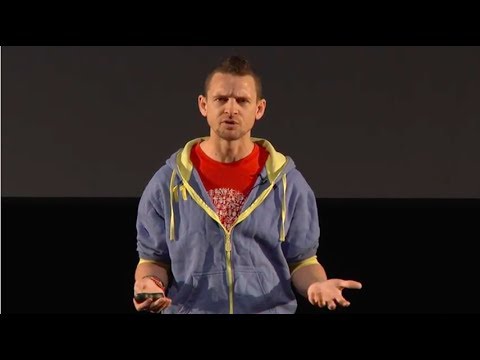
a bit about me I’m mr. C and I founded
the HACC lab here in Cambridge and we
teach kids how to hack how to make
things with tech how to produce things
in the 21st century because we live in
the 21st century but we have an
education system that comes from the
19th century that’s two whole centuries
ago these two quotes sum up my feelings
about the education system today pretty
succinctly Mark Twain first of all very
famous author said that he never let
school interfere with his education
which I find to be quite apt and the
second one is from my favorite cartoon
ever
it’s called Rick and Morty and the main
character there says that school is not
a place for smart people and I think
that that’s becoming an issue in today’s
society because we’re changing our
society is innovating but our education
system is beleaguered it’s in trouble
teachers are working very very hard to
try and do the things they’re being
asked to do but the things everything
else to do don’t fit what we need for
tomorrow this was written at the time of
the work houses Oliver Twist’s time 19th
century and this is when formalized
education began it started off in the
work houses it was a way to educate all
of the children in the workhouse
efficiently quickly so that they could
do what we needed them to do which was
working factories add up their paycheck
calculate their grocery bill and go home
we didn’t have to have innovators and
creators at this time we wanted people
to fill our factories and do this work
so the things that we taught them as you
can see at the end of that quote say
that we were teaching them for servitude
not creativity this is what the
classroom looked like in a workhouse and
I’m sure most of us feel some sort of
semblance to our own classrooms at
school in that straight lines facing the
front listening to me talk at you like
this slightly different in this though
because it was sit-down big quite do
what you’re told on your own and at the
end I will see how you have done Ken
Robinson one of my personal heroes asked
the question do schools kill creativity
he says we educate children by their
date of manufacture it’s not about what
you can do or how good you are at
something it’s about when you were born
which seems backwards to start with
and you can see at the end here our
system is predicated on academic ability
if you’re an alien and you thought the
education system was for a purpose then
you’d have to assume that purpose was
making University Professors because
according to the system those are the
people who have made it to the top and
that’s not what we need all of these
companies some of the biggest and most
powerful entities in the corporate world
indeed the world at large all of the
founders of these companies never
graduated from university the founders
of the two companies in the corner
Disney ‘virgin they left school at 16
school is not a place for smart people
sometimes kevin kelly the first editor
of Wired magazine a futurist a man who
knows where society is heading when it
comes to digital technology said this on
four economics that as soon as we had
electricity you would have telephones
that was inevitable that technology was
going to happen we would work out how to
communicate with electronics but it took
a special mind to invent an iPhone it
took a special mind to produce that
design and the concept the marketing
these are all unique skills that robots
can’t do these are the things we should
be teaching our people to be able to do
because the work house is gone it’s
being replaced with automation
this was the center this was the heart
and the soul of home entertainment in
the 1800’s the piano the amount of
effort it required to entertain people
on the piano was immense not only did
somebody have to build this instrument
which is a hugely skillful job but
somebody else had to go and learn how to
play the piano over many years of
painstaking lesson and then you had to
get all your friends around you take
turns singing along playing the piano
the piano is the number one thing sold
in house in the 19th century as soon as
1915 rolled around it was the phonograph
we did a clip sales of the piano by over
5,000 percent everyone had a phonograph
because you could get music from
anywhere in the world in your house you
could have an opera singer that you
loved playing in your lounge room for
all of your friends and then when you
got sick of that you could put somebody
else on the piano industry was destroyed
but today in radio broadcasting alone
there are more than half a million
people in the u.s. working this is what
we call creative destruction when the
old system is pulled apart for something
new it creates new opportunities and
these are the things we need to be
teaching our young people to seize this
is a terrifying study Ken Robinson again
quotes it I love showing this to
teachers because they’ll say yep I
totally see that this study was done in
the early 90s
it’s called breakpoint and Beyond and
you can see here that when they tested
these children at 4:00 and they gave
them a test that said how many uses can
you come up with for a brick see and
grown-ups will say well you can build a
house with it or I can use it to hold
down pieces of paper children was how I
can stand on it to reach things I can’t
get okay I could whack somebody with it
valid answer that is of it you could do
that with a brick I don’t advise it but
you could definitely do that with it
it’s a correct answer
ninety-eight percent of four-year-olds
tested at genius level for creativity
they tested the same children again at
age 10 32 percent they test the same
children again 8 percent they tested
280,000 adults that’s us less than 2% of
us tested at the same level for creative
genius we’ve had educated out of us
because the system we have doesn’t want
us to do that it’s not built it’s not
designed to produce people that do that
thing it’s a big issue that we’re facing
so how do we change things what can we
do automation is coming Bill Gates is
already talking about giving robots
income-tax sounds like a silly idea but
when you consider that if you’re
replacing a factory worker in say a car
factory in the Midlands with a robot
that person has now displaced from work
used to pay income tax and national
insurance all of those things are now
not going to the state they’re going to
the company who’s saving the money on
your wage the problem we have there is
that companies are lining their own
pockets at the expense of ours and our
lifestyle so Bill Gates is calling for
tax and income tax on robots which makes
sense but what does that do for our work
is when we can just place them and we
can even claim the tax back on
we teach a kid to 21st century skills
and these are things that have been
agreed upon a bunch amongst a bunch of
educators around the world these four
things are the things that we need to
teach children out things that would
take us forward because we have
computers to do our adding up
we have forklifts to do our heavy
lifting we don’t need you to do those
things anymore how do we teach these
things in the classroom with these
there’s a whole bunch of things that we
can talk about with video games that are
positive at the moment they have a
really bad rap but the things that I’m
about to talk to you about can change
the face of Education if we let them if
we can get the corporations that need
these workers to fund this idea because
right now the government can’t afford it
schools are already pressed for time
press for energy all those sorts of
things
corporations are asking for workers that
can do these things then why are they
not investing in that future so using
video games in the classroom addresses a
number of things first of all assessment
the assessment that we have the
standardized test we saw thousands of
parents pull their children out of
school and the days that SATs were
mandated last year they didn’t want
their kids sitting these standardized
box-ticking tests that put them in a
pigeonhole and says this is how we feel
you are doing video games don’t have
that they don’t have a do you know the
answer as opposed to can you solve this
problem
those are fundamentally different things
to ask a kid this one sets you up on a
loop for failure if you get it wrong
this one allows you to be creative and
have a hundred goes at trying to fix
this thing before you get it right and
that’s what we should be thinking about
that’s genius it’s not you recut I’ve
found the answer
science is progressed by people saying
hang on a minute that’s weird and
looking into that problem coming up with
solutions understanding how things work
nobody comes to the answer the first
time nobody and if they do they cheated
or they borrowed from somebody else at
the moment our system sets up a fear of
failure in children you walk into a
course or an exam and you feel like you
have a hundred percent when you walk
through that door the only way to go
from there is down you get a wrong
answer you lose marks another wrong
answer lose marks it’s a negative cycle
and it teaches our kids to fear having a
go at stuff and to be okay with getting
it wrong video games don’t do that they
give you a thousand opportunities to try
and get it right we’ve all played Super
Mario we all know how good it feels to
get every coin in that level what if we
could apply this to school what if we
could apply that idea the thing that
makes it come back to Super Mario over
over over again what if we could apply
that to school and get our kids coming
back over and over again we could also
add things into our classroom like
bonuses okay that would provide things
like agency because agency is the
ability to make choices about your own
life do you have the power over your own
life the education system today doesn’t
really allow kids that power to choose
what they want to learn where they would
like to study they have set boxes that
you need to take in order to get to a
certain place what if we could give kids
the agency to say all of your choices
make a difference everything you do in
your life don’t have that candy bar
today for lunch because if you do that a
thousand times you’re degrading your
health we see this in videogames all the
time there’s a very short cycle of
iteration you see your mistakes quickly
you get another go we can apply that to
school work one of my favorite examples
of that is super meatboy this game it
sounds very silly but it is genius if
you haven’t played it have a go it is a
masterwork of game design it is the
simplest game you can conceive of and
yet it is the most addictive and fun
thing ever it’s like Super Mario on
nitrous it’s insane okay I’m going to
show you a video of some of the plays so
this is me playing the other night
and watch how this game teaches you
your mistakes because as you see you’ll
see every opportunity I took in the game
at the beginning and as I get it wrong
they will Pete it down until the one guy
who wins so you can see all my meat boys
and as they start to get it wrong they
fade out more of them dying getting
squished and you can see I start
iterating my mistakes as we get more and
more through the level until I’m down to
two the first guy blazes through the
problem dies and I choose to wait
because even in video games choosing to
do nothing is an active choice all of
your choices mattering video games
that’s agency the idea that you can look
at a problem and say ok let’s try it
again with minimal consequence why we’re
not applying this to schoolwork why
we’re giving kids is terrified nature of
getting things right all the time Edward
de Bono lateral thinking genius the guy
who came up with the six hats coined the
term natural thinking gave us this quote
children are way more creative than us
because they haven’t been told this is
the answer this is the way you do stuff
they come up with it on the fly they try
things and if it gets wrong okay just do
it differently no problem we don’t have
that and I’m pretty sure all of us can
relate to that feeling that fear of
failure of getting the wrong answer or
putting your hand up in a meeting and
saying something that is wrong or
somebody else has already said that’s
crazy that is not how we innovate that’s
not how we move forward games also
provide responsive learning now that’s a
teacher a buzzword and what it really
means is that it allows me to find my
students and get to their problem
quickly to provide a solution or some
scaffolding that will support them to
move forward in the things that they are
doing video games provide this all the
time we can even change the difficulty
level of video games to make things
easier for our kids if they’re not
succeeding all the time we can give them
that success and make them feel good
about what they are doing if we have an
education system that starts at zero and
only moves forward and you can go up
levels like video games to become a more
powerful learner and more powerfull
citizen what are we going to start
seeing in changes in mindset in our
students how are they going to start
thinking about society as a whole extra
credits
another thing I’ll recommend to you go
and see extra credit if you like
interested in education these guys are
exceptional and they say that video
games will allow us to produce a system
that will be responsive and dynamic that
it will be able to tailor to individual
students needs at the point of need we
can build collaboration creativity
critical thinking into all of our
teaching just by its very nature it will
be baked in video games are the way
forward in education and we need to
start seeing people understanding that
video games are not just a waste of time
it’s not just an escapist act we can
harness the power of what makes video
games incredibly addictive and powerful
and put it to good use because we need
to support our teachers because these
guys are drowning they’re having more
and more things dumped on them all the
time and they can’t succeed at doing it
thank you
[Applause]
Please follow and like us: