
[Music]
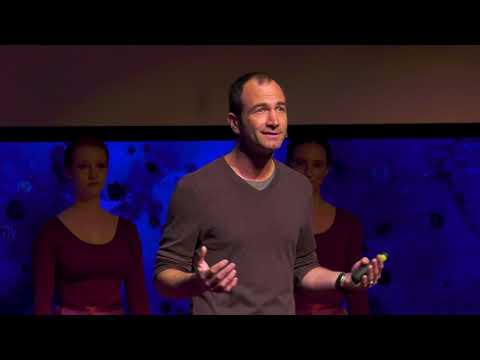
what you just saw was an expression of
the physiology and ecology of the great
whales as interpreted through the music
of ian lo and the choreography of
Susanna Oscar Smith and the dancers
works like these that require radical
collaboration bringing together
scientists choreographers composers and
dancers is what I’m here to talk about
today I’ve built a career around doing
things that I’m pretty good at but today
I’m here to talk about how working
together to get outside our comfort
zones can help us get beyond our
limitations and transform our work I’m a
scientist and an educator and my
research seeks to understand why and how
we have so much beautiful biodiversity
around us for instance those whales you
just saw and my teaching seeks to
develop passion in my students for the
natural world and to facilitate their
learning so that they can go on and make
their own impact mostly through medicine
science and teaching we all have things
that were really good at we have
different aptitudes and experiences but
we can’t be expected to be good at
everything therefore I suggest that to
make transformational advancements we
should all be collaborating working
together with very different people in
order to overcome the canalization of
our own specializations for an example
let me tell you about an experience of
working with artists to communicate
science we as scientists usually
communicate by telling people about
unfortunately this is a terrible way of
communicating we lose people in the
detail in the abstract even when what we
have to say is important but artists
choreographers and composers painters
and playwrights are experts at engaging
our senses manipulating us to feel to be
moved to understand and to remember and
this is exactly what we want to be doing
in science education we’re not really
here to provide knowledge what we want
to do is make that knowledge make sense
and to matter to do powerful art artists
combine unusual aptitude with years of
developed skills and practice and
training for instance Suzanne Auster
Smith is the director of the dance
program at Gonzaga and among other
things is a gifted choreographer dance
as an art form is one of the
quintessential features of humanity all
human cultures dance this is a way that
we as humans have always communicated
and expressed ourselves so to really
communicate science dance makes sense so
Suzanne and I decided to try to use
dance to communicate ideas from my
scientific research for instance we
realized that processes such as
evolution by natural selection can be
communicated through representative
movement and that that provides a
different understanding of that process
we can represent the shuffling of genes
each generation and the generations of
selection required to see changes but a
lot of work goes into art we brought in
a student composer Ian Lowe who tried to
interpret biological processes into
music and then we created in the studio
working together to try movements and
see if they communicated what we want
them too sometimes we’d work on
something for weeks and it just wouldn’t
work and we’d have to drop it but
through this process we came to realize
that as biology is a set of moving
rhythmic dynamic processes dance and
music can be made to communicate this in
a rich and detailed way this experience
transformed the way I understand
communication and education but the
value of this sort of interaction can go
both ways when asked what she gets out
of our collaboration Suzanne says that
artistic license is a wonderful tool but
in working with a scientist so is
accuracy through this process we
collaborated to find a balance between
the two and as a result my understanding
of biodiversity and appreciation for our
shared skills grew but this idea of
doing transformative work by working
with very different people doesn’t only
apply to artists and scientists I found
that my research is completely dependent
on working with others as well
scientific advancements are made by
working with others to challenge our
assumptions and to come up with new and
creative ways of explaining the world
but it turns out that this just doesn’t
happen if we only interact with people
that have the same background training
and paradigms as ourselves for another
example of collaboration educating out
of the classroom doesn’t have to mean
the studio in my teaching I would love
it if my students could learn physiology
by experiences with challenging their
own bodies I love it if they could learn
ecology by being out in the environment
and seeing and touching and smelling it
research suggests that this sort of
experiential learning is one of the keys
to engaging students from diverse
backgrounds and to making that
information really stick the problem is
that this is hard and I just don’t have
the skills to be able to make sure that
students can function
and be safe out in a wilderness
environment but luckily there are people
out there that do this is Matt Eden Feld
and he’s a program director in the
Gonzaga outdoors program and matt has
years of experience and specialized
training on how to manage groups and
keep them safe in stressful challenging
outdoor situations we find that by
working together by collaborating to
teach biology in context the learning is
deeper and more memorable we find that
the students learn to engage with the
natural world beyond their intellectual
understanding they learn that they are
part of the environment and they learn
how to work together to explore it but
the benefits of this interaction goes
both ways – when asked what he gets out
of our collaboration matt says that
working with a scientist adds another
layer of learning application and
transference to the interdisciplinary
approach of experiential learning
outdoor education is most effective when
there’s an interconnectedness between
adventure pursuits environmental inquiry
and character development both we as
educators and the students are
although my examples are mostly about
education that’s just what I do I think
that this idea applies far beyond the
context of teaching I think that by
radically collaborating we can transform
the way we solve problems so I challenge
each of you to reach out to people that
are very different from you and to think
expansively about how different
experiences backgrounds and perspectives
can change what you do however when I
tell people about this collaborative
work they often say well that sounds
really interesting but I can’t really
imagine working so far outside my own
field so here are a few things that in
my experience can help this work
the first is having humility and for me
this is meant recognizing that although
I teach for a living I have an immense
amount to learn about communicating and
engaging but humility is also a place of
openness to learning and new experiences
and a recognition that of course we
don’t have all the answers the second is
that we really have to respect the
skills and expertise of others just
because I don’t understand what you do
doesn’t mean that your skills don’t have
equal value to my own in academics like
many fields there’s a tendency to
overstate the value of our own expertise
and to discount the value of others but
I suggest that we must really respect
these differences because it is the
diversity of perspectives that allows us
to fully explore our human experience
finally it takes just a little courage
and by that I mean you have to be
willing to take risks you have to be
willing to reach out to and interact
with people that are very different from
you you have to be willing to do things
differently than you’ve ever done them
before and you have to question the way
you understand things that dance
collaboration I talked about earlier was
scary for me I don’t understand the
process of creating music or dance the
studio is not necessarily a comfortable
place for me I worried that I was
wasting my time that what we were
creating would be silly or even
ridiculous but by taking these risks we
were able to create something that was
new and different and that was effective
at reaching people that I never could
have reached alone humility respect and
a little courage in my experience that
opens the door to be able to tap into
the amazing potential of others to
so to conclude the dancers are going to
show us a piece from our collaborative
work that we use to demonstrate how
diversity and process can lead to
transformation thank you
[Applause] [Music]
Please follow and like us: