
every company today is a media and this
we know it and then we go to see
like some of the biggest publishers at
world are facing the world of gods
social media in particular came out of
very little this very nice study
very well done very thorough of the
tau center for digital journalism of the
columbia university has tried to understand
studying a week of publication
of contents in particular in part of
some major American publishers like
they face the social world and how
general publishing has changed
completely with the advent of google e
facebook I remind you that google and
facebook is the master given pars
the end of 2016 the traffic coming from
facebook to the publishers’ websites amounted to
about 45 percent from google
31 percent for which they are subject
fundamental to anyone who publishes
information number one consideration
the amount of content posted by
major publishers is gigantic for
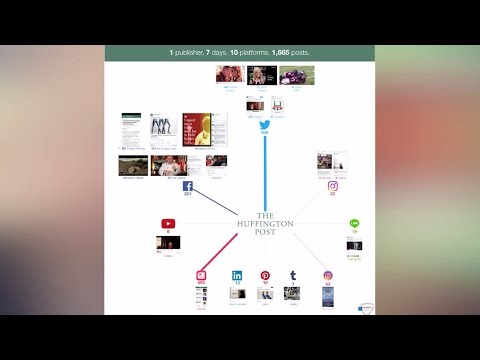
give you an idea in the week examined
from this study new york times e
huffington post have published about
1660 times each across the social t
he man even 2,800 in other words
give us a video on this gone to
seeing is not just about quality
on social media you must also produce one
huge amount of content to get you
notice second consideration
interesting about this study is that
divides netiv and netiv network contents
if you post on snap or if you post
on facebook stories just released now
for everyone on facebook is a content
native is only inside the platform
networks mean instead if you publish
on facebook but with a link that refers to the
your site
so here there are big differences
depends on the business model
in this study they identified that
two thirds of the contents of, for example, the
fake tax are all natives for
this year inside the platform
the publisher decides to make giveaway decides
to publish without people returning
on their own proper tended those contents
new york times instead of logic
completely opposite only 16 per
one hundred of the contents are native because
because he wants people to come on
own sites and face on sky shows not
buy monthly service to read them
quality news from new york times on
this interesting to see also the
subdivision half practically of the
monitored content are native and half
of the monitored contents are instead
the feeling then what is that i
publishers not knowing well that fish
take do both
on the one hand try to exploit the
distribution of these platforms
on the other hand, he tries to produce
content on their sites to be made of
keep users attached then cases
radically extreme type now disk and not
it has not even a site their place not only
on social media extreme third case
reflection that we bring home from
I repeat this study very nice
go and see it very long and that the
business model
unfortunately it is still not clear to
many if not everyone is not understood
well what will be the point of balance
to guarantee the quality of a
information because let’s make it clear for
post all the publishers on social networks
they are thrown in with big headlines
at basf it click dating link dating
trying to get more attention
possible users because that is
the way to compete on social networks
shoot bigger who is more resounding
that to the title that is more than that to us
point brings home the user is not a
nice way to do information and they know it
perfectly publishers but opposite thesis
then just that of calacanis that
the founder of inside that implies a site
you remember maybe, but I have a few years
ago he made a thousand pivots and today is called
inside they make information by email
and kia essentially emails his theory
not at all stupid because it claims that
if you are a publisher and send one
communication information via e-mail
not to middle intermediaries
you have to stay to write more titles
crazy, invent you, who knows what you are
only concern in that case is that
the guy face anso scribe and not you
follow more for which you are obsessed
to create excellent contents for
keep the reader attached to you
a good provocation some problems
clearly number 1 that the rate
the opening of mails click to write
at historical minimum then it depends
clearly who you are what you do me the
emails that I open to one hundred percent
an example is absolutely the relationship that
it has established however it is very difficult
the second point is that you must anyway
promote your content and where it is
promotes micheli promote email you
however go where users are
I suspect many of the new ones
generations do not even have the email
for a lot of reflection
interesting there will be publishers in
future that will look for new models
different and try to disengage from
platforms
they will be successful because they will be a lot
clever creatives will have cool ideas and
will win over readers will point
but few who will go against it
these great taking giants go to
disappear darvin will do his
second cleaning operation
category of publishers instead will be that
that will try to exploit the i scale
numbers the firepower of facebook
google etcetera etc. trying to
find a compromise and at the same
way they will make a publisher platform
platforms to live with
end of the accounts will have to come down to gods
compromises are already doing it
it will be more and more like this instead of
focus on what they want
get sooner or later have to stop and
say ok what is the famous proverb about
compromises and that each of the two parties
do something that you do not want to do
[Music]
Please follow and like us: