
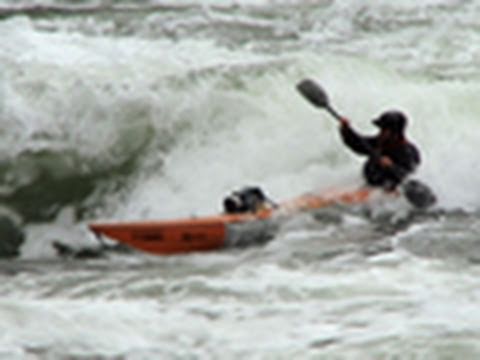
getting pulled back into a whirlpool
feels like someone just reach ups and
grabs onto the back ear boat and is
pulling me backwards down into the water
[Music]
all of a sudden everything around you
elevates and you’re looking up at the
world there’s moments that you’re not
sure how it’s going to all come out
Paul cuthie is part a small group of sea
kayakers who are intentionally seeking
out some of the oceans most turbulent
water tidal races title race is
basically what amounts to a river in the
sea it’s a flow of water caused by the
tides that basically brings large
volumes of water through constrictions
and few areas in the seabed that create
Rapids and turbulence whirlpools
different currents amongst this
adventurous contingent of paddlers
places like New Brunswick’s Bay of Fundy
in British Columbia but sea Inlet become
hotbeds for the sports newest form in
these northern latitudes the tides can
fluctuate by as much as 50 feet and so
having that huge change in water height
is where you have this huge current and
rush of water trying to float downhill
into another Basin as the water flows
over obstacles on the seabed standing
waves large enough to sink a small
vessel develop for these nimble sea
kayakers the waves are a thing of beauty
perfect for surfing
[Music]
there’s waves in some tidal races their
largest houses being down in this
cyclone of water is both a little bit
scary but also a little bit peaceful
[Music]
sitting down at water level and having
water rush by that fast and gives you
the feeling that you’re sliding along at
30 or 40 miles an hour it can feel
really weightless really light really
fast just like flying does with this
much energy an errant paddle stroke can
lead to disaster
when water flips a kayak the paddler
first tries to roll upright if that
fails the kayaker ditches the boat and
starts swimming one of the big
consequences of swimming out of your
boat is just the loss of buoyancy and so
being pulled down deeper in the water
then you can tolerate for longer than
you have air the aspect of finding where
these places are usually leads you to
asking where you shouldn’t be reading
almanacs and guidebooks and talking to
water taxi drivers and just asking them
where they try not to be and then we go
and find those places
[Music]
you know that you’re definitely on your
own there and is a place that not many
people get to get to see or experience
[Music]
feels like someone just reach ups and
grabs onto the back ear boat and is
pulling me backwards down into the water
[Music]
all of a sudden everything around you
elevates and you’re looking up at the
world there’s moments that you’re not
sure how it’s going to all come out
Paul cuthie is part a small group of sea
kayakers who are intentionally seeking
out some of the oceans most turbulent
water tidal races title race is
basically what amounts to a river in the
sea it’s a flow of water caused by the
tides that basically brings large
volumes of water through constrictions
and few areas in the seabed that create
Rapids and turbulence whirlpools
different currents amongst this
adventurous contingent of paddlers
places like New Brunswick’s Bay of Fundy
in British Columbia but sea Inlet become
hotbeds for the sports newest form in
these northern latitudes the tides can
fluctuate by as much as 50 feet and so
having that huge change in water height
is where you have this huge current and
rush of water trying to float downhill
into another Basin as the water flows
over obstacles on the seabed standing
waves large enough to sink a small
vessel develop for these nimble sea
kayakers the waves are a thing of beauty
perfect for surfing
[Music]
there’s waves in some tidal races their
largest houses being down in this
cyclone of water is both a little bit
scary but also a little bit peaceful
[Music]
sitting down at water level and having
water rush by that fast and gives you
the feeling that you’re sliding along at
30 or 40 miles an hour it can feel
really weightless really light really
fast just like flying does with this
much energy an errant paddle stroke can
lead to disaster
when water flips a kayak the paddler
first tries to roll upright if that
fails the kayaker ditches the boat and
starts swimming one of the big
consequences of swimming out of your
boat is just the loss of buoyancy and so
being pulled down deeper in the water
then you can tolerate for longer than
you have air the aspect of finding where
these places are usually leads you to
asking where you shouldn’t be reading
almanacs and guidebooks and talking to
water taxi drivers and just asking them
where they try not to be and then we go
and find those places
[Music]
you know that you’re definitely on your
own there and is a place that not many
people get to get to see or experience
[Music]
Please follow and like us: