
the parents of disabled children face an
entirely unique set of obstacles when
raising their child hi I’m Rebecca
Brayton and welcome to watchmojo.com and
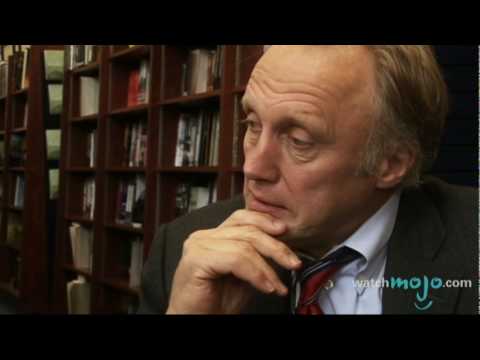
today we’re speaking with journalists in
brown about his son Walker the boy in
the moon so why don’t we start by having
you tell us about Walker and about your
book the boy in the moon is the story of
my son Walker who has a very rare
syndrome called CFC syndrome that’s 120
people in the world so that makes it one
of the rarest syndromes there’s a wide
range of disability but in walkers case
he’s very severely disabled he can’t
talk he can’t swallow so he can’t eat by
mouth so he’s spent by a little valve in
his stomach he we don’t know how well he
sees her here so he can see and he can
feel with his hand his most developed
senses in his touch he was very hard to
raise him we didn’t know what he had for
two years and then when we did find out
what he had we discovered nobody knew
anything about it I was a new center it
was a random genetic mutation it just
happens in one pair of three billion
paired nucleotides in the human genome
so it’s a very it’s a mystery story it’s
like living a mystery story explain to
me what it’s like raising a handicapped
child it can wreck your relationship it
costs a lot of its it’s very expensive
it’s you know exhausting I mean I didn’t
write a big project for a long time
because i was you know up every other
night for ten years and and it’s
isolating how do you think society as a
whole treats and views disabled people I
think we do our best to help them but we
do a terrible job because we’re afraid
of them I mean like I spend a lot of
time around disabled people and I’m
still terrified every time I go into a
group of them you know though whooping
and the beeping and the noises they make
the teeth in the face that is so
upsetting either we think I don’t want
to think about the disabled or we think
we have to cure them and fix them
immediately and so we have this weird
thing where everybody’s got to be normal
it makes it harder and more complicated
more expensive to do that what
could do is create communities where
they could be who they are and make this
hard to discern subtle but very
important contribution nevertheless the
book doesn’t offer a definitive answer
to the struggle do you think you’ll ever
find one no no i don’t i don’t think i
will ever know for sure what the value
of his life is or how much value Lee
added or detracted from mine I don’t
think I will ever really know if I
totally described what it was to be him
as a human being but I don’t think
anybody does you know I mean I keep
people say well why did you write a book
about a handicapped kid you know I mean
it’s so depressing and I said well you
know actually I’m not really writing
about a handicapped kid I’m reading
about a human being thank you very much
pleasure
Please follow and like us: