
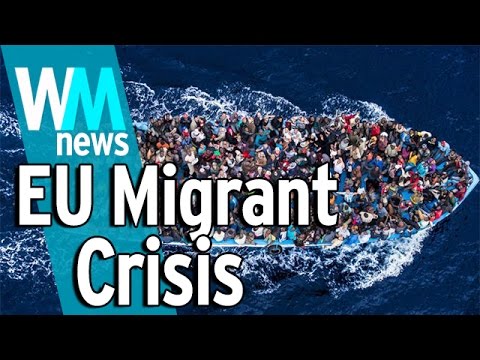
as the European Union prepares to launch
a military operation in the hopes of
limiting migration from the African horn
dozens continue to perish in the
Mediterranean Sea welcome to
watchmojo.com it
down ten crucial facts you should know
about the 2015 European Union migrant
crisis number ten who is making the
journey for several years thousands of
men and women have been making the
arduous trek from the north of Africa to
Europe in the hopes of attaining a
better quality of life historically a
large majority of migrants were from
Syria Eritrea Mali Nigeria and Gambia
with an overwhelming proportion of those
being male in 2015
additional migrants made the trek from
Afghanistan Libya Somalia the Horn of
Africa and more this trend has continued
in Syria due to the ongoing and deadly
civil conflict beginning with the 2011
Arab Spring protests that have led to
the deaths of over 220,000 people and
the displacement of at least a third of
the country’s population
this massive Exodus is in line with
global trends as 30,000 people are
reported to have fled their homes every
day in 2014 as a result of violence
leading to over 38 million displaced
people in the world
number 9 why are they risking their
lives the main reasons people are
risking their lives to travel from
Africa to Europe include escaping Civil
War pervasive poverty and a lack of
business and economic opportunities
within their home countries for example
there is a stark contrast in life
expectancy with sub-saharan Africa’s
being 47 years as opposed to 80 years in
the eurozone civil war is also a large
motivator with Syria Libya and Iraq all
in the midst of domestic conflict which
prompts civilians to escape their
war-torn countries according to Volcker
Turk director for international
protection with the office of US
High Commissioner for Refugees a high
degree of homeland misery and
persecution has left migrants with no
other option but to take unseaworthy
votes to Europe number eight which
routes are being taken while there are
numerous routes that can be taken the
central migration route taking migrants
from North Africa to Italy and Malta
from a Libyan port has been the
deadliest in the Mediterranean
especially when compared to routes that
journey to Apulia and Calabria Italy
however before reaching the port in
Libya a large majority of migrants must
first travel through the sea of the
Sahara then the Sahara Desert and it is
during this time that many died as they
face a dire lack of food and water or
are kidnapped held for ransom or sold
into forced slave labour if they survive
that the difficulties don’t end at the
main port in Libya as many are forced to
remain in the city and pay off their
debts to smugglers for the first part of
the journey once the debt is repaid or
they are ready to undertake the final
part of the journey the potential
migrants choose one out of many routes
from the tip of North Africa to the
eurozone number seven what are the
challenges facing Europe one of the
biggest challenges facing Europe in a
handling of migrants is its Asylum
system as of May 2015 the European Union
has 28 member states and each state has
its own rules regarding asylum some
member states such as Greece and Italy
have had to deal with greater demands
for asylum as they are the first point
of entry for the illegal migrants in
question this is placed in
ever-increasing strain on affected
countries economies which have already
been lagging additionally the eurozone
is funding an expensive border security
operation conducted by the EU Agency
Frontex called Operation Triton which
began in November 2014 in April 2015 the
budget for the 2015-2016 year-long
operation was tripled and set at 133
million dollars all this has led to a
drain on the e use resources as it
continues to grapple with its own
economic issues including the dire cash
crunch in
Greece which threatens to drag the
eurozone into another recession
number six who is saving the migrants
operation triton is the current border
security mission run by the italian
government and comprised of voluntary EU
contributors like iceland germany and
france
that was launched in 2014 and set to
last until 2016 in its search and rescue
operations across the Mediterranean Sea
operation Triton comes on the heels of
the 2013-2014 operation mari Nostrum
which was also launched by the italian
government during its year-long
operation over 150 thousand migrants
safely made it from Africa and the
Middle East to Europe
unfortunately the operation ended as the
cost of 120 million dollars for 12
months became too much for Italy to bear
alone that being said following the
deaths in April 2015 of over a thousand
migrants in what’s known as the 2015
Mediterranean Sea migrant shipwrecks an
emergency meeting was called at which EU
heads of state consented to triple the
budget for operation Triton knowing that
there is no easy solution there is no
magic solution but there is a
responsibility that we have to exercise
together
additional Navy patrol boats helicopters
and a UK Royal Navy assault ship were
also agreed upon meanwhile local
fishermen have been aiding the military
as they’ve been known to regularly pick
up migrants floundering on sinking rafts
instead of earning their living number
five are people benefitting the lack of
government stability in both Syria and
Libya has led to a massive increase in
smuggling activities and human rights
violations smugglers and human
traffickers also charge varying fees
depending on a person’s nationality a
sub-saharan may be charged upwards of
700 dollars while a Syrian could pay up
to $2,500 these payments are per person
and do not take into account the number
of people allowed on a boat as vessels
are typically dangerously overloaded
however due to a saturated market there
have also been decreases in prices per
person leading smugglers to recoup their
any way they can including filling their
boats with even larger numbers of
migrants number four what is the current
death toll the United Nations has
described the crisis in the
Mediterranean Sea as a quote tragedy of
epic proportions as of May 2015 the
death toll in the Mediterranean Sea has
increased sharply from the previous year
with an estimated 1,800 people feared to
have drowned while making the perilous
crossing according to the International
Organization for Migration from January
to April 2015 the death toll was 18
times larger than it was during the same
period of the previous year furthermore
based on the current statistics and
circumstances the migrant death toll
could reach 30,000 by the end of 2015
number three what is the proposed
solution in May 2015 the European Union
proposed a plan that would address the
growing humanitarian crisis in the
Mediterranean Sea introduced to European
officials in Brussels the plan would
include a quota system that would seek
to stop the flow of illegal migrants by
allowing 20,000 refugees into Europe
over the next two years with an
estimated cost of nearly 56 million
dollars the plan has faced direct
opposition from member states that do
not want to accept large numbers of
refugees but it’s really not acceptable
for people around the EU to say stop the
drowning and at the same time to say but
don’t bring the people here meanwhile
under the existing EU agreement Ireland
the United Kingdom and Denmark would be
exempt from the mandatory refugee plan
this proposal has the potential to stir
anti-migrant sentiments within the
eurozone as many countries believe they
have already done enough with French
prime minister Manuel Valls
notably saying quote France has already
done a lot number two how will it affect
surrounding Nations
as of early May 2015 the United Nations
Security Council is drafting a solution
that would target the smugglers and
boats that depart from the main route
Libya this would have multiple
international ramifications as it would
not only permit European troops to act
in international waters but also on
Libyan soil this is further complicated
by the turmoil in Libya as the country
is in the midst of a civil war with two
warring government factions furthermore
international law bans the return of
those fleeing persecution in their own
countries thereby requiring safe passage
for boats intercepted in the
Mediterranean Sea the hope is that by
targeting the smugglers at the root of
the problem it will limit the amount of
shipwrecks and deaths at sea number one
what will happen to the migrants as of
May 2015 European ministers have agreed
to launch a sea and air mission that
would include drones and surveillance
equipment these missions would
eventually target and destroy human
trafficking vessels and allow for the
boarding and searching of suspected
vessels this later phase is dependent on
the passing of a UN chapter 7 resolution
which would authorize the use of force
however refugee rights groups have
concerns regarding the use of military
force as they fear it could lead to an
even greater number of deaths if there
are fewer vessels the fear is that the
remaining boats will carry an even
greater number of people or that people
will resort to building their own boats
the eurozone’s military proposal may be
launched as early as late June of 2015
after which the outcome of the plan will
be revealed while thousands continue to
make the arduous journey to Europe did
these facts surprise you to vote for
which new story is covered next
head over to watchmojo.com slash suggest
and be sure to hit that subscribe button
for more newsworthy top 10s published
every week
you
[Music]
a military operation in the hopes of
limiting migration from the African horn
dozens continue to perish in the
Mediterranean Sea welcome to
watchmojo.com it
down ten crucial facts you should know
about the 2015 European Union migrant
crisis number ten who is making the
journey for several years thousands of
men and women have been making the
arduous trek from the north of Africa to
Europe in the hopes of attaining a
better quality of life historically a
large majority of migrants were from
Syria Eritrea Mali Nigeria and Gambia
with an overwhelming proportion of those
being male in 2015
additional migrants made the trek from
Afghanistan Libya Somalia the Horn of
Africa and more this trend has continued
in Syria due to the ongoing and deadly
civil conflict beginning with the 2011
Arab Spring protests that have led to
the deaths of over 220,000 people and
the displacement of at least a third of
the country’s population
this massive Exodus is in line with
global trends as 30,000 people are
reported to have fled their homes every
day in 2014 as a result of violence
leading to over 38 million displaced
people in the world
number 9 why are they risking their
lives the main reasons people are
risking their lives to travel from
Africa to Europe include escaping Civil
War pervasive poverty and a lack of
business and economic opportunities
within their home countries for example
there is a stark contrast in life
expectancy with sub-saharan Africa’s
being 47 years as opposed to 80 years in
the eurozone civil war is also a large
motivator with Syria Libya and Iraq all
in the midst of domestic conflict which
prompts civilians to escape their
war-torn countries according to Volcker
Turk director for international
protection with the office of US
High Commissioner for Refugees a high
degree of homeland misery and
persecution has left migrants with no
other option but to take unseaworthy
votes to Europe number eight which
routes are being taken while there are
numerous routes that can be taken the
central migration route taking migrants
from North Africa to Italy and Malta
from a Libyan port has been the
deadliest in the Mediterranean
especially when compared to routes that
journey to Apulia and Calabria Italy
however before reaching the port in
Libya a large majority of migrants must
first travel through the sea of the
Sahara then the Sahara Desert and it is
during this time that many died as they
face a dire lack of food and water or
are kidnapped held for ransom or sold
into forced slave labour if they survive
that the difficulties don’t end at the
main port in Libya as many are forced to
remain in the city and pay off their
debts to smugglers for the first part of
the journey once the debt is repaid or
they are ready to undertake the final
part of the journey the potential
migrants choose one out of many routes
from the tip of North Africa to the
eurozone number seven what are the
challenges facing Europe one of the
biggest challenges facing Europe in a
handling of migrants is its Asylum
system as of May 2015 the European Union
has 28 member states and each state has
its own rules regarding asylum some
member states such as Greece and Italy
have had to deal with greater demands
for asylum as they are the first point
of entry for the illegal migrants in
question this is placed in
ever-increasing strain on affected
countries economies which have already
been lagging additionally the eurozone
is funding an expensive border security
operation conducted by the EU Agency
Frontex called Operation Triton which
began in November 2014 in April 2015 the
budget for the 2015-2016 year-long
operation was tripled and set at 133
million dollars all this has led to a
drain on the e use resources as it
continues to grapple with its own
economic issues including the dire cash
crunch in
Greece which threatens to drag the
eurozone into another recession
number six who is saving the migrants
operation triton is the current border
security mission run by the italian
government and comprised of voluntary EU
contributors like iceland germany and
france
that was launched in 2014 and set to
last until 2016 in its search and rescue
operations across the Mediterranean Sea
operation Triton comes on the heels of
the 2013-2014 operation mari Nostrum
which was also launched by the italian
government during its year-long
operation over 150 thousand migrants
safely made it from Africa and the
Middle East to Europe
unfortunately the operation ended as the
cost of 120 million dollars for 12
months became too much for Italy to bear
alone that being said following the
deaths in April 2015 of over a thousand
migrants in what’s known as the 2015
Mediterranean Sea migrant shipwrecks an
emergency meeting was called at which EU
heads of state consented to triple the
budget for operation Triton knowing that
there is no easy solution there is no
magic solution but there is a
responsibility that we have to exercise
together
additional Navy patrol boats helicopters
and a UK Royal Navy assault ship were
also agreed upon meanwhile local
fishermen have been aiding the military
as they’ve been known to regularly pick
up migrants floundering on sinking rafts
instead of earning their living number
five are people benefitting the lack of
government stability in both Syria and
Libya has led to a massive increase in
smuggling activities and human rights
violations smugglers and human
traffickers also charge varying fees
depending on a person’s nationality a
sub-saharan may be charged upwards of
700 dollars while a Syrian could pay up
to $2,500 these payments are per person
and do not take into account the number
of people allowed on a boat as vessels
are typically dangerously overloaded
however due to a saturated market there
have also been decreases in prices per
person leading smugglers to recoup their
any way they can including filling their
boats with even larger numbers of
migrants number four what is the current
death toll the United Nations has
described the crisis in the
Mediterranean Sea as a quote tragedy of
epic proportions as of May 2015 the
death toll in the Mediterranean Sea has
increased sharply from the previous year
with an estimated 1,800 people feared to
have drowned while making the perilous
crossing according to the International
Organization for Migration from January
to April 2015 the death toll was 18
times larger than it was during the same
period of the previous year furthermore
based on the current statistics and
circumstances the migrant death toll
could reach 30,000 by the end of 2015
number three what is the proposed
solution in May 2015 the European Union
proposed a plan that would address the
growing humanitarian crisis in the
Mediterranean Sea introduced to European
officials in Brussels the plan would
include a quota system that would seek
to stop the flow of illegal migrants by
allowing 20,000 refugees into Europe
over the next two years with an
estimated cost of nearly 56 million
dollars the plan has faced direct
opposition from member states that do
not want to accept large numbers of
refugees but it’s really not acceptable
for people around the EU to say stop the
drowning and at the same time to say but
don’t bring the people here meanwhile
under the existing EU agreement Ireland
the United Kingdom and Denmark would be
exempt from the mandatory refugee plan
this proposal has the potential to stir
anti-migrant sentiments within the
eurozone as many countries believe they
have already done enough with French
prime minister Manuel Valls
notably saying quote France has already
done a lot number two how will it affect
surrounding Nations
as of early May 2015 the United Nations
Security Council is drafting a solution
that would target the smugglers and
boats that depart from the main route
Libya this would have multiple
international ramifications as it would
not only permit European troops to act
in international waters but also on
Libyan soil this is further complicated
by the turmoil in Libya as the country
is in the midst of a civil war with two
warring government factions furthermore
international law bans the return of
those fleeing persecution in their own
countries thereby requiring safe passage
for boats intercepted in the
Mediterranean Sea the hope is that by
targeting the smugglers at the root of
the problem it will limit the amount of
shipwrecks and deaths at sea number one
what will happen to the migrants as of
May 2015 European ministers have agreed
to launch a sea and air mission that
would include drones and surveillance
equipment these missions would
eventually target and destroy human
trafficking vessels and allow for the
boarding and searching of suspected
vessels this later phase is dependent on
the passing of a UN chapter 7 resolution
which would authorize the use of force
however refugee rights groups have
concerns regarding the use of military
force as they fear it could lead to an
even greater number of deaths if there
are fewer vessels the fear is that the
remaining boats will carry an even
greater number of people or that people
will resort to building their own boats
the eurozone’s military proposal may be
launched as early as late June of 2015
after which the outcome of the plan will
be revealed while thousands continue to
make the arduous journey to Europe did
these facts surprise you to vote for
which new story is covered next
head over to watchmojo.com slash suggest
and be sure to hit that subscribe button
for more newsworthy top 10s published
every week
you
[Music]
Please follow and like us: