
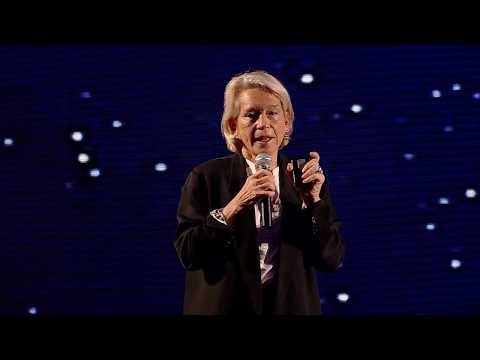
[Music]
good
[Music]
and it’s going to be a bit complicated because it
there is a double translation what I say
in french will be translated into english
then in Georgian
so I will try to hold in 15
minutes and I hope the estate
translations will be good so I come
of a city called Bordeaux for
sailboats that in the south west of the
la France
so I have a science degree
policies and I have a doctorate of
philosophy that I got in paris to
the fume cupboard and so in my private life
I absolutely did not imagine working
I raised my four
children until they are
gone to university and where they are
entered the world of work and I
obviously was even less
I was even less prepared to
work in the field of
urbanism since I have absolutely
no skill to do that
nevertheless i have been doing this for 20 years or
22 years old next to a man who
is alain juppé who was
Prime Minister of France Minister
foreign affairs and that is
mayor de bordeaux bordeaux being the
sixth city of france since
now 22 years old
I would like to show you in 14 minutes
how in my opinion and I think that alain
I share this idea I hope that
in the room there are a lot of
people who share this idea
I am absolutely convinced that there is
no historical inevitability and that there
has no historical determinism
I am absolutely convinced that
the energy of men she can counter
it can block the inertia the
conservatism of structures and that’s what
that I will try to show you when
I’m going now I’m not going anymore
talk about me i’m going to talk about bordeaux
because it’s still the city that
I know the best
showing you how she has changed
in 20 years so in 1995 bordeaux his
first feature is that she
is poor and she is very
in debt she is poor because there is
hundred thousand inhabitants who left
to go and live in the suburbs
outside because it was more
comfortable and she is highly indebted
because she’s got her into
a series of very investments
important and that they are only
not been productive ie
it’s invested
this moment not create wealth
second characteristic of bordeaux
twenty years ago she is dirty she is
dirty and in the historic center
I should not say it but the
inhabitants go out and their garbage without
even put them in bags in
plastic third characteristic of
bordeaux twenty years ago she was
completely asphyxiated by the
cars for a simple reason it’s
than the hundred thousand people who
had gone to live outside
come back every day
working with their car and that
did not have a transportation system in
effective common and therefore last
characteristic of bordeaux there are 20
years all people who had talent
students coming out of
university young entrepreneurs
the artists left me alone to leave
bordeaux to go to paris of course
the eldorado or to try to succeed
abroad
today 20 years later see how
the 100,000 inhabitants left for
to live outside bordeaux
today 20 years later what is
happens
firstly we managed to
eliminate to get rid of
cars we managed to get in
get rid of it because we have
realized a transport system in
common with very trams
we have today 77 km
but we also have buses
very effective we also have a
policy in favor of bicycles that is
remarkable and we became the
first French bike city we
have a pedestrian plan that we are
developing and we have
also batobus since we
have a very big river that
is called the garonne here is the tramway
who are traveling on the stone bridge and
you see he has no catenaries
here is bicycle parking linked to the
public transport policy we
have developed a policy of
very efficient public spaces you
remember four rules where the
tram passes cars do not pass
not only the tram goes through the city
historical
it bypasses the cars it
city so there are more cars in
the historic center
third rule when we redo a
place or when the tram arrives on
completely redone the public space of
front façade is redone the floor is
redone public lighting have redone the
street furniture have redone everything
and 4th rule every note in all our
public spaces we consider that
50% of the space is reserved for
pedestrians and bicycles second
quality today of bordeaux she
is clean
obviously a city is never
completely clean but finally we
managed to practice sorting
selective one thing extraordinarily
difficult for us French
third feature we have
regained 40 thousand inhabitants between 40 and
45 thousand inhabitants and we count well
by 2030 to have regained 100,000
inhabitants we had lost bordeaux
metropolis these eight hundred thousand inhabitants
today’s fourth remarkable point
in 2007 we were ranked at
World Heritage of Humanity by
unesco
and we are the biggest together
classified urban world
in fact you see the perimeter here at
right the perimeter is surrounded by the
red line and the buffer zone by the
yellow line is almost the whole city
de bordeaux which is classified in
World Heritage
here are some examples of Bordeaux
place of the purse which the biggest
heritage ensemble the best known and
then last conclusions of these twenty
years of all-out work that’s
that today the city of bordeaux
it may be a bit exaggerated but
she collects a number of labels from
absolutely extraordinary distinction
I will remember 4 in 2015 we have
been qualified by a large organization
the city of happiness in 2016
we have been recognized as the city
preferred by employees
it means that people who
work in France in one dream
it’s come to work it in bordeaux
there is no work for everyone
third remarkable distinction in
2017 the man says planet has us
designated as the best
tourist destination in the world and he
two weeks ago we have just been
recognized as the least
stressful of France all that is very
exaggerated but it still means
something sure is that become
bordeaux then I show you some
pictures before after
just so you understand there the
difference enough the edges of the
garonne before today
before there were cars everywhere
today the town hall before the square
today
here is a small place before and
today another place before and
Today there are hundreds that
it’s the place of the opera before and the
place of the opera today then
how did you get there
on the political side, we must remember
three or four ideas but no more the
first idea is that we had a
politician called alain
juppé and who was a politician
with a very big
national and international oram and for
to gain the trust of the inhabitants
important to have a policy that is
known
2nd second mandatory element this
politician he had a vision
he had a vision for bordeaux he
had a medium and long term vision
and this vision she expressed by
urban projects so I’m very
proud because it is me who wrote them
for alain juppé these urban projects
they were communicated and shared
with the inhabitants
the first is 1996 the second 2009
the 3rd 2013
and today I’m preparing the project
metropolitan 2030 2050 I would be dead
when it will be realized
I’m still very happy to
participate third element
important is stability
alain juppé and sea with small
interruption for 22 years in bordeaux
it is not a sufficient condition
obviously to change a city but
it is a necessary condition if you
have political instability
you can not lead a project
long-term policy
last condition is that it takes
that investors that there is a
logic in investments
operational I take an example
very clear in 1995 the merdy the
priority for me is the tramway and
public spaces
it’s the
the restoration of the equipment of
proximity ie the schools the
gyms residences for people
elderly etc. and heritage
all this is implemented it means
what does it mean that very quickly in
public space
there is comfort again there is to
new from the place as there is the
place the shops develops there are some
bistros that happen there are events
cultural that happens in space
public
and as at the same time we redo the
schools the gyms the inhabitants who
had gone to live outside
say we can come back because we have
efficient equipment and we have to
again the ability to breathe in
this city and as the same time we
took care of the heritage the tourists
have said we can come back
the heritage is in good condition we have
the public space in which one can get
to walk
there is public transportation that
we avoid coming by car and it’s
like that we entered a
virtuous circle and that its effects
cumulative triggered employment
and we brought back wealth and that’s
like that we actually came out of the
very difficult situation bordeaux
then on the other side of the side the
civil society what has happened
passed obviously there are four words
keys for civil society the
first is the trust
the second is the shared project
the third in my opinion it’s
the time horizon
we must be able to think
with a specific horizon and then the
last is the collective story then
trust she arrived quickly enough
she came from alain juppé said
I have a project for my city
and here it is my project the
following what when the administration and
the politician have proposed to the
civil society to enter into
partnerships civil society to
accept when I say civil society
are the university
the traders the promoters
real estate banks the
investors and getting into
joint projects with
administration
obviously to increase the trust of the
side of the inhabitants what creates the
trust is when they see that
announced projects are carried out at
4 years 5 years 10 years the tramway
rolling public spaces summer redone
and obviously the inhabitants at this
moment brings a capital of
third policy confidence
story telling story
share how do you explain that that
has been doing 22 years that there are projects to
bordeaux a big political project and
so after 20 years ended up
share a common history with
inhabitants we share a story
town
we share common projects and therefore
what happens is that today we
came out of the simple notion of
trust to get into the idea of a
story that we share a story that
we share it means that we
have all of us regardless of our opinions
policies
we all have today the same
representations of what bordeaux
what the Bordeaux metropolis is
he we have the same
representations of what we
wait for the future that means
that today we still need the
politics obviously but the best
ambassadors of Bordeaux these are the
bordelais themselves whatever
the political difficulties we
let’s just walk in the same
meaning then and bbc in all that then
you have a lot in common with
bordeaux you have the beauty you have
an incredibly beautiful city you have
an absolutely extraordinary heritage
you have a geographical situation
strategic what not at all the case
from Bordeaux
we are just next to
Spain today is complicated
and then you have a very old
history with many like the
old stories a lot of woes
and of which you probably have a
ability to resilience that is
remarkable today in the world
contemporary
resilience is probably the
first quality that is expected of
companies and cities because the
world is going very fast and so when I
think of tbilisi where I came
already four times I have the image that me
comes to mind this is the picture in the
movie called our childhood at
tbilisi of the little boy who plays
piano and this little boy finally
despite the woes of war he
he manages to make the impossible
possible we bordeaux we made
the impossible possible and I am
absolutely convinced that in tbilisi
that’s what you ‘re going to do and that
you will make the impossible possible
Thank you
[Applause]
good
[Music]
and it’s going to be a bit complicated because it
there is a double translation what I say
in french will be translated into english
then in Georgian
so I will try to hold in 15
minutes and I hope the estate
translations will be good so I come
of a city called Bordeaux for
sailboats that in the south west of the
la France
so I have a science degree
policies and I have a doctorate of
philosophy that I got in paris to
the fume cupboard and so in my private life
I absolutely did not imagine working
I raised my four
children until they are
gone to university and where they are
entered the world of work and I
obviously was even less
I was even less prepared to
work in the field of
urbanism since I have absolutely
no skill to do that
nevertheless i have been doing this for 20 years or
22 years old next to a man who
is alain juppé who was
Prime Minister of France Minister
foreign affairs and that is
mayor de bordeaux bordeaux being the
sixth city of france since
now 22 years old
I would like to show you in 14 minutes
how in my opinion and I think that alain
I share this idea I hope that
in the room there are a lot of
people who share this idea
I am absolutely convinced that there is
no historical inevitability and that there
has no historical determinism
I am absolutely convinced that
the energy of men she can counter
it can block the inertia the
conservatism of structures and that’s what
that I will try to show you when
I’m going now I’m not going anymore
talk about me i’m going to talk about bordeaux
because it’s still the city that
I know the best
showing you how she has changed
in 20 years so in 1995 bordeaux his
first feature is that she
is poor and she is very
in debt she is poor because there is
hundred thousand inhabitants who left
to go and live in the suburbs
outside because it was more
comfortable and she is highly indebted
because she’s got her into
a series of very investments
important and that they are only
not been productive ie
it’s invested
this moment not create wealth
second characteristic of bordeaux
twenty years ago she is dirty she is
dirty and in the historic center
I should not say it but the
inhabitants go out and their garbage without
even put them in bags in
plastic third characteristic of
bordeaux twenty years ago she was
completely asphyxiated by the
cars for a simple reason it’s
than the hundred thousand people who
had gone to live outside
come back every day
working with their car and that
did not have a transportation system in
effective common and therefore last
characteristic of bordeaux there are 20
years all people who had talent
students coming out of
university young entrepreneurs
the artists left me alone to leave
bordeaux to go to paris of course
the eldorado or to try to succeed
abroad
today 20 years later see how
the 100,000 inhabitants left for
to live outside bordeaux
today 20 years later what is
happens
firstly we managed to
eliminate to get rid of
cars we managed to get in
get rid of it because we have
realized a transport system in
common with very trams
we have today 77 km
but we also have buses
very effective we also have a
policy in favor of bicycles that is
remarkable and we became the
first French bike city we
have a pedestrian plan that we are
developing and we have
also batobus since we
have a very big river that
is called the garonne here is the tramway
who are traveling on the stone bridge and
you see he has no catenaries
here is bicycle parking linked to the
public transport policy we
have developed a policy of
very efficient public spaces you
remember four rules where the
tram passes cars do not pass
not only the tram goes through the city
historical
it bypasses the cars it
city so there are more cars in
the historic center
third rule when we redo a
place or when the tram arrives on
completely redone the public space of
front façade is redone the floor is
redone public lighting have redone the
street furniture have redone everything
and 4th rule every note in all our
public spaces we consider that
50% of the space is reserved for
pedestrians and bicycles second
quality today of bordeaux she
is clean
obviously a city is never
completely clean but finally we
managed to practice sorting
selective one thing extraordinarily
difficult for us French
third feature we have
regained 40 thousand inhabitants between 40 and
45 thousand inhabitants and we count well
by 2030 to have regained 100,000
inhabitants we had lost bordeaux
metropolis these eight hundred thousand inhabitants
today’s fourth remarkable point
in 2007 we were ranked at
World Heritage of Humanity by
unesco
and we are the biggest together
classified urban world
in fact you see the perimeter here at
right the perimeter is surrounded by the
red line and the buffer zone by the
yellow line is almost the whole city
de bordeaux which is classified in
World Heritage
here are some examples of Bordeaux
place of the purse which the biggest
heritage ensemble the best known and
then last conclusions of these twenty
years of all-out work that’s
that today the city of bordeaux
it may be a bit exaggerated but
she collects a number of labels from
absolutely extraordinary distinction
I will remember 4 in 2015 we have
been qualified by a large organization
the city of happiness in 2016
we have been recognized as the city
preferred by employees
it means that people who
work in France in one dream
it’s come to work it in bordeaux
there is no work for everyone
third remarkable distinction in
2017 the man says planet has us
designated as the best
tourist destination in the world and he
two weeks ago we have just been
recognized as the least
stressful of France all that is very
exaggerated but it still means
something sure is that become
bordeaux then I show you some
pictures before after
just so you understand there the
difference enough the edges of the
garonne before today
before there were cars everywhere
today the town hall before the square
today
here is a small place before and
today another place before and
Today there are hundreds that
it’s the place of the opera before and the
place of the opera today then
how did you get there
on the political side, we must remember
three or four ideas but no more the
first idea is that we had a
politician called alain
juppé and who was a politician
with a very big
national and international oram and for
to gain the trust of the inhabitants
important to have a policy that is
known
2nd second mandatory element this
politician he had a vision
he had a vision for bordeaux he
had a medium and long term vision
and this vision she expressed by
urban projects so I’m very
proud because it is me who wrote them
for alain juppé these urban projects
they were communicated and shared
with the inhabitants
the first is 1996 the second 2009
the 3rd 2013
and today I’m preparing the project
metropolitan 2030 2050 I would be dead
when it will be realized
I’m still very happy to
participate third element
important is stability
alain juppé and sea with small
interruption for 22 years in bordeaux
it is not a sufficient condition
obviously to change a city but
it is a necessary condition if you
have political instability
you can not lead a project
long-term policy
last condition is that it takes
that investors that there is a
logic in investments
operational I take an example
very clear in 1995 the merdy the
priority for me is the tramway and
public spaces
it’s the
the restoration of the equipment of
proximity ie the schools the
gyms residences for people
elderly etc. and heritage
all this is implemented it means
what does it mean that very quickly in
public space
there is comfort again there is to
new from the place as there is the
place the shops develops there are some
bistros that happen there are events
cultural that happens in space
public
and as at the same time we redo the
schools the gyms the inhabitants who
had gone to live outside
say we can come back because we have
efficient equipment and we have to
again the ability to breathe in
this city and as the same time we
took care of the heritage the tourists
have said we can come back
the heritage is in good condition we have
the public space in which one can get
to walk
there is public transportation that
we avoid coming by car and it’s
like that we entered a
virtuous circle and that its effects
cumulative triggered employment
and we brought back wealth and that’s
like that we actually came out of the
very difficult situation bordeaux
then on the other side of the side the
civil society what has happened
passed obviously there are four words
keys for civil society the
first is the trust
the second is the shared project
the third in my opinion it’s
the time horizon
we must be able to think
with a specific horizon and then the
last is the collective story then
trust she arrived quickly enough
she came from alain juppé said
I have a project for my city
and here it is my project the
following what when the administration and
the politician have proposed to the
civil society to enter into
partnerships civil society to
accept when I say civil society
are the university
the traders the promoters
real estate banks the
investors and getting into
joint projects with
administration
obviously to increase the trust of the
side of the inhabitants what creates the
trust is when they see that
announced projects are carried out at
4 years 5 years 10 years the tramway
rolling public spaces summer redone
and obviously the inhabitants at this
moment brings a capital of
third policy confidence
story telling story
share how do you explain that that
has been doing 22 years that there are projects to
bordeaux a big political project and
so after 20 years ended up
share a common history with
inhabitants we share a story
town
we share common projects and therefore
what happens is that today we
came out of the simple notion of
trust to get into the idea of a
story that we share a story that
we share it means that we
have all of us regardless of our opinions
policies
we all have today the same
representations of what bordeaux
what the Bordeaux metropolis is
he we have the same
representations of what we
wait for the future that means
that today we still need the
politics obviously but the best
ambassadors of Bordeaux these are the
bordelais themselves whatever
the political difficulties we
let’s just walk in the same
meaning then and bbc in all that then
you have a lot in common with
bordeaux you have the beauty you have
an incredibly beautiful city you have
an absolutely extraordinary heritage
you have a geographical situation
strategic what not at all the case
from Bordeaux
we are just next to
Spain today is complicated
and then you have a very old
history with many like the
old stories a lot of woes
and of which you probably have a
ability to resilience that is
remarkable today in the world
contemporary
resilience is probably the
first quality that is expected of
companies and cities because the
world is going very fast and so when I
think of tbilisi where I came
already four times I have the image that me
comes to mind this is the picture in the
movie called our childhood at
tbilisi of the little boy who plays
piano and this little boy finally
despite the woes of war he
he manages to make the impossible
possible we bordeaux we made
the impossible possible and I am
absolutely convinced that in tbilisi
that’s what you ‘re going to do and that
you will make the impossible possible
Thank you
[Applause]
Please follow and like us: