
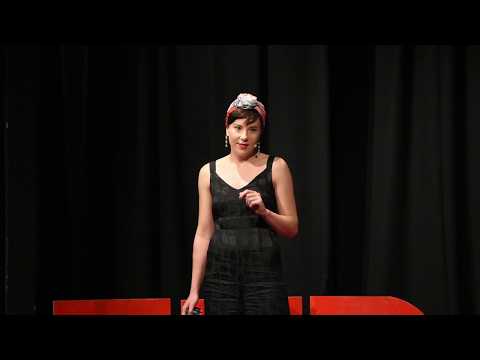
[Applause]
when I was in grade 2 we used to do this
thing where when it was your birthday
you got to stand up in front of the
class and tell your story it was kind of
a big deal it was it was bigger than
normal show-and-tell where you just said
what you did on the weekend it was kind
of like a TED talk for seven year olds
and I remember very well my birthday was
coming up and I went home and I asked
mum and dad what do you think I should
talk about for my special show-and-tell
and they said why don’t you talk about
the time we lived in Cambodia as a
family when you were younger and so it
was a Wednesday morning I was very
excited I’d brought some photos to share
I’d prepared my speech I stood up in
front of the class and I said when I was
little I lived in padam Penh Cambodia on
a crocodile farm and I began to tell my
story sit down don’t tell lies my
teacher had interrupted me and I hung my
head in shame I remember tears burning
in my eyes and I sat down my story had
been interrupted have you ever been made
to feel like your story doesn’t matter
because that’s how I felt in that moment
and so I guess that sparked something in
me and I think it was the realization
that maybe it was not a normal
experience for a seven-year-old growing
up in Queensland to have lived on a
crocodile farm in Cambodia but not only
that that you know having an experience
that was unusual was something to be
ashamed of and I was ashamed I didn’t
tell my parents this for years cuz on
some level I blamed myself for sure
until not going according to plan that
day and so my curiosity for Cambodia
only grew as I grew older and I learnt
that when we lived there in the early
night
he’s the country had been in the state
of turmoil and that we lived there
because my dad had been working for the
United Nations and he was a part of this
move to install a democracy after years
of colonial rule and civil war and
genocide in Cambodia and I learnt of the
sacrifices that my parents had made
moving to Cambodia but also leaving and
I learned that we left Cambodia not so
much out of choice but because my friend
who was four years old at the time who I
went to preschool with had been abducted
shot in the leg and left on the street
because just like me her dad had worked
for the United Nations and so I
understood how lucky I was from a very
early age and I felt my privilege very
deeply and I knew I had to go back and
as soon as I finished high school I went
back to Cambodia and ended up starting a
small community organization that worked
to regenerate the arts I felt like I was
giving back and I felt like I was you
know on top of the world I was doing
something that I loved to do and I was
getting my education online long
distance and I was you know I was happy
I felt like I was kicking goals but then
all of a sudden that all changed I found
myself in an abusive relationship I
didn’t think that that was something
that would ever happen to someone like
me I felt like you know I was educated I
understood how these issues played out
my parents worked in social justice I
was smart this didn’t happen to people
like me and so I heared that it was
happening because I was ashamed and I
was ashamed because I I was ashamed that
I had gotten myself into that situation
I was ashamed that I hadn’t left the
relationship and I was ashamed because I
but eventually I did get out and I did
so with the help of people very very
close to me and I realized if that was
the hardest thing that I’ve ever had to
do me with all the resources at my
fingertips
wonderful loving family what are other
women going through the same thing as I
went through going through and so I
began to talk and I began to tell my
story
I became an ambassador for the
International Day of the girl and when I
was 24 I stood up in a room like this
and shared my story for the first time
and I remember my dad sitting in the
front row and seeing tears streamed down
his face because he felt like he’d let
something magical started happening when
I started sharing my story I noticed
other people started approaching me and
sharing theirs and I realized that when
I was able to be vulnerable enough to
stand up and share my story I could just
see the shame in the room wither and die
before my eyes and when I shared my
story I was giving other people the
strength and the courage to do the same
and that when I shared my story other
people felt less alone and that I did
too this changed everything for me this
realization I knew that this was the
thing that I was going to dedicate my
life to I knew that this was the thing
that I needed to dedicate my life to and
so I did so even though I’d started with
the Masters of regeneration of the arts
in Cambodia I ended one with her focus
on the power of female collective
storytelling so the poet Muriel Rukeyser
says what would happen if one woman told
the truth about her life the world would
split open and I asked what would happen
if millions did I believe in the power
of stories and when it comes to
gender-based violence
our stories are shrouded in shame our
stories have never been properly
recorded reported or believed they’ve
remained invisible and this has to
change
so I started working as a gender
advocate and I saw firsthand how the
power of stories could really change the
hearts and minds of people in positions
of power and then I worked on developing
a digital mapping tool that allowed
women to map out their stories of street
harassment right here in Melbourne and I
remember when we were developing it
people said women won’t want to share
their stories online that’s not
something they would do but they did and
in the pilot alone 1,300 stories were
shared in just the first six weeks and I
knew that we’d harness the power of
technology to create an evidence base to
inform how we can improve the problem
design safer cities and prevent
gender-based violence into the future
and then the me2 movement happened and
half a million women shared their
stories in just the first 24 hours of
that movement last October no longer
were people saying women won’t want to
share their stories online they were
asking what can we possibly do about
this huge problem 96 million stories of
sexual assault and harassment have been
shared on Twitter in the last eight
years alone this is big data but most of
it isn’t actually being used to inform
how we address the problem moving into
the future so we know that forty seven
women here in Australia have died this
year already
from gender-based violence and we know
that 9 out of 10 Australian women have
said that they have been harassed in
public and have had to modify their
behavior as a result of that and we know
that 85 percent of women when they are
sexually assaulted do not report it and
so if these stories aren’t being
reported decision-makers don’t know
about them they don’t even know the full
story and if you can’t understand a
problem you can’t fix it and so I
started my company she’s a crowd
in order to address that data gap so we
use storytelling data to help address
gender-based violence and make city
safer for women
Brene brown says stories are just data
with soul and I know women are ready to
share their stories and that
decision-makers are ready to hear them
so she’s a crowd has created a
storytelling platform where women
anywhere in the world can share their
experiences and those stories are
aggregated as data that actually inform
how decision-makers understand the
problem so that they can address it so
they can design safer cities better
policies and solutions we’re harnessing
the power of technology to ensure that
our stories don’t get left out of the
textbooks and the history books this
time so standing up here and sharing my
story with you today I feel powerful and
I feel visible and I want every single
woman in the world to have the chance to
feel this way – thank you [Applause]
Please follow and like us: