
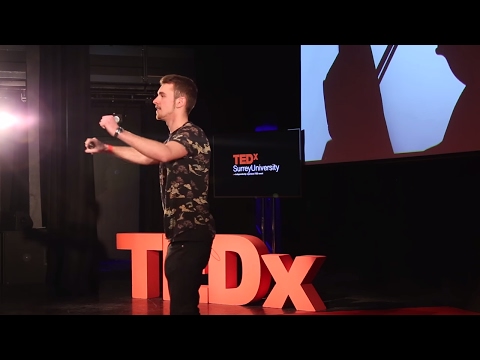
so when you think of someone who listens
to classical music what do you think of
maybe someone like this I don’t know
where I got that photo from so what sort
of music does this person listen to
right that’s my actual hair well it was
actually this time in my life I fell in
love with classical music it was
probably the best time to fall in love
with classical music I was a teenager
right being a teenager sucks the
emotional turmoil the identity crises is
really difficult classical music is the
genre of music that has the deepest
emotional aspects to it and the largest
emotional range now I’d never really
listened to it before other than hearing
it like secondhand smoke but my grandpa
recalled him Papa loves classical music
and I was in his car one day and I heard
something on the radio and it just
touched the nerve with me so I said to
him puffer could I have some classical
music I have no idea what any of these
funny Italian words or anything meant
and he gave me a couple of CDs and I
couldn’t stop listening I asked him
could we go to a concert I think he’s a
bit surprised I mean look at me I was
messing around in rock bands for most of
my time so he did in the first composer
we heard was Elgar right you might
recognize Elgar from the 20 pound note
the old one anyway right and the first
piece I heard was Elgar’s cello concerto
I had no idea what to expect this is
what happened
a mind once expanded never returns to
its original dimensions I’d been bitten
by the bug I couldn’t get enough of this
stuff and I kept going to these concerts
with my papa we used to go once or twice
a week right and I noticed something
quite remarkable happened we got to know
each other better
we felt we understood each other better
there’s something about sitting together
emotionally exposed for a couple of
hours that means you see inside someone
else is someone else’s emotional state
and I kept going to these concerts and I
realized that often I was the only young
person in the room sometimes you might
see one or two of them like unicorns
with their grandparents in the front row
right and I thought what’s happened
that’s pushed classical music over the
edge of what school and I think I’ve
come to the conclusion it doesn’t quite
fit with a lot that we see in modern
society modern society is often unkind
to emotion right it’s not cool to allow
yourself to be emotionally exposed for
two hours all right we live in a society
that runs on fear
just a doubt off it’s horrible ass
better who’s it hi nice we live in a
society that runs on fear right a
society in which the rich are dressing
poor the poor addressing rich no one’s
actually happy to just sort of be who
they are
an emotional complex human being some
people are they’re the lucky ones right
and by going to classical music concerts
you can do this there’s something very
rejuvenating about actually accepting
yes I have these emotions being allowed
to be taken on an emotional journey
right but it’s a big world when I
started learning about classical music
it seemed huge I didn’t understand a
word I didn’t understand the composer’s
names I didn’t know what was what right
and you need an introduction which is
what I’m here to do okay so I’ve made a
playlist TEDx our University on Spotify
if you go out today like you will and
you feel like you want to get to know
classical music go on there listen to
something listen to one composer listen
to more of their music listen to piano
concertos you like piano concerto listen
to more of them go to a concert for one
piece and you’ll discover others and
before you know it you’ll know this
whole expansive world
and when you do that these pieces of
toast to remind me to tell you it’s okay
not to like things right I mean some
people they go to classical music gonna
sit there yes it’s culture this is
lovely yeah yes
they don’t accept that actually it’s
okay not to like things my papa was told
once you smile too much Bruce meaning
you are allows not to like things you
don’t have to say everything’s good just
because it’s seen as something you want
to get to know I was at a concert in
Oxford with my friend Jethro and we were
sat in the gallery and after the
interval there was this world premiere
of this contemporary composers violin
concerto and I said to Jethro I hope
this isn’t one of those pieces right and
the music started a guy rubbed two
pieces of toast together I kid you not
and we just like giggling we were like
schoolboys we couldn’t stop laughing in
the front row of the stores there was a
guy sat there looking very prim and his
wife and at the end of the piece he’d
been giving me and Jethro evils for
laughing at the end of the piece he
stood up and everyone was clapping and
giving him flowers it was the composer
we’ve been laughing at his music for the
last ten minutes that’s not okay but it
is okay not to like things right and
when you want to get to know classical
music there are a few things you should
know to start out with right the first
thing to know is that classical
composers like to die well maybe they
don’t like to die but they do it a lot
right this is John Cale more she lived
to 122 years old okay now a question
that people often poses what if John
Calment was a pie all right if she was a
pie and she had 122 slices and each one
was a year of her life
you could fit Mozart Schubert Chopin
Jacey urban who died at 11 and still
have six years left they’re all throwing
themselves in rivers and dying of
syphilis early on they’re an interesting
bunch and the second thing you need to
notice that there are heroes there are
villains there’s everything in between
dmitri shostakovich was around in Soviet
Russia and he was around during Stalin’s
dictatorship when he would write
something that Stalin and in the gang
would like he would be given accolades
and seen as a hero in society and then
he would write something that they did
it and he would live in fear for his and
his family’s lives and this broke him
he he was a football referee don’t know
why it broke him this this fear that he
lived under for most of his life he used
to send send packages to himself to see
if the mail was still working he used to
synchronize all the clocks in his house
he liked to have some control in the
life that he couldn’t and he has a son
who’s also a famous conductor now called
Maxime Shostakovich he wrote a piece for
him called the piano concerto called one
of his piano concertos number two and in
this piece you can hear despair you can
hear fear you can hear all these
negative emotions but more than that in
all of Shostakovich is music you can
[Music]
you wrote that for his son Maxim’s
birthday
what birthday president right on the
other side of things there are people
like vogner Varga was an anti Santi
Semite he didn’t like Jewish people that
in my books and in most people’s books
makes him a really horrible man right
he’s seen as a bit of a villain in
classical music rightly so he was a
political exile for a lot of his life he
was also a bit old he used to wear
identical pairs of pink silk pants every
day I had hundreds of pairs of these
prepared for him he would throw them out
at the end of the day and wear a new one
all right but he could also be capable
of really gorgeous things his future
wife Cosimo gave birth to their son
Siegfried her birthday was on the 24th
of December on the 25th of December the
day after the birthday that followed are
giving birth to their son Siegfried he
had 15 musicians creep up the stairs of
their Bavarian house and wait for her to
wake up and on Christmas morning when
she woke there was this piece that he’d
written for her and for his son
Siegfried
similar gestures both lovely pieces of
music but by two very different
characters one seen as a hero one seen
as a villain
the composers in classical music are not
quite good they’re not quite bad they’re
just like Greek gods they’re just like
Game of Thrones characters they’re just
human like all of us right there’s this
great browning quote our interest is on
the dangerous edge of things the honest
thief the tender murderer the
superstitious atheist another composer
who’s more of a myth now than a man in
society is Beethoven right I won’t I
could give a whole TED talk on beta and
his life was ridiculous right
he went deaf at the age of 30 and all of
the most beautiful music that you have
known your whole life da da da da da da
da da that you know you know loads of
tunes he wrote when he was stone deaf he
never heard a note of that music right
but today I just want to talk about his
violin concerto and in particular one
time my pop when I went to a concert of
his violin concerto the soloist came on
the stage and he was looking very
nervous like a little boy he looked
completely unfit for the stage at the
time he came on and there was something
odd going on but the minute the music
started he transformed he became the
most graceful majestic amazing musician
and the piece finished and there was a
minute of silence
hundreds of busy people who had come
together and this 30 minute emotional
journey finished and there was a minute
of silence and tears on the soilless
face and then the music stopped and he
went back to the quiet unassuming man
that he’d walked on the stage yes and I
went home I couldn’t stop thinking about
this guy his name was August I had a
lick and I googled him and it turns out
he was a prodigy right when he was a
young boy and when he was 15 he was in a
fire
they gave him third-degree burns over
his whole body he was told he would
never play the violin again
his hands were damaged he was told just
to write off the idea but he says that
this time in his life taught him how
important playing the violin and
classical music in general was for him
he wanted to do that in his life on
anything else to share classical music
and he spent several painful years
waking up early in the morning forcing
his hands to play the violin it must
have hurt so much but after seven years
he gave his first concert back as a
musician and he’s now a Grammy Award
winning violinist right the last person
I’d like to introduce you to is Jean
Sibelius Jean Sibelius as a French first
name Jean his first language was Swedish
he was born in Russian occupied Finland
his dark father died in him when he was
an infant this guy was a an identity
crisis waiting to happen
made him an alcoholic from when he was
about 18 19 years old he got to middle
age which is better than some composers
right and when he was in his 30s his
daughter died it made things worse for
him he was given money by the Finnish
government just for being him because he
was a symbol of sort of Finnish nurse
and independence for Finland and they
would give him our equivalent of
thousands of pounds a month just to be
him and he would spend the whole lot on
drinking champagne eating lobster and
smoking the big Cuban cigars right he
contracted throat cancer four years
after his daughter died so was he like
Mozart
did he die in his mid-30s this is him in
his 90s right when he was 60 years old
he decided he would never write a piece
of music again he never wrote it and no
after that he thought he’d he’d said it
all right but before he finished
composing he died at 91 years before he
finished composing he wrote his violin
concerto which is the most special piece
I can think of it’s the piece that has
helped me through despair is the piece
that gives an insight into emotional
states that I’ve felt and it’s also a
piece which is so full of emotions happy
he’s sad and everything in between
right now I want to do an experiment I’m
a scientist by day right we are all busy
people if you never give classical music
anytime again in your life
give me give Sibelius the next three
minutes sit emotionally exposed with
everyone else in this room and at the
end observe a few moments of silence and
see how it feels this talk doesn’t end
here this talk
continues out as you guys go out and go
to concerts and try classical music and
listen to my playlist right and the
beauty of music is not in the sounds
that are produced it’s in the emotions
that the music evokes in you
thank you [Applause]
Please follow and like us: