
[Music]
raise your hand if you have seen a
psychiatrist this week
one person well everyone’s hand should
be up right now because you’re looking
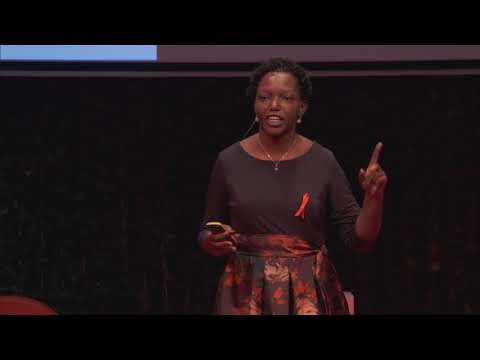
at one
I am a psychiatrist born and raised in
Uganda besides taking care of persons
with mental health problems I research
and teach mental health in the School of
Medicine at Meharry University in my
career I’ve had the privilege of being
on both sides of a mental hospital bed
what do I mean by that on one side of
the bed I have been a caregiver to a lap
one with mental illness my brother Luke
had grown into a handsome intelligent
hard-working young man at age 16 he was
diagnosed with the severe mental illness
as a family we took care of him the best
way that we could but after struggling
with his illness for 10 years he gave up
and he took his own life
on the other side of the bed I have been
B psychiatrist taking care of persons
with mental health problems given that
experience I know how hard a diagnosis
of mental illness hits the affected
individual and the family I have lived
the pain the anger and the shame the
denial the guilt and the blame despite
the fear we must act on mental health
issues we must act in spite of the fear
yesterday was World AIDS Day now you may
wonder what is the connection between
hiv/aids and mental health but it is the
people living with hiv/aids that drew me
into the mental health field and I want
you to meet two of these people living
in northern Uganda where conduct my
research this is
Severino he lives in an AAMCO village
cake industry when I met him in 2013 he
could not work in his garden because he
lacked energy all the time as a result
he did not have enough food for his
household when he was hungry
he could not take his medication
consequently he was sick all the time
unable to work he felt useless worthless
and hopeless and he felt he should die
Betty here I lived in piranha village in
paraty street when I met her last year
she was too weak to even sit up she was
faced with multiple challenges including
raising three children all by herself
she was angry at her situation and she
did not want to talk to her neighbors
she preferred to lock herself up in her
hut with her children she too saw death
as the only option these two people
Betty and suberino were struggling with
depression but they did not know this
depression is the commonest mental
health problem in the world and
according to the World Health
Organization these are the numbers 350
million people around the world suffer
from depression 7 out of 10 are living
in poverty in poor areas and about five
of those seven do not have access to
treatment a Leone in my career as a
young doctor used to be ashamed of the
fact that I did not know how to treat
someone who had hiv/aids and a mental
health problem the senior doctors I
worked with they used to prescribe the
usual treatments but for persons with
hiv/aids they would get severe
complications suggesting that their
management had to be different
so in search of answers I went to a
bookstore in Kampala and I bought myself
a textbook on mental health so that I
could educate myself and offer the
appropriate care so I read this book
from cover to cover
and I really over and over again I
couldn’t find a single sentence with the
words each IV and mental health this was
a Eureka moment for me I had stumbled on
a major treatment gap in the care of
persons with hiv/aids in Africa now I
did not know how I would change this
state has core but I thought a good
place to start was to pursue a master’s
degree in psychiatry at the end of that
program a paper from my thesis was
published in the American Journal of
Psychiatry drawing attention to the
burden of mental health problems in
persons living with hiv/aids in Africa
the editor-in-chief of that journal sent
me a personal email that read as all
congratulations on the nice piece of
psychiatry I was so excited I was on the
cover page I thought I was going to be
famous but no I did not become famous
but that achievement and me Fulbright
Science and Technology award to pursue
doctoral studies in the United States
while in the United States before I knew
what had hit me
they hunt her for solutions to
depression had become hunted I was in a
foreign land with a four month old baby
I had left to other children aged four
and five with my husband at home as I
tried to adjust to a new way of life my
thoughts became increasingly naked
I was a bad mother I was a bad wife to
make matters worse I was failing to
attain the grades required of a doctoral
student so I was a bad student and to
add insult to injury my my academic
advisor had told me that his only
responsibility towards my academics was
to sign my official documents when the
need arose given my experience in mental
health I knew I was sliding into
depression so I told myself I so you
must reverse the situation immediately I
mustered all the courage I could and I
went to the students Assistance Program
to get help
I was commended for seeking their
services and they asked me to share my
problems and I did and afterwards I felt
like a heaven Lord had been lifted off
my chest I was feeling better already
I knew I had come to the right place and
more help was on the way but then this
is what I heard your insurance is the
wrong type for this facility you need to
change that at the moment there is not
therapist who is a good fit for you when
we find one we’ll get back to you in the
meantime go to the Dean of studies and
declare your disability so that you can
get consideration in your examinations
and if you get any thought of trying to
kill yourself
quickly run to the emergency room
now think about that for a moment I
realized I had to help myself
and this is what I did number one I
continued to share my problems my
difficult situations with people I trust
in my network I called home more often I
talked to my husband about the children
my worries and he responded by sending
me their report cards my children were
scoring great a and money was going
great see this was a wake-up call to
stop my excessive worrying my children
were fine they were thriving I recall
spending hours on the phone with my
brother Gonza offloading my problems
onto him and I’d feel much better
afterwards the point is if you remain
silent you cannot get the help or the
support that you need the second thing I
did was to proactively increase my
social support and network I forced
myself to make friends with anyone who
was willing to talk to me I made friends
with academic coordinator and I learned
that as a doctoral student I was
entitled to a tutor so I took up that
option and I improved my grades I also
learnt I could change my advisor and I
did
[Applause]
I also learned that I could reach out to
as many professors as I could in other
departments who could help and guide me
in my research research has shown that
social support and connections are the
strongest protectors against depression
the third thing I did was to learn and
practice positive coping skills in
particular those required to deal with
stigma and discrimination in the
communities where I lived
I was regarded different I mean I was
reading books all the time I just didn’t
seem to know how to have fun so no one
wanted to associate with me I had to
learn to accept those things about
myself that I cannot change and to also
surround myself with those people that
support me what am I saying here I’m
saying that positive coping skills
protect against depression the last
thing I did I increased my income
[Applause]
I got an online job as part of a project
in Uganda and as a result I could afford
to buy an air ticket and fly home at the
end of each semester to be with my
family and friends research has shown
that poverty is highly associated with
depression and in the African context
any intervention for depression must
address the issue of poverty these four
actions I took saved my life
unfortunately for my colleague also a
Fulbright Scholar in the same graduate
program and as I did not survive her
depression while in Uganda enjoying the
comfort and the family the comfort of my
family and friends I received an email
from her and she said also I am
overwhelmed I need to talk to you
immediately I knew this was trouble and
I’m so far away I told her I promise I’m
going to be back within one week and
I’ll come and see you the day after I
arrived before I had a chance to talk to
her she killed herself she took her own
life just like I was devastated I
thought I could teach my colleague the
actions I took to push back depression
but I didn’t get a chance I thought
about the people living with hiv/aids in
Uganda struggling with depression with
no access to treatment and I made a
decision I was going to help them after
completing my doctoral studies I
searched for an HIV program
to work with me to fight depression the
aid support organization tassel I agree
to work with me
I then come up with a bold idea to
develop a culturally sensitive group
therapy program to treat depression and
these are the four aspects of that
program number one the program uses talk
therapy to treat depression according to
the World Health Organization talk
therapies should be the first treatment
for mild to moderate depression number
two the program uses a group approach to
deliver these talk therapy from the
works of Steven Biko it is well
documented that Bantu Africans have a
natural tendency to form group
friendships as Africans we see our
community as an extension of ourselves
so our group approach is not only a good
fit for our culture but also allows
greater access to the program number
three the program provides knowledge and
skills as opposed to handouts
participants are told how to seek social
and emotional support they taught how to
practice positive coping skills we teach
them how to identify and initiate small
viable income generating projects we
provide them with basic financial skills
like how to get the money how to budget
for that money how to find market for
the product the last thing is that in
this program will ensure that the group
sessions are culturally appropriate what
do I mean by that
participants attending this program are
put in gender specific groups that means
women meet alone and the men meet alone
cause the issues are different the
facilitators of these groups must be the
same gender as the group participants
the group facilitators guide the
sessions using a manual in the local
language
local rituals are inserted within each
group sessions and in between sessions
participants are given assignments that
increase social norms and values the
women in this program prefer to sit on a
mat and they allowed to do so and
they’ve nicknamed is matched the pain
reliever a clear testimony that whatever
they discuss on that mat relieves their
pain this program has received both
national and international praise we
have been supported by the Canadian
government through Grand Challenges
Canada as well as MQ transforming mental
health a charity based here in London so
what happened the outcomes of this
program women liked better
the one with the red sock Oh Betty now
report feeling more empowered and more
in control of their emotions they speak
up taking better care of their children
Betty gained friends hope and motivation
to continue to live and contribute to
her community today but it has a sweet
potato garden and also a herd of God’s
from which she gets money to meet her
basic needs Sabrina who was who felt he
should die prior to joining the program
teamed up with his group members and
they started a project of growing
vegetables for sell his share of the
proceeds
he used to set up a for a custom garden
from which he and millions of uganda
shillings he also acquired a herd of
God’s today sabrina is a clan leader and
he’s a treasurer at the primary school
[Music]
when we interviewed Severino two years
after participating in this program he
referred to the group sessions as the
best talk of living his own words my
colleague at the Graduate School never
had the chance to share in the best talk
of living perhaps if she had she would
have felt as empowered as the men and
women we have supported since then there
are millions like her without access to
culturally sensitive talk therapy I’m
sure you all know someone who might be
struggling with depression what can we
do about it what can you do about it we
have a formula here that works a formula
that has been published in the lancet
HIV journal you can spread the good news
my dream is to see this program embedded
in other health programs not only in
Uganda but also in communities across
Africa we will not only save lives but
will help people thrive I believe that
together we can give so many more the
best talk of living
[Applause]
[Music]
Please follow and like us: