
how do you measure success and this is a
question that I have asked hundreds of
times to individuals and as well as to
firms that are looking to add value and
quite frankly it’s a question that I
truly like to ask police chiefs across
the country and in asking that question
my expectation and the answer would be
would be something around crime rate it
might be around clearance rates it could
you know could be around use of force
data but imagine if you would that I
asked that question and after I heard
the answer back let’s take the
Pittsburgh Bureau Police for instance
and I said well I’ve been thinking about
this a little bit perhaps you should be
thinking about measuring success like a
grocery store now there probably be a
little pause look at the watch clearing
of throat hurting of eyes you know this
guy has truly lost it but I’m saying
think about something you are the
president of a grocery store chain in
which you have grocery stores all throw
out that let’s say the Pittsburgh area
and what you choose to do is part of
your value creation as far as your
strict part of your strategy is to have
the same items in every single grocery
store everyone would look just like this
you would tout your low prices your Y
Diles good lighting cleanliness easy
parking but your customers would come to
you and what they would say is well you
know I’d like to have these different
things inside the store it’s not meeting
the needs that I have and when they
would come and talk to you say well yeah
but we have low prices and we have wide
aisles and good lighting
but you weren’t meeting the demographics
of what was happening in each of the
neighborhoods and therein lies the
problem we’re not listening to our
customer base and pretty soon if within
your grocery store you would start to
lose customers to your competitors the
first time I learned the lesson about
what this could mean was in the late 90s
I was assigned to be the commander of
the zone
two precinct in the Hill District and at
the time the focal point was Center
occur Patrick this is present-day center
core Patrick nice bike stand the library
in the background a bank you know
typical neighborhood in the city of
Pittsburgh what I will tell you is it
was a very different place in the late
90s in fact some of you might be very
surprised to know that in the late 90s
and for a number of years before that
this seemingly serene scene was
inhabited and was the largest open-air
drug market in the city of Pittsburgh
three or four hundred open-air drug
deals would happen across this corner on
any given day and as a police agency
what we were doing was going through and
just pure enforcement arrest after
arrest after arrest and so the community
wanted it to look like this but it was
far different and we were just and every
time they would come up and ask us we
would say but we’re making more arrests
in my first aha moment when doing this
was I met I went into City Council was a
yearly a yearly piece that we had to do
and as I walked into City Council and I
sat down I was the new commander I did
what my predecessors did I opened my
file folder up they said how are you
doing and I said last year at senator
Corps Patrick we made X amount arrests
which is a 10% increase over last year
sat back accolades please come tell me
what a great job I’m doing Saladin was a
city council member at the time he
looked me right across the I can still I
can still remember this moment he said
so what what are you doing to solve the
problem I was crestfallen don’t you see
what I’m doing here
I’m working so hard I’m making these
arrests but it was a wake-up moment for
me and what we decided to do is work
together over an 18-month period of time
we changed the way we measured success I
didn’t know even when I didn’t know then
we closed bars we put down abandoned
houses we’ve changed traffic patterns
and the really cool thing was I want
we solved the drug problem but all the
ancillary crimes are resolved that the
homicides the robberies threw salts that
were happening in this area went away is
the open-air drug dealing went away one
of my look looking to fast one of my
regrets is that that kind of thinking
never held on because today if you ask
about a police agency where they measure
success they’re gonna tell you part one
crimes and this is it folks when you
hear crimes gone up or down these are
the eight crimes that they’re talking
about so I want you to think about you
you’re in a community meeting beset by
violence by graffiti drugs prostitution
you pick what’s happening in your
community at any given time you have a
police executive come walking in you
have an elected official come walking in
and what they tell you is is that you
start to complain about what the issues
are happening and what you say is but
part one crimes are down 5% we’re back
to our grocery store we’re telling you
what we think is important and one of
the reasons why we got stuck in this is
because my performance evaluations were
rated on this and it still happens to
this day so what do we do about it
mark moore is a professor at the Harvard
the Harvard Kennedy School of Government
I had the very good fortune of taking a
class there an executive training
session several years ago mark came upon
two very simple and elegant thoughts
that I thought were you know stuck with
me to this day number one a police
agencies primary function is not to
reduce crime it’s to reduce fear think
about that and remember that for a
minute the second thing is mark was
advocating measuring results differently
and how communities interacted and it’s
been very tough to get traction around
and I can always see how these two
things began to merge together but I
couldn’t quite figure out how we wanted
to do it but I want you to think a
minute about this whole concept of fear
and how it relates to community impact
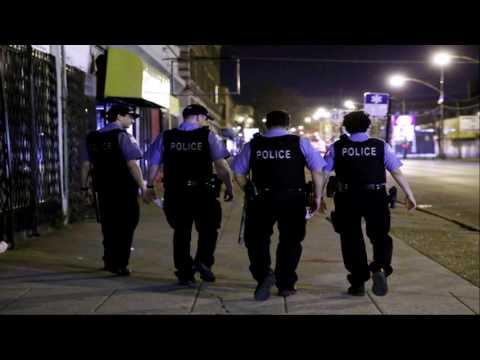
because if I show this photo to
individual and I said you’re walking
down the street and you see these four
officers approaching you how are you
gonna feel there are gonna be some
people that say I heard a couple
Snickers in the guardian’s some people
are gonna say well I feel safe I feel
good I know that you know for that time
being I’m okay you’re gonna have a large
majority that say listen that makes me
fearful and it’s something that police
agencies have to recognize that fear of
fear of the police is actually worse
than fear of the criminals that are int
there or there and it’s a problem that
we have to confront and we have to face
so my Eureka moment then starts as I’m
asked to put together and I’m asked to
work with a consulting group with a
major city police department we started
talking about some of these issues and
since everything in business can be so
fine have any business students and
anything in business can be solved by a
two by two we came up with a 2×2 and
this is it on the x-axis is crime rate
from low to high community satisfaction
low to high and then we put into these
quadrants best practice upper-left and
what this is is a community with a low
crime rate high community engagement
they’re working together to effectively
solve their problems lower-left we need
educate and engage I’m gonna I want you
to remember this quadrant four seconds
I’m going to tell you a little bit about
a story where this could actually be
problematic you have a low crime rate
that you have low community satisfaction
it’s actually truly a danger area
because you might have things that are
happening underneath in which people
aren’t people why they’re not feeling
engaged
upper right high community engagement
high crime rate what a better place to
experiment and innovate you have a group
of community members that are looking to
work with you to do things and then
finally high crime low community
engagement this is a place where trust
and fear and where you see issues that
are beginning that that happened that
people feel unsafe in their communities
now interestingly enough in this in this
build trust quadrant I urge you to
listen to the news because in some of
these neighborhoods where you hear this
what are you hear I’ve been on the end
of that I’ve been in the press
conferences I’ve said we need the
community to come forward we need them
to help us we need them to work with us
I’ve heard the community members say we
want the police to work with us they
don’t understand our problems they just
come in and then they leave it’s really
interesting they’re both asking for very
similar things but they’re not
connecting the dots on exactly how to do
that and that creates issues in the if
some people begin to think about now
what do you do here we have 88
neighborhoods in the city of Pittsburgh
what I would propose is it starts with a
quick attitudinal survey in which what
we do is we take these 88 neighborhoods
we just plot one to ten one to ten and
what we say is we’re going to say where
each neighborhood plots along that line
then build a separate strategy in each
of those neighborhoods we’re back to our
grocery store folks this is why grocery
stores use a loyalty card so they want
you to come back they want you to be the
voice of the customer and what happens
is is that then we arm our officers with
communication strategies when they’re in
those neighborhoods exactly what to be
talking about because these are the
concerns that are happening within each
of the groups at the same time we have
to every three months readapt what we’re
doing
because people are gonna move through
here now what’s interesting about this
is is that our measure success doesn’t
become this crime rate piece what our
measure success becomes is how are we
moving through this and moving people
out of the red zone
how do we move you people purple to
green how what is our success in moving
people into areas in which we see the
type of thing that we want to happen
we’re not attacking the crime rate we’re
not at centering core Patrick just
making arrests and hoping for the best
what we’re doing now is measuring
success in a different way where the
crime rate becomes the outcome not the
focal point and it’s a very different
way of looking at law enforcement in the
late not in the late 80s into the early
90s the New York New York City was beset
by crime and CompStat was created and
CompStat was basically a system in which
you would look at clusters of crime and
you would attack that crime and
historically now CompStat which was seen
as groundbreaking we used it in the city
of Pittsburgh and it’s police agencies
across the country used it become stat
was interesting because his fear began
to decrease in New York City and even
though crime went down what happened was
the effort got stalled in this lower
left-hand quadrant you can make that
argument because what happened was the
community began to question the methods
that the NYPD was using in order to
reduce crime they didn’t feel engaged
and what I’m suggesting to you is is
that there’s a way for the community to
be engaged first in order to reduce
crime none of this is easy you know
obviously this is where we want to get
but it’s going to take all of you it’s
going to take in light and elected
officials it’s going to take in light
and police executives officers windu
communication strategy communications
expert data analytics
all of these are bold moves but bold
moves are what required to change the
present day think about something when
you think about police community
relations are you satisfied with what
you’re seeing are these things you know
these types of images too rare and I
think a lot of you can look about it
maybe say yeah I think maybe they are in
business these aren’t new concepts we
had a grocery store being a
manufacturing environment whatever the
case may be
we’ve already understood you listen to
the customer you build what brand
loyalty brand loyalty then besets people
wanting to work with you you add value
and you move forward we teach it we do
it that’s what works well so this isn’t
a new concept that it is a new concept
in public safety what I’d like you to do
is think about don’t we really owe this
to our communities to be innovative to
be transparent to engage to think about
ways in which the police ages aren’t
telling the citizens what they’re doing
and asking them to sort of be grateful
for the work but also working in
partnership so you can work together and
so we have safer communities and better
standards of living across whatever
neighborhood that you’re living in thank
you very much
Please follow and like us: