
the opportunity to talk to you about the
elephant in the room the fear of the
other there is not much choice when you
find a boat full of frightened people in
the middle of the night the sight of
shivering scared people moved even those
who didn’t want them in the village in
the first place this is how a
middle-aged fishermen from Schuyler see
Kamiya’s
a tiny village of 100 inhabitants on the
inlet verse described to me why he
decided to pull refugee boats to save
him his village was a place when many
people were many people crossing the
Mediterranean in the latest wave of
European migration arrived in 2015 and
2016 I started a research project on the
Greek island of Lesbos and hills wanting
to understand how the tiny communities
coped with receiving a big number
innumerable number of needy people I
spoke to those who set up local
charities and makeshift organizations to
help refugees and migrants migrants were
arriving day after day for many months
many times during the night initially in
their tents later on in turn hundreds of
thousands I also interviewed locals who
found caught themselves in dramatic
situations they could have never
imagined I realized the genuine
compassion coexisted with fear in most
cases what made the difference was
whether individuals allowed themselves
to respond to the natural fear and how
communities collectively responded to
the refugee arrivals
this made me think that overcoming the
fear of stranger for each of us is key
but having policies that promote our
inclination for compassion towards the
helpless other is much more important
going back to the fisherman helping haul
the boats in he described that his
decision to rescue people on the dingus
many of whom have never seen the sea
before and could not operate the engine
was not a result of conscious
deliberation it came rather from his
urge to protect them from harm science
explains this by our pre-programmed
ability to participate in other people’s
shared emotions this works as follows
seeing the other suffering activates
regions in the brain which are involved
in processing pain related emotions
while the mirror neurons transmit this
information the whole process happens by
feeling rather than thinking put simply
we be curious Lee experienced other
people’s harm as our own because it
serves our own survival in other words
we mirror people’s feelings when there
are in danger in order to save ourselves
so to speak but the emotional connection
I have described doesn’t always happen
on seeing other people’s flight it’s
possible to have an emotional freezing
to experience this and this happens when
we all are too aware of our own
vulnerability and are horrified
literally of sharing that predicament we
really feel it could be us in their
place in those instances it is very
important how our individual reaction is
modified and how it is expressed
socially this is why I consider it very
important how local communities turned
those initial
actions of people into solidarity
towards refugees and migrants and let me
tell you it is not only people who lack
empathy that do not help as was the case
of a shopkeeper in the same village who
refused to share to sell a bottle of
water to the man coming of the lifeboat
in the heat of a scorching Greek summer
many well-meaning individuals can be
frightened by the sheer human despair
and needed Ness that such situations
evoke this is why again it is so
important how are our pre-programmed
individual reactions are expressed in
the social arena again the tiny village
in lesbaz provides a useful lesson here
and this is this the hostile shopkeeper
had to change his waves because his
neighbors shunned him I would like to
post here a proposition that it is very
important how communities and
individuals react initially but these
initial reactions cannot be sustained
without adequate policies and support
from the government after all even in
lesbos fear and resentment replaced the
initial welcomed by on the ground
initiatives when some European
governments began raising wild fences
and walls to stop people moving this has
left refugees in a limbo with the Greek
government unable to meet their needs
and with Islanders having no possibility
to rise a wall over the sea they feel
they share the faith of abandoned and
stranded migrants and hopefully some
politicians and media outlets in the EU
affluent countries began comparing
refugees to flood invasion and swarms of
people
such reaction is is both unbecoming and
dangerous people leave their countries
because they see no future in there and
because they have no other choice this
is why migration is synonymous with
human history the current arrivals may
feel big but Europe in the 20th century
alone has seen much bigger population
movements after the Second World War
twelve million Germans fled or were
expelled from Eastern Europe 100
thousands of Jews survivors of the
genocide perpetrated by the Nazis along
with war prisoners and forced laborers
sought safety beyond the native lands
but the traumatic experience of European
history started perhaps after the end of
the first world world war and the
dissolution of the Ottoman Empire Greece
received more than 1 million refugees in
few short months after the population
exchange with Turkey in an impoverished
country emerging from various wars every
third person was a refugee in 1923 and
the population of Athens comprised a
fourth in 40% newcomers mostly Greek
Orthodox Christians from Anatolia in
western Turkey there were few other
great facilities people were placed
everywhere in public squares in theatres
even in the ancient sites what this
experience teaches us is very relevant
to today’s Jordan for example in Jordan
today every third person is a Syrian
refugees many argue that the asylum
seeker reaching Europe today are very
diverse and quite different in terms of
their country of origin motivation and
profile
despite their diversity however the
refugee experience
then and now share some common crucial
traits that is the refugee plight has
been met with indifference and neglect
on the part of those who can help them
and now at the same time the historical
parallels of previous displacements can
teach us a valuable lesson how
integration occurs in face of adversity
of serving fear and hostility towards
the immigrants the current lessons from
lesbos for example tell us that helping
refugees and migrants it’s not about us
just assisting them we gain by helping
other people by giving to other people
as an unemployed former salesman from
Italy nee who set up a soup kitchen with
other citizens told me when I lost my
job I felt stigmatized I stayed in my
house cooking and offering free meals to
refugees help me gain my dignity and
sense of self-worth while we all have a
responsibility for the individual
stances we take we need sustainable
policy responses to support this for it
is not the responsibility of individuals
to taken the role of governments that
fail to support the needs of the most
vulnerable not just the forced migrants
their own populations as well this then
gives room to various xenophobic
populist parties to successfully
scapegoat refugees and migrants for
failing public services low wages and
unemployment one while untrue such
accusations find find a fertile ground
in each of us because they speak to over
primary fear of survival it is an easy
when we encounter strangers to give name
so when we meet many strangers who come
uninvited to what we consider our own
place
with whom we have to share scarce
resources who may feel we are lacking
ourselves it is easy for opposition and
even in Amity to occur however in doing
so we actually ignore the past we share
with today’s savages and migrants in the
last year’s alone over 1 million of
refugees and migrants mostly from Syria
Iraq and Afghanistan reached Europe in
their majority they fled war and
persecution trying to reach Italy or
Greece over 9,000 people are reported to
have lost their lives
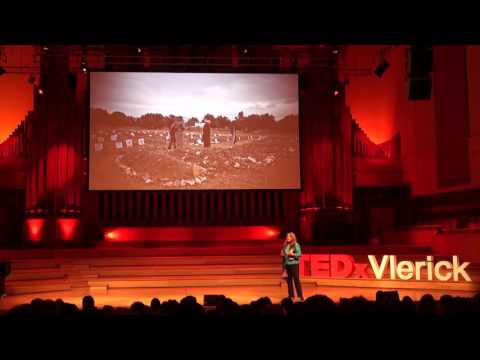
in this journey activists in lesbos
arranged for dignified burials for many
of those who died at sea let me repeat
we act compassionately because we
identify with those who suffer but when
the fear takes over we can easily
distance ourselves from the plight of
the other the most dangerous thing for
me is when the government’s propagate
fear because it gives us permission to
neglect the most vulnerable and to
consider the essential human needs as
somehow less worthy than our own sending
refugees and migrants who made the
perilous journey to Greece on Dinges
back to Turkey is only possible because
we decide enta fie with them completely
otherwise it would be considered an act
of utter cruelty we must not forget that
not long ago Europeans fled war many of
us today like myself live and work in
different countries because they provide
us with better opportunities
over sixty million Europeans a number
comparable to the entire population of
displaced people around the globe have
moved to America in search of a better
future from the middle of 19th century
only in some way many of us are
descendants of migrants in that sense we
are not native or stranger but a
combination of both we are what I call
hybrid subjects so what I have described
in my academic work and other writing is
an emotional ability to identify with
the plight of the other is very
important because it decides how we
respond when we see the stranger but
even more important is to consider that
perhaps each of you in this room is one
form of hybrid or another this is a good
thing because it allows us to speak to
the good fear the identification and
compassion and this is also how we can
vanquish fear by considering our shared
riccati as living beings so let us
accept that the fear of the other is a
natural response as humans we are all
wired for survival by either responding
in through emotional attuning or
distancing ourselves from the pain of
the other but let us also consider
whether we don’t know what the future
holds in store for each of us as a
daughter of Greek political exiles from
the Greek Civil War who was born in
Albania and raised as a stateless person
in Poland who now lives in the UK I’m
acutely aware how the accidents of birth
so let us consider that fear is part of
who we are but do not let fear take over
at a collective and group level because
as history shows by embracing the our
other in ourselves we are all better off
thank you [Applause]