
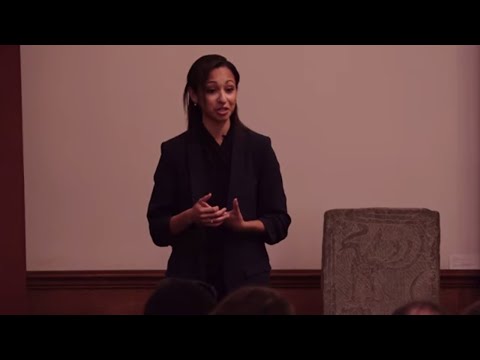
my job as a choreographer is to make
people move so to start off I’d like you
to put yourselves in my shoes while you
are seated I’d like you to think of one
dance movement it could be anything
you’d like and if I point to you I’d
like you to stand up turn around and
demonstrate for those around you don’t
be self-conscious this is just being
recorded for anyone on the Internet to
see I’ll give you a couple seconds to
ready no I’m just kidding I’m not gonna
make you do that no no no see then I’d
be hiring dancers for no pay and there
is enough of that in my profession
already there is a reason I did that to
you though that surge of energy coursing
through your veins in this moment some
may call it panic can tell you a
surprising amount think about your
initial reaction to my request were you
worried about having to come up with
something on the spot were you concerned
that those around you might judge you or
think your idea silly were you fearful
of feeling vulnerable or perhaps you
were secretly hoping I’d pick you
because you have a default go-to dance
move that you save for special occasions
you know the one no matter your reaction
how you interact with those around you
determines what those relationships can
yield keep that gut reaction you had in
mind as I tell you about my own
discoveries through dance
now in July of last year my ballet
company performed at a large well-known
venue in New York City after a year of
preparation
i choreographed and produced a full
evening of my work and I worked with a
team of nearly a hundred people dancers
musicians a Chamber Choir and a full
administrative and production crew the
entire experience was blissfully
euphoric ly entirely exhaustive but not
exhausting and the way one might expect
in the final months leading up to my
performances my rehearsal schedule went
from zero to way past the speed limit
and yet I felt more focused and
energized than in all the months prior
and it wasn’t just because I experienced
an increase in efficiency something had
shifted not only in my focus control and
critical thinking but also in the way I
related and responded to others I came
to realize that my work choreographing
in the studio was directly influencing
everything outside of it and so thinking
on my feet so to speak isn’t just about
the positive effects of physical
activity on creativity and productivity
actively engaging with my artistic
practice has had a profound and lasting
impact on my professional and personal
development and one realization has
stayed with me throughout that anyone
can apply certain choreographic
principles to better themselves and
their relationships with others so what
exactly is choreography at its most
basic it is the design of movements
patterns and phrases to create sequences
articulated with physical bodies and
most often set to music as with many
other artistic disciplines
choreographers use the tools at hand
music dancers and the basic building
blocks of technique and style and they
transform them with their ideas
the aim is to make the whole greater
than the sum of its parts why is it
important that these elements are
transformed think about it this way if
you read a review of a fabulous novel
you don’t ever hear them say you used a
lot of really big fancy words throughout
sometimes the words repeated a lot other
times not so much sometimes they
appeared only once it was fantastic 10
out of 10 would recommend it’s how the
words transcend the confines of the page
that matters there are only 26 letters
in the English alphabet and yet the
combinations and the permutations are
limitless when seized and nurtured and
arranged and rearranged until the
sentences turns symphonic the same is
true in dance there is an oft repeated
quote by the genius choreographer and
father of American Ballet George
Balanchine which goes there are no new
steps only new combinations now this
doesn’t mean that I don’t spend
countless hours agonizing over the my
new show of these combinations and
whether the left foot starts to the left
and then goes to the right or maybe it
starts to the right and then goes to the
left maybe it really does start to the
left but then it goes a little bit more
to the left and then goes to the right
while the right arm goes to the right in
the head goes to the left this is a lot
of my day every day so as you may have
gathered I’m a bit of a perfectionist
for every hour I spend in the studio
with my dancers I can spend upwards of
five to six hours choreographing on my
own I listen to the music until the play
count is in the hundreds
I take meticulous notes on paper and on
my computer and I’m mad about the
overall structure of the ballet I want
to create and what I plan to achieve in
rehearsal each day
I can be obsessive about musicality
detail-oriented about steps and hyper
focused on shapes and geometries but why
am i doing all of this what is the
larger purpose it’s because I’m chasing
that elusive something it comes out of
the right steps and the right
combinations at the right time in the
right environment with the right people
this is what drives me to use the medium
of dance to dive into the infinite
potential of exploring human
relationships so choreography the noun
the art itself is the literal embodiment
of the intangible it’s the expression of
concepts and feelings made visible but
to choreograph the verb the practice of
creating the art that’s where things get
more interesting my form of
self-expression requires a series of
reactions from within the first is
inevitably a visceral response to a
piece of music that heightens my senses
and drives me to create but from there
I’m a walking contradiction everything I
do from that point forward is a
calculated compulsion a sought out
knee-jerk reaction to my surroundings
and thoughts and feelings a cab a
carefully designed plan to proceed with
abandon this contradiction holds true
for many artists composers painters
poets some of the most virtuosic and
pioneering artists in their field start
out with rigorous structured training
from an early age
it is only after they have honed their
craft to the point of being borderline
monastic they can break free from these
confines and forge new paths the
distinction is with choreography the
heart of the creative process ultimately
takes place in real time when composers
create new scores they are often
isolated conjuring music in their heads
until it is printed and passed to the
players to interpret now as I said I do
quite a bit of preparation in isolation
but once I’m in the studio all of that
listening prepping planning and
seemingly solidified football playing
marching band formation stick figure
scribbling is in peril because suddenly
my internal monologue becomes an open
conversation and the characters are
actively challenging the plot three
things are then happening at once my
analytical side is adjusting me over
overall structure I had in place for the
work my emotional side is seeking the
best way to use another person’s
physical form as a conduit for my own
voice and and this is a big one I’m
shifting from the role of passive
thinker to dynamic leader now let me be
clear I’m not trying to flatter myself
when one thinks of a dynamic leader the
image of a resolute larger-than-life
figure may come to mind but ponder that
word dynamic it is inherently defined by
the concept of movement we want leaders
who can mobilize others who can elevate
discourse and who can shift perspectives
it also means that that person must be
adaptive proactive and reactive the
decisions they make are informed but
they are made on the spot with the
information at hand in a studio one of
the most important markers of an
effective choreographer is one who
communicates dynamically think for a
moment about everyone’s favorite
team-building exercise the trust fall
they’re called trust Falls for a reason
they build trust but it’s the word fall
that grabs my attention not only are
these exercises a physical embodiment of
communication and relationship building
but they’re an accelerant showing
someone that you are trustworthy
trusting or both builds a relationship
infinitely faster than telling that
person that you are what happens if
there’s a communication breakdown
between a manager and an employee in a
meeting someone drops the ball it’s not
great but what happens if there’s a
communication breakdown between my
dancers and me in the studio
someone could literally get dropped so
the stakes are high in either case but
I’d be willing to bet that the risk of
imminent physical injury makes us that
much more attentive and so we have to be
present in the moment and by virtue of
that we are engaged with ourselves and
with each other so there’s the physical
aspect of dynamic response but there’s a
scarier type of trust fall one that
carries even more risk but possibly more
reward and that is the pursuit of
vulnerability
it is one thing to brace statically for
impact in moments when exposure feels
inevitable and you were unable to
maintain a perfectly polished facade but
to chase that deeply personal discomfort
actively and with purpose can prove
transformative I lay myself out in front
of dancers collaborators audiences
critics being creative requires that I
ask all those who are present to engage
with the most exposed raw parts of
myself it’s the emotional equivalent of
intense weight lifting creating
miniscule tears in the muscle fiber in
order to come back stronger if it is the
dancers job to absorb interpret and
expose the inner workings of my mind
then I must be willing to share that
information with them readily and
effectively the dancers must trust in my
ideas and I must trust them to bring
their perspectives to enhance and
transform them as a choreographer it is
also my responsibility to adapt my work
to meld with what distinguishes each
dancer as an individual while still
maintaining the integrity of my vision
it’s a symbiotic relationship in a
sensitive ecosystem this ecosystem
extends further the dancers must trust
each other and the audiences must trust
us for the time and attention they have
invested
so how do I get these players to be
invested more importantly why does it
matter if they are should anyone care
that I feel strongly really really
strongly if the count is on seven and a
half and not seven or that the head
should tilt just a bit more to the left
does any of this matter when the final
curtain comes down and everyone goes
back to their daily lives creating art
is about connection it’s about
communication it’s about shared
experience this is not new information
we know this there have been countless
studies done that prove the value of the
arts in creating a more emotionally
intelligent cohesive and progressive
society and about the importance of
ensuring that diverse perspectives are
given a voice to broaden the narrative
what interests me is how we get there
and why we engage in trust Falls in
everyday life and yet we neglect to
think of them as such we are met with
moments that challenge us relationships
that try us decisions that paralyze us
how do we communicate to cultivate
deeper connection and understanding
think like a choreographer come prepared
but be prepared to adapt be reactive but
not reactionary be confident but don’t
conflate confidence with being confident
you’re always right
be present in the moment and Trust the
fall earlier this week I put my own
words to the test working with two
extraordinary dancers from American
Ballet Theatre Stephanie Williams and
Calvin Royale the third who are present
with us in the audience today I
choreographed rehearsed and filmed a new
ballet for you all to see today in just
a matter of hours I brought my basic
building blocks to the studio see what
happens when intuitive interaction
colors the creative process
Please follow and like us: