
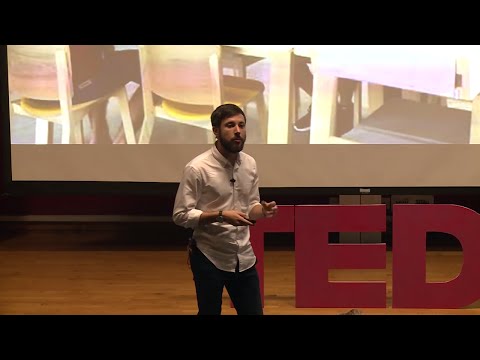
many different means to work you’re
using your phones using your laptops and
you’re working in different places some
of you may even be working in the space
at this moment my titles aren’t showing
as earlier so I’m going to be talking
about the new generation workforce and
what we can do with space and to help
create environments that encourage young
people such as yourselves to engage and
work in the work environment it’s only
recently that a thing such as
programming have been able to be carried
out from a beach environment a graphic
designer no longer needs tools and space
they can work from a beach environment
with the workspace changes in the world
flexible working is now possible and for
the younger generation it has become the
norm we use cloud-based devices we use
cloud-based services to engage with our
work and communicating connect across
spaces this was going to say office with
a question mark the office what is the
office what is the office to you as a
young person what does it mean to work
from an office and have you ever thought
why you work in an office and what the
reasons are behind you working in an
office I’m sure many of you here you’re
studying and you’re looking forward to
maybe working on in an office on Hong
Kong Island and that is your life sixty
to seventy percent of our lives is spent
working and we’re spent in environments
and spaces that kind of dictate how we
live our lives and what we do with our
lives a bad environment can have a
negative impact on our lives and
creating spaces and communities that
really encourage you to have a work-life
balance and to have a work that you
enjoy is powerful the office why does an
office exist is any other one ever
thought through this offices came about
from the libraries and people sharing
government documents spaces to store
important notices we moved through into
the Industrial Revolution where vast
amounts of information needs to be
stored and large pools of workers where
needed and by merchants to be housed to
pro
the documents store the administration
and keep records of what business was
being transacted this gradually changed
gradually moved we saw the open office
environment in the 1920s to the 50s and
spaces that managers could manage and
look out across the staff over see what
work was being done and communicate and
collaborate with the people in the space
as we progress through into the 70s
cubicles arose I’m sure many of you here
who may be a little bit older have your
own personal cubicle maybe mark has one
that he calls his own I used to work in
a cubicle in local government back in
London and it’s it’s a safe space it’s a
space where you can feel maybe I can
have an enormous day today I can go into
work I can get my work done put my head
down and that’s it the world is the
world is away from me it doesn’t
encourage collaboration it doesn’t
encourage connections it doesn’t
encourage sharing of ideas and I think
the newer generation is looking for that
that interaction within a workspace and
I think businesses and companies need to
look for that within a workspace to as
cubicles came down though what we
started to see was the prevalence of the
open office or the open-plan space this
space i think is seventy percent of us
offices now have an open-plan office so
many of you probably work from one the
idea is to encourage collaboration and
connectivity but what we can see happen
is that extroverts sort of start taking
over the place introverts don’t no
longer have a safe space that they can
hide away from the troubles of the day
that they can get some of their work
done and they can focus down on the
problems and tasks at hand it can be
distracting I think we all agree that at
the moment its life is getting more
distracting we’re constantly checking
our phones there’s constant
notifications happening constant pings
and constant needs of attention across
all our devices the workspace is no
different and I think deep work is
becoming tricky to attain in a workspace
you always have seeking new inputs
through a space and you’re unable to
focus on the task at hand there’s always
an email there’s always a phone call
things need to change to that impact but
maybe they change too much within the
work space environment slides all sorts
of fun things hammocks
we saw this what I like to call the
google ification of the office space
primarily probably started by them and
we started to see this shared out across
the media fun things you could do in
your workspace that would really kind of
break the work-life balance but perhaps
encourage people to just treat work life
is home life through this we started to
see a bit of a change and a bit of a
furring down of the space and through
this i think co-working rose so this is
our space garish society yes we are pet
friendly animals are allowed in the
space and we like to collaborate and
work with them so co-working is is
flexible workspace shared workspace
where businesses can work together
collaborate and communicate through
ideas with offices with shares and desks
locations and this encourages people to
exchange knowledge to communicate and
create to work together within a
community and encourage each other to
achieve why is co-working important in
Hong Kong I think we’re we’re a vast
space the island is very populated and
these spaces encourage different
communities and different arrangements
of people to work together and achieve
together but this change in workspace is
being brought about by new forms of
technology new digital tools and this is
why the flexible generation who is
looking for new means of work is going
to achieve in a different way storage
storage used to require vast amounts of
space storage is now in the cloud clouds
yes so all your knowledge is in the
cloud all your information all your
thoughts your fears your dreams
everything that you share is out there
unless you’re a particular type of
person who has everything switched off
from their phone and doesn’t want to
interact with the cloud the cloud has
allowed the rise of these flexible
spaces and it has also allowed the next
generation workforce to expect different
from how they work within a space and
previously you had to get to your office
log into a computer everything was on an
intranet or a local network system you
had no access to that outside of work
just a few years ago when I worked
government there was no way for me to
access any of my information any of my
documents any of my emails through my
phone I had to be on location in the
space now with the advent of the cloud
google drive dropbox all these tools
that many of the new generation
workforce are native in our growing up
using day-to-day it’s become normalcy
for them to use a flexible space and not
need to be tethered to one space as we
seeing this there is no need for there
is no need for a stand-alone office and
companies are changing the way that
they’re approaching how they manager
manage and use their workforce a
productive workforce does not need to be
stored in one space focusing on and an
tethered they are able to work
independently across locations space
what does space mean and why are they
able to use it flexibly across locations
what we see is that as companies grow
they’re able to spread their workforce
out across different different parts of
the environment we have global companies
working in Hong Kong with one user who
is just based in the city through these
tools these digital tools they’re able
to connect globally connect with their
companies and teams in all different
create great achievements this says
programming space but it doesn’t say
program and say so it’s just a white bar
programming space is what I do at Gary
society so we have three locations on
Hong Kong Island one in Thailand and
what does programming space mean no I
don’t know how to code I tried I’ve
tried meant for many years but it’s
never quite clicked probing space is
bringing life and energy into space
through events through workshops through
through different kinds of talks and
series this space is an example and when
you will go out in between the brakes
there’s no energy here nothing’s
happening it’s a dead space when we’re
all in here there’s thoughts and fears
and dreams of everyone is exchanged and
you can almost feel the energy if you
enter an abandoned building if you’re
with Hong Kong aerobics and you’re
entering an abandoned building you feel
that energy we heard that from them as
well you feel the energy you feel the
the desolation you feel maybe what was
passed
enter a music hall you feel the energy
in the space you hear the notes you hear
all their renditions that have been
played in the space and with programming
space what we’re trying to do is bring
that energy and that community to our
work spaces people these days want to
connect they want to collaborate and
they want to feel at home in a space
they want to feel at home in a community
work space is not just a real estate
play it’s about people it’s about
community it’s about collaboration and
connections and with the workshops talks
events in series that i put into our
spaces we hope to achieve that and allow
what i like to say curated collisions to
happen we want to encourage a certain
type of individual who is open to new
experiences who’s open to working in our
environment to find out about us to join
us maybe become a member to work in the
space in the day or simply come in in
the night listen to speakers like we’ve
had today and gain some inspiration and
go back and change maybe the view and
when we talk about programming in space
as well we can also talk about turning
what is ostensibly an empty storage room
that was being used over in Thailand for
many weeks as kind of a the back end of
a renovation job into a space that is
full of young people communicating
collaborating across cultures people
who’ve travelled traveling across the
world and all in one space and looking
to work looking to learn new skills and
connect with each other and this is in
Thailand a space that we put together in
partnership with love D and this is
focusing at digital nomads and if you
didn’t know what a digital Nomad is it’s
someone who can work remotely who is
basically at the cusp of this new
generation workforce who’s looking to
engage and work solely through a laptop
moving remotely every two to three
months and not not having one fixed
abode not staying at a desk simply
moving with the times taking a new
experiences connecting and doing all
their work through the digital tools
that are available this is a play by us
to explore how we can work and interact
with this community and connected them
the difficulties with this community is
that they’re constantly moving there in
flat
I think for a community to grow you need
some key linchpins to be there to be
encouraging you need people to be
reciprocating you need almost people who
are your your your cheerers who are
working for you to encourage other
people to be engaged with the community
and we see with this that this is only
going to become more prevalent and
flexible working and working in this
manner is going to change how we
interact with space it’s going to change
the need for fixed officer bones and we
already see large companies HSBC
recently has moved their team into their
digital team into a flexible workspace
in Causeway Bay they’re changing how
they interact with real estate they’re
changing the needs to put down such vast
sums to call a space their own and
because of this we’re going to see a
vast change in how us here young people
are may be working in 20 to 30 years
time Millennials they look like
Millennials there was a title that said
Millennials we heard about them earlier
seventy percent of Millennials are
interested and keen to work flexibly
they don’t want to be tethered to a
space and they want to kind of dictate
their own hours why should we work nine
to five many of us have different time
rhythms some of us prefer working in the
morning some of us work great at night
with this revolution we’re going to see
that the ability to work to your own
schedule and work within your own
schedule it’s going to become available
and company’s going to brace that and
instead of the old-style housing
everyone on the one space to increase
productivity we’re going to see a new
way of being empathetic towards the
needs of people and productivity are
increasing because of that but what does
the workspace of the future look like
this is a project in the Netherlands
from a few years ago looking at a future
workspace that required no sitting no
snow seats the idea is there’s a sort of
places you can lean places you can move
places you can kind of Neil casually on
some of you are shaking your heads and
this is a concept that’s not just
looking at how the conventional office
can be changed and how there is not
really a need anymore for four walls a
desk a screen but also how many of us
are concerned with the in
act of sitting for eight to nine hours a
day and what they can have on your
health what they can have on your
ability to live a long and fruitful life
the idea here is that with constant
movement you’re you’re keeping healthy
or keeping fit you’re keeping strong and
you’re keeping well and I feel that
we’re going to see more and more of
these these sort of ideas filtering into
the workspace environment we already see
it with treadmill desks we already see
it with standing desks which we provide
as well a garage the ability to stand
and work is becoming more and more
prevalent and people are more keen on
this they no longer just want that cubby
hole where they can sit away but what’s
the next step beyond space and I think
we’re all aware here that real estate is
very expensive space is limited in Hong
Kong what options are available when
we’re looking beyond the the idea of the
conventional work space and what can we
do with that virtual reality i feel is
going to be a strong proponent of this
as we become more flexible and embrace
this this environment the needs are
still connect and be in the same space
with someone it’s going to be there I
see a future where people will log into
their device you’ll be in a room with
your clients you’ll have no need to
travel to see your clients and perhaps
you just have a space within your own
home where that is your workspace you
walk in plug yourself in and there you
are in your space with your clients or
with your team that’s across across the
globe this ensures that you still have
that interactivity between people
winners within a space you’re not just
doing at a flat skype screen and i think
this is something that we’re going to
see more and more of augmented reality
or minted versions of how we work and
interact with our products and devices
new ways of interacting with our clients
as well it’s going to change the way we
interact with our space so the new
generation workforce what does the
future have in store with for us I see I
see that the future here for us is that
we’re going to be untethered from space
untethered from the needs to be in a
particular location untethered from the
need to be overseen by management
digital tools digital devices allow us
to collaborate in new ways
and and ways that are improvement on the
previous of how office space is used I
had a nice little final statement here
to say which for me is that the way how
space is created and how space is used
and how we can create space for you has
a change in your life how you interact
with the space is important for you in
terms of how you live your life and in
creating new spaces and new experiences
for work and we can create a new way in
a new experience for how you live your
life so thank you guys and thanks for
the mark for sharing this evening [Applause]