
back in 2014 I was standing knee-deep in
mud digging in the grounds in one of the
villages in Tacloban in the Philippines
it was just nine months after the
devastating typhoon Haiyan we were there
to learn about placemaking in a
completely unknown context and that
challenges of designing when everything
is foreign and different we went there
thinking that we were going to build
houses instead we ended up on among
other things drawing huge maps together
with people living there to illustrate
the challenges and how their community
worked and the streamlet ranges in the
area as a designer I try to understand
how your life might be as a person as a
part of a neighborhood as a citizen in
your city seeing things from your
perspective still having sustainable
development in mind let’s say this
fellow here is you I’m trying to
understand why how you live your life
how you get to work what kind of
challenges you have juggling picking
kids up after school or reaching that
deadline at work your your life may be
affected by the where you live and
neighborhood you live in and I want you
all right now to imagine what you think
is a good neighborhood so maybe you will
tell me about the safe places where your
children can play and you are describing
the behaviors you would like to have in
your neighbors like someone there to be
a helping hand and you in the middle
might tell me something completely else
my point is this is not just about your
needs
anymore this is about the needs of a
community as well like how a
neighborhood should have playgrounds
even though you might not have kids your
neighborhood is part of a district and
if you’re from the city of Trondheim you
may have heard that our politicians have
decided that the area of slip’n is to
become a climate neutral district for
next two years a new massive plan is
being developed
there’s visions of sustainable housing
areas and new mobility solutions we’re
talking about needs and priorities on a
district level here and even further the
needs of the city and the region on top
of that Trondheim just got funded for
EGU project developing positive energy
blocks and districts in this area that’s
buildings and areas that will store and
produce more energy than they use this
project is tech heavy it’s hard to grasp
and I would say almost impossible to
implement an up scale unless we find
ways of connecting this to the way we
develop plan and communicate our city in
addition to the city’s needs this is
also about the needs for solutions that
being called positive city exchange this
project is all about the exchange of
energy but it’s also about the exchange
of other resources like knowledge in
ideas and this is where I find it
interesting because we tend to think
that technology in urban development
equals something like this and all the
human-centered designers will just shake
to shake their heads and close their
eyes and I mean it looks a little bit
like upscale cellphones right
there is some truth in this but this is
what urban areas will look like if the
engineers alone are to design also the
looks of them not just the technology
technology is way too important to leave
this summer I talked to hundreds of
schoolchildren about the same theme and
if you ask youth about this this it’s
not an adequate picture they told me
about their ideas of the future city of
trauma and they talked about organic
houses and sustainable solutions they’re
smart but they also talked about nature
and the ocean and places to meet in the
city for adults and kids alike
and when we ask them what the good city
should look like they showed us pictures
like this and this regardless of any
technology infrastructure most designers
spend their expertise on designing
smaller objects with understandable user
needs user needs in city development on
the other hand in the other hand that’s
hard to grasp it’s all these different
perspectives and opinions about what a
good district might be and different
ways of living way too often we are
designing areas and districts that
people don’t really want to live in
that’s why we need you and your
interaction to develop them this is
nothing new the EU knows this and that’s
why one third of the positive City
exchange project it’s all about you guys
the vision is how to co-create and
accelerate the city we would like to
live in it’s quite aiming quite high and
in short that means that we are to
develop demonstrations locally focusing
on citizen enrollment and participation
connecting technology and the use of
open data with participation all design
and we promised the EU in Trondheim that
we’re going to do this so we kind of
need to make it work ok so there’s a
couple of things that we all need to
agree upon before we’re able to actually
do this number one developing our cities
is everyone’s business that means that
you as a citizen you need to engage and
most importantly you need to be able to
join in and that’s why one of our
demonstrations are targeting the
challenges from a citizen perspective ok
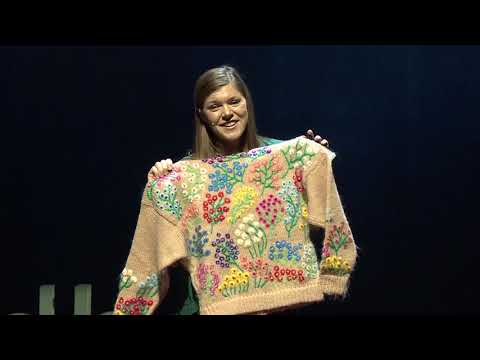
so let’s say your grandmother is
knitting you a sweater without asking
you first kind of like this and she
might think this looks really nice but
there’s a pretty good chance that you
won’t be wearing it so often because you
didn’t pick it out but if you were to
sit down with her choosing the patterns
and colors you might have yourself a new
favorite sweater designing good
neighborhoods and urban spaces should
never be like ready-to-wear fashion it’s
always handcrafted it’s always dependent
on the context you need to help grandma
pick the sweaters you want ok number two
developing our cities is everyone’s
business
meaning that the public officials and
planners need to stop being afraid of
what people say I want demonstration
project number two is targeting the
urban authority’s perspective because it
seems to me that when people are talking
about how participation is done it’s
like someone is taking out a box putting
the people into it putting it to the
side to store for when needed I mean
come on it’s like we’re trying to
maintain complete control over something
that we should just observe and listen
to and draw inspiration from the people
with the University and the technology
development here charm is actually an
excellent place for developing
demonstration projects on energy
solutions and mobility we’re really good
at this and it might be hard to see the
connection to the citizen participation
but we cannot make those projects work
without finding good ways and better
tools to connecting them it’s the way we
look at placemaking develop our areas
and include the citizen needs because if
I were to talk to people living in the
areas we were talking about they would
never care which sector in the pro’ in
the public organization our from what
are they were telling me about the
kindergarten that’s just closed down or
the bad public transportation system the
focus is on their areas and their needs
number three developing our cities is
everyone’s business meaning that we need
to build even better bridges between the
different communities and organizations
locally in order to reach out
support development and the prototyping
of new solutions in our own cities
that’s demonstration number three
because one thing we figured out was
that while the innovation ecosystem in
Trondheim is quite good we need to
connect that better to the way we do
citizen involvement in general
innovation should not just be for the
so-called innovation community
entrepreneurial strategies and citizen
involvement might actually have a lot of
the same goals reaching out to those who
would like to make a difference so I
mean we live in a small town it’s
Trondheim but we have the largest
University in Norway it’s 40,000
students your neighbor might as well be
a computer scientists if we’re if we are
to look at the university and students
as such a big resource why not have the
same mindset when we are involving
neighbourhoods there’s not one universal
model to do this we need to work on it
from a range of different perspectives
in order to find new ways of developing
things together as a community face to
face and through digital tools because
tools just like this pencil with this I
can draw but to create I need to
practice and learn how to make beautiful
things with it technology will never be
anything else than great tools tools
that need people and creators to create
beautiful solutions and whether it’s in
a village in the Philippines or in the
city of trim’ solutions needs to be
based on a solid understanding
of the local context and the people
living there the positive City exchange
project give us the opportunity to test
this way of thinking uniting the
technical the personal and the
continuing co-creation process because
we cannot hand you or anyone else in the
world the ready-made solutions the
sustainable cities that’s a one size
fits all that’s not sustainable at all
we need you and your interaction to do
this because that’s intelligent design
that’s sustainable growth that’s a smart
city
[Applause] [Music]
Please follow and like us: