
women in film that the risk of standing
here and sounding presumptuous calling
myself magic I’ll actually tell you that
it’s about how my perceptions of women
in film were completely changed by one
woman here in Guatemala I work in film
I work as a digital colorist people say
you what you color then I do my grandma
thinks that I take black and white films
and color them in kind of like The
Wizard of Oz and some days I feel like
The Wizard of Oz when I can bring out
the light and beauty in a film kind of
like this but if you’re not looking you
might actually never see the work of a
colorist you might just think I left
this film I love the way it makes me
feel I love the way I feel like I’m
living in this moment in this story but
I’m not sure why how being a colorist is
not always about making things look
pretty
sometimes it’s about making them look
dark or scary or intense or even really
hard to look at that’s a powerful
emotion too and it’s these emotions that
my work resides it’s about bringing just
the amount of light and just that
deepness in the shadows just a little
bit of blue maybe some softness a little
right amount of clarity to help the
audience feel how I feel my job is very
technical it happens in front of a big
computer in the dark often all by myself
but it builds on the elements of
storytelling it builds on the tactical
elements of where film was shot what the
location was like what the light looked
like that day how the actors felt and
how the props coordinated with the
costumes it also builds
on the storytelling elements of time and
place a film that sat on a dusky night
in the 70s is going to look completely
different from a bold punchy action film
or a cold may be kind of hard and dark
future all of these films have different
stories of color
my best day I feel like I can create
whole world and on my worst day it’s
about that guy in that bright yellow
shirt that was walking in the back of
the shop and his yellow shirt says I
love cheeseburgers and someone’s asking
me can you make that go away can you
tone that down a little bit and I do
that too now in the past couple years
the phrase women in film has become very
important and people have fought to
bring that awareness up it’s part of a
bigger movement to allow and encourage
and support a wider diversity of voices
in the films and the media that we’re
consuming more and more every day and
this idea is really powerful it’s not
only about the voices and the stories
that we see in the media but it’s also
about the people behind the camera it’s
the people who are the writers the
directors the cinematographers the
colorist
who are sometimes the lens through which
we see and hear the stories and those
voices make a big difference I’ve always
thought there was something extra
magical about the idea women in film
I have never quite known what a few
years ago my colleagues brought a
project to me it was an extension of a
piece they had filmed years ago here in
Guatemala in a small village of Pena
Blanca above Lake oticon there they had
met a young woman whose dream was to be
a nurse and to start a pharmacy in her
village this woman’s name was Rosa and
she was just about to graduate high
school and take that next step in her
journey my colleagues asked me if I
would help co-direct this film to bring
a woman’s perspective to that lens I
thought ah this this is it this is what
I’ve been looking for this is a woman’s
story that needs another woman to help
understand and listen to this
this is woman in film this is going to
be great this is going to be magic
and so we started planning for the shoot
and I started thinking about the colors
of Guatemala I thought about that deep
blue of the lake and the way it shimmers
when you look down at it from above I
thought about the green of the trees as
it rise up the hills on all the sides
about the purples and the reds of the
women’s blouses and the beautiful
embroidery on them and how delicate it
was I thought about how all the colors
here are more vibrant than I have ever
seen there’s a bit of a dis duskiness
and heaviness in the air as well they’re
not so bright and bouncy they’re
sometimes a little bit soft a little bit
serious I thought I’m going to capture
all these colors and this is going to be
great this is going to be magic we also
started thinking about the storyline of
Rosa and biggest thing I thought of was
you know this is about this Rosa but
there are so many roses roses are our
little girls roses who our older women
the roses are someone who’s gone through
something really hard and yet they still
have dreams and they still fight and
there’s a strong powerful woman I
thought maybe just this roses story
would be a little beacon of light in
that you can keep fighting and you can
can find your dreams you can pursue them
and I thought this is going to be great
this is going to be this is going to be
magic and so we had the cameras and the
story and the colors all planned out and
we came here to Guatemala we rode the
truck up the hills and roses mother and
her father they welcomed us into her
home and Rosa gave me a big hug and then
the day of graduation came and we all
dressed up y’all put on our Sunday
clothes and we got in the truck and we
were heading down town down the mountain
to the her to the church in pancha and
next to me was standing Rosa and
she was wearing these beautiful new
shoes and his warm breeze was flowing in
it it brushed through my hair and I
looked over and it was I was flipping
through her hair too and I thought ah
this this is the magic graduation we
were there and watching Rosa walked down
the aisle to receive her diploma on this
next step to achieve her dream her
mother was there to give her a big hug
and to pull her into her arms and to put
that special graduation ring on her
finger it was one of the most beautiful
moments I’ve ever seen I thought this
woman’s story is so inspiring this
woman’s story is great over the next few
days we filmed Rose at home and at
school and at the clinic she was working
at where she was already helping women
understand their health needs and where
they could go to get help
she was already welcoming people and
especially connecting to the women in
her community and it was great to see
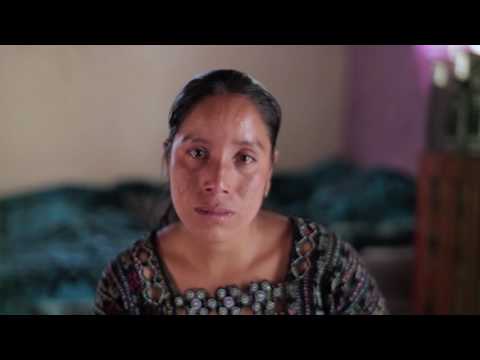
and then we had this final interview
that we were going to shoot and it was
going to be this interview that tied
everything together and so we found the
location and we got the camera set up
and lit the scene and Rosa’s sat down
and I sat across from her and I had all
these questions what was your favorite
toy growing up what what did you what
did you know you first wanted to be a
nurse what did it feel like to walk down
that aisle and know you had you know you
had taken the next step in accomplishing
this thing that you had sought out and
Rosa looked right at me she looked right
at the camera and and she started
talking and she told me about how she
grew up poor and the family didn’t have
money for toys or dolls about how she
was pulled out of school when she was
young to take care of her brothers she
talked about how she was sent off to the
city and she was just 14 to help earn
money for the family and she talked
really softly about how when she was
there someone she thought was a friend
taking advantage of her and she had to
come pregnant and had to come home and
to face her family in that moment and
her eyes hell lit up and she talked
about how she wanted to have this this
baby no matter what and I just sat there
and I listened and she talked about how
her daughter was finally born and her
daughter had hydrocephalus which is a an
issue of swelling in the brain that’s
filled with water and about how everyday
she held her daughter in her arms even
though she became heavy and her arms
were weak and about the day her her
daughter first smiled and she thought
maybe everything will be okay and then
about the day that her daughter passed
away and not even three years old and
the tears ran down her face and they ran
down mine too I looked at her and I
thought this is not a story with scenes
and color that can be digitally altered
this is life and it’s hard and it hurts
this is not great this is not magic and
then a couple days later we left we did
come home and we created a story a film
about Rosa that was moving and powerful
and inspiring and I did color it and
when I colored it I saw those beautiful
colors of Guatemala I saw the blue of
the lake and the green of the trees and
the red of Rosa’s mother’s dress and yet
they were still hard and it still still
hurt
I showed this film to Rosa and she
changed a couple things and then she
said this is my story and I want to tell
it I have never met someone so brave so
the short film Rosa these storms
premiered at a major US Film Festival it
screened at festivals all over the
country and when we put it online
people watched it over all over the
world and people started writing in and
they said I am a Rosa and they said my
mom is a Rosa or my daughter or my
cousin and I thought maybe this is great
maybe this one woman who had the courage
to tell her story that’s meant so much
to all these other people maybe this is
great one festival asked if Rosa herself
would come and speak and we thought if
she wants to go and she did and she
applied for a passport and she flew in a
plane and she came to Washington DC the
United States and Rosa stood up there in
front of all these people and she held
her head high and she said no matter
what storms we face in life we can all
grow wings like the birds and fly and I
stood up there next to her I looked at
this tiny inspiring Mayan woman next to
me there were beautiful new shoes I
thought there is this space in my chest
that is always going to hurt for what
she’s been through and yet always feels
her courage and her light as well and I
looked up at these credits scrolling
through the screen and I thought it’s
not about the scenes not about the
storyline it’s definitely not about the
colors it’s about this woman’s story and
it’s her voice that spoke up above
everything that mattered and I don’t
know maybe that’s the magic dress
[Applause] [Music]